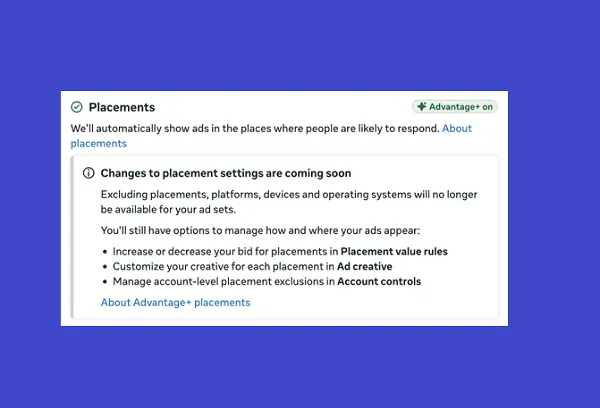
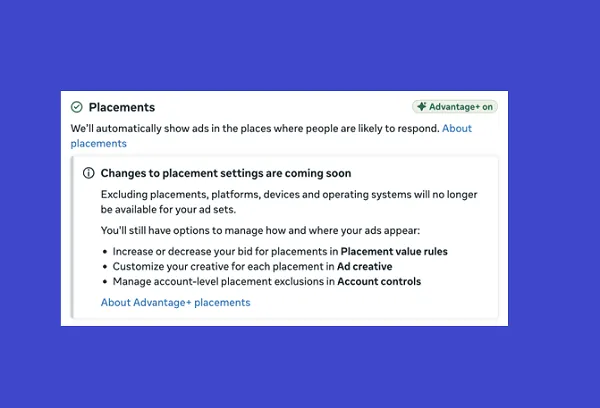
The digital advertising landscape is undergoing a significant transformation as Meta, the parent company of Facebook and Instagram, moves to eliminate the "Placements" option from ad sets. This strategic shift, communicated to advertisers through internal alerts, signifies a crucial step in Meta’s ambitious roadmap towards a fully automated advertising ecosystem, a vision articulated by CEO Mark Zuckerberg. The removal of placement controls, which allowed advertisers to meticulously dictate where their ads appeared across Meta’s vast network of platforms, is poised to grant Meta’s sophisticated AI systems greater autonomy in optimizing ad delivery. This development, while potentially streamlining campaign management for some, raises questions about advertiser control, brand safety, and the future of creative input in digital marketing.
The Evolving Role of Placements in Meta Advertising
For years, the "Placements" feature has been a cornerstone of campaign setup for Meta advertisers. It provided a granular level of control, enabling marketers to exclude specific ad delivery locations. This could range from avoiding placements like Facebook search results, where user intent might be less aligned with purchasing, to opting out of in-stream video ads within Reels, where ad fatigue or context could be a concern. The ability to manually select or deselect placements—whether automatic (allowing Meta’s system to distribute ads across all available placements) or manual (allowing advertisers to choose specific platforms and formats)—offered a critical mechanism for advertisers to align their campaigns with brand guidelines, target audience behavior, and budgetary considerations. For instance, a luxury brand might choose to exclude placements deemed less premium, while a performance-focused advertiser might prioritize placements with historically higher conversion rates. This control was invaluable for managing brand perception and ensuring ad spend was directed towards the most effective channels.
The Unfolding Shift: From Control to Automation
The recent alerts to advertisers signal a definitive move away from this granular control. Meta is increasingly nudging advertisers towards broader placement strategies, advocating for its automated systems to identify and leverage the most responsive display options for each advertisement. This isn’t merely about simplifying the ad setup process; it represents a fundamental redefinition of how Meta envisions advertising on its platforms.
According to information shared by Meta ads expert Jon Loomer, who first reported on the impending change, advertisers are being notified that the "Placements" option is being phased out. While a definitive timeline for this rollout has not yet been announced, the implications are substantial. The removal will extend beyond simply disabling manual selection. Loomer also highlighted that the capability to exclude platforms will be similarly curtailed, if not entirely removed. This means Meta’s AI will have the authority to serve ads from any campaign across any of its applications—Facebook, Instagram, Messenger, and the Audience Network—based on its algorithmic assessment of optimal performance.
Meta’s Long-Term Vision: The Fully AI-Automated Ad Campaign
This strategic pivot is deeply intertwined with Meta’s overarching ambition to achieve fully automated ad campaigns by 2026. The company’s long-term vision, as articulated by CEO Mark Zuckerberg in an interview with Ben Thompson of Stratechery, is to create an advertising system where businesses need minimal creative input or technical expertise. Zuckerberg outlined a future where a business would simply state its objective, link a bank account, and Meta’s AI would handle the rest – from creative generation and demographic targeting to performance measurement. "We’re going to get to a point where you’re a business, you come to us, you tell us what your objective is, you connect to your bank account, you don’t need any creative, you don’t need any targeting demographic, you don’t need any measurement, except to be able to read the results that we spit out," Zuckerberg stated. He further emphasized the transformative potential of this approach, suggesting it represents "a redefinition of the category of advertising."
The Power of AI in Modern Advertising
The underlying technology driving this transformation is Meta’s advanced artificial intelligence. While these AI systems are not sentient, their proficiency in large-scale data analysis and pattern recognition makes them exceptionally well-suited for the complexities of modern digital advertising. As AI processing capacities expand, these systems can analyze vast datasets and user queries with unprecedented speed. They excel at identifying intricate correlations and matching data points to deliver the most relevant outcomes.
In the context of advertising, this translates to an AI’s ability to discern which types of ads are most likely to resonate with individual users and then craft personalized ad messages that align with prevailing performance trends. This data-driven approach aims to maximize engagement, conversions, and ultimately, return on investment for advertisers. Meta has been gradually guiding its advertising partners toward this level of automation over the past few years, through initiatives like Advantage+ campaigns, which leverage AI to optimize various aspects of ad delivery.
Implications for Advertisers: Opportunity and Uncertainty
The removal of placement controls represents another significant step in this ongoing evolution. While it may empower Meta’s AI to achieve potentially superior campaign results by leveraging every available optimization opportunity, it also signifies a reduction in direct advertiser control. This could lead to a higher degree of reliance on Meta’s internal systems, a shift that some advertisers may find disquieting.
Potential Benefits:
- Enhanced Efficiency: For businesses lacking dedicated ad management teams or extensive technical expertise, fully automated campaigns could significantly reduce the time and resources required to launch and manage advertising efforts.
- Improved Performance: Meta’s AI, with access to vast amounts of real-time data, may indeed identify optimal placements and targeting strategies that individual advertisers might overlook, potentially leading to higher conversion rates and better ROI.
- Streamlined Campaign Management: The simplification of the ad setup process could make Meta’s advertising platforms more accessible to a wider range of businesses.
Potential Concerns:
- Loss of Granular Control: The inability to exclude specific placements or platforms could be problematic for brands with strict brand safety requirements or those aiming for highly curated audience segments. The risk of an ad appearing in an undesirable context or on a platform not aligned with brand image could increase.
- Creative Homogenization: A significant concern is the potential for ad creative to become too similar if AI systems are generating and optimizing based on their own existing outputs. This could lead to a decline in ad effectiveness over time as audiences become desensitized to repetitive messaging and formats. The very data that fuels the AI’s learning could become a feedback loop that limits innovation and differentiation.
- Transparency and Accountability: As more control is handed over to AI, questions about transparency in decision-making processes and accountability for campaign outcomes may arise. Advertisers might struggle to understand precisely why certain ads are served in specific contexts.
- Brand Safety and Contextual Relevance: Without manual controls, advertisers might have less assurance about the contextual relevance of their ads. For example, an ad for a sensitive product might inadvertently appear alongside controversial content if the AI prioritizes broad reach over contextual appropriateness.
Navigating the Future of Meta Advertising
Meta has indicated that it has strategies in place to mitigate potential issues, such as the risk of creative homogenization. The company’s continued investment in AI research and development suggests a commitment to refining these systems to ensure sustained effectiveness and advertiser satisfaction. However, the industry will be closely watching how these changes unfold and how advertisers adapt to a landscape where the boundaries of manual control are increasingly blurred.
The removal of placement controls is not an isolated event but rather a deliberate step in Meta’s broader strategy to redefine advertising for the AI era. It signals a future where the line between advertiser and platform-driven optimization becomes increasingly faint, with the ultimate goal of creating a seamless, highly efficient, and potentially more profitable advertising engine. The success of this transition will hinge on Meta’s ability to balance the power of its AI with the ongoing needs and concerns of its advertiser base, ensuring that while control may shift, the ultimate objective of effective and responsible advertising remains paramount. The industry will need to engage in a period of adjustment, learning to work with and leverage these increasingly sophisticated AI tools while remaining vigilant about the implications for brand integrity and marketing effectiveness.