In an era defined by rising customer acquisition costs and a saturated digital advertising market, global enterprises and small businesses alike are shifting their focus from raw traffic acquisition to the strategic discipline of conversion marketing. This shift represents a fundamental change in digital strategy, moving away from the "volume-first" approach of the early 2010s toward a model of operational efficiency where the value of existing web traffic is maximized through data-driven optimization. Conversion marketing, defined as the practice of encouraging website visitors to take specific, measurable actions, has emerged as the primary lever for increasing return on investment (ROI) without requiring a proportional increase in advertising spend.
The Strategic Shift from Acquisition to Conversion
For much of the last two decades, digital marketing was dominated by search engine optimization (SEO) and pay-per-click (PPC) advertising. The prevailing logic suggested that more traffic inevitably led to more revenue. However, as the cost-per-click (CPC) on platforms like Google Ads and Meta has surged—driven by increased competition and privacy-related changes in tracking—businesses have found that simply buying more visitors is no longer a sustainable growth model.
Market analysts note that conversion marketing addresses this inefficiency by focusing on the "middle and bottom of the funnel." Rather than pouring capital into the "top of the funnel" to attract disinterested browsers, conversion marketing utilizes Conversion Rate Optimization (CRO) to transform those already on a site into leads or customers. This methodology recognizes that a 2% increase in conversion rate can often yield the same revenue growth as a 100% increase in traffic, typically at a fraction of the cost.
The Chronology of Digital Marketing Optimization
The transition to a conversion-centric model has occurred in distinct phases over the past twenty-five years:
- The Traffic Era (1995–2005): The early web focused on visibility. Success was measured in "hits" and page views. Search engines were rudimentary, and the goal was simply to be found.
- The Analytics Era (2005–2012): The launch of tools like Google Analytics allowed marketers to see what happened after a click. The industry began to track bounce rates and time-on-site, though many actions remained siloed.
- The Optimization Era (2012–2020): Dedicated landing page builders and A/B testing platforms became mainstream. Marketers began to realize that the destination (the landing page) was as important as the source (the ad).
- The Intelligence Era (2020–Present): Modern conversion marketing now leverages artificial intelligence, machine learning, and real-time behavioral data to create personalized experiences. Current strategies involve "smart traffic" routing and dynamic content replacement to suit individual user intent.
Core Metrics and the Mathematics of Success
To evaluate the efficacy of a conversion marketing program, organizations rely on two primary data points: the definition of conversion goals and the calculation of the conversion rate.
Defining Conversion Goals
A conversion is not a monolithic event; it is categorized based on its proximity to revenue.
- Macro-Conversions: These are primary objectives, such as a completed e-commerce purchase, a signed service contract, or a paid subscription.
- Micro-Conversions: These are incremental steps that indicate interest, such as signing up for a newsletter, downloading a whitepaper, or adding an item to a cart.
The Conversion Rate Formula
The industry standard for measuring success is the Conversion Rate (CR), calculated by dividing the number of conversions by the total number of visitors, then multiplying by 100. For example, a site with 10,000 visitors and 300 conversions maintains a 3% conversion rate.

Industry benchmarks vary significantly by sector. According to 2024 digital marketing reports, the average e-commerce conversion rate fluctuates between 1% and 3%, while high-performing B2B SaaS (Software as a Service) landing pages can see conversion rates exceeding 10% for lead-generation offers.
The Psychology of the User Journey
Conversion marketing is rooted deeply in behavioral psychology. Experts argue that visitors do not convert by accident; they convert when a digital environment successfully mitigates "friction" and enhances "motivation."
The Value Proposition
The most critical element of any conversion strategy is the value proposition—a concise statement explaining why a customer should choose a particular product or service over a competitor. Market research suggests that a value proposition must be "instantly understandable." If a user cannot determine the benefit of an offer within the first five seconds of landing on a page, the probability of a "bounce" (leaving the site) increases by over 70%.
Usability and Technical Friction
Technical performance is a non-negotiable component of conversion marketing. Data from Google indicates that a one-second delay in mobile load times can impact conversion rates by up to 20%. Beyond speed, usability factors such as mobile responsiveness, intuitive navigation, and form length play pivotal roles. Industry studies show that reducing the number of fields in a contact form from five to three can increase completion rates by nearly 30%, as it reduces the perceived effort required from the user.
Trust Signals and Social Proof
In an anonymous digital landscape, trust is the currency of conversion. High-converting websites utilize "social proof"—testimonials, case studies, industry certifications, and real-time customer activity notifications—to validate their claims. Detailed feedback that addresses specific pain points is significantly more effective than generic praise. For instance, a testimonial stating, "This software reduced our reporting time by 15 hours a week," provides a tangible benefit that resonates with potential buyers.
Tactical Implementation: From A/B Testing to AI
Professional conversion marketers employ a suite of high-impact tactics to refine the user experience.
Landing Page Optimization
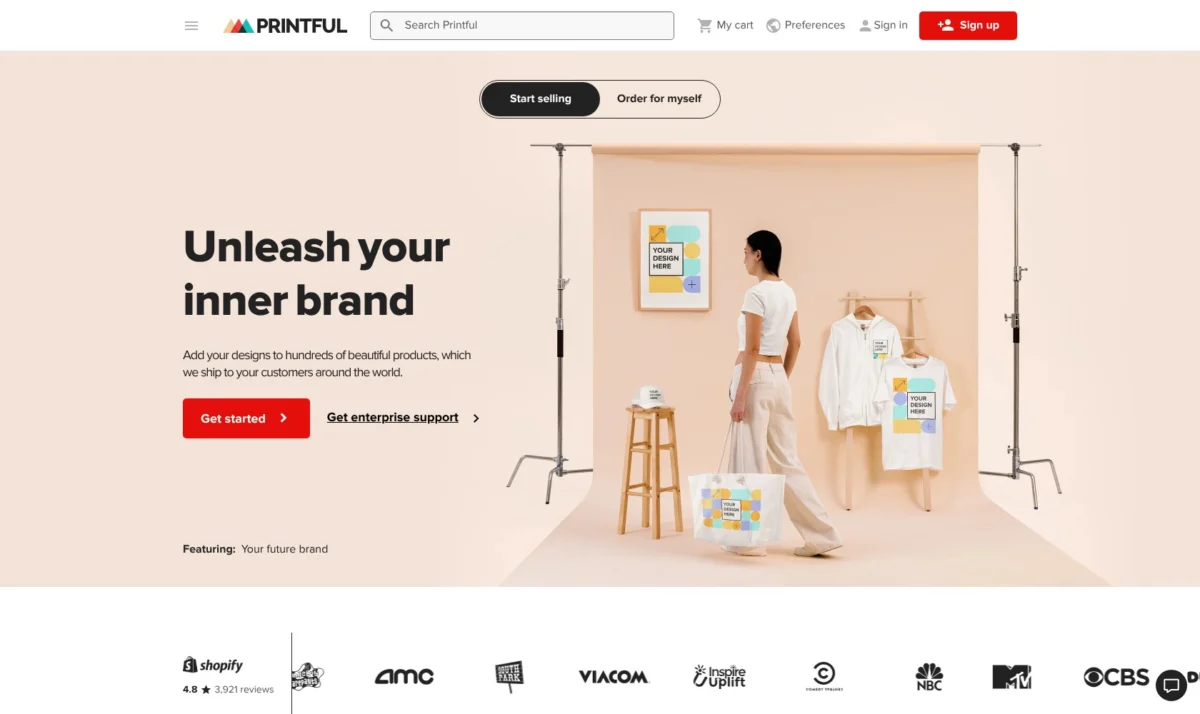
Unlike a general homepage, which serves as a directory, a landing page is designed for a single objective. By removing navigation menus and external links, marketers create a "conversion tunnel" that directs the user toward a single Call to Action (CTA).
A/B Testing and Experimentation
A/B testing, or split testing, involves showing two versions of a webpage to different segments of visitors to determine which performs better. Modern platforms allow marketers to test headlines, CTA button colors, imagery, and even different pricing models. The key to successful experimentation is statistical significance; tests must run long enough to ensure that the results are not due to random chance.

Interactive and Visual Content
The integration of video and interactive elements has become a standard for high-converting sites. Statistics suggest that including a video on a landing page can increase conversions by up to 80%. Short, 60-to-90-second "explainer" videos are particularly effective at distilling complex value propositions into digestible formats.
Strategic Overlays and Engagement Tools
While often maligned, pop-ups and sticky bars remain highly effective when deployed contextually. "Exit-intent" pop-ups, which appear when a user moves their cursor to close a tab, offer a final opportunity to capture a lead through a discount or a lead magnet. The evolution of these tools now allows for "smart" targeting, where the message changes based on the user’s previous behavior or the source of their traffic.
Data Integration and Feedback Loops
The final stage of a robust conversion marketing strategy is the creation of a continuous feedback loop. This involves both quantitative and qualitative data analysis.
Quantitative Analysis: Tools such as Google Analytics 4 provide data on user flow and drop-off points. Heatmaps, provided by services like Hotjar or Microsoft Clarity, offer a visual representation of where users click and how far they scroll, identifying "dead zones" on a page that may be distracting from the primary goal.
Qualitative Analysis: Marketing teams are increasingly mining data from customer support logs and sales transcripts. By identifying the most common objections or questions raised by prospects, marketers can update their landing page copy to address these concerns proactively, thereby removing barriers to conversion before they arise.
The Broader Impact on Business Sustainability
The implications of conversion marketing extend beyond the marketing department. By improving the efficiency of digital assets, companies can lower their Customer Acquisition Cost (CAC) and increase the Lifetime Value (LTV) of their customers. This improves overall profit margins and provides a competitive advantage in the marketplace.
Furthermore, as artificial intelligence continues to integrate with marketing technology, the future of conversion marketing lies in hyper-personalization. AI-driven engines can now predict which version of a page will most likely convert a specific visitor based on thousands of data points, including location, device type, and past browsing history.
In summary, conversion marketing has evolved from a niche tactical concern into a central pillar of corporate strategy. As the digital space becomes more crowded and expensive, the ability to effectively convert existing traffic is the primary differentiator between brands that merely survive and those that achieve sustainable, scalable growth. Organizations that master the balance of psychological triggers, technical excellence, and rigorous data analysis are positioned to lead the next era of digital commerce.


 Asro
Asro
 Dwi Wanna