

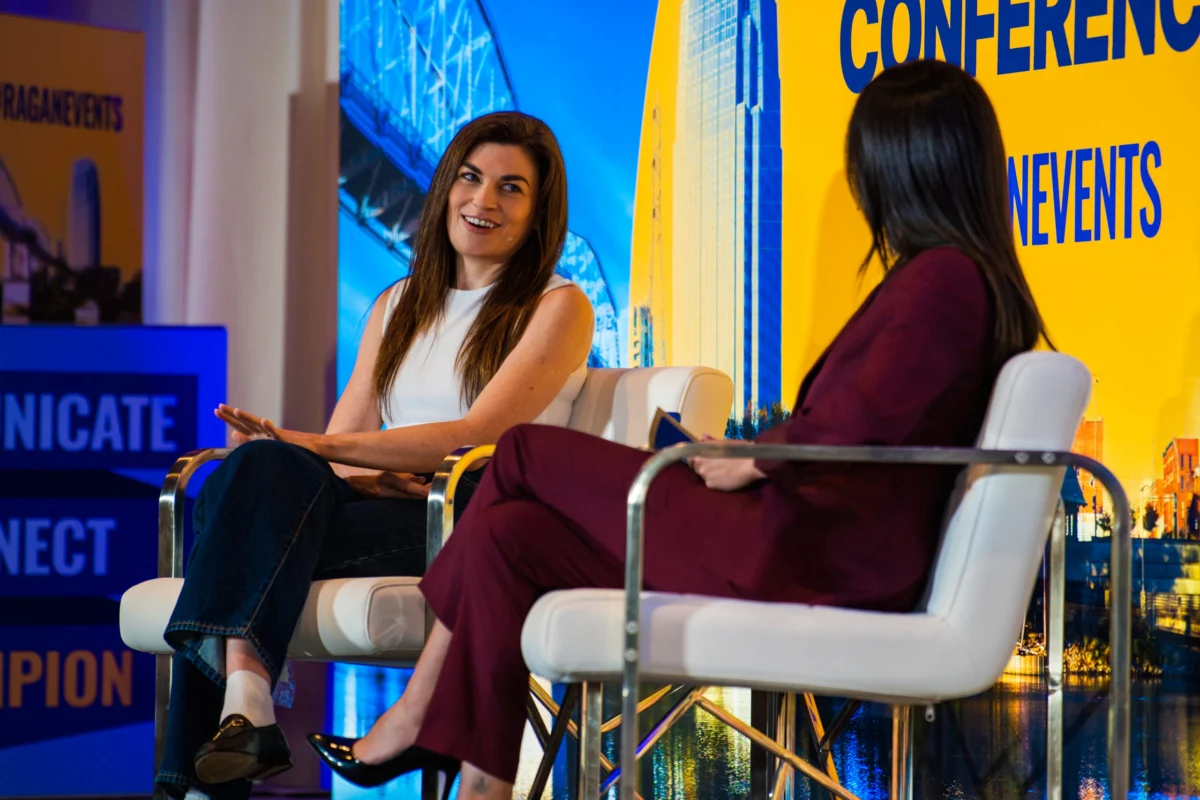
The 2026 Employee Experience Conference, hosted by Ragan Communications in Nashville, Tennessee, concluded with a resounding message: while technology continues to redefine the boundaries of the modern workplace, the success of any organization remains fundamentally rooted in human connection, trust, and clarity. As professionals from the fields of Human Resources, Internal Communications, and Executive Leadership gathered in the Music City, the discourse shifted from the mere adoption of tools to the sophisticated management of change in an era of unprecedented digital acceleration. The three-day event served as a critical touchpoint for leaders navigating a landscape characterized by leadership transitions, global socioeconomic volatility, and the deepening integration of generative artificial intelligence (AI) into daily operations.
The Landscape of Organizational Change in 2026
The corporate environment of 2026 is markedly different from the beginning of the decade. The "Great Realignment" of the mid-2020s has left many employees feeling over-stimulated yet under-connected. Against this backdrop, the Nashville conference highlighted that the primary challenge for modern communicators is no longer the dissemination of information, but the curation of meaning. As organizations undergo constant technological and structural shifts, the role of the internal communicator has evolved into that of a "culture architect."
Data presented during the opening keynotes suggested that nearly 65% of global employees report "change fatigue," a condition where the sheer volume of organizational pivots leads to apathy and decreased productivity. To combat this, conference speakers emphasized a dual-track strategy: managing the mechanics of change while simultaneously anchoring the workforce in a sense of continuity.
Anchoring Stability Through Values and Principles
A recurring theme throughout the sessions was the necessity of distinguishing between an organization’s "values" and its "cultural principles." Ryan Poe, APR, Director of Executive Communications at St. Jude Children’s Research Hospital, argued that values define the soul of an organization, while principles dictate the daily behaviors of its people.
According to Poe, values must remain immutable even during periods of extreme disruption. When an organization undergoes a merger, a leadership change, or a massive technological overhaul, employees look for "islands of stability." By reinforcing that the core mission and values remain unchanged, leaders can reduce the psychological friction associated with new workflows.
Hilary Hamblin, Manager of Organizational Change Management and Internal Communications at St. Jude, expanded on this by noting that culture provides the necessary continuity. She posited that while strategies and tools are ephemeral, the "how" of an organization—the way people treat one another and approach problems—must be the constant thread. Organizations that successfully navigate change are those that repeatedly embed these principles into every touchpoint of the employee lifecycle, from onboarding to executive town halls.
The Managerial Shift: From Funnels to Filters
The conference addressed a critical bottleneck in the modern corporate structure: the middle manager. Historically, managers were viewed as "funnels" designed to pass every piece of information from the C-suite down to the frontline. However, in an age of information saturation, this model has become obsolete and counterproductive.
Heather Kestly, Senior Communications Director at Medtronic, introduced a paradigm shift, suggesting that managers must now act as "filters." In this capacity, a manager’s value lies in their ability to distill complex corporate mandates into relevant, actionable context for their specific teams. Kestly argued that when managers simply pass along data without translation, they contribute to the noise rather than the solution.
This sentiment was echoed by Jamesia Harrison, Director of University Communications at North Carolina A&T State University. Harrison noted a significant gap between "leadership intent" and "employee execution." She observed that employees can only execute what they truly understand. If a leader believes they have communicated a vision but the frontline cannot articulate how it affects their daily tasks, the communication has failed. The conference consensus was clear: clarity is the ultimate currency of trust.
Strategic AI Adoption: Purpose Over Performance
Artificial Intelligence was, unsurprisingly, a dominant topic of discussion. However, the tone in 2026 has shifted from the "hype cycle" of previous years to a more pragmatic, human-centric evaluation. Scott Armstrong, Director of Communications at Microsoft, cautioned against the "AI for the sake of AI" mentality. He argued that technology should solve genuine business or employee problems rather than merely serving as a demonstration of technical capability.
The ethical implications of AI in the workplace were also scrutinized. Armstrong suggested that when AI begins to replace human-to-human interactions, leaders must pause and evaluate the "empathy cost." For instance, in high-stakes or emotionally charged situations, the efficiency of a chatbot cannot replace the nuance and support of a human being.
Shoshana Leon, Strategic Communications Lead at CSAA Insurance Group, provided a poignant example regarding crisis management. In the aftermath of an accident or a personal tragedy, an employee requires a human touch to feel valued by their employer. Relying on automated systems in these moments can cause irreparable damage to the employer-employee relationship.
Furthermore, the successful adoption of AI is inextricably linked to corporate culture. Samantha Stark, Founder and Chief Strategist at Phyusion, noted that for AI to drive real innovation, organizations must foster a "safe-to-fail" environment. If employees fear that experimentation with new tools will lead to punishment for errors, their use of AI will remain superficial, failing to unlock the technology’s true transformative potential.
Data Literacy and the Audience-First Mandate
In the realm of analytics, the conference highlighted a growing paradox: while organizations have more data than ever, they often have less insight. Adam Perrow, Senior Director of Employee Experience and Human Resources at Ally Financial, warned that not all metrics are created equal. He challenged communicators to move beyond "vanity metrics"—such as email open rates or intranet clicks—and focus on "impact metrics" that correlate with business outcomes and employee sentiment.
Perrow suggested that friction within an organization often hides within broken processes, inefficient workflows, and poor system handoffs. By using data to diagnose these "points of friction," communicators can provide tangible value to leadership.
The strategy for content creation has also undergone a refinement. Craig Thomason, Director of Global Employee and Executive Communications at Merck, championed the "ABC" model: Audience Before Content. In an era where employees are bombarded with content from dozens of internal and external channels, Thomason argued that communicators must deeply understand the needs, fears, and motivations of their audience before writing a single word. This audience-centric approach ensures that communication is viewed as a resource rather than a distraction.
Preserving Humanity in a Technical World
Perhaps the most resonant takeaway from the Nashville summit was the renewed emphasis on "soft skills"—which many speakers argued should be renamed "durable skills." As technical tasks are increasingly automated, qualities such as judgment, curiosity, and empathy are becoming the primary differentiators of successful leaders.
Kerrie Vnuk, Head of Internal Communications at Cotality, emphasized the importance of building relationships across all levels of the hierarchy. By engaging with both skeptics and supporters, communicators can gain a holistic view of how messages will land. Vnuk advocated for the use of informal advisory groups—"pulse committees"—to test ideas and surface potential resistance before a broad rollout.
The link between mental well-being and performance was also a focal point. Nick LaFave, Senior Director of Organizational Communications at Children’s Minnesota, presented evidence that an employee’s capacity for high performance is directly tied to their emotional and mental health. He argued that leaders cannot expect sustained excellence if they ignore the "capacity crisis" facing many workers today. In 2026, well-being is no longer a peripheral HR benefit; it is a core business strategy.
Analysis of Implications for 2027 and Beyond
The insights from the 2026 Employee Experience Conference suggest a major turning point in corporate governance. The "human-centric" workplace is no longer a theoretical ideal but a competitive necessity. As AI continues to commoditize technical skills, the "human premium"—the ability to lead with empathy, navigate ambiguity, and build high-trust cultures—will become the most sought-after trait in the global talent market.
For organizations, the timeline for adaptation is shrinking. The move from "funnel" to "filter" for managers requires a massive reinvestment in leadership development. Similarly, the shift toward "Audience Before Content" necessitates a more sophisticated understanding of data privacy and employee sentiment analysis.
The conference concluded with a call to action for all attendees: to be the "guardians of the human experience" within their organizations. While the tools of the trade will continue to evolve, the fundamental need for clear, honest, and empathetic communication remains the bedrock of a resilient workforce. As the industry looks toward the 2027 Internal Communications Conference in Seattle, the focus remains steadfast on balancing the efficiency of the machine with the heart of the human.









