The global market for conversion rate optimization (CRO) and digital experience monitoring has undergone a significant transformation over the last decade, evolving from simple A/B testing scripts into complex ecosystems that combine behavioral analytics, server-side experimentation, and artificial intelligence. At the forefront of this evolution are two distinct yet often compared industry leaders: Crazy Egg and Optimizely. While both platforms aim to improve website performance and user engagement, they represent fundamentally different philosophies in software delivery and organizational scale. This report examines the technical capabilities, financial structures, and strategic implications of choosing between Crazy Egg’s all-in-one behavioral suite and Optimizely’s enterprise-grade Digital Experience Platform (DXP).
The Evolution of Website Optimization: A Brief Chronology
To understand the current positioning of these two platforms, one must look at the timeline of the digital optimization sector. Crazy Egg was founded in 2005 by Hiten Shah and Neil Patel, emerging as a pioneer in the visual analytics space. At a time when Google Analytics focused primarily on raw traffic data, Crazy Egg introduced "Heatmaps," a visual representation of user clicks that allowed marketers to see exactly where visitors were engaging with a page. This visual-first approach democratized UX research for small and medium-sized businesses.
Optimizely arrived later, in 2010, founded by Dan Siroker and Pete Koomen following Siroker’s experience as the Director of Analytics for the 2008 Obama presidential campaign. Optimizely’s entry focused heavily on the statistical rigor of A/B testing, quickly becoming the preferred choice for high-traffic enterprise sites. The industry reached a major inflection point in 2020 when Optimizely was acquired by Episerver, a global provider of content management and commerce solutions. This acquisition shifted Optimizely from a specialized testing tool to a comprehensive Digital Experience Platform, placing it in direct competition with giants like Adobe and Oracle.
Core Comparison: All-in-One Accessibility vs. Enterprise Orchestration
The primary distinction between the two platforms lies in their scope of service. Crazy Egg operates as a consolidated subscription model, providing a "swiss-army knife" of tools—including heatmaps, session recordings, surveys, and A/B testing—under a single price point. In contrast, Optimizely has moved toward a modular, "best-of-breed" enterprise model where experimentation, analytics, and content management are often sold as separate, high-value contracts.
Experimentation and Statistical Methodology
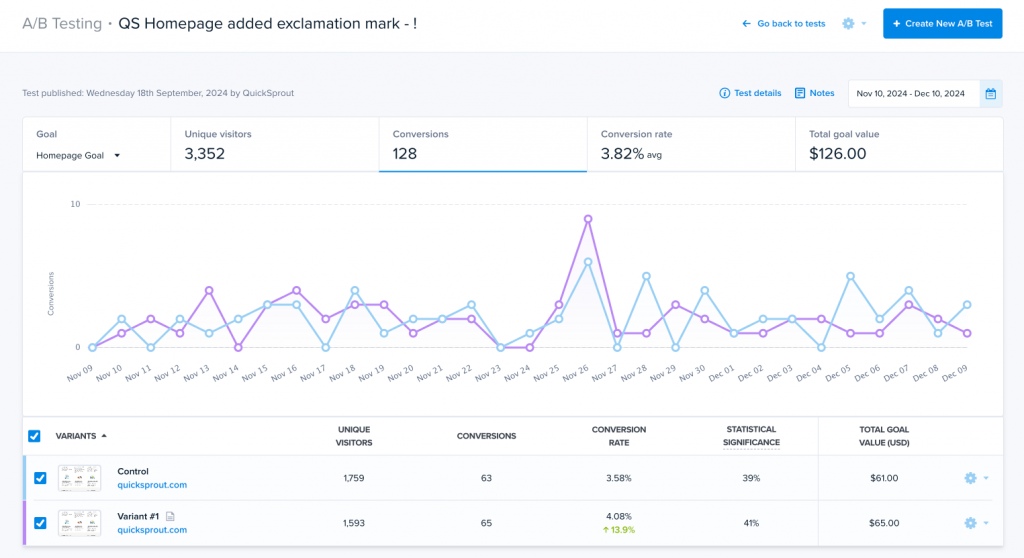
Experimentation remains the cornerstone of both platforms, yet their technical executions cater to different user profiles. Crazy Egg’s A/B testing tool is designed for agility, featuring a visual editor that requires zero coding knowledge. It supports standard A/B and split-URL testing, utilizing a Multi-Arm Bandit (MAB) algorithm to automatically shift traffic toward winning variants in real-time, thereby minimizing the "opportunity cost" of a failing test.
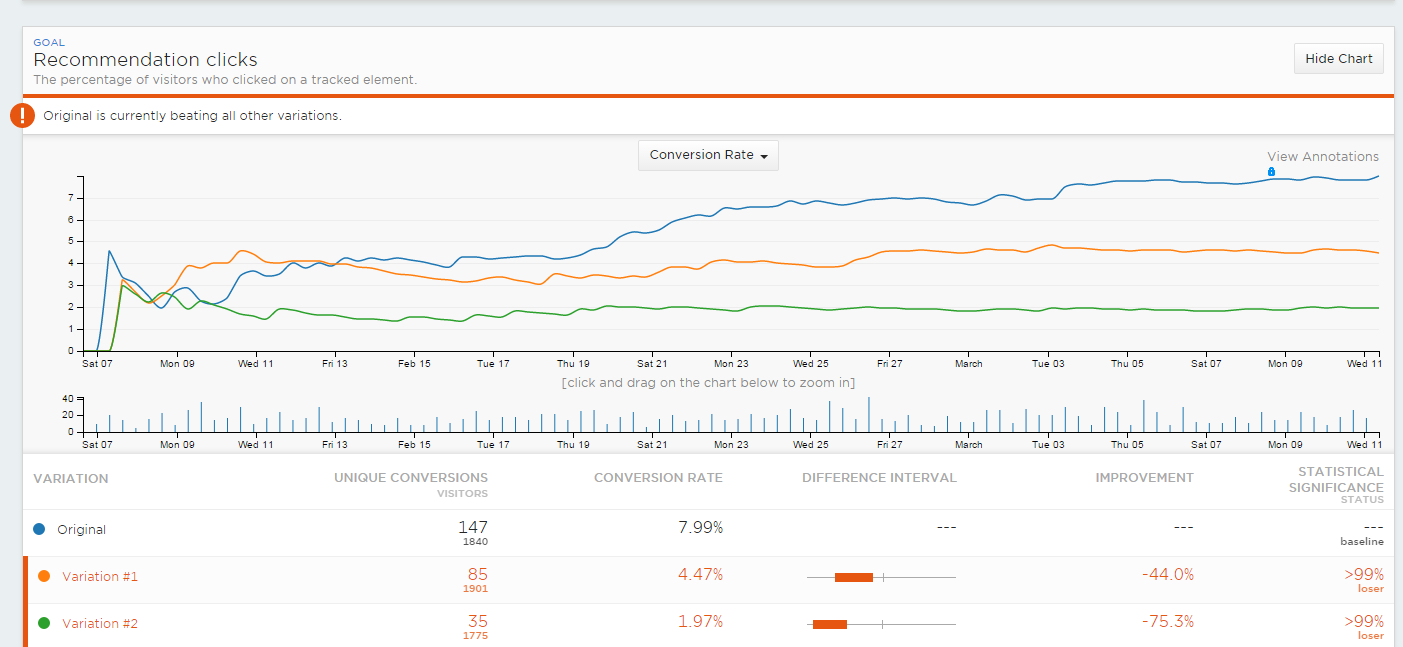
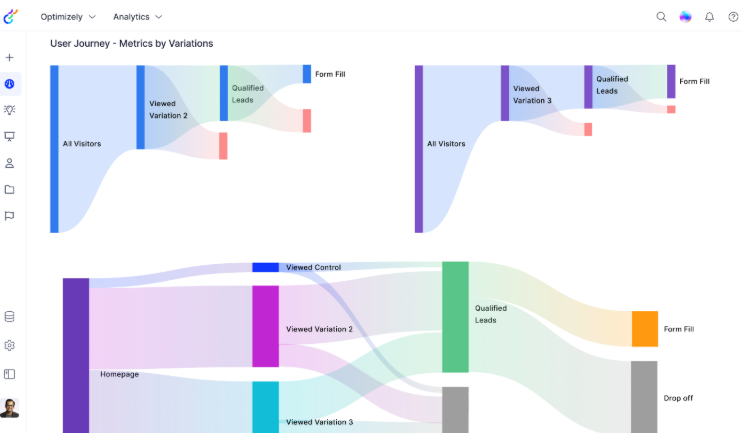
Optimizely’s experimentation suite is significantly more robust, catering to product teams and developers. Beyond standard A/B tests, it offers multivariate testing (MVT), allowing teams to test multiple variables simultaneously to see how they interact. Crucially, Optimizely provides server-side experimentation through its "Feature Experimentation" product. This allows companies to test deep backend logic—such as search algorithms or pricing structures—rather than just front-end UI changes. This level of depth is a prerequisite for major e-commerce and SaaS organizations but often exceeds the needs of standard marketing teams.
Behavioral Insights and the "Why" Behind the Data
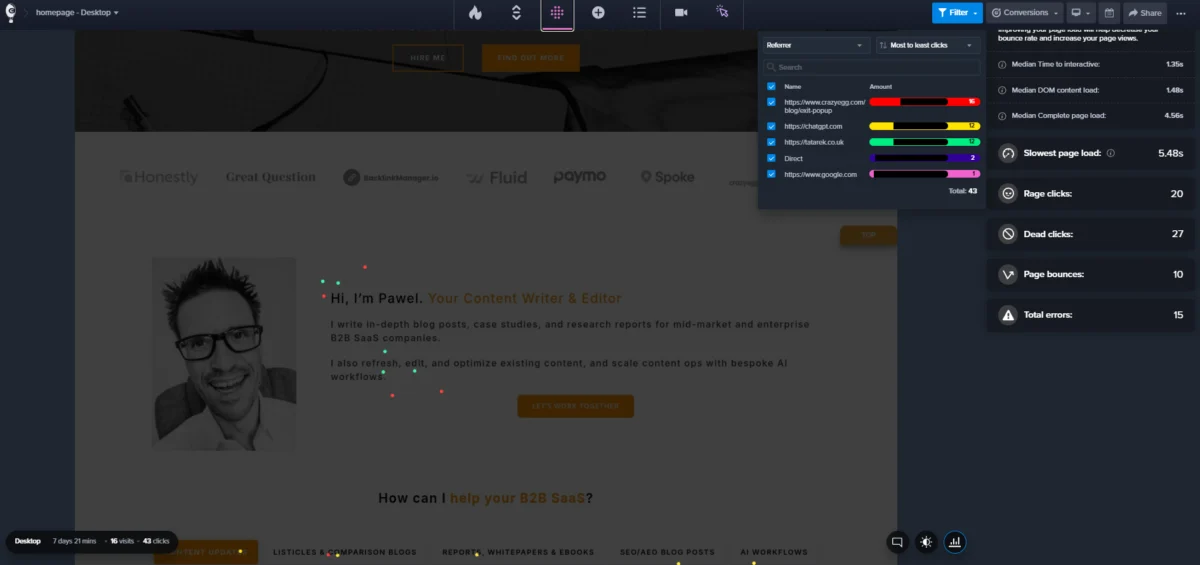
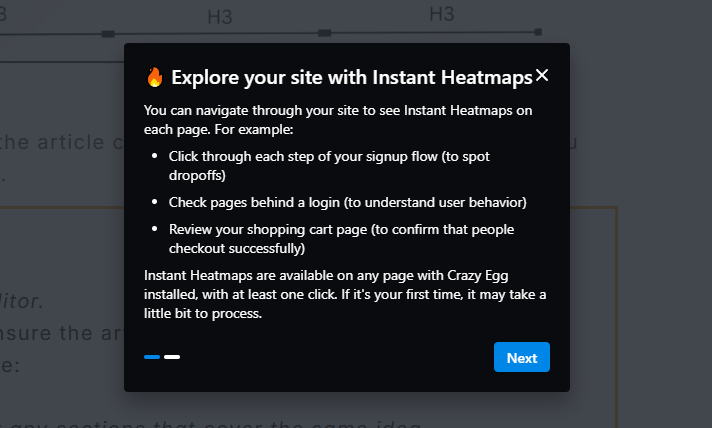
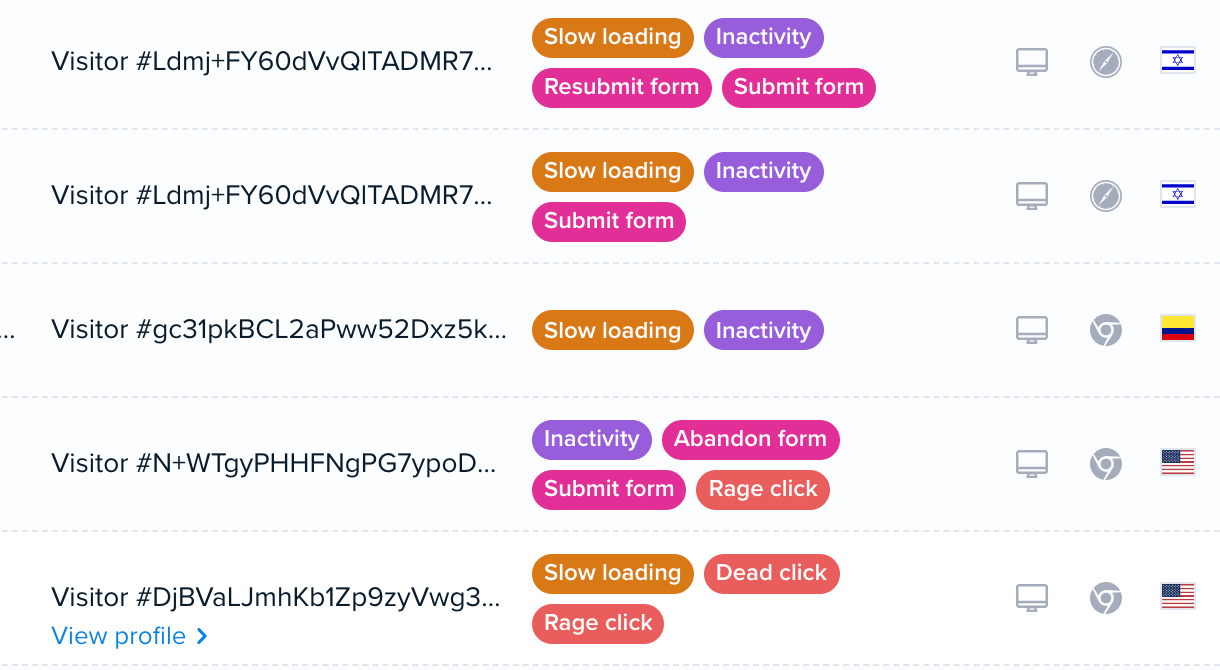
A significant point of divergence is the native inclusion of behavioral analytics. Crazy Egg provides five distinct types of heatmaps (Heatmap, Scrollmap, Confetti, Overlay, and List) alongside native session recordings. These tools allow researchers to identify "rage clicks"—where a user clicks repeatedly out of frustration—and "dead clicks," where an element appears interactive but is not.
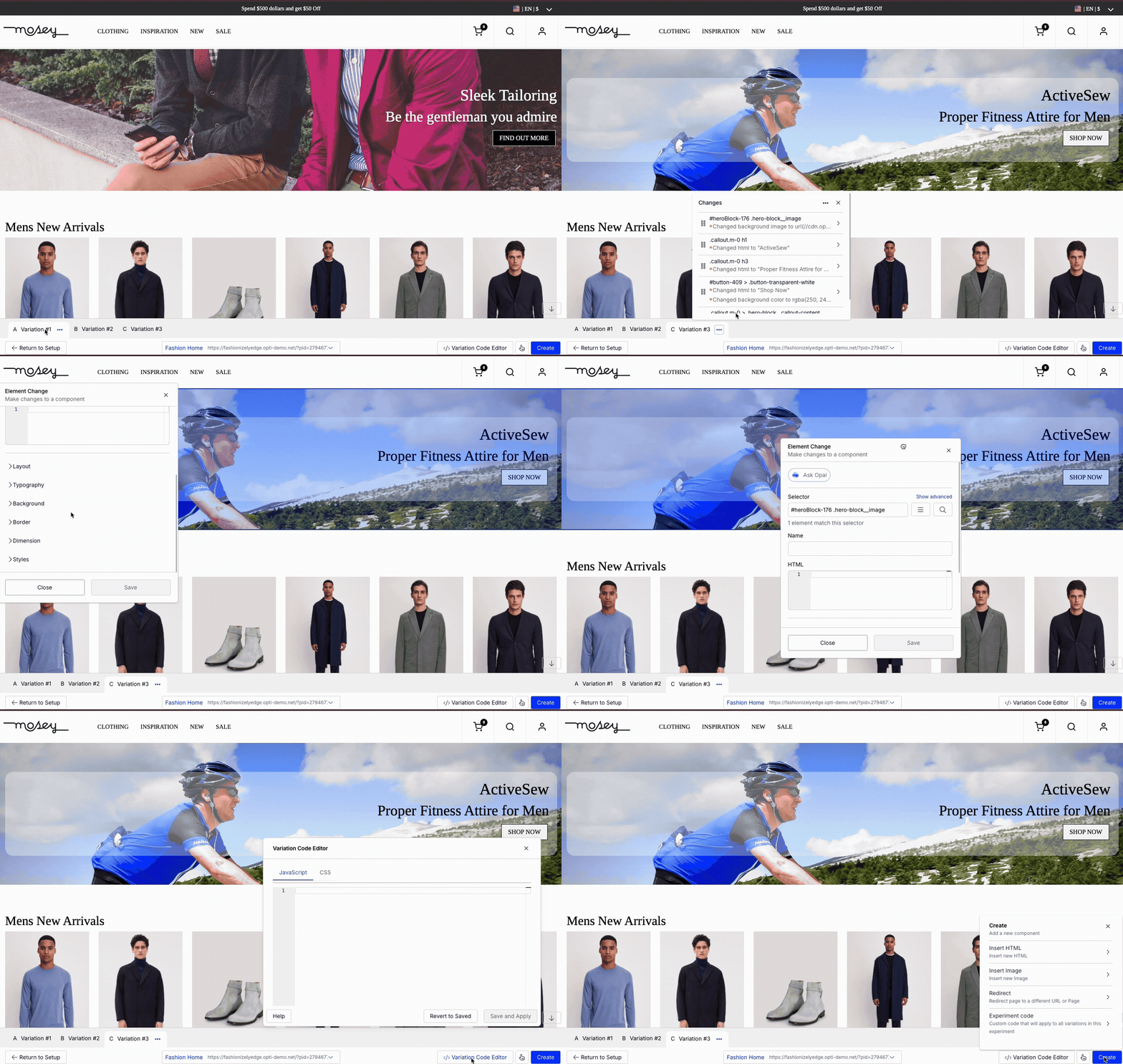
Optimizely does not offer a native heatmap or session recording tool. Instead, it relies on integrations with third-party providers like Hotjar, Microsoft Clarity, or Contentsquare. While Optimizely’s AI agent, Opal, can interpret images of heatmaps from these external sources to suggest test ideas, the lack of native behavioral data means enterprise users must often manage multiple vendor relationships and data streams to get a complete picture of user intent.
The Shift Toward AI and Agentic Workflows
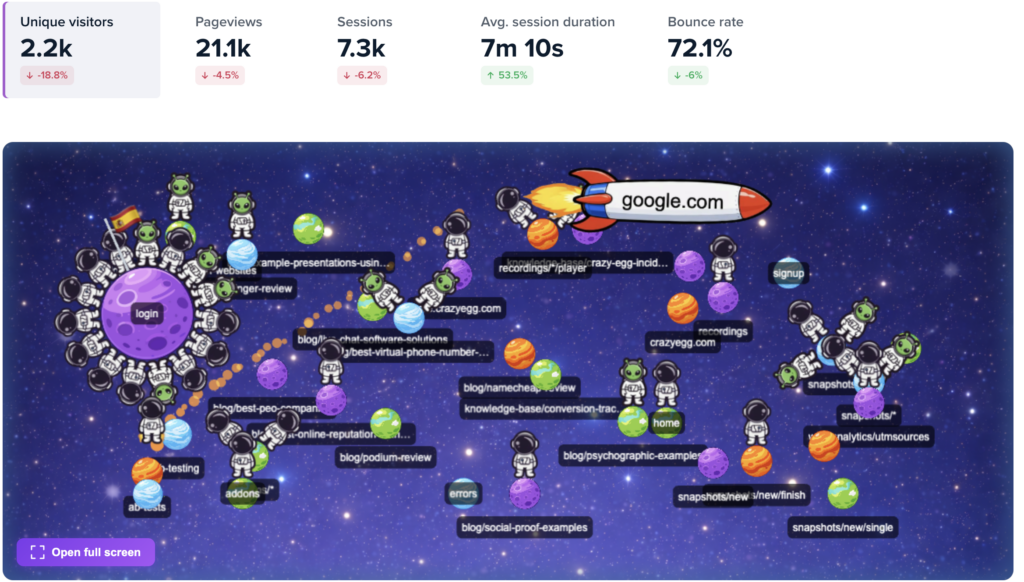
As the SaaS industry moves toward "Agentic" workflows, both platforms have integrated artificial intelligence to reduce the manual labor of data analysis. Crazy Egg has focused on "Top Insights," an AI feature that scans thousands of data points across recordings and heatmaps to deliver plain-English recommendations to the user. Its "Tasks" feature, currently in early access, represents a move toward automated optimization, where the AI configures reports and drafts page changes based on a specific goal, such as reducing bounce rates.
Optimizely has taken a more infrastructure-heavy approach with Opal, an AI-powered agent orchestration platform. Opal is designed to sit atop the entire Optimizely suite, allowing users to chain complex workflows. For example, a user could schedule an agent to conduct an "Experiment Program Health Review," which would analyze test velocity and win rates across the organization. However, this power comes with a different cost structure; Opal operates on a credit-based system, with deep-dive reports often consuming the majority of a monthly free allowance.
Financial Analysis and Total Cost of Ownership (TCO)
The financial implications of choosing one platform over the other are stark, reflecting their different market targets. Data from Vendr, a SaaS procurement platform, indicates that Optimizely experimentation contracts for mid-market companies typically range from $50,000 to $80,000 per year, with enterprise deployments often exceeding $200,000. These contracts usually involve two-to-three-year commitments and include significant implementation costs for professional services.
Crazy Egg maintains a transparent, self-serve pricing model. Its top-tier Enterprise plan is priced at $599 per month (billed annually), which totals roughly $7,188 per year. For this price, the user receives the full suite of optimization tools.
Implementation and Data Residency
For many organizations, the "hidden" cost of optimization is implementation. Crazy Egg utilizes a single tracking script that can be deployed via a tag manager, with data typically flowing within hours. Optimizely’s enterprise suite, particularly when integrating its CMS or warehouse-native analytics, can require months of engineering resources.
However, Optimizely offers superior options for data residency and compliance. It carries a wide range of certifications, including ISO 27001, SOC 2 Type 2, and PCI DSS. For European organizations with strict GDPR requirements, Optimizely allows for specific EU data residency, a feature that is often a "must-have" for government, healthcare, and financial sectors.
Industry Impact and Strategic Implications
The choice between Crazy Egg and Optimizely often reflects an organization’s maturity and its broader data strategy.
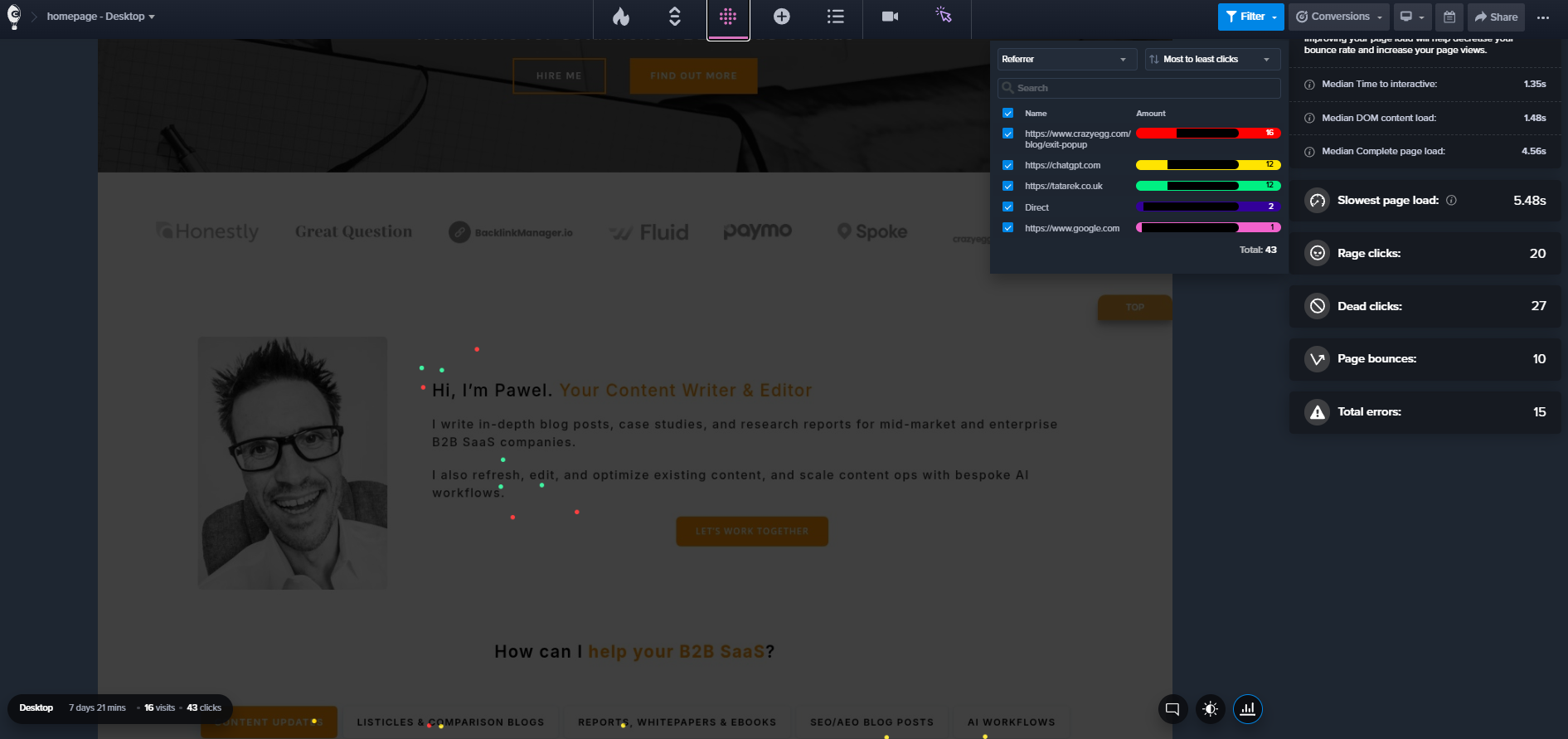
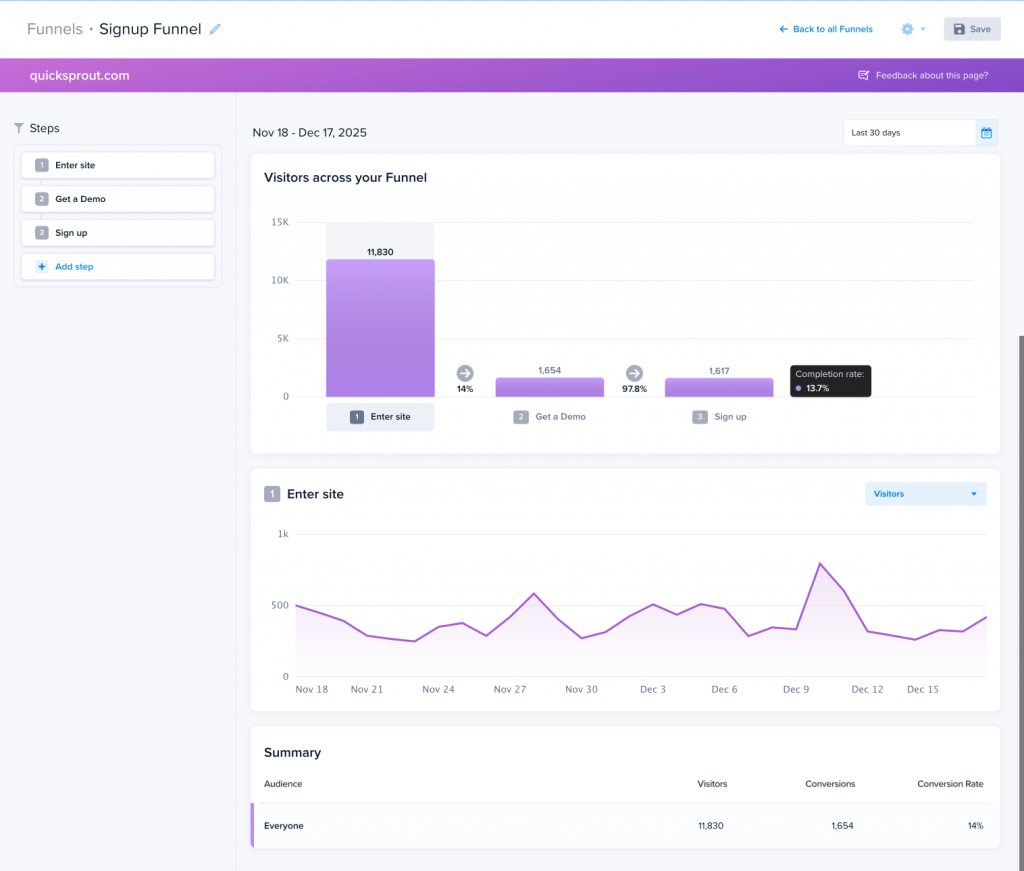
- The Case for Consolidation: For marketing teams and growth hackers who need to move fast, Crazy Egg offers a "single pane of glass." By housing surveys, heatmaps, and testing in one place, teams can identify a problem (via heatmaps), ask for user feedback (via surveys), and test a solution (via A/B testing) without switching tabs or exporting CSV files.
- The Case for Ecosystem Integration: For large-scale digital enterprises, Optimizely acts as a foundational layer. If a company is already using Optimizely’s Content Management System (CMS) or its B2B Commerce tools, adding the experimentation layer creates a unified profile of the customer. Furthermore, Optimizely’s warehouse-native analytics allows data scientists to query experiment results directly within their own Snowflake or BigQuery environments, facilitating advanced multi-touch attribution.
Official Perspectives and Market Sentiment
Market analysts suggest that the "SaaS sprawl" of the last five years is leading many companies back toward consolidation. "Organizations are increasingly wary of paying for five different tools to manage one website," notes one industry report on MarTech trends. This sentiment favors the Crazy Egg model for companies looking to maximize ROI on a limited budget.
Conversely, Gartner and Forrester continue to rank Optimizely as a leader in the Digital Experience Platform space, noting its "visionary" approach to AI and its ability to handle complex, high-traffic environments. For a Fortune 500 company, the $100,000+ price tag is often viewed as an insurance policy for statistical accuracy and data security.
Final Summary of Market Positioning
Crazy Egg remains the dominant choice for organizations prioritizing speed, ease of use, and behavioral depth. Its ability to provide immediate visual feedback on user behavior makes it an essential tool for UX designers and conversion specialists who need to justify their decisions with qualitative data.
Optimizely is positioned as the high-performance engine for digital-first enterprises. Its focus on server-side testing, feature flags, and deep integration into the content and commerce stack makes it more than a marketing tool; it is a piece of core business infrastructure.
Ultimately, the decision rests on the "depth vs. breadth" requirement. If the goal is to understand and fix a website’s user experience today, Crazy Egg provides the most direct path. If the goal is to build a multi-year digital transformation strategy backed by warehouse-native data and server-side logic, Optimizely provides the necessary enterprise framework.