

"Target" is a key word in marketing. Perhaps our most important word. Who are you speaking to? There are a variety of ways to think of targeting in marketing: behavioral, psychographic, demographic, geographic. And while all of these are important, it’s also crucial to understand how to talk to people from different generations. In this Marketing to Generations series, we’ll be covering digital marketing to Gen Z (1995-2010), Millennials (1980-1994), Gen X (1960-1979), and Baby Boomers (1940-1959) so you can know if you’re reaching these groups in the right place and with the right message.
We’re starting off strong with the youngsters of the group: Gen Z.
Gen Z is a term that has become ubiquitous in discussions about consumer trends and the future of the workforce. Often characterized by their innate digital fluency, their exposure to global events, and their evolving values, this demographic cohort is undeniably influencing the marketplace. As the generation born roughly between 1995 and 2010, they are the first to have grown up entirely in the digital age, a formative experience that has profoundly shaped their perspectives and behaviors. This series aims to provide a comprehensive understanding of how to effectively engage with this pivotal generation through digital marketing strategies.
The Gen Z Mindset: A Product of the Digital Age and Global Turmoil
Gen Zers are the first true digital natives. Their formative years were marked by constant connectivity, early access to smartphones, computers, and the internet. This unprecedented immersion in the digital realm has endowed them with a unique set of cognitive and social traits. Unlike previous generations who adapted to technology, Gen Z has always known a world where information is instantly accessible and communication is predominantly screen-mediated.
Beyond their technological upbringing, Gen Z’s worldview has been significantly shaped by a series of significant global events. They are the first generation to have no memory of a world before the September 11th attacks, an event that instilled a sense of global interconnectedness and, for some, a heightened awareness of security and societal fragility. Furthermore, many Gen Zers witnessed their parents navigate the economic fallout of the Great Recession (2007-2009), a period of significant financial instability that likely fostered a pragmatic and security-conscious approach to personal finance and career planning. More recently, as they have entered adolescence, college, and the workforce, they have faced the profound disruptions of the COVID-19 pandemic. This ongoing global health crisis has further underscored the importance of resilience, adaptability, and a nuanced understanding of public health and societal well-being.
These collective experiences have contributed to a generation that is often described as realistic, open-minded, and pragmatic. Their digital mastery translates into a mobile-first orientation and a keen ability to process information rapidly. They are also recognized as highly ethical consumers, increasingly factoring social and environmental responsibility into their purchasing decisions. However, this also means they possess a shorter attention span for content that doesn’t immediately capture their interest and are particularly adept at filtering out or rejecting what they perceive as intrusive or inauthentic advertising. A notable characteristic of Gen Z is their high valuation of uniqueness and individuality, a trait that brands must acknowledge and cater to in their marketing efforts.
This inherent skepticism towards traditional marketing stems from their constant exposure to advertising across all their favorite platforms. To truly capture their attention, brands need to move beyond overt promotional tactics and embrace strategies that are authentic, engaging, and offer genuine value. Their demand for uniqueness means that generic messaging will likely fall flat, necessitating a more personalized and creative approach.
Gen Z Consumption Habits: A Data-Driven Perspective

Understanding the consumption patterns of Gen Z is crucial for effective marketing. A comprehensive study by McKinsey & Company, titled "True Gen: Generation Z and its implications for companies," shed light on several key aspects of their purchasing behavior. While the specific bullet points from the original content are not provided here, the broader implications of such research point to several critical trends.
Gen Z’s purchasing decisions are often influenced by a combination of factors that reflect their values and digital upbringing. Research consistently indicates a strong preference for brands that align with their ethical considerations, including sustainability, fair labor practices, and social justice initiatives. They are not afraid to research a brand’s stance on these issues and will often boycott companies that do not meet their expectations.
Furthermore, their digital fluency means that online research and peer reviews play a significant role in their decision-making process. They are more likely to trust recommendations from influencers, friends, and online communities than traditional advertising. This has led to a rise in influencer marketing and the importance of user-generated content.
The McKinsey study, and similar analyses, also highlight Gen Z’s preference for experiences over material possessions, a trend that has gained momentum in recent years. They are also known for their value-consciousness, often seeking out deals and promotions, but not at the expense of quality or ethical considerations. The rise of the "circular economy" and the secondhand market is also a testament to their pragmatic approach to consumption and their awareness of environmental impact.
Marketing to Gen Z: Navigating the Digital Landscape
Applying this understanding of Gen Z’s mindset and consumption habits to digital marketing requires a strategic and nuanced approach. The key lies in meeting them where they are and speaking to them in a language they understand and trust.
Platforms to Reach Gen Z
The digital landscape inhabited by Gen Z is dynamic and multifaceted. While they are present on a wide array of platforms, certain channels have emerged as particularly influential. Understanding the demographic makeup and user behavior on these platforms is paramount for effective outreach.
Social media platforms are undoubtedly central to Gen Z’s digital lives. TikTok has become a dominant force, known for its short-form video content, creative trends, and algorithmically driven discovery. Its popularity among Gen Z is undeniable, making it a prime platform for brands to engage with this demographic through entertaining and authentic content. Instagram continues to be relevant, particularly for visual storytelling, influencer collaborations, and its Stories feature, which allows for more ephemeral and relatable content. YouTube remains a go-to for longer-form video content, educational material, and entertainment, with Gen Z utilizing it for everything from music to product reviews.
Beyond these major players, platforms like Snapchat, with its focus on ephemeral messaging and augmented reality filters, also hold appeal. Discord servers, initially popular for gaming communities, have expanded to encompass diverse interests and have become hubs for niche communities where Gen Z congregates and discusses brands. Twitch, the live-streaming platform, is also gaining traction for its interactive content and community-driven engagement.

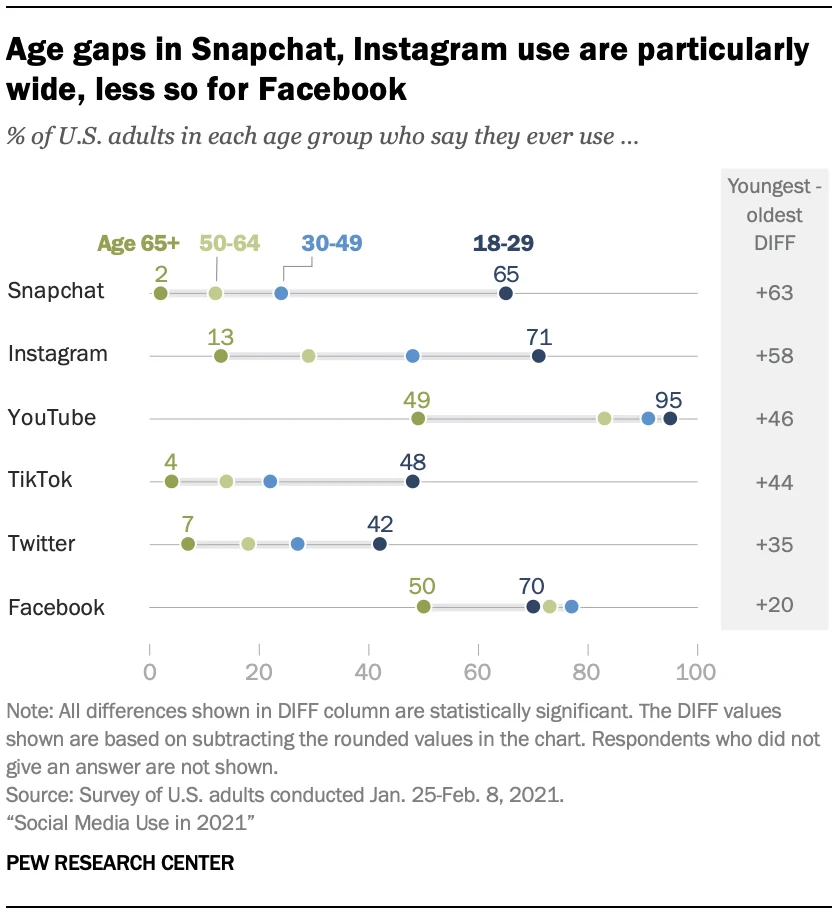
The image provided illustrates the age distribution across various social media platforms, reinforcing the notion that different platforms cater to different generational segments. While this article focuses on Gen Z, understanding these broader platform demographics is essential for a holistic digital marketing strategy that might also aim to reach other generations. For instance, platforms like Facebook, while still used by Gen Z, often have a more significant concentration of older demographics. Conversely, newer and more niche platforms might be heavily dominated by younger users. The key takeaway is that a multi-platform approach, tailored to the specific audience and content format of each platform, is essential for comprehensive Gen Z outreach.
Messaging That Speaks to Gen Z
Crafting messages that resonate with Gen Z requires an understanding of their values, their skepticism, and their appreciation for authenticity. Generic, overly polished, or overtly sales-driven messaging is likely to be ignored or met with resistance. Instead, brands should focus on creating content that is relatable, informative, entertaining, and ethically aligned.
Here are some types of messaging that are likely to appeal to Gen Z:
- Authentic and Transparent Content: Gen Z values genuine interactions. This means showcasing behind-the-scenes glimpses of a brand, highlighting real employees, and being honest about a brand’s mission and values. Avoid overly curated or inauthentic portrayals.
- Value-Driven Messaging: Brands that demonstrate a commitment to social and environmental causes will resonate deeply with Gen Z. This could involve highlighting sustainable practices, ethical sourcing, or charitable partnerships. Messaging that emphasizes a brand’s positive impact on the world is crucial.
- Entertaining and Engaging Content: Gen Z is a generation that consumes a vast amount of content, much of it designed for entertainment. Brands should strive to create content that is not only informative but also enjoyable to watch, read, or interact with. This could include humorous videos, interactive polls, or creative challenges.
- User-Generated Content and Community Focus: Empowering Gen Z to create and share their own content related to a brand can be incredibly effective. Encouraging user-generated content fosters a sense of community and provides authentic social proof.
- Short-Form, Mobile-Optimized Content: Given their mobile-first nature and shorter attention spans, content that is concise, visually appealing, and easily digestible on a smartphone is essential. This includes short videos, impactful graphics, and concise captions.
- Humor and Relatability: Gen Z often appreciates a good sense of humor and content that reflects their everyday experiences and challenges. Brands that can inject personality and wit into their messaging, while remaining appropriate, can forge stronger connections.
- Interactive Content: Gen Z is accustomed to interacting with content. This can be achieved through polls, quizzes, Q&A sessions, live streams, and augmented reality filters. Encouraging participation fosters engagement and makes the brand feel more accessible.
- Educational and Informative Content: While entertainment is important, Gen Z also values learning. Brands that provide useful information, tutorials, or insights related to their products or industry can establish themselves as trusted resources.
It is important to acknowledge that segmenting an entire generation into a few bullet points is a simplification. Individual preferences, cultural backgrounds, and specific interests within Gen Z are incredibly diverse. The effectiveness of any marketing strategy will also vary significantly depending on the industry, the specific product or service being offered, and the unique audience a brand is trying to attract.
For instance, a luxury fashion brand will need to adopt a different tone and visual aesthetic than a sustainable snack food company. Similarly, a tech startup targeting early adopters will have different communication needs than a brand focused on broader consumer appeal. Therefore, while the principles outlined above provide a strong foundation, ongoing research, data analysis, and A/B testing are crucial to fine-tune messaging and identify what truly resonates with a particular segment of Gen Z.
The broader implication of these evolving consumer preferences is a paradigm shift in marketing. Brands can no longer afford to rely on traditional, top-down communication methods. Instead, they must embrace a more collaborative, transparent, and value-driven approach. The success of marketing to Gen Z hinges on building genuine relationships, fostering community, and demonstrating a clear commitment to principles that matter to them.
In conclusion, understanding Gen Z requires a deep dive into their unique upbringing, their experiences of significant global events, and their evolving consumption habits. By embracing authentic messaging, prioritizing ethical considerations, and leveraging the right digital platforms, brands can effectively connect with this influential generation and build lasting relationships in an ever-changing marketplace. For those seeking to develop more sophisticated digital marketing solutions tailored to reach and convert their Gen Z audience, engaging with experienced marketing professionals can provide the strategic guidance and tactical execution needed for success.
Continue Reading
The exploration of generational marketing is a continuous process, with each cohort presenting unique challenges and opportunities for brands. As Gen Z continues to mature and gain purchasing power, their influence on the market will only grow. Future installments of this series will delve into the specific digital marketing strategies for Millennials, Gen X, and Baby Boomers, offering a comprehensive guide to reaching diverse consumer segments in the digital age. Each generation possesses distinct characteristics, communication preferences, and media consumption habits that necessitate tailored approaches. By understanding these nuances, marketers can develop more effective campaigns that resonate with their target audiences, driving engagement, loyalty, and ultimately, business growth. The ongoing evolution of digital platforms and consumer behavior demands a commitment to continuous learning and adaptation for any brand seeking to thrive in today’s competitive landscape.









