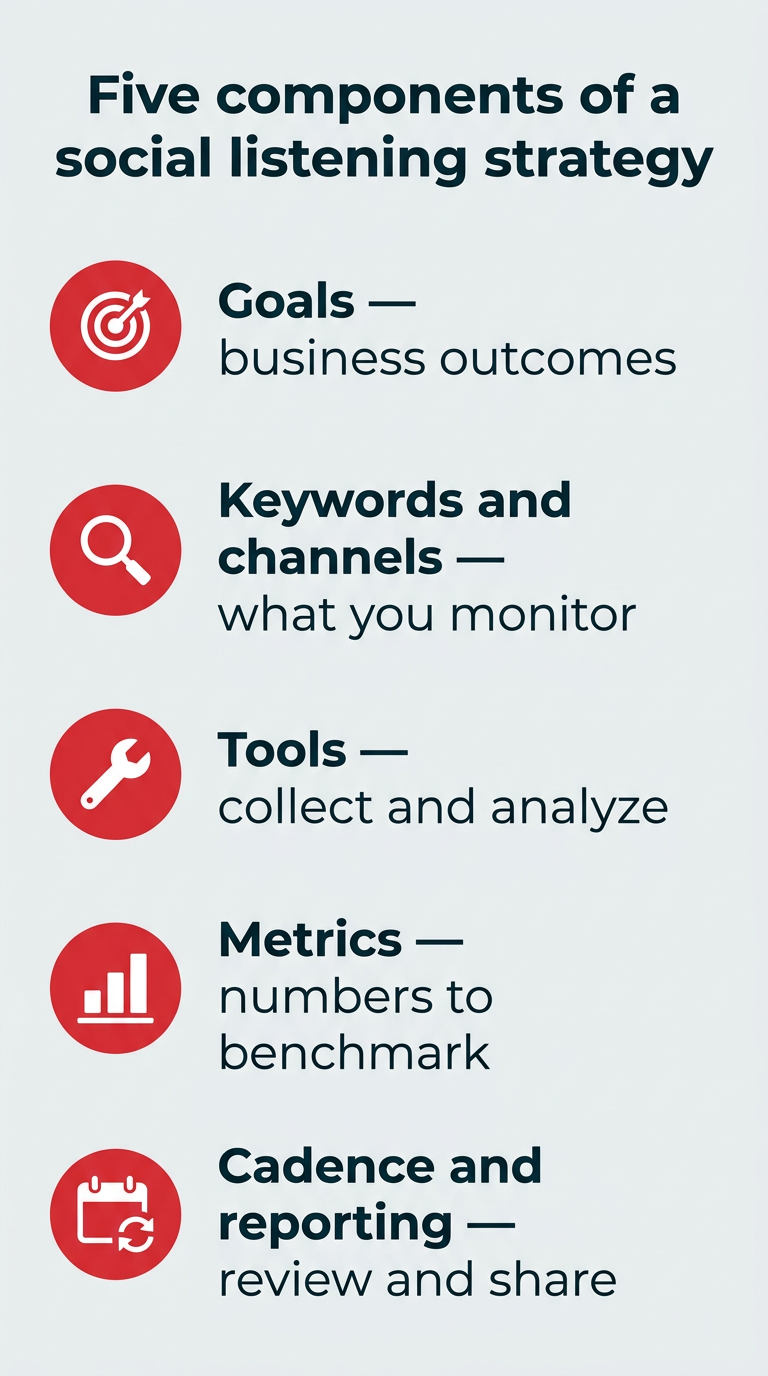
A social listening strategy represents a structured plan for harnessing the vast ocean of social media data to derive actionable intelligence that propels business success. It meticulously outlines the specific conversations to track, the rationale behind these tracking efforts, the frequency of data review, and the key stakeholders who will receive and act upon the resulting insights. Unlike ad-hoc monitoring, which reacts to immediate mentions, a well-defined social listening strategy is proactive, establishing in advance the critical questions that demand answers and building repeatable processes to obtain them. This strategic approach ensures that data collection is purpose-driven, transforming raw social chatter into informed decisions and tangible business impact.
The Evolution of Digital Intelligence: From Monitoring to Strategic Listening
The digital landscape has undergone a profound transformation over the past two decades, evolving from simple communication platforms into complex ecosystems teeming with consumer opinion, market trends, and competitive intelligence. In this dynamic environment, the ability to understand and respond to public sentiment has become paramount. Initially, businesses engaged in "social monitoring," a reactive process focused on tracking individual mentions, comments, and direct messages, primarily for customer service and immediate reputation management. This involved identifying direct tags or mentions of a brand to facilitate rapid responses.

However, as social media proliferated and data volumes exploded, a more sophisticated approach became necessary. Social listening emerged as the analytical evolution of monitoring, moving beyond individual interactions to identify patterns, themes, and overarching sentiment across a multitude of conversations. With platforms projected to reach an estimated 5.75 billion users by 2026, the sheer volume of unstructured data presents both a formidable challenge and an unparalleled opportunity for businesses to gain deep market insights. Industry analysts frequently emphasize that companies failing to integrate robust social listening into their strategic planning risk falling behind in market responsiveness and customer engagement.
Differentiating Social Listening from Social Monitoring
While often conflated, social listening and social monitoring serve distinct, albeit complementary, functions within a comprehensive digital strategy. Understanding their differences is crucial for effective implementation:
- Focus: Social monitoring typically concentrates on individual mentions, comments, and direct messages, aiming for immediate engagement. Social listening, conversely, focuses on analyzing patterns, broader themes, and sentiment trends across numerous conversations.
- Scope: Monitoring primarily tracks a brand’s own mentions and direct tags. Listening extends this scope to include competitor analysis, industry-wide discussions, and untagged conversations relevant to products, services, or market segments.
- Timeframe: Monitoring operates in real-time, addressing day-to-day interactions. Listening examines trends over longer periods—weeks, months, or quarters—to identify sustained shifts and emerging developments.
- Output: The direct output of monitoring is often a reply, a resolved customer ticket, or an internal escalation. Social listening’s output is strategic insights, actionable recommendations, and potential shifts in business strategy.
- Typical Ownership: Community managers and customer care teams usually own social monitoring. Social listening insights inform a wider array of departments, including social media, market research, product development, and executive leadership.
Most successful organizations integrate both practices. Monitoring ensures swift customer responses, while listening provides the macro-level understanding of what those responses, and indeed the entire market conversation, signify. A well-designed strategy treats monitoring as a vital input into the broader, more analytical listening program.

The Strategic Imperative: Why Social Listening Matters More Than Ever
In an era defined by rapid information flow and heightened consumer expectations, a strategic social listening framework is not merely advantageous; it is a fundamental requirement for sustained competitive advantage. It ensures that efforts are focused, actionable, and demonstrably tied to genuine business impact.
- Focused Intelligence Gathering: Without a clear strategy, the sheer volume of social data can be overwhelming, leading to "data soup" rather than actionable insights. A strategy directs resources towards tracking conversations that directly align with specific business objectives, preventing information overload and ensuring that teams focus on signals that truly matter.
- Transforming Data into Direction: Social listening provides a clear conduit from raw data to strategic action. It translates observed trends and sentiments into concrete next steps. For instance, a consistent decline in positive sentiment regarding a product feature over several weeks can trigger an immediate review by the product development team, rather than remaining an unnoticed data point in a dashboard.
- Shifting from Reactive to Proactive Posture: Unstrategic listening often equates to crisis management—responding only after issues have escalated. A robust strategy enables organizations to identify nascent trends, detect subtle shifts in brand sentiment, and recognize early warning signs of potential public relations challenges or market disruptions before they fully materialize. This proactive stance allows for timely intervention and strategic adaptation.
- Demonstrating Tangible Business Impact: Crucially, a social listening strategy links data collection to measurable business outcomes. It clarifies how insights contribute to improving customer experience, safeguarding brand reputation, informing product innovation, optimizing marketing campaigns, and ultimately, driving revenue. This direct connection is vital for securing internal buy-in and justifying investment in social intelligence tools, especially when demonstrating ROI to executive leadership. Studies indicate that companies effectively leveraging social listening can see up to a 20% improvement in customer satisfaction and a significant reduction in crisis response times.
Core Methodologies: The Analytical Engine of Social Listening
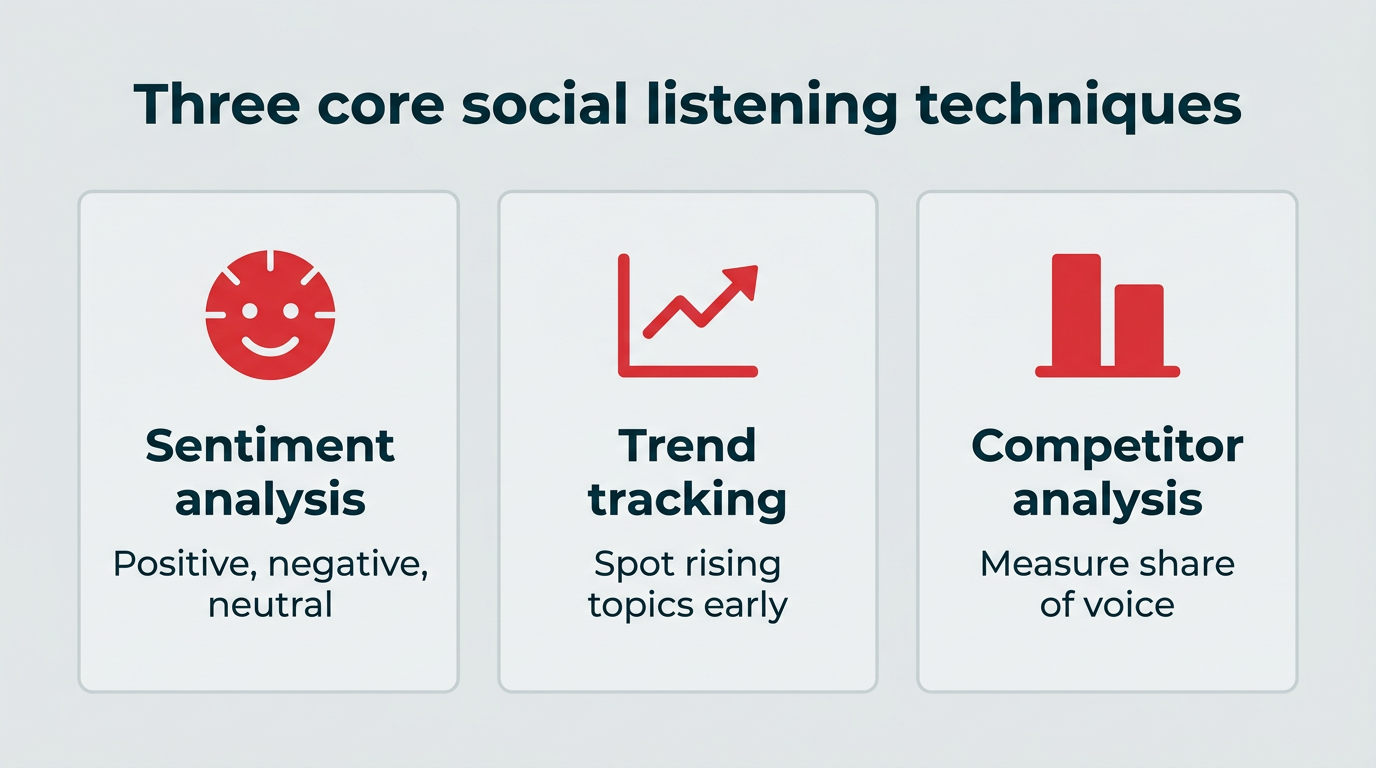
Effective social listening relies on several core analytical techniques that transform qualitative social data into quantitative insights. The global market for social media analytics tools, which underpins social listening, is projected to exceed $17 billion by 2028, underscoring its growing importance and technological sophistication.
- Sentiment Analysis: This technique involves classifying social media conversations as positive, negative, or neutral to gauge public opinion and emotional tone. Modern tools utilize advanced Natural Language Processing (NLP) and machine learning algorithms to interpret nuance, sarcasm, and context across vast volumes of text. For strategic purposes, the emphasis lies on identifying sentiment trends over time. A stable sentiment score indicates healthy brand perception, while a sudden drop signals a potential issue requiring investigation. Pairing sentiment with conversation volume provides even richer context: a spike in mentions coupled with falling sentiment often indicates a problem, whereas a spike with rising sentiment usually signifies a successful campaign or positive event.
- Trend Tracking: Trend tracking focuses on identifying topics, hashtags, and phrases that are gaining momentum within a specific industry or demographic. The objective is to spot these emerging interests before they reach their peak, offering a critical advantage for proactive planning. Content teams leverage trend data to inform content calendars and create timely, relevant material. Product development teams use it to identify unmet needs or emerging demands for new features, product formats, or even specific ingredients. The challenge lies in distinguishing fleeting fads from sustained, impactful shifts, necessitating a consistent review cadence.
- Competitor Analysis: Applying social listening methodologies to rival brands provides invaluable competitive intelligence. This involves tracking competitor mentions, analyzing their sentiment, assessing reactions to their campaigns, and measuring their share of voice relative to your own. By understanding what customers praise or criticize about competitors, businesses can identify market gaps, refine their value propositions, and anticipate competitive moves. Share of voice, in particular, offers a straightforward benchmark that resonates with executive leadership, indicating market presence and brand salience.
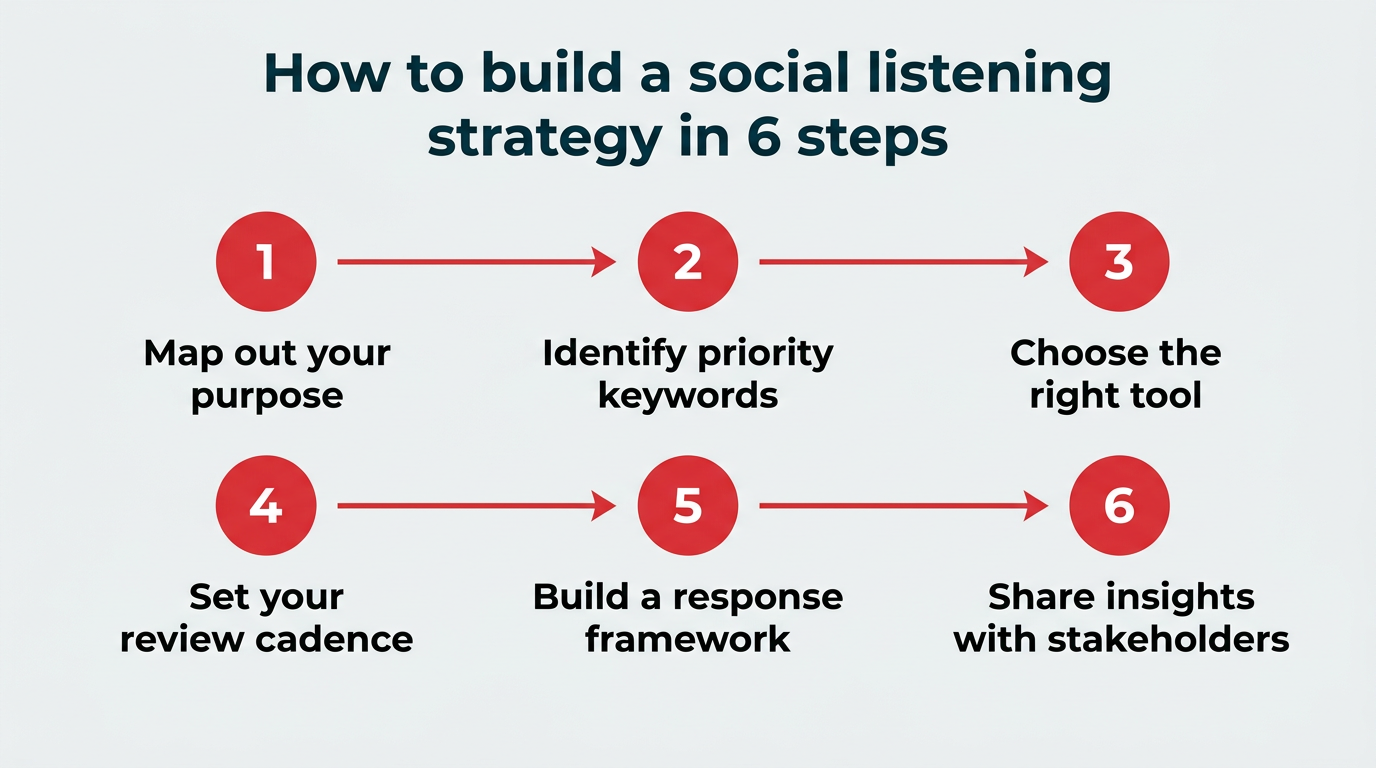
Crafting a Comprehensive Social Listening Framework: A Six-Step Guide for Organizations
Building an effective social listening strategy requires a methodical approach, ensuring alignment with overarching business objectives and a clear path from insight to action.
1. Defining Strategic Objectives:
The foundational step involves clearly articulating the purpose of social listening, aligning it directly with organizational strategic goals and Key Performance Indicators (KPIs). This transcends mere social media team objectives to encompass broader departmental needs, such as enhancing customer support, guiding product innovation, managing corporate reputation, or gaining competitive intelligence. For instance, a goal might be "to reduce customer churn by identifying and addressing common pain points discussed online" or "to inform new product features based on emerging consumer desires." Establishing these specific KPIs ensures that listening efforts are measurable and contribute meaningfully to the business.
2. Identifying Priority Keywords, Topics, and Digital Ecosystems:
Once goals are established, the next step is to define the precise data points to monitor. This includes a comprehensive list of keywords, key phrases, product names, executive names, campaign hashtags, and even common misspellings of brand terms. For competitive intelligence, the same robust list must be compiled for top rivals. Beyond keywords, it’s crucial to identify the relevant digital ecosystems—which social media platforms (e.g., X, Instagram, Facebook, LinkedIn, TikTok), forums, review sites, or news outlets are most likely to host pertinent conversations. Prioritizing channels ensures efficient resource allocation and maximum data relevance.
3. Selecting Advanced Social Listening Platforms:
Given the immense volume and complexity of social data, a sophisticated social listening tool is indispensable. When evaluating platforms, organizations should look for capabilities such as:
- Broad Data Coverage: Ability to ingest data from a wide range of social networks, blogs, forums, and news sites.
- Advanced AI/NLP: Robust sentiment analysis, topic clustering, and language processing to accurately interpret tone and context across multiple languages.
- Real-time Capabilities: Instant alerts for spikes in mentions or sentiment shifts.
- Integration: Compatibility with existing CRM, BI, or marketing automation systems.
- Customizable Reporting: Flexible dashboards and report generation to meet diverse stakeholder needs.
- Historical Data Access: Ability to analyze past trends for comparative insights.
These features enable efficient data collection, filtering, and analysis, preventing the overwhelming "data soup" scenario.
4. Establishing Review Cadence and Alert Systems:
The frequency of data review must be tailored to the strategic goals. High-priority objectives, such as real-time crisis management or customer service inquiries, necessitate daily (or even continuous) monitoring. For longer-term strategic decisions, such as trend analysis for product development, weekly or monthly reviews may suffice. Crucially, automated alert systems within the listening tool can notify relevant teams of significant anomalies—sudden spikes in negative sentiment, increased competitor activity, or emerging viral trends—ensuring that urgent issues are addressed promptly, irrespective of the scheduled review cadence.
5. Developing an Actionable Response Framework:
Identifying insights is only half the battle; acting upon them is where true value is generated. A structured response framework categorizes insights and prescribes appropriate actions. A common approach involves a multi-tiered system:
- Tier 1 (Immediate Action): Insights requiring a rapid response (e.g., customer complaints, critical negative mentions, emerging crises). These often involve direct engagement by community managers or customer service.
- Tier 2 (Internal Discussion/Escalation): Insights that warrant internal investigation or cross-departmental discussion (e.g., recurring product feedback, shifts in competitor strategy, potential marketing opportunities). These might be routed to product, marketing, or PR teams.
- Tier 3 (Long-Term Strategic Input): Broader trends or sentiment shifts that inform long-term strategy, product roadmaps, or brand positioning. These insights are typically presented to executive leadership for strategic planning.
Clear workflows for approval and execution are essential, particularly for larger organizations, to ensure fast yet compliant responses.
6. Disseminating Strategic Insights to Stakeholders:
The impact of social listening is maximized when insights are effectively communicated to all relevant stakeholders across the organization. This requires tailoring the format and depth of reports to suit different audiences. Executive summaries for leadership might highlight key trends and strategic recommendations, while detailed dashboards could serve product or marketing teams. A good social listening platform facilitates this by generating clear, visually engaging reports. Leveraging AI, as seen in advanced platforms, can further enhance this step by automatically summarizing findings and surfacing the most critical themes, ensuring that reports lead with actionable intelligence rather than raw numbers. This cross-functional reporting is vital for bridging the perceived gap in understanding social media’s value within many organizations.
Real-World Applications: Case Studies in Strategic Social Listening
Real-world examples powerfully illustrate how strategic social listening translates into tangible business outcomes across diverse industries.
1. Yves Rocher: Innovating Product Development Through Consumer Insight
The French beauty brand Yves Rocher, known for its natural cosmetics, faces the dual challenge of maintaining product quality and competitive pricing while staying at the forefront of natural beauty trends. Their social listening strategy was designed with three core objectives: understanding consumer perception of ingredients, identifying opportunities for eco-friendly packaging, and adapting to evolving beauty narratives. By diligently monitoring online discussions, Yves Rocher gained insights into changing consumer expectations around specific ingredients, allowing them to proactively adjust formulations or develop new product lines. For example, they identified a significant shift in consumer sentiment from using cosmetics to "hide flaws" to viewing beauty products as a component of self-care and self-expression. This crucial insight directly informed a revamp of their social media strategy, emphasizing inclusivity and individuality, and influencing future product development cycles.

2. Zoo Zurich: Enhancing Visitor Experience and Reputation Management
As a major non-profit tourist attraction, Zoo Zurich discovered that a significant portion of online conversations about their institution occurred without direct tags or hashtags. This presented a challenge for reputation management and visitor engagement. Their social listening strategy was specifically crafted to uncover these untagged mentions, gather visitor feedback, and identify missed opportunities for interaction. By implementing a tool that provided daily reports of all relevant mentions, regardless of tagging, Zoo Zurich gained a comprehensive view of public sentiment. This allowed them to proactively address concerns, respond to positive feedback, and even leverage user-generated content (UGC) through campaigns like #FollowerFotoDerWoche, turning visitor photos into inspiration for official social media posts and features. This approach not only enhanced visitor experience but also strengthened donor relations, crucial for a non-profit organization.
3. Dubai TV Channels Network: Data-Driven Content Strategy
For content-centric organizations like Dubai TV Channels Network, social listening offers a powerful mechanism to optimize content production. Their strategy focused on two main goals: understanding audience reactions to current programming and identifying popular themes for future content development. By monitoring social media platforms in multiple languages, the network gathered rich data on viewer sentiment regarding plotlines, characters, and overall show reception. Weekly automated reports detailing positive and negative sentiment changes after each episode were sent to relevant stakeholders, with monthly summaries provided to departments requiring less real-time data. This deep, actionable insight allowed the organization to shift its strategy, prioritizing audience feedback to optimize future seasons and ensure content resonated more deeply with its diverse viewership, a critical factor in a competitive media landscape.
The Future of Social Intelligence: Broader Implications and Outlook
In conclusion, social listening has transcended its origins as a niche marketing tool to become a fundamental pillar of business intelligence. It provides an unparalleled window into consumer psyche, market dynamics, and competitive landscapes. As artificial intelligence and machine learning continue to advance, the capabilities of social listening platforms will only grow, offering even deeper, more nuanced insights. Ethical considerations and data privacy will remain paramount, requiring robust governance frameworks alongside technological innovation. Ultimately, for organizations navigating the complexities of the modern digital age, a well-executed social listening strategy is no longer optional; it is a strategic imperative for informed decision-making, sustained growth, and resilient brand management.