rifanmuazin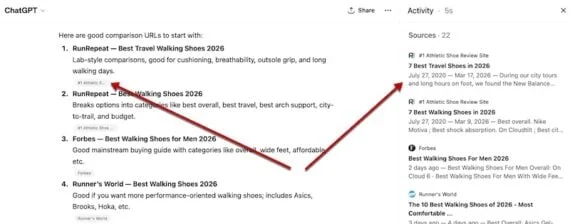
Generative AI platforms such as ChatGPT, Claude, and Gemini are increasingly incorporating source links within their responses, a feature known as citations. These citations can appear inline within an answer or in a dedicated panel, often positioned to the right of the generated text. While the exact algorithms governing these citations remain largely undisclosed by the AI developers, understanding their mechanics is becoming crucial for businesses and content creators aiming to optimize their online presence in this evolving digital landscape. This development signals a new frontier in digital visibility, where not only traditional search engine rankings but also AI-driven information retrieval processes will play a significant role.
The emergence of these citations is not merely a technical detail; it represents a fundamental shift in how information is consumed and attributed. As AI models become more sophisticated and integrated into everyday search and information-gathering habits, the ability to be cited by these platforms can translate into substantial traffic and brand recognition. The current opacity surrounding citation algorithms presents a challenge, but ongoing analysis and research are beginning to shed light on the underlying principles.
Understanding the Mechanics of AI Citations
The precise methodologies employed by generative AI platforms to select and present citations are complex and proprietary. However, industry observers and researchers have identified several key patterns and influencing factors. At a high level, the process involves the AI model accessing and processing vast amounts of information from the internet to formulate its responses. The citations serve as a verification mechanism, directing users to the original sources of the information presented.
One of the primary drivers for citation appears to be the underlying search engine technology that powers these AI models. Analysis suggests that platforms like ChatGPT and Gemini leverage Google’s search index, while Claude and Perplexity utilize Brave Search. This dependency means that traditional Search Engine Optimization (SEO) practices, aimed at improving a website’s ranking on Google and Brave, are likely to have a direct impact on the likelihood of being cited by these AI tools. In essence, content that ranks highly in conventional search results is more likely to be identified and referenced by AI models.
However, the relationship is not solely transactional. Some platforms, notably ChatGPT, have been observed to cite their publication partners irrespective of their external search engine rankings. This indicates that direct partnerships and content agreements can also play a role in the citation process, creating a hybrid model where both organic visibility and strategic alliances influence AI attribution.
Categorizing AI Citations: A Deeper Dive
Recent research and analysis have begun to categorize the different types of citations generated by AI platforms, providing a more nuanced understanding of their function and implications. These categories, derived from patents, independent studies, and empirical observation, offer valuable insights into how AI models interact with online content.
Grounded Citations: The Foundation of AI Answers
Grounded citations are those that directly influence the AI’s generated answer. In this process, the AI platforms actively perform searches, crawl the content of indexed web pages, and then quote or reference these sources within their responses. This mechanism ensures that the information provided is directly attributable to specific external content, enhancing transparency and allowing users to explore the origins of the AI’s knowledge. This is akin to a researcher meticulously documenting their sources to support their findings.
The reliability and authority of the cited sources are paramount in this context. AI models are likely trained to prioritize credible and authoritative websites, making strong domain authority and high-quality content essential for achieving grounded citations.
Ungrounded Citations: Reinforcing Existing Knowledge
Ungrounded citations serve a different, yet equally important, purpose. They are used to support and confirm the AI’s existing training data rather than directly influencing the content of the answer itself. These can be thought of as "reverse" citations, where the AI references external sources to validate information it already possesses from its training datasets. The presumed objective is to bolster accuracy and objectivity by cross-referencing information with known, reliable companies and publications.
The frequency of ungrounded citations is a subject of ongoing investigation. A notable analysis by Oumi, an AI development firm, referenced in a New York Times article, suggested that "more than half" of the citations appearing in Google’s AI Overviews (powered by Gemini) are ungrounded. This finding highlights the extent to which AI models may rely on their internal knowledge bases, using external links primarily for corroboration rather than as primary sources for new information. The implication is that even if a piece of content is not directly quoted, its presence in the training data or its general alignment with AI-generated statements can lead to an ungrounded citation.
Ghost Citations: The Missing Link
Ghost citations represent a peculiar phenomenon where links appear within AI-generated answers without a clear corresponding source name or explanation for its inclusion. This often occurs when the source content does not explicitly articulate how its product or service addresses the user’s query. According to a study by search optimizer Kevin Indig, a significant 61.7% of AI answers contain ghost citations.
This category points to a potential disconnect between how AI models interpret content and how content creators structure their information. For a citation to be effective, it needs to be easily traceable and demonstrably relevant. Ghost citations, by their nature, fail to meet this standard, potentially leading to user frustration and a diminished impact for the cited source.
Invisible Citations: The Unattributed Influence
Perhaps the most concerning category for content creators is that of invisible citations. This occurs when generative AI utilizes a website’s information without explicitly mentioning or linking to it. A recent study by Ahrefs revealed that a substantial 50.2% of URLs retrieved by ChatGPT remain uncited. Furthermore, anecdotal evidence suggests that platforms like Reddit, while frequently influencing AI answers, are rarely cited directly.
This phenomenon raises critical questions about intellectual property, attribution, and fair use. When AI models derive significant value from content without proper acknowledgment, it can undermine the efforts of creators and publishers. The implications for content strategy are profound, as it suggests that simply producing high-quality content may not be enough to guarantee attribution, even if that content is instrumental in shaping AI responses.
The Evolution of Citation Algorithms: A Timeline of Observations
While a definitive timeline for the development and refinement of AI citation algorithms is not publicly available, the visible emergence and evolution of these features can be broadly observed over the past couple of years.
-
Early Generative AI (circa 2022-2023): Initial iterations of large language models often produced responses without explicit source attribution. Users relied on the AI’s stated confidence in its answers, with no direct means to verify the information’s origin. This period was characterized by a focus on generative capabilities rather than transparent sourcing.
-
Emergence of Basic Citations (late 2023 – early 2024): As AI models became more sophisticated and integrated with search functionalities, rudimentary forms of citation began to appear. These were often simple links appended to responses, sometimes in a less organized fashion. Platforms like Perplexity AI gained traction for their emphasis on providing sources from the outset.
-
Systematic Citation Integration (2024 onwards): Major AI developers, including OpenAI (ChatGPT), Google (Gemini/AI Overviews), and Anthropic (Claude), began to systematically integrate citation features into their user interfaces. This included the development of dedicated citation panels and inline badges, as depicted in the accompanying image of ChatGPT. The growing prevalence of these features suggests a strategic decision to enhance transparency and credibility.
-
Research and Analysis Intensify (mid-2024): Concurrent with the integration of citations, academic and industry researchers began publishing studies analyzing the patterns, types, and potential algorithms behind these attributions. Reports from Ahrefs, Kevin Indig, and discussions within communities like Reddit’s r/SEO_for_AI highlight a growing collective effort to decode the citation landscape.
-
Partnerships and Algorithmic Refinements (ongoing): The observation that ChatGPT cites publication partners irrespective of rankings, and the underlying reliance on Google and Brave Search, suggests ongoing refinements and strategic integrations within the citation algorithms. Future developments may involve more sophisticated natural language understanding to better identify and attribute specific pieces of information.
Strategic Implications for Online Visibility: The GEO Strategy
The advent of AI citations presents a new strategic imperative for businesses and content creators, often referred to as a "Generative AI Optimization" or GEO strategy. The goal is to increase a brand’s visibility within AI-generated content, much like traditional SEO aims to improve visibility in search engine results pages (SERPs).
"Influencing an answer is different from being cited in it," the original article notes. This distinction is crucial. While direct citation provides the strongest form of attribution, simply appearing in any AI-generated answer, especially if it involves your products or services, can still yield significant exposure. The ultimate priority, therefore, is to establish direct or indirect associations with the prompts that AI platforms use to generate their responses.
The fundamental building block of this strategy lies in training data. While AI platforms may perform real-time searches on engines like Google or Brave to supplement their responses, their initial knowledge base is derived from the vast datasets on which they were trained. Therefore, ensuring that a brand’s content is part of this foundational training data is paramount. This can be achieved through:
- High-Quality, Authoritative Content: Creating comprehensive, well-researched, and reliable content that is likely to be indexed and valued by search engines and, by extension, AI training datasets.
- Structured Data and Semantic Markup: Implementing schema markup and other structured data formats can help AI models understand the context and meaning of your content more effectively.
- Consistent Online Presence: Maintaining a strong and consistent presence across various online platforms, including reputable websites, academic publications, and well-regarded forums, can increase the likelihood of your content being ingested by AI training processes.
- Strategic Partnerships: As observed with ChatGPT’s practice of citing publication partners, forming alliances with platforms that are frequently referenced by AI can also be a viable strategy.
While the exact mechanisms remain elusive, the principle is clear: if your content is discoverable, understandable, and deemed valuable by the AI systems, you stand a greater chance of being recognized and cited. The challenge lies in navigating the opaque nature of these algorithms, but the potential rewards in terms of brand exposure and user engagement are substantial.
Reactions and Industry Perspectives
The evolving landscape of AI citations has elicited a range of reactions from different stakeholders within the digital ecosystem.
Content Creators and Publishers: Many are expressing a mix of concern and cautious optimism. The prospect of their meticulously crafted content being used by AI without explicit attribution is a significant worry, potentially devaluing their work and impacting revenue streams. However, the opportunity to gain visibility through AI citations is also being recognized as a new avenue for audience engagement. Industry bodies and individual creators are actively lobbying for greater transparency and fairer attribution models.
Search Engine Providers and AI Developers: Companies like Google and OpenAI are facing increasing scrutiny regarding their AI’s citation practices. While they emphasize the goal of providing users with more comprehensive and verifiable information, the opaque nature of their algorithms is a point of contention. Developers are likely balancing the need for algorithmic efficiency with the growing demand for transparency and accountability. Statements from these entities often highlight the ongoing development and refinement of their AI systems, suggesting that citation mechanisms are subject to continuous improvement.
SEO Professionals and Digital Marketers: This group is actively engaged in understanding and adapting to the new paradigm. The rise of AI citations necessitates a recalibration of traditional SEO strategies, with a growing emphasis on content quality, authority, and understanding how AI models process information. Discussions within SEO communities often revolve around reverse-engineering citation patterns and developing predictive models for AI attribution.
Academics and Researchers: The study of AI citations has become a significant area of research. Scholars are exploring the ethical implications, the impact on information dissemination, and the potential for bias within AI citation systems. Their work provides the empirical data and theoretical frameworks needed to understand this complex phenomenon.
The Broader Impact and Future Implications
The increasing reliance on AI for information retrieval and the subsequent focus on AI citations have profound implications for the future of the internet and information consumption.
- Shifting Landscape of Online Visibility: Traditional SEO will likely remain relevant, but its dominance may be challenged by the need to optimize for AI visibility. Brands that fail to adapt may find themselves marginalized in AI-generated search results.
- Redefining Content Value: The value of content may be increasingly measured not only by its direct engagement with human users but also by its utility and influence within AI systems. This could incentivize the creation of content that is both human-readable and machine-understandable.
- Ethical Considerations: The prevalence of ungrounded and invisible citations raises significant ethical questions about intellectual property, fair compensation for content creators, and the potential for AI to inadvertently or intentionally misattribute information. This may lead to increased regulatory oversight and industry self-regulation.
- Evolution of Search: The line between search engines and AI assistants will continue to blur. The experience of "searching" may transform into a more conversational and synthesized interaction with information, where citations play a critical role in guiding users through the AI’s knowledge base.
- Partnership Models: The observed trend of AI platforms citing their partners suggests that future digital strategies may involve more direct collaboration and data-sharing agreements between content providers and AI developers to ensure favorable citation practices.
In conclusion, the emergence of citations within generative AI platforms marks a pivotal moment in the digital age. While the precise workings of these citation algorithms remain a closely guarded secret, ongoing analysis and observation are providing crucial insights. For businesses and content creators, understanding and strategically adapting to this evolving landscape through a dedicated GEO strategy is no longer optional but essential for maintaining and enhancing online visibility in an AI-driven future. The pursuit of transparency, fair attribution, and a deeper understanding of how AI consumes and references information will be critical in navigating this new frontier.