The digital landscape is undergoing a rapid transformation, marked by the increasing integration of artificial intelligence into search engine mechanisms and content creation workflows. This profound shift was the central theme of the April 2026 SEO Update by Yoast, where SEO experts Carolyn Shelby and Alex Moss dissected the latest advancements in Agentic AI, Google’s evolving spam and core updates, and the critical re-evaluation of content strategy. The consensus from the update was clear: merely publishing more content is no longer a viable strategy for SEO success and, in many instances, actively hinders performance. Instead, the focus has unequivocally shifted towards quality, authority, and intelligent interaction with AI-driven search environments.
The Ascendance of Agentic AI in Search
A significant development highlighted in the April 2026 update is Google’s explicit move towards an "AI agent manager" paradigm, signaling a fundamental restructuring of how the web is accessed and interpreted. Google has introduced a new "Google-agent user agent," a technical indicator of more sophisticated, AI-driven crawling and interaction capabilities. This is not merely an incremental update; it suggests a future where autonomous AI agents, rather than just traditional web crawlers, actively engage with websites to fulfill user queries.
Simultaneously, industry initiatives like WebMCP (Web Machine Comprehension Protocol) are emerging, aiming to standardize how these AI agents interact with web content. This protocol seeks to provide a structured framework, akin to robots.txt but designed for AI, allowing website owners to define how AI agents can access, process, and utilize their data. The implications are far-reaching: websites will need to optimize not just for human readability and traditional search engine bots, but also for complex AI agents that can perform tasks, synthesize information, and even initiate actions based on user intent. This marks a departure from a purely informational web to a more interactive and functional one, managed by AI. Carolyn Shelby and Alex Moss underscored that this shift means webmasters must now consider "agent access" as a primary optimization vector, moving beyond human browsing patterns alone.
Google’s AI Expansion and Efficiency Drive
Google’s commitment to AI is further exemplified by its continuous efforts to enhance AI capabilities and efficiency. A notable technological breakthrough discussed was "TurboQuant," a novel approach to AI model compression. TurboQuant allows Google to significantly improve the efficiency of its AI models, making them faster, less resource-intensive, and capable of processing vast amounts of data more rapidly. This increased efficiency translates directly into quicker, more sophisticated AI responses in search, reducing latency and enabling more complex AI operations at scale.
In parallel with these infrastructural improvements, Google is expanding "task-based features in AI Mode" within its search interface. These features are designed to facilitate more direct user interaction with AI-driven search experiences, allowing users to accomplish specific tasks rather than just retrieve information. For instance, an AI might not just provide information about booking a flight but could actively guide the user through the booking process, pulling data from multiple sources and presenting actionable options. This refinement in user interaction, powered by more efficient AI models, is expected to profoundly shift user expectations and search behavior. As AI becomes faster and more seamlessly integrated into daily tasks, users will increasingly expect search to be a proactive problem-solver rather than a passive information provider.
Adapting Structured Data for AI-First Interpretation
As AI’s role in content interpretation deepens, Google is adapting its systems to better understand and label different types of content. The addition of "AI bot labels to forum and Q&A structured data" is a case in point. This allows search engines to distinguish between contributions made by human users and those generated by AI, which is crucial for maintaining the integrity of community-driven content and ensuring transparency. In an age where AI can generate highly convincing text, these labels are vital for assessing the provenance and trustworthiness of information, especially in contexts where human experience or opinion is paramount.
Furthermore, Google updated its documentation with "read more" deep link best practices. These guidelines help website owners optimize their content for better AI comprehension, ensuring that AI agents can effectively navigate and extract information from complex articles or long-form content. By implementing these best practices, publishers can improve the likelihood that their content is accurately understood, indexed, and cited by AI systems, potentially leading to greater visibility in AI-generated summaries or responses. The underlying message is clear: clear, well-structured data is no longer just for traditional SEO; it’s fundamental for AI to correctly interpret and leverage content.
Google’s Stricter Stance on Quality and Spam
The first quarter of 2026 saw Google double down on its commitment to search quality, rolling out significant updates to its core algorithm and spam policies. The March 2026 spam update targeted various manipulative tactics, while the concurrent March 2026 core update aimed at improving the overall relevance and quality of search results. These updates often result in considerable shifts in search rankings, rewarding sites that align with Google’s quality guidelines and penalizing those that employ deceptive or low-value practices.

Among the specific spam tactics addressed, "back button hijacking" was highlighted. This refers to manipulative practices that prevent users from easily returning to a previous page, trapping them on a site. Google’s explicit targeting of such tactics underscores its commitment to user experience and its increasingly granular approach to identifying and penalizing technical manipulation. The company also announced improvements to its spam reporting tools, empowering users and webmasters to contribute to a cleaner search ecosystem. The consistent message from Google, reinforced by the Yoast experts, is that enforcement is becoming more sophisticated and pervasive, targeting not only overt spam but also subtle forms of manipulation and the proliferation of low-value, unoriginal content. This continuous tightening of policies reflects Google’s strategic imperative to maintain the utility and trustworthiness of its search results amidst the explosion of AI-generated content.
AI Integration Across Digital Platforms
The broader ecosystem of digital tools and platforms is rapidly integrating AI-driven workflows, signaling a future where AI is an intrinsic part of content creation, management, and monetization. Elementor, a popular WordPress page builder, launched "Angie," an agentic AI designed to assist WordPress users with various tasks, from content generation to website design optimization. Similarly, Cloudflare introduced "EmDash" as a WordPress alternative, further emphasizing the shift towards AI-powered content and infrastructure management, while also continuing its work on agent readiness standards to ensure secure and efficient AI interaction.
Beyond website platforms, advancements in large language models (LLMs) continue apace. Anthropic released "Claude Design," a tool likely aimed at leveraging its Claude LLM for creative and design-related tasks, and previewed "Mythos," suggesting further expansion into advanced AI capabilities. OpenAI, a leading AI research organization, was observed testing an "AdsBot" and introduced a ChatGPT ad manager interface. These developments indicate that AI is not just influencing content creation but is also being directly embedded into advertising, monetization, and content distribution systems. For SEOs and content creators, this means AI will increasingly become a co-pilot, not just a tool, transforming daily workflows and requiring a new understanding of how to leverage these powerful capabilities responsibly.
The Enduring Primacy of Authority and Trust
Amidst the technological shifts, the core principles of authority, trust, and content quality remain paramount. Google explicitly reinforced that "commodity content does not perform well." This refers to generic, undifferentiated content that merely rehashes existing information without adding unique value, expertise, or perspective. With the advent of sophisticated AI, generating vast quantities of such content has become trivial, making its differentiation and ranking even more challenging. The message is clear: websites must provide genuinely valuable, original, and authoritative content to stand out.
Broader industry analysis, corroborated by the Yoast update, consistently highlights the critical importance of "authority, freshness, and first-party signals." Authority, often encapsulated by Google’s E-E-A-T (Experience, Expertise, Authoritativeness, Trustworthiness) framework, is crucial for establishing credibility. Freshness ensures content remains relevant and up-to-date, especially in rapidly evolving fields. First-party signals, such as direct user engagement, brand mentions, and proprietary data, serve as strong indicators of a site’s value and reliability. As AI systems become adept at synthesizing answers from vast datasets, they rely more heavily on trusted, differentiated sources. Websites that consistently demonstrate these qualities are more likely to be cited, included, and prioritized by AI, cementing their position as reliable information providers in the new search paradigm.
Evolving Metrics: Measuring AI Visibility
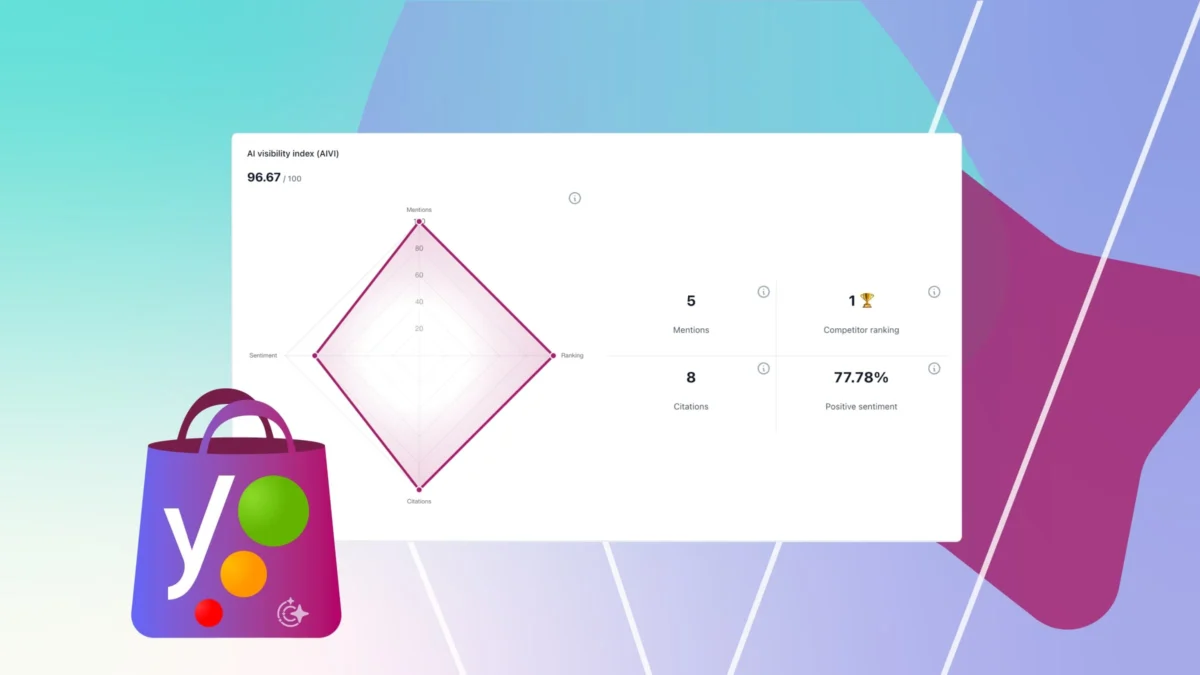
The shift towards AI-first search necessitates a re-evaluation of how SEO success is measured. The traditional focus on keyword rankings, while still relevant to some extent, is increasingly insufficient. The Yoast update suggested that "Visibility is moving beyond rankings into citation, inclusion, and influence within AI-generated responses." This means SEO professionals must broaden their analytical scope to include metrics that reflect how their content is being leveraged by AI.
New paradigms for performance measurement might include tracking how frequently a website’s content is cited in AI-generated summaries, the prominence of its inclusion in AI-powered knowledge panels, or its influence on the overall sentiment and information presented by AI agents. Understanding the flow of information through AI systems, and how a brand’s expertise is being acknowledged and attributed, will become vital. This evolution in measurement reflects a fundamental change in the SEO objective: from merely ranking high to becoming a trusted, influential source that AI systems actively recommend and integrate into their responses. The future of SEO measurement will involve sophisticated analytics capable of tracking these new forms of AI visibility and influence, moving beyond simplistic SERP position tracking.
Outlook and Future Adaptations
The April 2026 SEO Update by Yoast painted a vivid picture of a search ecosystem in flux, driven primarily by the relentless march of AI. The implications for website owners, content creators, and SEO professionals are profound: adaptability is no longer optional, but essential. The era of "more content" is over; the era of "smarter, more authoritative, and AI-optimized content" has begun. Websites must prioritize user experience, technical excellence, and the creation of genuinely valuable, differentiated content that can withstand the scrutiny of both human users and increasingly sophisticated AI agents.
The continuous tightening of Google’s quality guidelines and spam policies underscores a long-term commitment to a cleaner, more trustworthy search environment. As AI integrates deeper into platforms and tools, the lines between content creation, SEO, and user interaction will blur, demanding a holistic strategy that accounts for every touchpoint. The next SEO Update by Yoast, scheduled for May 21, 2026, at 4:00 PM CET (10:00 AM EST), promises to further explore these dynamics, offering continued guidance as the digital world navigates this unprecedented technological shift. For those seeking to thrive in this evolving landscape, staying informed and adapting strategies will be key to unlocking future success.