

The digital marketing landscape reached a significant milestone on February 3, 2026, as industry analysts released a comprehensive update to the benchmarks governing high-converting landing pages, identifying 40 distinct examples that define the current era of consumer engagement. As businesses navigate an increasingly fragmented digital economy, the distinction between a "polished" professional interface and a cluttered web presence has become the primary determinant of marketing ROI. This analysis explores the technical architecture, psychological triggers, and strategic deployment of standalone web pages designed specifically for advertising and marketing campaigns.

The Evolution of the Standalone Conversion Asset
In the contemporary marketing framework, a landing page is no longer viewed merely as a destination for traffic but as a specialized conversion engine. Unlike a corporate homepage, which serves as a general information hub, a landing page is engineered for a singular objective: converting visitors into leads or customers through a focused value proposition. The latest data indicates that the strategic use of these pages is the cornerstone of successful SaaS, E-commerce, and professional service campaigns.

The chronology of landing page development has shifted from static, one-size-fits-all designs to highly personalized, dynamic experiences. In the early 2010s, landing pages were often cluttered with secondary navigation and multiple competing calls-to-action (CTAs). By 2026, the industry has standardized a "lean" approach, where every element on the page—from the hero image to the footer—is ruthlessly scrutinized for its impact on the final conversion rate.
Strategic Categorization of Top Performers
The 2026 analysis identifies several industry leaders who have successfully leveraged design psychology to dominate their respective sectors.

SaaS and Health Wellness: The Calm and Netflix Models
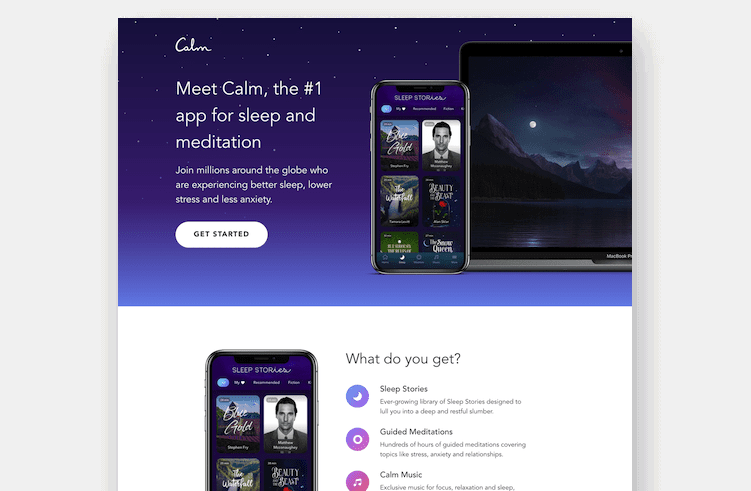
Calm, a leading meditation and sleep application, utilizes a landing page strategy that mirrors the product’s core promise: tranquility. By employing a minimalist design with high-quality, soothing visuals, the page reduces cognitive load, making the "Get Started" CTA the path of least resistance.

Similarly, Netflix continues to set the benchmark for SaaS conversion. Despite its massive global scale, the platform’s landing page remains one of the simplest on the internet. It highlights a singular value proposition—unlimited entertainment—and utilizes a straightforward email capture form. This "frictionless entry" model has been credited with helping the service maintain over 300 million subscribers worldwide.

E-commerce and Niche Markets: Zola and Goby
In the wedding industry, Zola has revolutionized the user journey by acting as a "one-stop-shop." Their landing page succeeds by addressing the inherent stress of wedding planning through organized, visual blocks that guide the user through invitations, registries, and venue searches.

Goby, a dental health startup, demonstrates the power of the "perfection" narrative. Their headline, "Brushing perfected," combined with a money-back guarantee and clear social proof, addresses consumer skepticism in the health-tech space. This approach illustrates a broader trend in 2026: using landing pages to build trust as much as to sell products.

The Role of Agency Innovation: Case Studies in Conversion
A significant portion of the high-performing pages identified in the 2026 report were developed by specialized marketing agencies like MuteSix, ConversionLab, and Webistry. These firms have pioneered the "Conversion-Centered Design" (CCD) methodology.

- MuteSix and Grass Roots: For the Grass Roots Farmers’ Cooperative, MuteSix developed a narrative-driven page that takes the consumer from "problem awareness" (the issues with industrial meat) to "solution consideration" (the benefits of grass-fed products).
- ConversionLab and Campaign Monitor: This collaboration focused on the "Social Proof" pillar, integrating authentic testimonials and clear, actionable CTAs like "Design Your First HTML Email Now."
- Webistry and Panda7: Addressing the traditionally tedious process of car insurance, Webistry designed a page for Panda7 that promises a quote in minutes. This strategy targets "time-poverty," a growing consumer sentiment in the mid-2020s.
Supporting Data and Technical Benchmarks
The effectiveness of these 40 examples is supported by rigorous quantitative data. Market research conducted throughout 2025 and early 2026 highlights several critical success factors:

- Video Integration: Landing pages that incorporate video elements have seen a conversion increase of up to 86%. This is particularly evident in the "Woolx" and "CD Baby" examples, where video backgrounds provide an immersive look at product quality.
- Mobile Optimization: With over 70% of global web traffic originating from mobile devices in 2026, "mobile-first" design is no longer optional. The top-performing pages utilize responsive frameworks that ensure the "Above the Fold" content remains impactful on smaller screens.
- The "Rule of One": Pages with a single, clear CTA perform significantly better than those with multiple options. The Spotify and Netflix pages are prime examples, where the exit points are minimized to keep the user focused on the conversion goal.
The Psychology of the "Above the Fold" Space
The term "Above the Fold"—originally a newspaper industry term—refers to the content visible on a screen without scrolling. In the 2026 digital environment, a visitor’s attention span is estimated at less than eight seconds.

The top 40 examples share a common trait: they place their primary value statement and CTA within this immediate viewing area. For instance, the "Gusto" landing page for HR tools simplifies a complex product into a single, digestible story within the first screen. This reduces "bounce rates" and ensures that even casual browsers understand the offer immediately.

Official Responses and Industry Impact
Industry leaders have reacted to the 2026 benchmarks with a focus on accessibility and the democratization of design. Luke Bailey, a senior content strategist, noted that the advent of drag-and-drop builders has leveled the playing field. "Most of these top-tier examples started as a blank page and a big idea," Bailey stated. "You don’t need a massive development team to create a page that rivals Amazon’s conversion rates."
Furthermore, agencies like J7 Media have emphasized the shift toward "Social Commerce." Their work with brands like Coco Village and Fast Mask demonstrates how landing pages are becoming the bridge between social media discovery (TikTok/Instagram) and the final transaction.
Broader Implications for the Future of Digital Marketing
The analysis of these 40 landing page examples suggests a permanent shift in how brands interact with consumers. The focus has moved from "selling" to "solving." Whether it is Roomeze matching roommates in New York City or Snackpass streamlining bubble tea orders, the most successful pages are those that position the product as a solution to a specific, localized problem.
As artificial intelligence continues to integrate into design builders, the next frontier will likely be "Hyper-Personalization," where landing pages change their copy and imagery in real-time based on the individual visitor’s browsing history and preferences.
Conclusion: The Path to Conversion Excellence
The 2026 report serves as a roadmap for marketers seeking to improve their digital performance. The key takeaways are clear:

- Prioritize clarity over cleverness.
- Use high-quality visuals to build an emotional connection.
- Leverage social proof to mitigate consumer risk.
- Continuously A/B test every element to discover what resonates with the target audience.
In an era where digital noise is at an all-time high, the landing page remains the most effective tool for cutting through the clutter and securing a direct connection with the consumer. As demonstrated by the "Michael Jordan of landing pages" analogy, excellence in this field is not about inherent talent but about the disciplined application of proven design principles and data-driven optimization.







