The modern mobile application landscape has reached a point of saturation where traditional quantitative metrics no longer suffice to maintain a competitive edge in an increasingly crowded marketplace. For years, mobile app professionals have relied heavily on quantitative analytics to track performance, yet a fundamental flaw persists in many standard workflows: a disproportionate focus on numerical data at the expense of understanding human behavior. While quantitative analytics—the tracking of downloads, daily active users (DAU), churn rates, and session lengths—provides a vital skeletal framework of app performance, it frequently fails to provide the "why" behind user actions. This informational gap has led to the rise of qualitative analytics, a methodology that incorporates visual and behavioral data to transform how developers and product managers optimize the digital experience.
The Limitations of Quantitative Data in a Mobile-First Economy
In the current global economy, where mobile applications are projected to generate over $613 billion in annual revenue by 2025, the stakes for user retention have never been higher. Quantitative analytics remains an essential component of the optimization process; it acts as the primary diagnostic tool. It can efficiently signal that a problem exists—for instance, identifying a 40% drop-off rate at the registration screen or a sudden spike in uninstalls following a software update. However, numbers are inherently silent regarding the specific frustrations of the user.
Industry experts argue that relying solely on numbers is akin to a doctor knowing a patient has a fever without knowing the cause of the infection. Quantitative data can confirm that users are leaving the app prematurely, but it cannot reveal if they are leaving because a button is difficult to tap, a form field is confusing, or a specific animation is causing the app to lag. To bridge this gap, the integration of qualitative analytics—specifically touch heatmaps and user session recordings—has become a prerequisite for high-performing development teams.
The Rise of Qualitative Methodology: A Chronology of Analytics Evolution
The trajectory of mobile analytics has undergone several distinct phases over the last two decades. Understanding this timeline is crucial for recognizing why qualitative data is the current frontier of app optimization.
- The Log Era (2008–2011): Following the launch of the Apple App Store, developers relied on basic server logs and download counts. Analytics were rudimentary, focused almost entirely on acquisition rather than retention or behavior.
- The Quantitative Boom (2012–2015): The emergence of sophisticated SDKs (Software Development Kits) allowed for event tracking. Tools like Flurry and early iterations of Google Analytics for Mobile enabled developers to see "events," such as button clicks and screen views.
- The Behavioral Shift (2016–2019): As the market became saturated, the cost of user acquisition (CAC) skyrocketed. Developers shifted focus toward "Lifetime Value" (LTV). This era saw the rise of platforms like Appsee (later acquired by ServiceNow), which pioneered the use of qualitative tools to reduce friction.
- The Privacy-First Qualitative Era (2020–Present): With the introduction of GDPR and Apple’s App Tracking Transparency (ATT), analytics have had to become more sophisticated and privacy-compliant. Modern qualitative analytics now focus on anonymized behavioral patterns, using AI to aggregate session recordings into actionable insights without compromising individual user identity.
Technical Foundations: Touch Heatmaps and User Session Recordings
Qualitative analytics rests on two primary pillars that provide a window into the user’s mind: touch heatmaps and user session recordings.
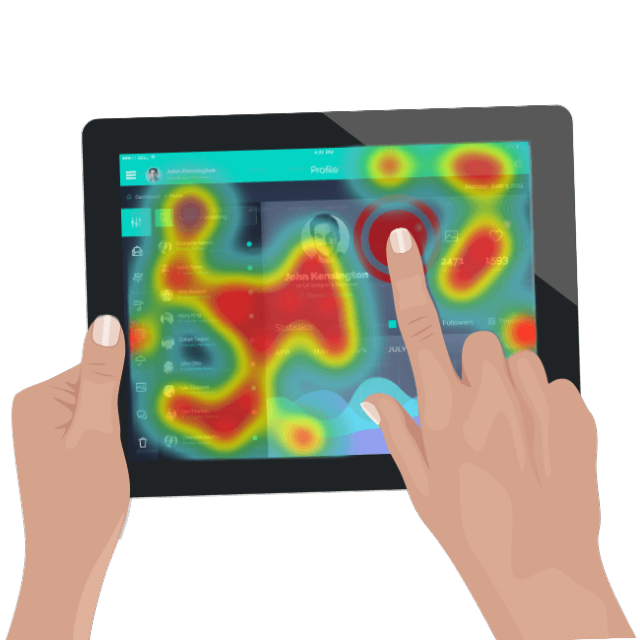
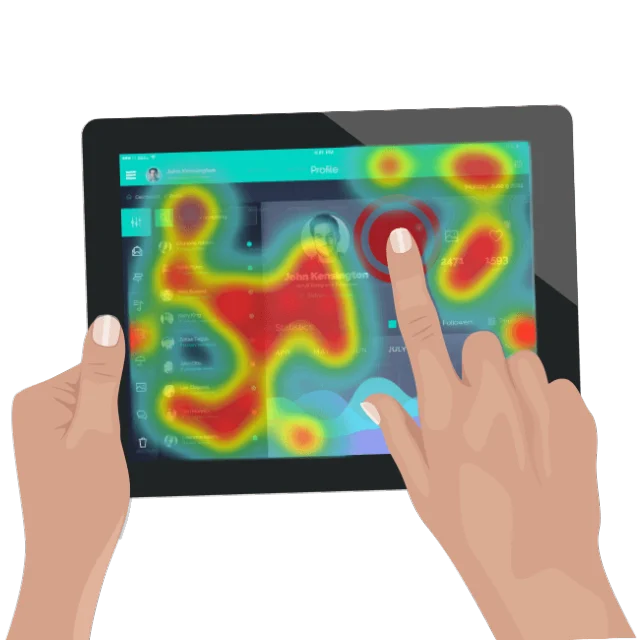
Touch heatmaps aggregate all physical interactions—taps, double-taps, swipes, and pinches—across a specific screen. By layering this data, developers can visualize "hot" and "cold" zones. A significant discovery in qualitative research is the "unresponsive gesture." This occurs when a user interacts with an element they believe should be functional—such as an image they expect to enlarge or a text string they think is a link—but the app provides no response. Industry data suggests that unresponsive gestures are among the leading causes of "rage clicking," a behavior strongly correlated with immediate app abandonment.
User session recordings complement heatmaps by providing a chronological, video-like playback of a single user’s journey. Unlike traditional usability testing, which occurs in a controlled laboratory setting, these recordings capture behavior "in the wild." This allows professionals to observe how the app performs across different devices, network speeds, and real-world distractions. By watching these sessions, product teams can identify "UI friction"—the subtle moments of hesitation where a user becomes confused by the navigation or the interface layout.
Data-Fueled Optimization: A Unified Workflow
The most effective mobile teams do not choose between quantitative and qualitative data; they create a feedback loop that utilizes both. This "Data-Fueled Optimization" workflow follows a logical progression: Alert, Investigate, and Resolve.
Consider the common scenario of shopping cart abandonment. Quantitative tools might show that 60% of users who add an item to their cart do not complete the purchase. In a traditional workflow, a team might guess that the price is too high or the shipping costs are a deterrent. However, by shifting to a qualitative investigation, the team may watch session recordings and discover that the "Checkout" button is obscured by a chatbot overlay on certain screen sizes, or that the credit card input field triggers the wrong keyboard type (alphabetic instead of numeric), causing user frustration.
By shortening the distance between identifying a problem and understanding its cause, companies can significantly reduce their development cycles. Statistics from UX design studies indicate that every dollar invested in ease of use provides a return of up to $100. Qualitative analytics is the primary vehicle for achieving that ROI.
Proactive Troubleshooting and Technical Integrity
Beyond user experience (UX) optimization, qualitative analytics serves as a critical tool for technical troubleshooting. In a reactive model, developers wait for crash reports or negative App Store reviews to fix bugs. However, crash reports often lack the context of what the user was doing immediately before the failure.
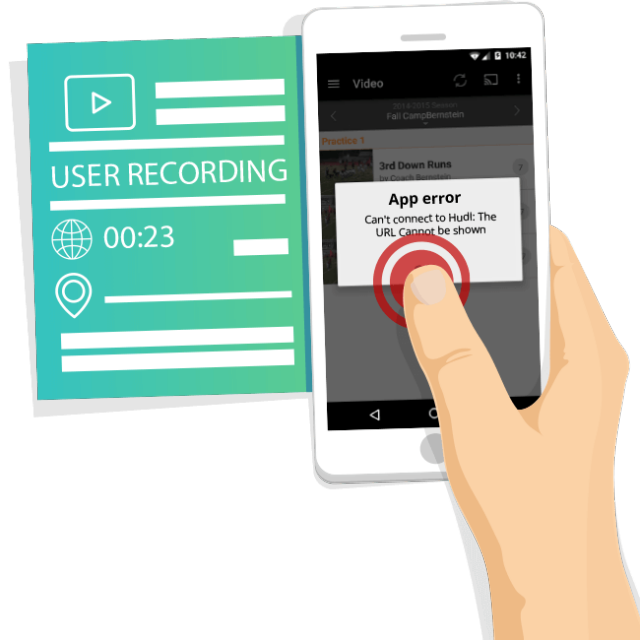
Proactive troubleshooting uses qualitative data to catch "soft failures"—instances where the app does not crash but fails to perform its intended function. For example, a user might attempt to log in via a third-party social media API. The API might fail silently, leaving the user stuck on a loading spinner. Quantitative data might simply show a long session duration, which could be misinterpreted as high engagement. Qualitative recordings, however, would clearly show a frustrated user waiting for a process that will never complete.
By identifying these "edge cases" early, development teams can issue patches before the issues affect the broader user base, thereby protecting the app’s rating and brand reputation.
Industry Perspectives and the Broader Impact
The shift toward qualitative insights has drawn significant attention from industry leaders. "We are moving away from a world of ‘vanity metrics,’" says one senior product strategist at a leading Silicon Valley firm. "Knowing you have a million downloads is meaningless if you don’t know why 900,000 of those people never opened the app a second time. Qualitative data is the only way to solve the retention crisis."
Furthermore, the integration of qualitative analytics has profound implications for the "Experience Economy." As mobile apps become the primary interface for banking, healthcare, and retail, the cost of a poor user experience is no longer just a lost sale; it is a loss of institutional trust.
Conclusion and Future Outlook
The integration of qualitative analytics represents a maturation of the mobile industry. As artificial intelligence continues to evolve, the next frontier will likely involve "Automated Qualitative Insights," where AI algorithms watch thousands of session recordings and automatically flag UX friction points for human review.
For mobile app professionals, the message is clear: the numbers tell the story, but the behavior provides the lesson. By revamping analytics workflows to include touch heatmaps and session recordings, organizations can move beyond guesswork and build products that are not only functional but intuitively aligned with user expectations. In the hyper-competitive mobile ecosystem, the ability to see through the user’s eyes is the ultimate competitive advantage.