As Meta CEO Mark Zuckerberg continues to articulate his expansive vision for artificial intelligence, the prevailing indicators suggest that both Zuckerberg and Meta face a formidable challenge in gaining public acceptance. Zuckerberg’s audacious concept posits a future where every individual gains access to a bespoke personal AI superintelligence agent, meticulously designed to offer guidance across the full spectrum of daily life, from critical health decisions to complex financial planning. However, the realization of such an intimate and pervasive technological integration fundamentally hinges on Meta securing significantly greater access to users’ highly personal information. Given Zuckerberg’s current standing in public opinion, this prerequisite presents an extraordinary hurdle for the tech giant.
The Genesis of a Trust Crisis: Meta’s History and Public Perception
Meta Platforms, Inc., formerly known Facebook, has a well-documented history punctuated by controversies surrounding data privacy, content moderation, and its overall impact on society. This legacy has cultivated a profound and widespread distrust among the public, which directly undermines Zuckerberg’s ambitious AI aspirations. For over a decade, the company has grappled with accusations of prioritizing growth and profit over user well-being and data security. Landmark events, such as the Cambridge Analytica scandal in 2018, exposed how millions of Facebook users’ personal data were harvested without consent for political profiling, sending shockwaves through the digital world and profoundly damaging public confidence in the platform’s stewardship of personal information. This incident, among others, cemented an image of Meta as a company with a casual approach to privacy, often perceived as opaque in its data collection practices and resistant to accountability.
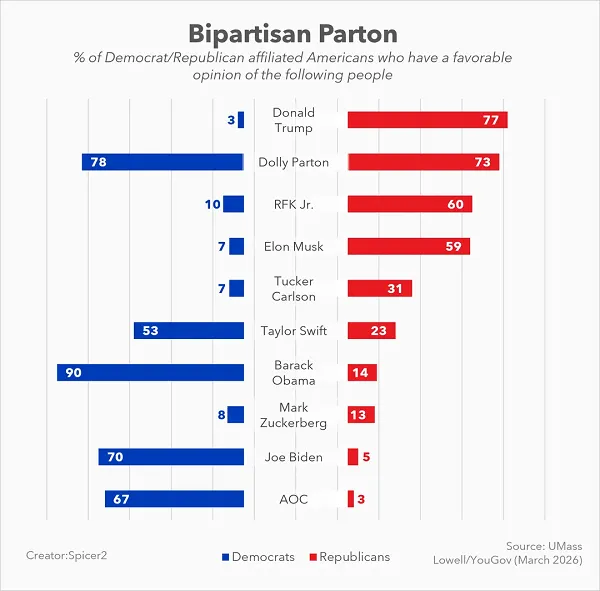
The consequences of this eroded trust are starkly illustrated by recent independent polling. A comprehensive new survey conducted by UMass Lowell’s Center for Public Opinion, in collaboration with YouGov, revealed a striking consensus: Mark Zuckerberg is identified as the least-liked public figure in the United States, a sentiment shared almost equally across both Republican and Democratic political affiliations. This bipartisan disapproval is particularly telling, as it indicates a broad societal skepticism that transcends traditional political divides. The implications of such low favorability for a CEO whose company seeks to embed AI agents into the most sensitive aspects of users’ lives are profound. It suggests that even if the technological capabilities of Meta’s AI were flawless, the human element—trust—remains a critical, perhaps insurmountable, barrier to mass adoption.
Zuckerberg’s AI Manifesto: A Future of Ubiquitous Personal Agents
Earlier this month, Zuckerberg formally unveiled the blueprint for his AI-centric future by publishing a comprehensive 6,500-word manifesto. This extensive document meticulously outlines a world where every individual will be served by an "always-on" AI assistant, acting as a constant companion and guide. Zuckerberg’s vision is eloquently articulated within the manifesto: "Everyone will have an exceptionally capable personal agent that understands you, your goals, and everything you care about. Your agent will work 24/7 on your behalf to improve your relationships, health, career, finances, home management, hobbies, and more. It will free up time for the things you enjoy, and help you accomplish more than you could otherwise."
From a purely functional perspective, this proposition presents a compelling future. Imagine an AI that proactively manages your calendar, optimizes your investment portfolio based on real-time market data and your personal risk tolerance, provides personalized health recommendations drawn from your biometric data and medical history, or even suggests conversational prompts to enhance personal relationships. For many, this sounds like an appealing trajectory towards a more efficient, less error-prone existence, where smarter decisions are automatically facilitated, ostensibly leading to a better quality of life. The promise is one of enhanced human capability, augmented by tireless digital intelligence.
The Data Imperative: Fueling the Superintelligence
However, the operationalization of such sophisticated and deeply personalized AI agents mandates an unprecedented level of access to personal data. To genuinely "understand" a user’s goals, care about their relationships, and improve their health or finances, these AI tools would need to access a vast and incredibly sensitive array of information. This includes, but is not limited to, real-time health metrics from wearables, electronic medical records, financial transaction histories, investment portfolios, communication logs (emails, messages, calls), location data, browsing habits, purchasing preferences, social media interactions, and potentially even biometric data and emotional states inferred from various inputs.
The scope of data required extends far beyond what Meta currently collects, even with its extensive ecosystem of platforms like Facebook, Instagram, and WhatsApp. To offer truly proactive and contextually relevant guidance, the AI would need a continuous, comprehensive feed of an individual’s life, requiring users to willingly grant Meta a panoramic view into their most private domains. This fundamental requirement directly clashes with the public’s heightened awareness and concern regarding data privacy, especially in the wake of numerous high-profile data breaches and privacy infringements across the tech industry. The more powerful and personalized the AI, the more data it needs, thereby amplifying the privacy risks and the demand for unwavering trust.
A Chronology of Meta’s AI Ambitions and Privacy Pitfalls
Meta’s journey into AI is not new. The company has invested heavily in artificial intelligence research for years, particularly through its fundamental AI research (FAIR) lab, contributing significantly to open-source AI advancements. However, the public-facing push for integrated, personal AI has gained significant momentum more recently, evolving alongside or even eclipsing its previous primary focus on the metaverse.

- Early AI Investments (2013 onwards): Meta (then Facebook) established FAIR, a leading AI research lab, to drive advancements in machine learning, computer vision, and natural language processing, forming the bedrock for its current AI ambitions.
- Metaverse Pivot (October 2021): The company rebranded to Meta Platforms, signaling a strategic shift towards building the metaverse, a persistent virtual environment. While initially the primary focus, AI was always intended to be a foundational technology within this metaverse.
- Ray-Ban Meta Smart Glasses Launch (September 2023): As a tangible step towards blending digital and physical realities, Meta launched its second generation of AI-powered smart glasses in collaboration with Ray-Ban. These glasses feature integrated cameras and microphones, enabling hands-free photo and video capture, live streaming, and interaction with Meta AI.
- "Perv Glasses" Controversy (Ongoing since 2021 launch): Almost immediately, the camera-equipped glasses sparked intense privacy concerns. Users reported feeling uneasy about being unknowingly recorded, leading to the derogatory label "perve glasses." This incident highlighted the immediate and visceral public reaction to technology that blurs the lines of consent and personal space, serving as a microcosm of the larger trust challenge Meta faces with its AI vision. Despite privacy indicators like LED lights to signal recording, public apprehension remains high.
- Zuckerberg’s AI Manifesto Publication (Recent): This recent manifesto solidified AI as the central pillar of Meta’s future strategy, clearly articulating the vision for personal AI agents.
This chronology reveals a consistent pattern: Meta introduces innovative, deeply integrated technologies, but these innovations are frequently met with significant public backlash over privacy implications. The "perve glasses" controversy, in particular, demonstrates the immediate and profound impact of perceived surveillance and lack of consent on user adoption and brand reputation, directly foreshadowing the challenges for an AI agent that would require even more intrusive data access.
The Broader Implications: Privacy Advocates, Ethicists, and Regulatory Scrutiny
The intersection of Meta’s AI ambitions and its public trust deficit creates a complex landscape with far-reaching implications for individuals, the company, and the broader technological ecosystem.
Concerns from Privacy Advocates: Organizations dedicated to digital rights and privacy, such as the Electronic Frontier Foundation (EFF) and the American Civil Liberties Union (ACLU), consistently express alarm over the prospect of powerful AI agents controlled by a single, historically controversial corporation. Their concerns revolve around:
- Data Aggregation and Monopolization: The risk of Meta aggregating unprecedented amounts of sensitive data, creating a single point of failure for security breaches and an unrivaled surveillance capacity.
- Lack of Transparency and Control: Users may have little insight into how their AI agent processes data, makes recommendations, or influences their decisions, potentially eroding individual autonomy.
- Mission Creep: The potential for AI agents, initially designed for assistance, to evolve into tools for pervasive monitoring, targeted advertising, or even behavioral manipulation.
- Security Vulnerabilities: The immense trove of sensitive data required would make these AI systems prime targets for cyberattacks, with catastrophic consequences for users if compromised.
Ethical Considerations from AI Ethicists: Beyond privacy, AI ethicists raise critical questions about:
- Algorithmic Bias: If trained on biased data, personal AI agents could perpetuate or amplify societal biases in recommendations related to health, finance, or career opportunities.
- Erosion of Human Agency: Over-reliance on AI guidance for all aspects of life could diminish critical thinking, decision-making skills, and personal responsibility.
- Defining "Good": Who defines what constitutes "better health," "improved relationships," or "smarter financial decisions" for a personalized AI? The values embedded in the AI’s design could implicitly impose a particular worldview.
- Digital Divide: Access to these "superintelligence agents" could exacerbate existing inequalities, creating a new form of digital divide between those who can afford and trust such services and those who cannot.
Regulatory Scrutiny and Market Impact: Meta’s past actions have already subjected it to intense regulatory scrutiny worldwide. The European Union’s General Data Protection Regulation (GDPR) and California’s Consumer Privacy Act (CCPA) are just two examples of frameworks designed to curb unchecked data collection. Any attempt by Meta to launch highly intrusive personal AI agents would undoubtedly invite renewed and potentially more stringent regulatory responses. This could manifest as:
- Increased Fines: Penalties for non-compliance with data protection laws could skyrocket given the scale and sensitivity of data involved.
- Restrictions on Data Collection: Regulators might impose strict limits on the types of data Meta can collect or how long it can retain it.
- Antitrust Concerns: The monopolistic potential of a single company controlling such pervasive personal AI could lead to antitrust investigations aimed at breaking up Meta or regulating its services as public utilities.
- Market Resistance: Even if regulatory hurdles are cleared, the public’s deep-seated distrust could translate into widespread reluctance to adopt Meta’s AI products, significantly hindering its market penetration and profitability. The "teenage social media usage" settlement, while an attempt to improve public standing, underscores the ongoing need for Meta to address societal concerns, but it’s a piecemeal effort compared to the scale of trust required for the AI vision.
Conclusion: The Trust Gap as the Ultimate Barrier
Mark Zuckerberg’s vision for an AI-powered future, where personal superintelligence agents seamlessly guide individuals through life, is undeniably ambitious and technologically intriguing. It promises unprecedented levels of efficiency, personalization, and enhanced decision-making. However, the path to realizing this future for Meta is fraught with a singular, overwhelming obstacle: a pervasive and deeply entrenched public trust deficit.
The UMass Lowell/YouGov survey, indicating Zuckerberg as the least-liked public figure across the political spectrum, is not merely an anecdotal data point; it is a critical bellwether for the formidable challenge Meta faces. The company’s historical handling of user data, its persistent privacy controversies, and the immediate backlash against even seemingly innocuous technologies like camera-equipped smart glasses, collectively paint a picture of a company struggling to convince the public of its genuine commitment to user well-being over profit.
For Meta’s AI dream to materialize, it must first bridge this immense trust gap. This will require far more than technological innovation; it demands a fundamental shift in corporate culture, a renewed and transparent commitment to user privacy that is demonstrably prioritized over data monetization, and a proactive engagement with privacy advocates and regulators. Until Meta can genuinely convince the public that it is working for the common good and not merely for its bottom line, its grand AI vision will likely remain just that—a vision, perpetually out of reach due to the very human element of trust. The future of personal AI, particularly under Meta’s stewardship, hinges not on computational power, but on regaining the confidence of the people it aims to serve.