

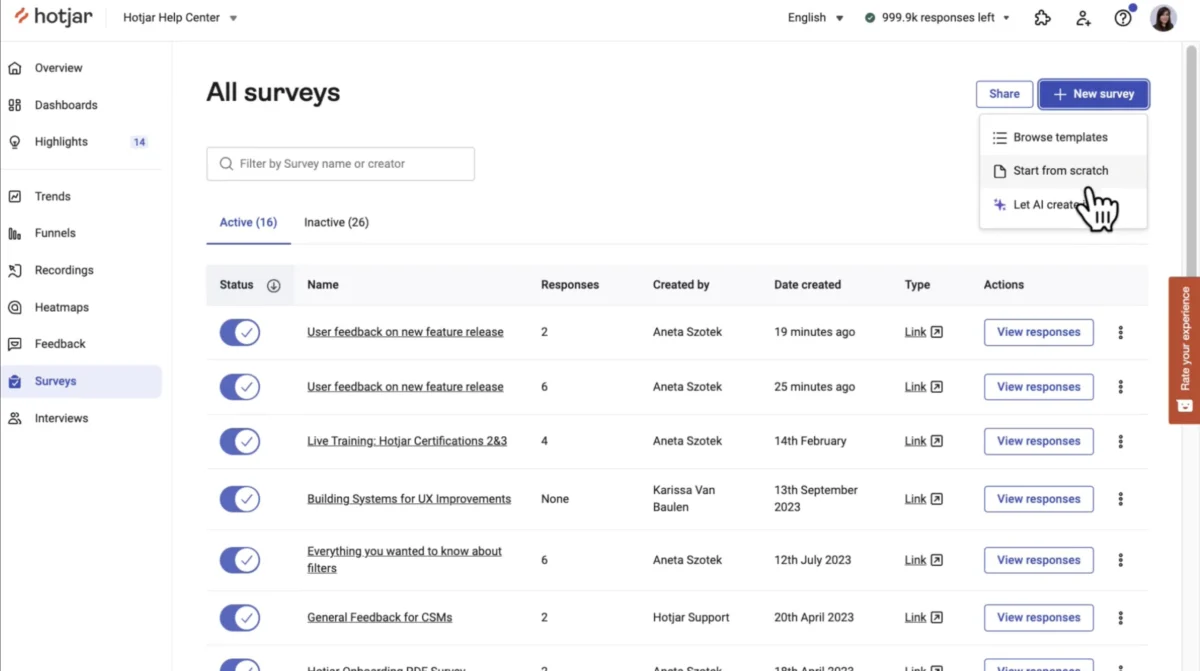
The landscape of user experience (UX) and conversion rate optimization (CRO) has undergone a significant transformation over the last decade, moving from simple heatmapping to complex, AI-driven behavioral analysis. At the center of this evolution are two prominent platforms: Pulse, a Voice of Customer (VoC) tool integrated into the VWO AB Tasty ecosystem, and Hotjar, a long-standing industry leader that recently finalized its integration with the enterprise analytics giant Contentsquare. As digital teams strive to bridge the "insight gap"—the distance between knowing what a user did and understanding why they did it—the choice between these two tools has become a strategic pivot point for product managers, UX researchers, and growth marketers alike.
While both Pulse and Hotjar offer essential feedback mechanisms such as surveys and sentiment analysis, their operational philosophies and technical architectures differ significantly. Pulse positions itself as a specialized feedback engine designed to fuel an experimentation loop, whereas Hotjar has evolved into a modular component of a broader, enterprise-grade experience analytics suite. Understanding these nuances is critical for organizations looking to optimize their tech stack without introducing unnecessary friction or redundant costs.
The Strategic Shift: A Chronology of Market Consolidation
To understand the current state of these tools, one must look at the recent timeline of corporate activity in the MarTech sector. Hotjar, founded in 2014, gained rapid popularity by democratizing access to heatmaps and session recordings, tools that were previously reserved for enterprise budgets. However, the market’s move toward "all-in-one" data platforms led to Hotjar’s acquisition by Contentsquare in 2021.
The culmination of this deal occurred in July 2025, when Hotjar completed its full merger into the Contentsquare ecosystem. This move effectively ended Hotjar’s tenure as a standalone product for new users. Today, the features once synonymous with Hotjar are distributed across three distinct Contentsquare modules: Experience Analytics, Voice of Customer, and Product Analytics. This restructuring reflects a broader industry trend where qualitative feedback is no longer viewed as an isolated metric but as a layer that must be integrated with quantitative product data.
In contrast, Pulse has grown as a native component of VWO (Visual Website Optimizer), which later joined forces with AB Tasty. This integration was designed to solve a specific pain point: the "data silo" problem. By keeping VoC data within the same platform used for A/B testing and personalization, VWO enables teams to move from a user complaint to a live experiment in a single workflow. As of 2024, VWO supports over 3,000 businesses, emphasizing a "full-stack" approach to experience optimization.
Comparative Feature Analysis: Voice of Customer and Beyond
When evaluating Pulse and Hotjar, the most immediate point of comparison is their survey and feedback collection capabilities. Both tools are designed to capture the "Voice of the Customer" (VoC) through various formats, but their delivery methods vary.

Survey Channels and Mobile Integration
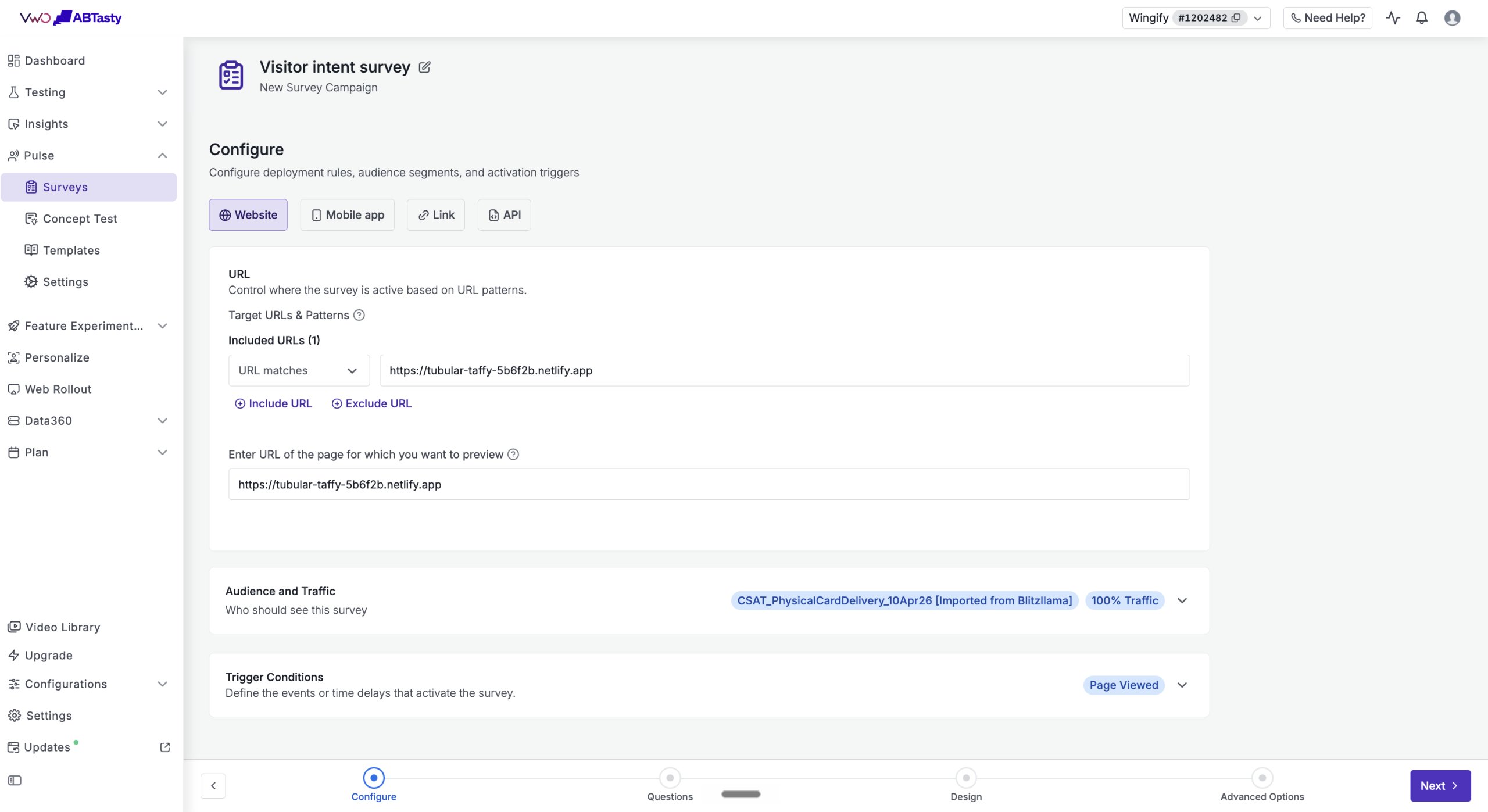
Pulse offers a distinct advantage for organizations with a heavy mobile presence. It provides native support for iOS and Android, as well as cross-platform frameworks like React Native and Flutter. This allows product teams to deploy micro-surveys directly within mobile apps, triggered by specific in-app events or user behaviors.
Hotjar, while robust on the web, focuses primarily on mobile web and link-based surveys. While it can capture feedback from mobile users, it lacks the deep, native SDK integration that Pulse offers for mobile applications. For companies whose primary touchpoint is a native app, Pulse’s ability to target surveys at the screen level or via specific SDK-triggered events represents a significant technical edge.
Targeting and Triggering Mechanisms
The effectiveness of a feedback tool is often measured by its targeting precision. Pulse utilizes an event-based system that allows for granular segmentation based on user attributes and behavioral patterns. Most of these triggers are "no-code," meaning marketing teams can deploy surveys without waiting for developer cycles.
Hotjar employs a similar logic, utilizing URL targeting and JavaScript-based triggers. However, its event-based targeting often requires a more hands-on setup via its Events API, which may necessitate developer intervention. Both platforms allow for the filtering of responses by the same attributes used for targeting, enabling researchers to slice data by user persona or lifecycle stage.
AI and the Automation of Insight
In the current era of "big data," the challenge for UX teams is no longer collecting feedback, but processing it. Both Pulse and Hotjar have leaned heavily into generative AI to solve this problem.
Pulse’s AI engine is focused specifically on the feedback layer. It automatically categorizes open-ended responses into themes and sentiments, providing summaries that highlight actionable trends. This is particularly useful for high-traffic sites where manual tagging of thousands of survey responses is unfeasible. The AI also assists in survey creation, generating questions based on the team’s goals.
Hotjar’s AI implementation is broader in scope. Because it is part of the Contentsquare suite, its AI (branded as Frustra) analyzes behavioral data alongside feedback. It can summarize session replays, auto-tag responses, and even label customer events during the initial setup. The trade-off is focus: while Hotjar’s AI provides a wide view of the user experience, Pulse’s AI goes deeper into the nuances of qualitative feedback, aiming to refine the hypothesis-building stage of the experimentation loop.

The Experimentation Loop vs. The Research Repository
A fundamental difference between the two tools lies in what happens after the feedback is collected.
Pulse is built for action. It is designed to be the starting point of an experimentation loop. If a Pulse survey reveals that users are confused by a specific checkout step, the team can immediately launch an A/B test or a personalization campaign within the same VWO/AB Tasty interface. This "all-in-one" ecosystem reduces the "time-to-insight" and "time-to-action," which are critical KPIs for agile growth teams.
Hotjar, conversely, serves as a comprehensive research repository. With the addition of "Engage," Hotjar allows teams to move beyond passive feedback into moderated interviews and unmoderated usability tests, drawing from a pool of over 200,000 testers. This makes Hotjar a superior choice for deep-dive user research and concept validation that requires human interaction rather than just digital triggers. While Hotjar integrates with third-party A/B testing tools, it does not offer the same native, frictionless transition to experimentation that Pulse does.
Pricing Structures and Modular Complexity
The financial aspect of choosing between Pulse and Hotjar has changed significantly following the Hotjar-Contentsquare merger.
Hotjar’s pricing has moved toward a modular model. New sign-ups must navigate the Contentsquare tier system, where heatmaps/recordings (Experience Analytics) and surveys (Voice of Customer) are separate paid modules. While a free plan exists, scaling the tool across an enterprise often results in a higher total cost of ownership than the previous standalone Hotjar pricing.
Pulse utilizes a pricing model based on Monthly Tracked Users (MTU). This is generally viewed as more predictable for high-growth companies. Pulse offers a 30-day free trial, allowing teams to test the native mobile integrations and AI summaries before committing to a contract. For existing VWO users, adding Pulse is often a more cost-effective way to consolidate their stack than bringing in an external tool like Contentsquare.
Broader Impact and Industry Implications
The competition between Pulse and Hotjar reflects a larger struggle in the software-as-a-service (SaaS) industry: the battle between "Best-of-Breed" and "Integrated Suites."
For years, the "Best-of-Breed" approach—using Hotjar for recordings, Optimizely for testing, and GA4 for analytics—was the standard. However, the friction of moving data between these tools has led many organizations to favor the "Integrated Suite" model offered by VWO (Pulse) and Contentsquare (Hotjar).
Industry analysts suggest that the merger of Hotjar into Contentsquare signifies the end of the "simple" feedback tool. As privacy regulations like GDPR and CCPA become more stringent, and as third-party cookies disappear, first-party feedback collected through tools like Pulse and Hotjar becomes the most valuable asset a company owns. The ability to link this feedback to specific user behaviors while maintaining compliance is now a baseline requirement for any enterprise-level tool.
Conclusion: Making the Decision
Choosing between Pulse and Hotjar requires an honest assessment of a team’s current workflow and future goals.
Pulse is the logical choice for teams that prioritize speed and execution. If the goal is to identify a point of friction and test a solution immediately, the integration of Pulse within the VWO AB Tasty ecosystem is an unbeatable advantage. Its superior native mobile support also makes it the clear winner for app-first companies.
Hotjar (Contentsquare) remains the powerhouse for dedicated UX researchers who need a 360-degree view of the user. For organizations that require session recordings, heatmaps, and live user interviews alongside their surveys, Hotjar’s breadth of features is unmatched. However, stakeholders must be prepared for the increased complexity and cost associated with its new modular structure under Contentsquare.
In the final analysis, both tools succeed in giving a voice to the user. Pulse turns that voice into a hypothesis for an experiment, while Hotjar turns it into a comprehensive story of the user journey. The right choice depends on whether your team needs a map of where users are going, or a laboratory to change where they end up.







