

The digital marketing landscape has reached a critical inflection point in 2024, as newly released data from the Unbounce Conversion Benchmark Report reveals a widening gap between average performers and industry leaders. Analyzing a massive dataset comprising over 57 million conversions, 41,000 unique landing pages, and 464 million pageviews, the report provides a definitive look at what constitutes success in the current fiscal year. The primary finding indicates that the median conversion rate across all industries currently stands at 6.6%, a figure that serves as a vital baseline for marketers globally. However, the data suggests that "good" performance—defined as the 75th percentile—requires a conversion rate of at least 11.4%, with top-tier performers in certain sectors reaching as high as 40.8%.
The Statistical Foundation: Median Versus Average
In assessing the health of digital marketing campaigns, the 2024 report emphasizes the use of median values over traditional averages to prevent statistical skewing. In the context of conversion rate optimization (CRO), a small number of "unicorn" pages—those converting at exceptionally high rates due to viral traffic or highly specific niches—can artificially inflate average figures. Conversely, a large volume of low-performing or "zombie" pages can drag averages down. By utilizing the median, which represents the true middle-of-the-pack performance, the report offers a more realistic benchmark for the typical business.

The distinction is vital for strategic planning. If a marketing department compares its performance against an average skewed by outliers, it may set unrealistic expectations or, conversely, fail to recognize a competitive disadvantage. The 2024 baseline of 6.6% serves as the demarcation point: pages performing below this level are trailing the majority of the market, while those exceeding 11.4% are effectively outperforming 75% of their competitors.
Industry-Specific Performance and Sector Analysis
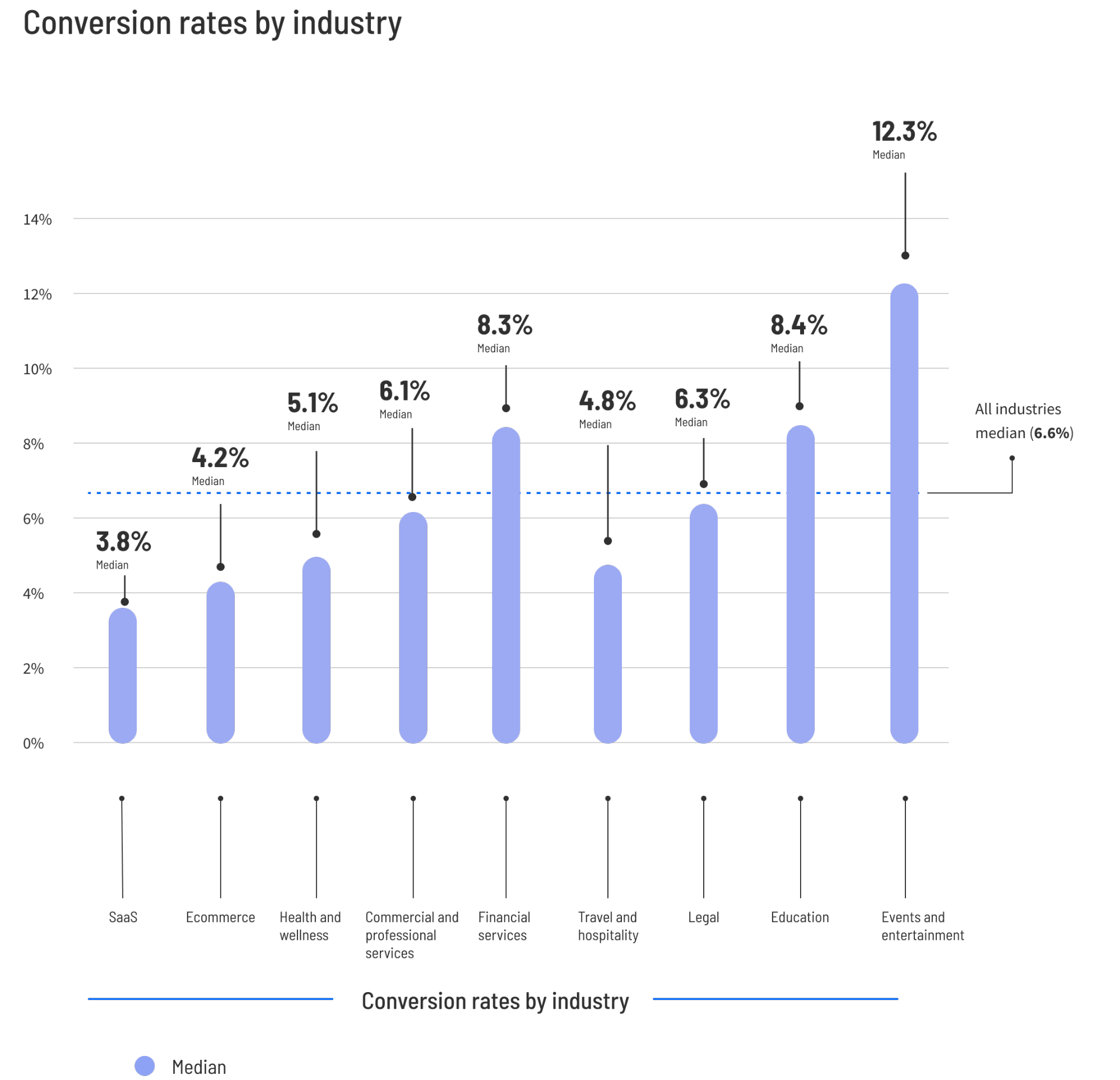
The 2024 data highlights that conversion rates are heavily dictated by industry-specific buyer psychology and the complexity of the "ask."

eCommerce and Retail Dynamics
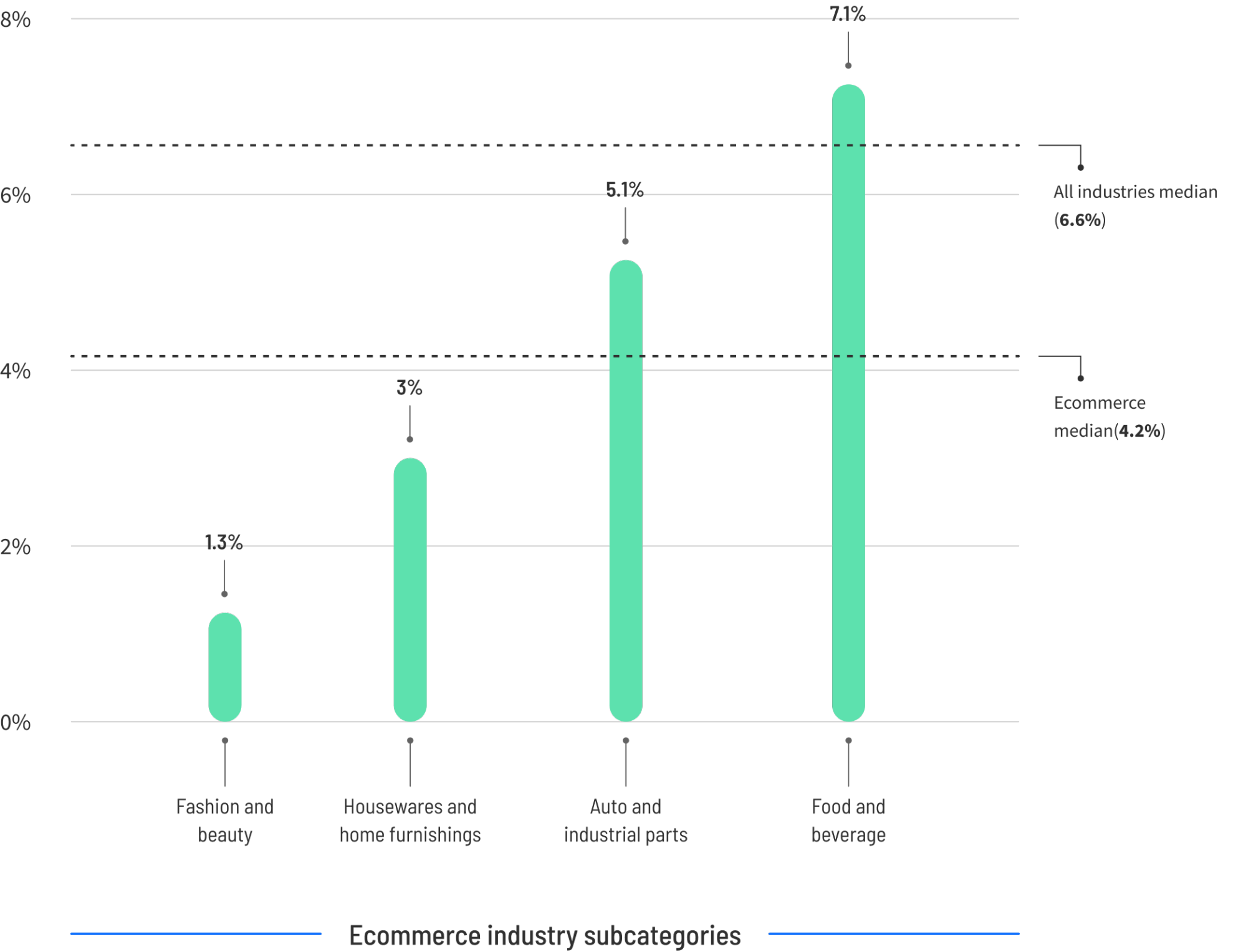
The median conversion rate for eCommerce landing pages currently sits at 4.2%. While this is lower than the all-industry median, it reflects the high-volume, high-competition nature of online retail. Top-performing eCommerce pages (the top 25%) are achieving rates of 11.4% or higher. There is significant internal variance within this sector; for instance, Food and Beverage pages boast a 7.1% median, whereas Fashion and Beauty segments often struggle at a 1.3% median due to the high degree of comparison shopping and "window browsing" prevalent in those niches.
The SaaS and Technology Hurdle
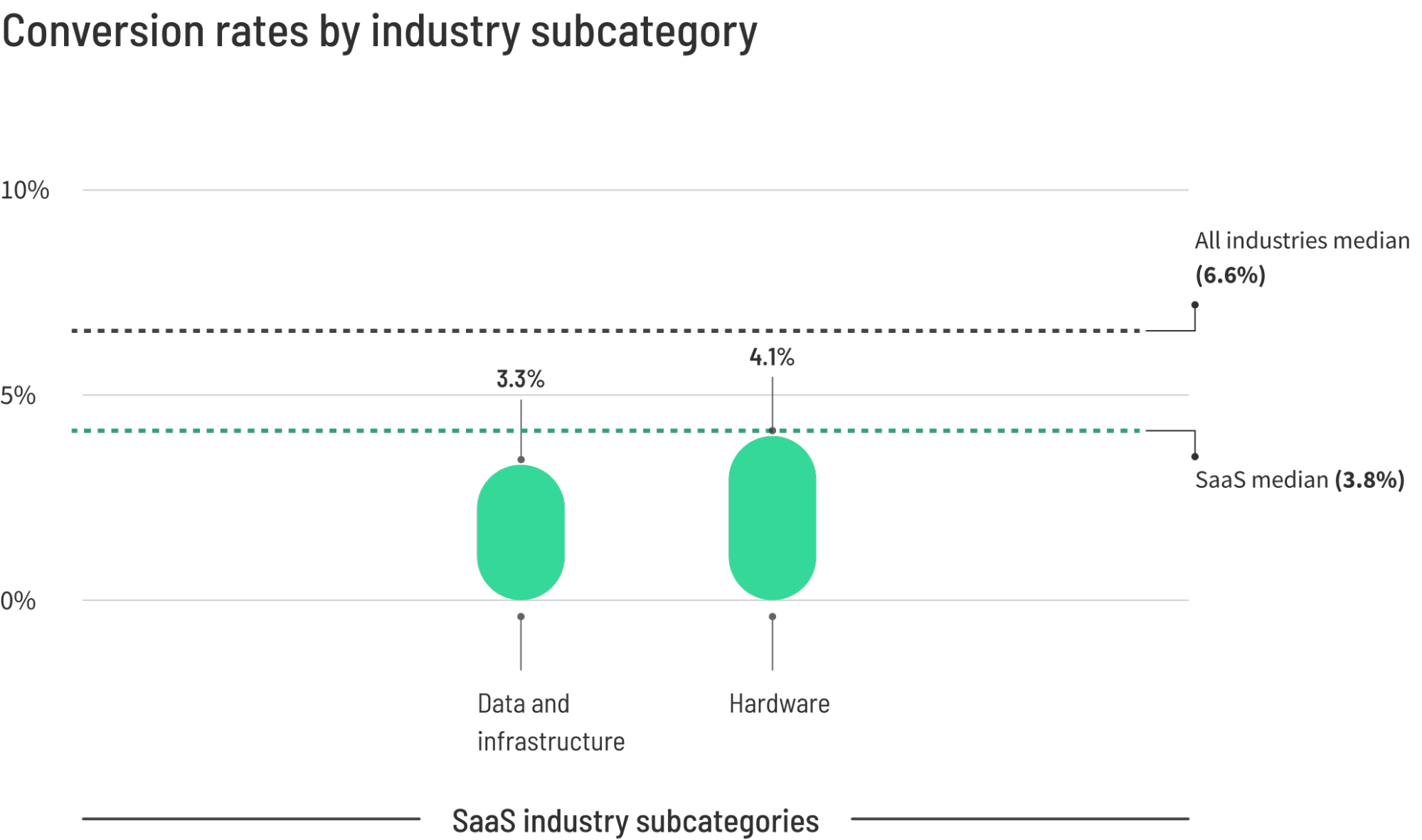
Software as a Service (SaaS) companies face a unique challenge in 2024, with a median conversion rate of 3.8%. This lower figure is attributed to the longer sales cycles and the higher cognitive load required to understand complex software solutions. High-performing SaaS pages reach an 11.6% threshold by successfully simplifying their value propositions and utilizing "low-friction" calls to action, such as free trials that do not require credit card information.
Financial Services and High-Intent Conversions
Financial services exhibit a robust median conversion rate of 8.3%. This is largely driven by the high-intent nature of the audience; users searching for insurance or investment options are typically further along in the decision-making process. Notably, the insurance subcategory is a major outlier, with a median conversion rate of 18.2%. The report identifies a unique trend in finance: mobile traffic converts 27.8% better than desktop, suggesting that users are increasingly making sensitive financial decisions or inquiries via handheld devices.
Professional and Legal Services
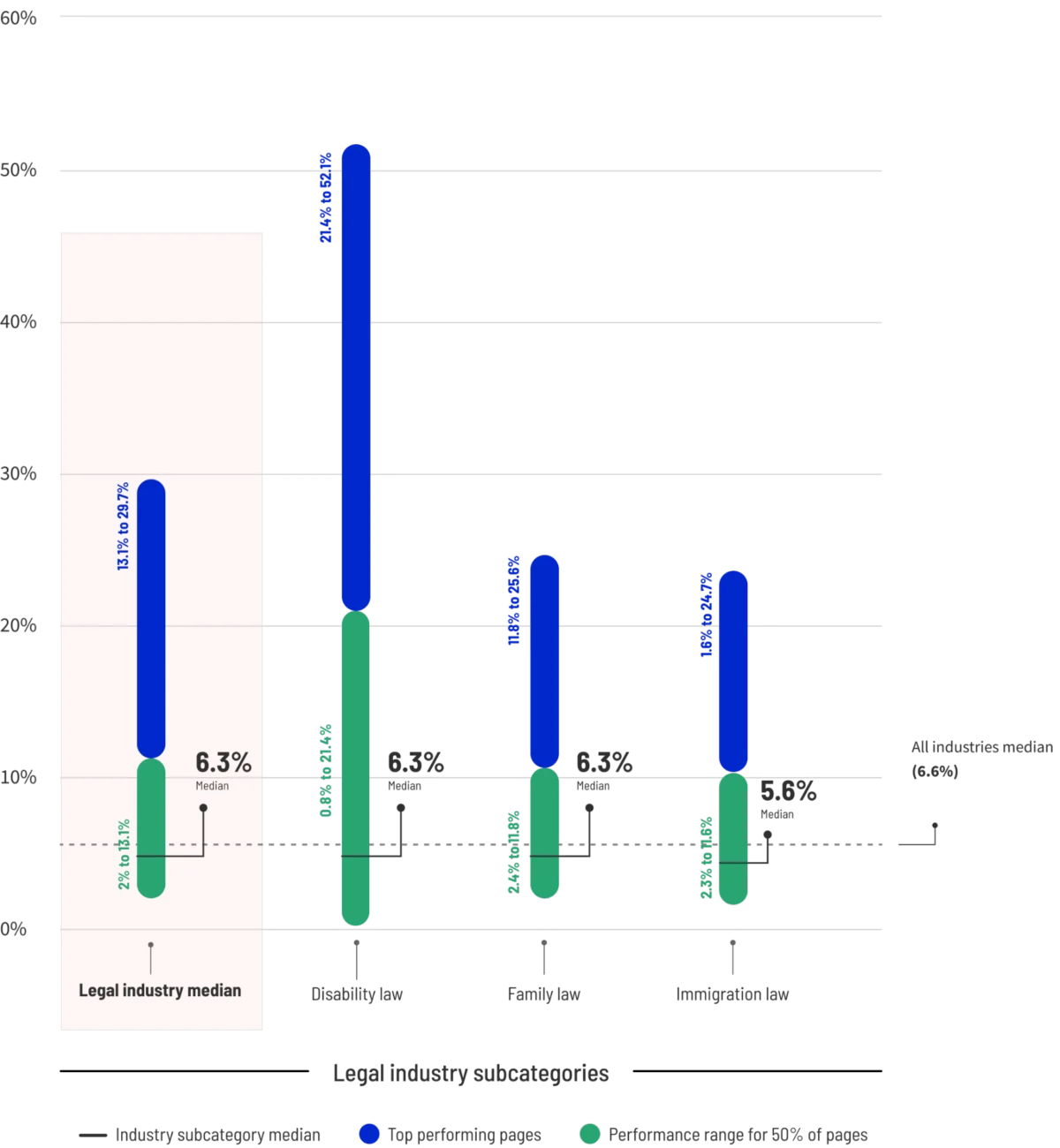
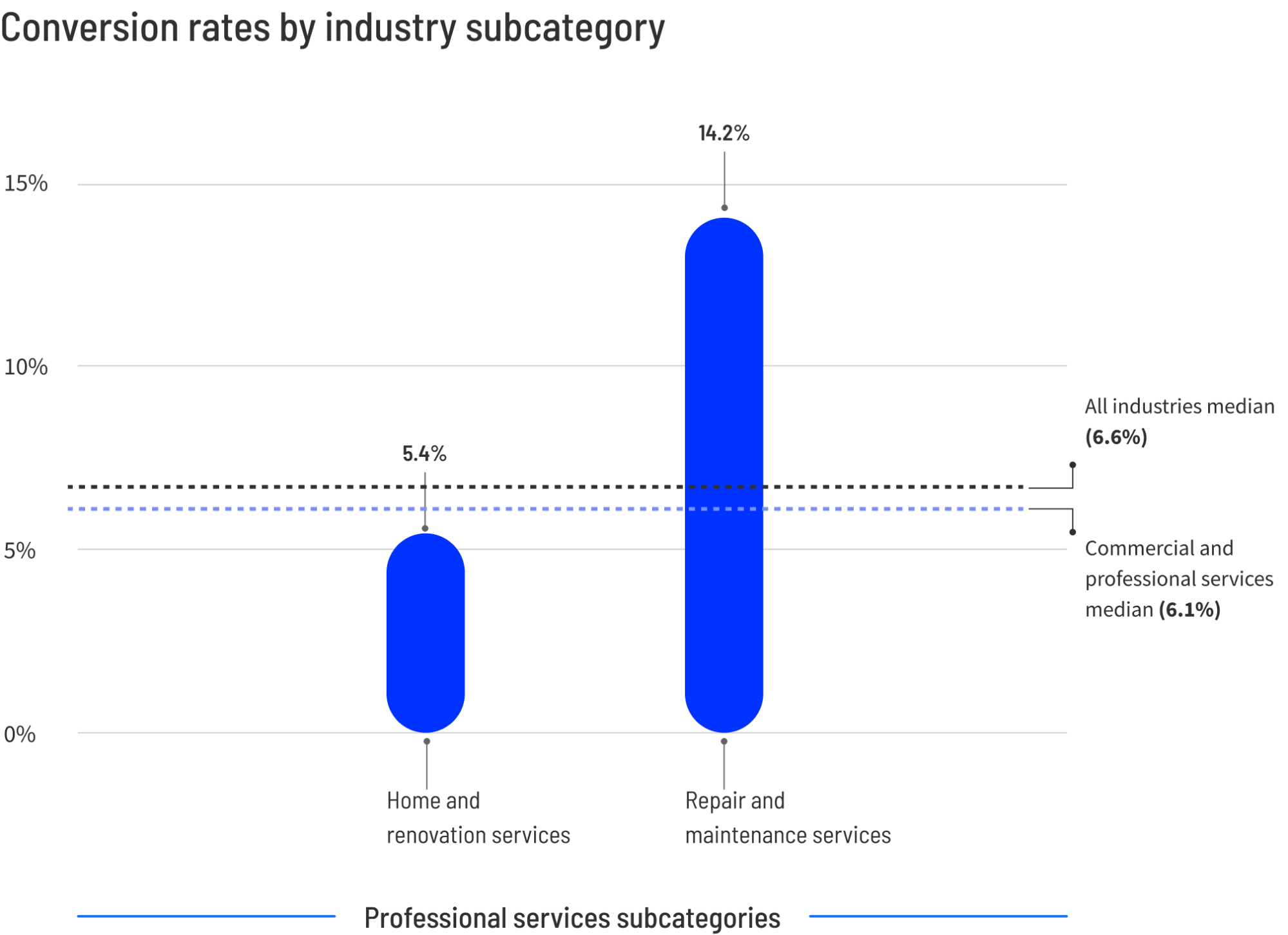
Professional services, including consulting and agencies, maintain a 6.1% median, while top performers hit 14.1%. In the legal sector, the median is 6.3%, but the top quartile exceeds 13.1%. A critical takeaway for legal marketers is the "urgency factor." Legal landing pages convert significantly better on mobile (21%) than on desktop (15.9%), as individuals often seek legal counsel immediately following an incident or the receipt of legal documents.
The Impact of Traffic Channels and Device Types
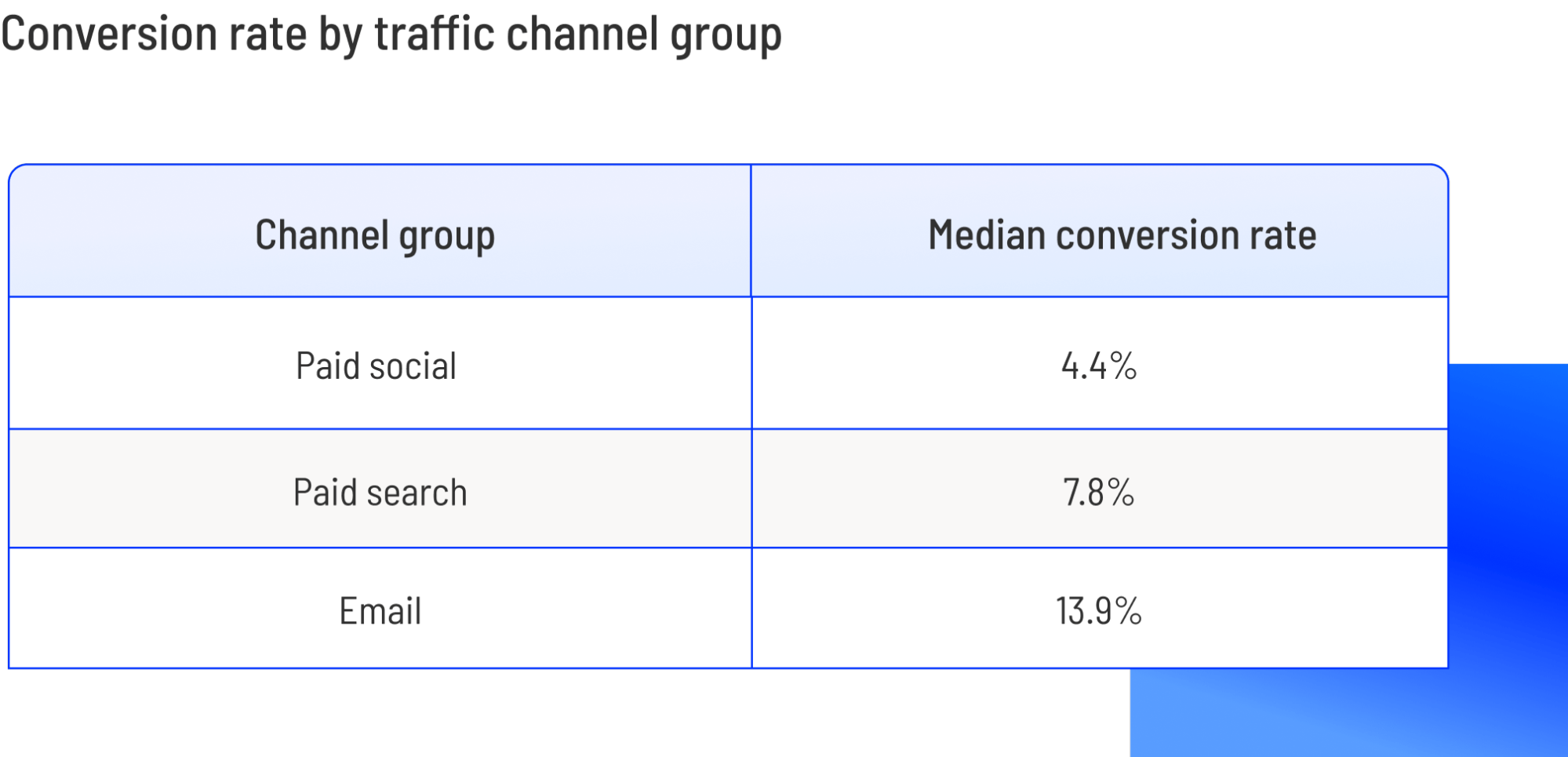
The 2024 benchmarks illustrate that where traffic originates is often as important as the content of the landing page itself. Email marketing continues to be the highest-converting channel across nearly all industries. In the professional services sector, for example, email traffic converts at a staggering 14%, compared to just 4.4% for paid social media traffic. This discrepancy highlights the value of "warmed" leads over "cold" social media discovery.
Furthermore, the "Device Disparity" remains a hurdle for many marketers. While mobile devices account for approximately 83% of all landing page visits in 2024, they frequently convert at lower rates than desktop equivalents in sectors like Travel and Hospitality. In that industry, desktop traffic converts 10.4% better than mobile, likely because travelers prefer the larger screen real estate for comparing complex itineraries and viewing high-resolution gallery images before committing to a high-cost booking.
Strategic Implications and Optimization Tactics
To bridge the gap between the 6.6% median and the 11.4% "good" threshold, the 2024 report suggests five data-backed optimization strategies:
- Readability and Simplification: There is a direct correlation between simple language and high conversion. Pages written at a 5th-to-7th-grade reading level convert at a median of 11.1%, which is 56% better than pages written at an 8th-to-9th-grade level. The use of industry jargon and "corporate-speak" acts as a friction point that discourages conversion.
- The Mobile Experience: Given that mobile dominates traffic volume, pages must be optimized for speed and "thumb-friendly" navigation. A delay of even one second in mobile load time can lead to a significant drop in conversion potential.
- Social Proof Integration: Strategic placement of testimonials and trust signals near the primary Call to Action (CTA) rather than relegated to the footer can increase trust and reduce bounce rates.
- Distraction Removal: High-converting pages in 2024 are characterized by a "leaking-proof" design. Removing navigation menus and external links ensures the user has only two choices: convert or leave.
- Iterative A/B Testing: The report concludes that the highest-performing marketers are those who treat their landing pages as living documents, constantly testing button colors, form lengths, and headline variations.
Expert Analysis: The Evolving Role of Intent
Josh Gallant, founder of Backstage SEO and a primary contributor to the Unbounce analysis, suggests that the 2024 data points toward a "Flight to Quality." As consumer privacy regulations tighten and the cost of paid acquisition rises, marketers can no longer afford to send broad traffic to generic pages.
"Not all conversions are created equal," Gallant notes. "The number that counts as ‘good’ isn’t one-size-fits-all. It depends on your industry, your audience, and how people find your page in the first place." This sentiment reflects a broader industry shift toward "Intent Matching"—the practice of ensuring the landing page content precisely mirrors the psychological state of the visitor based on their referral source.
Broader Market Impact and Future Outlook
The implications of these 2024 benchmarks extend beyond simple marketing metrics; they serve as an economic indicator for the digital economy. The high conversion rates in Education (10.1% median) and Entertainment (which sees sweepstakes pages converting at nearly 48%) suggest that consumers are currently prioritizing immediate self-improvement and low-cost digital engagement.
As we move toward 2025, the integration of Artificial Intelligence in landing page creation is expected to shift these benchmarks further. AI-driven tools like "Smart Traffic" are already beginning to automate the routing of visitors to the page variant most likely to convert them, effectively raising the floor for "average" performance. For businesses, the message of the 2024 report is clear: standing still is equivalent to falling behind. Achieving a "good" conversion rate now requires a sophisticated blend of psychological insight, technical speed, and relentless testing. Those who fail to optimize for industry-specific nuances will find themselves increasingly priced out of the competitive digital advertising market.







