

The digital marketing landscape has undergone a radical transformation over the last decade, shifting from a focus on aesthetic intuition to a rigorous, data-driven discipline centered on Conversion Rate Optimization (CRO). At the heart of this evolution lies the practice of experimentation, a process that allows organizations to move beyond guesswork and make decisions based on empirical evidence. While A/B testing has long been the standard for comparing simple variations of web elements, the increasing complexity of user interfaces and consumer behavior has necessitated more sophisticated methodologies. Multivariate testing (MVT) has emerged as a critical tool for high-traffic platforms, enabling marketers to analyze the intricate interactions between multiple page elements simultaneously to determine the optimal configuration for user engagement and revenue growth.

The Mechanics and Strategic Goals of Multivariate Testing
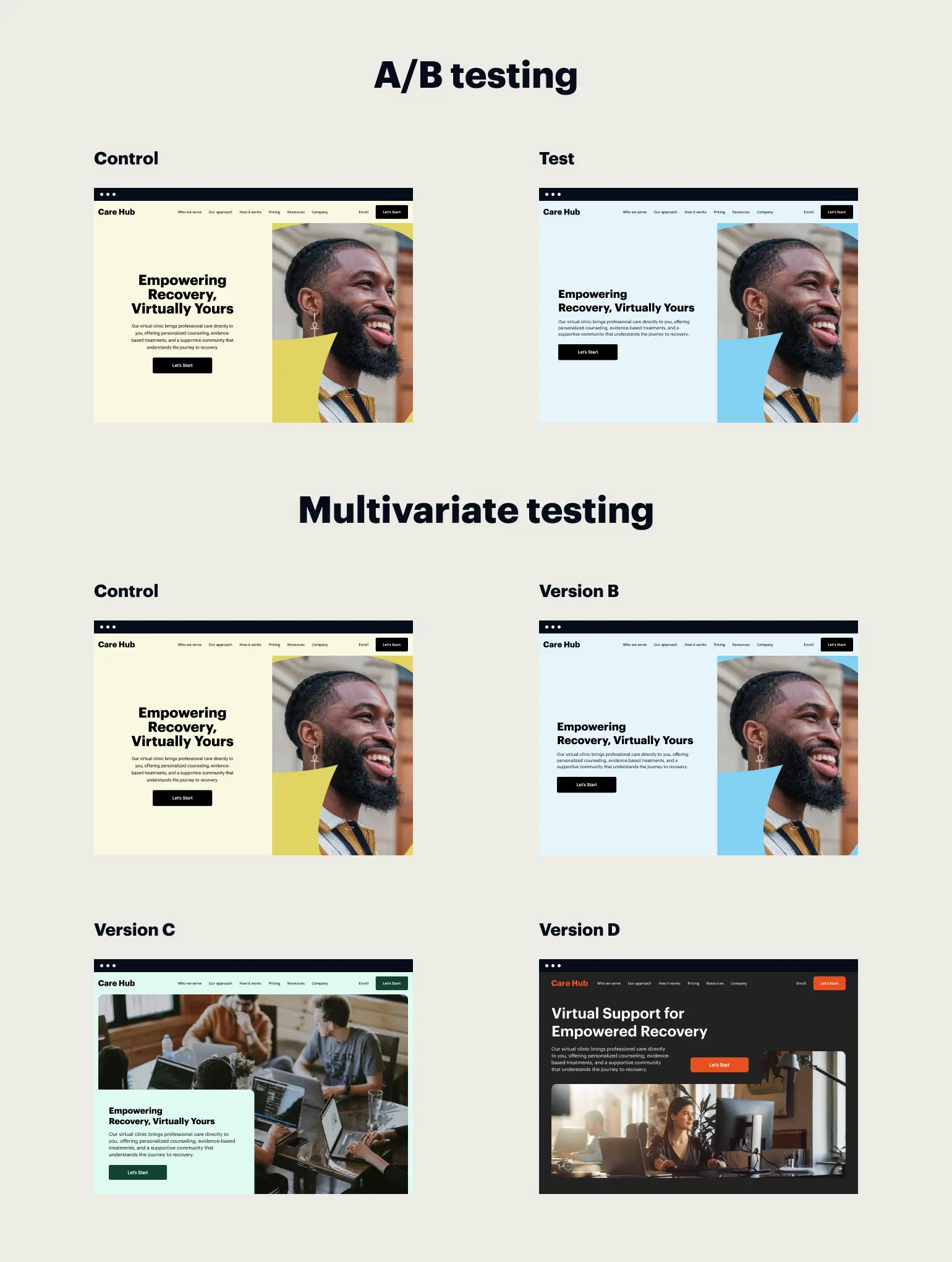
Multivariate testing is defined as a technique for testing a hypothesis where multiple variables are modified simultaneously. The primary objective is to identify which combination of variations performs the best out of all possible permutations. Unlike A/B testing, which typically isolates a single change—such as the color of a button or the wording of a headline—MVT provides a granular view of how different elements interact with one another. For example, a specific headline might perform exceptionally well when paired with a certain hero image but fail to convert when paired with a different visual.
The variables scrutinized in a typical MVT include headlines, imagery, web forms, Call-to-Action (CTA) buttons, links, and the spatial arrangement of these components. By systematically modifying these selected variables, marketers can analyze how different components work in tandem. This holistic approach is essential for optimizing complex landing pages where the user experience is defined by the sum of its parts rather than individual elements in isolation.
The overarching goal of MVT is to maximize conversion rates by identifying the "winning" variation through statistical significance. When implemented correctly, it allows for a more nuanced understanding of user psychology and behavior, providing a level of insight that simple split testing cannot match.
Strategic Advantages and the Traffic Threshold
The implementation of multivariate testing offers several key benefits for mature digital organizations. First, it identifies interaction effects between elements, revealing whether certain design choices complement or contradict one another. Second, it accelerates the optimization process by allowing multiple hypotheses to be validated in a single test cycle. Finally, it provides a comprehensive data set that can inform long-term design systems and brand guidelines.
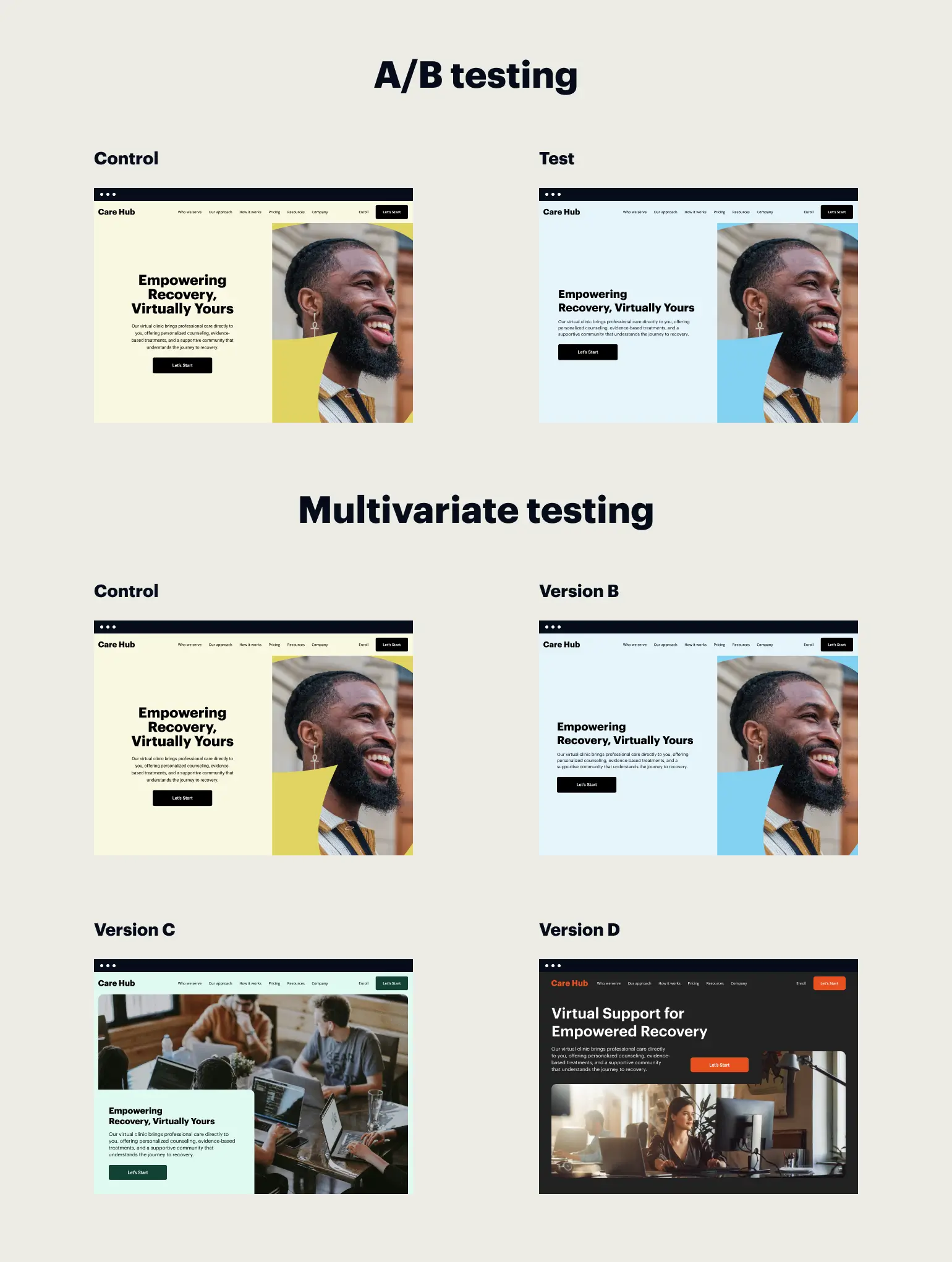
However, the power of MVT comes with a significant operational requirement: substantial web traffic. Because MVT involves testing numerous combinations of elements, the total audience must be divided into many smaller segments. For instance, testing three headlines and two images results in six distinct versions of a page. To achieve statistical significance, each of these six versions requires a sufficient sample size. If a website lacks the necessary traffic volume, the test may take months to conclude, or worse, produce "noise" rather than actionable data. This makes MVT a tool primarily utilized by established brands with high-velocity user streams.
Comparative Analysis: Multivariate Testing vs. A/B Testing
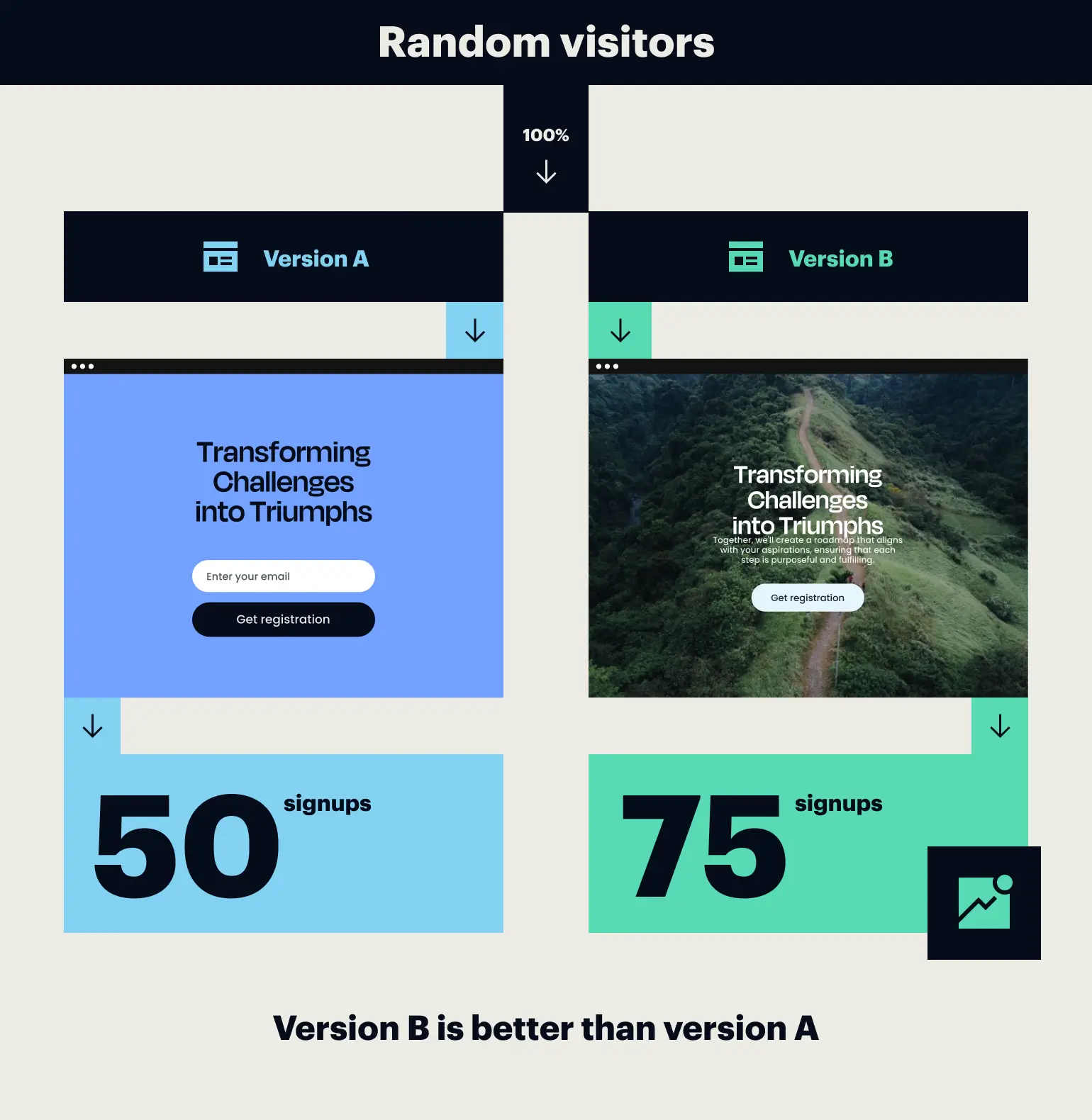
To understand when to deploy MVT, it is necessary to contrast it with A/B testing, also known as split testing. A/B testing is a methodology where two versions of a page (A and B) are compared to determine which performs better against a specific metric, such as click-through rate or sign-up completion. This process involves dividing the audience into two groups and exposing each to a single variation. It is an ideal method for testing radical changes or for websites that do not have the massive traffic required for MVT.

In an A/B test, a marketer might compare a product page with a single, prominent CTA button against a version with multiple smaller buttons. The goal is to see which layout structure drives more conversions. In contrast, MVT would take those same CTA buttons and test them in combination with different headlines and background colors simultaneously.
The choice between these two methods depends on several factors:
- Experiment Complexity: MVT is high-complexity, while A/B is low-complexity.
- Speed of Testing: A/B testing typically reaches results faster due to the smaller number of variations.
- Interaction Insights: Only MVT can tell you if Headline A works specifically because of Image B.
- Resource Requirements: MVT requires more design and development resources to create the various combinations.
- Precision: While A/B testing is excellent for determining which version is better, MVT is superior for determining which combination of elements is optimal.
The Mathematical Foundation of MVT
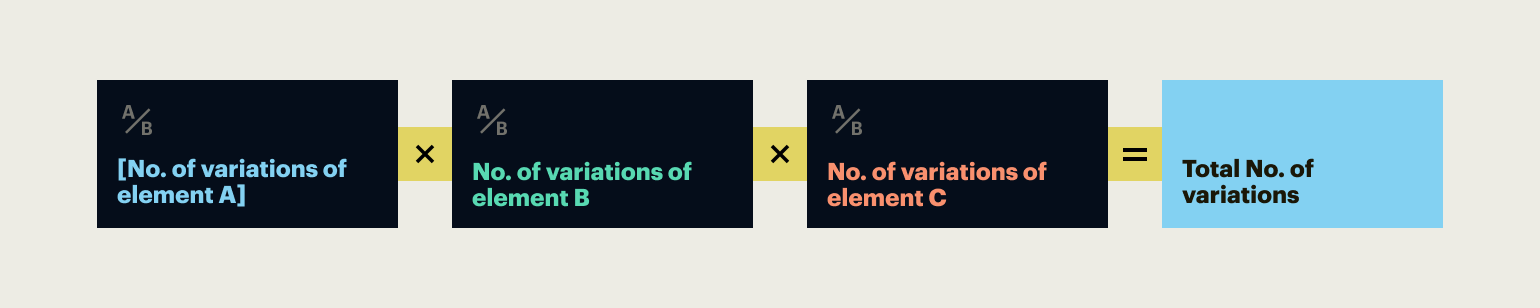
The number of variations generated in a multivariate test is determined by a simple multiplicative formula. To calculate the total number of combinations, one must multiply the number of variations for each element being tested.
For example, if a marketing team decides to test:

- Three different headlines
- Two different hero images
- Two different CTA button colors
The formula would be: 3 (Headlines) x 2 (Images) x 2 (Colors) = 12 total combinations.
To conduct this test, the platform would need to serve 12 different versions of the page to its audience. If the team were to add just one more variable, such as two different font sizes, the number of combinations would jump to 24. This exponential growth in variations is why traffic volume is the most significant barrier to entry for MVT.

Methodologies of Implementation: Full Factorial vs. Fractional
There are several mathematical approaches to conducting these experiments, the most prominent being the Full Factorial, Fractional Factorial, and Taguchi methods.
- Full Factorial Testing: This is the most thorough approach, where every possible combination of variables is tested. It provides the most accurate data regarding element interactions but requires the most traffic.
- Fractional Factorial Testing: This method tests only a subset of the possible combinations. It uses statistical models to predict how the untested combinations would have performed. While it requires less traffic, it carries a higher margin of error.
- Taguchi Method: Originally used in manufacturing, this method is rare in digital marketing. It involves highly complex calculations to identify trends with minimal variations, but it is often considered too rigid for the fluid nature of web traffic.
Real-World Applications and Success Stories
Case studies from industry leaders demonstrate the tangible impact of these testing methodologies.
AliveCor: Strategic Product Launch via Badge Testing
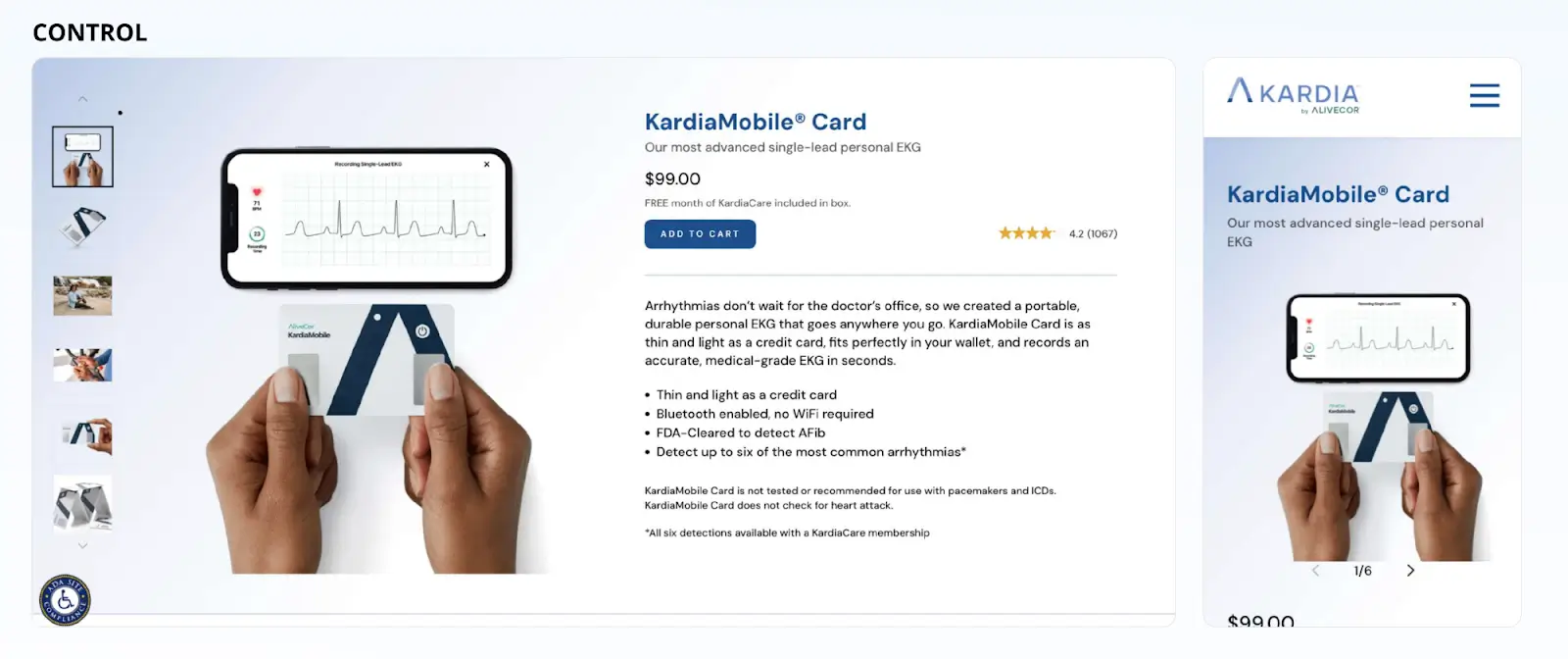
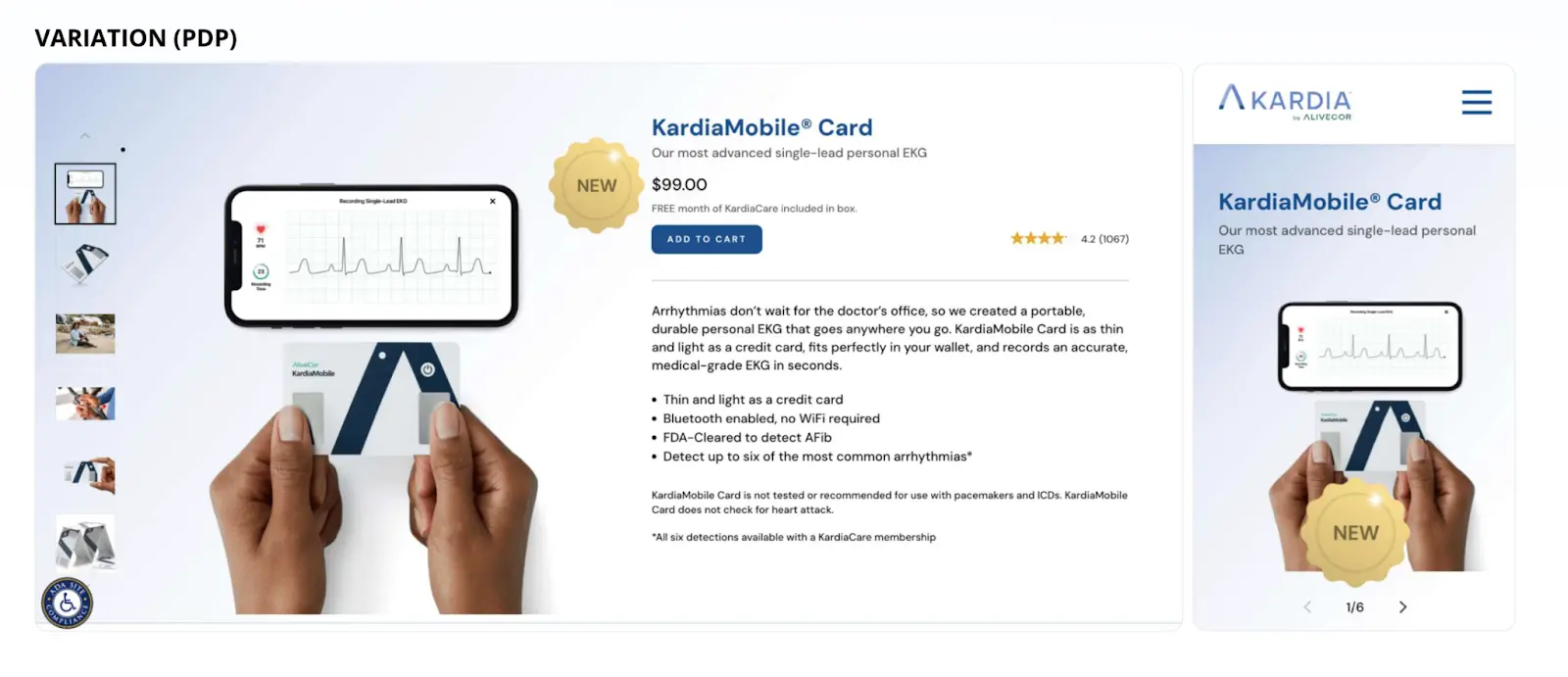
AliveCor, a medical device company, sought to launch its KardiaMobile Card without cannibalizing the sales of its existing product line. The team hypothesized that visitors would interact more frequently with products that were explicitly highlighted as "New." They conducted a test adding a "New" badge to product detail pages and listing pages. The results were significant: the variation featuring the badge saw a 25.17% increase in conversion rates and a 29.58% increase in revenue per user. This experiment validated the psychological principle of novelty and its ability to drive consumer action.
Groove: The "Copy-First" Redesign
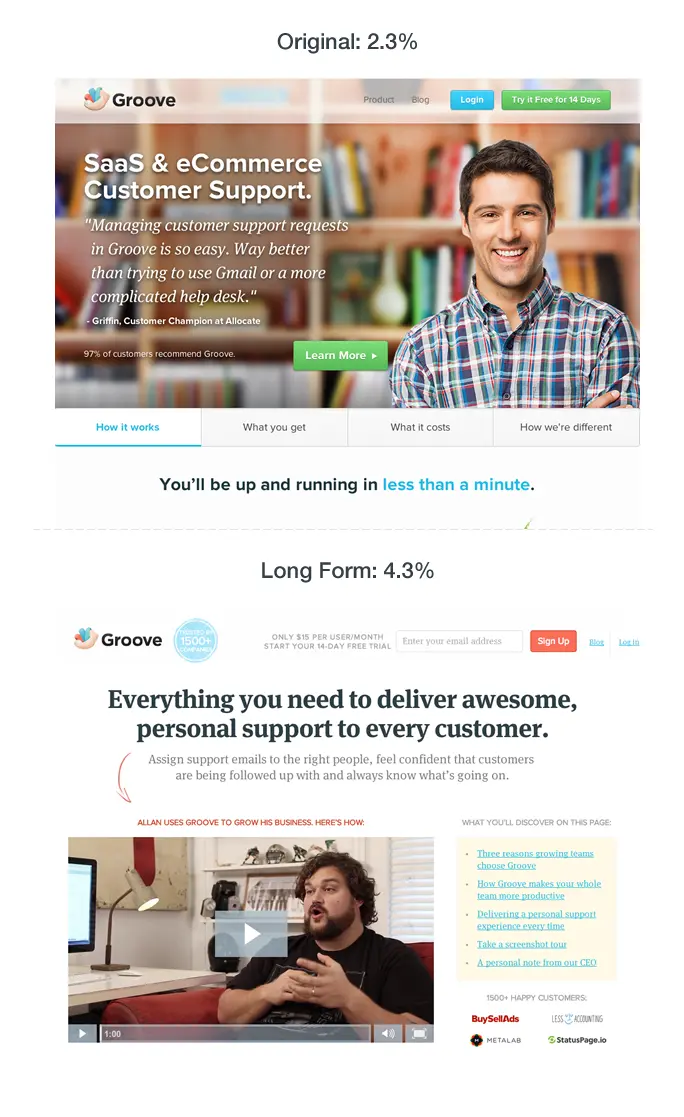
Groove, a customer support platform, utilized testing to overhaul its landing page layout. By moving from a feature-heavy design to a "copy-first" approach that emphasized benefits over technical specifications, the company increased its conversion rate from 2.3% to 4.3%. This success story highlights how testing can be used not just for small tweaks, but for validating major shifts in brand narrative and information architecture.

Navigating Implementation with Modern Tools
For many marketers, the complexity of MVT suggests that A/B testing remains the more practical starting point for optimization. Tools like Instapage have streamlined this process, allowing users to create experiments by defining a hypothesis, selecting specific landing page experiences, and automatically splitting traffic between variations.
The workflow typically involves:
- Hypothesis Creation: Defining exactly what change is expected to drive a specific result.
- Experience Selection: Identifying the target page and the specific segments of the audience to be included.
- Variation Design: Using a builder to create different versions of the page.
- Traffic Split: Determining what percentage of visitors sees each variation.
- Analysis: Monitoring the experiment until statistical significance is reached, then implementing the winning version.
The Broader Impact and Future of Digital Optimization
As artificial intelligence and machine learning continue to integrate with marketing technology, the boundaries between A/B testing and MVT are beginning to blur. AI-driven optimization tools can now perform "continuous testing," where algorithms automatically adjust page elements in real-time based on user behavior, essentially running a perpetual multivariate test without the need for manual setup.
However, the fundamental principles of multivariate testing remain more relevant than ever. In an era where customer acquisition costs are rising, the ability to squeeze maximum value out of every visitor is a competitive necessity. Organizations that master the art of the experiment—understanding not just that something works, but why it works in combination with other factors—will be the ones that achieve sustainable growth.
Ultimately, multivariate testing is more than a technical exercise; it is a commitment to a culture of excellence. It acknowledges that the digital experience is a complex ecosystem of signals, and that the only way to truly understand the user is to test, learn, and iterate with scientific precision. Whether through a simple A/B split or a complex 24-way multivariate matrix, the goal remains the same: creating a more effective, engaging, and high-converting digital world.







