Agentic artificial intelligence (AI)-powered cross-border commerce company Sazo is poised to redefine international online shopping, aiming to make purchasing goods from other countries as seamless as domestic transactions. The company has officially entered the United States market in June, allowing American consumers to purchase items directly from Japan. This expansion marks a significant step for Sazo, which began its cross-border operations in early 2024 by facilitating commerce from South Korea to Japan, and subsequently added Japan to Korea in June 2025.
Headquartered in Nagoya, Japan, Sazo also maintains offices in Tokyo and Seoul. Further solidifying its global ambitions, the company plans to open a new office in California within the next year, according to Chief Financial Officer Gavin Jung. This strategic move into the U.S. market underscores Sazo’s commitment to bridging geographical and logistical barriers in global e-commerce.
"The macro backdrop is almost counterintuitive," Jung explained to Digital Commerce 360. "Trade is getting more restrictive. The U.S. ended its de minimis duty exemption, and yet cross-border demand keeps rising, actually. What changed is the game. It used to be about duty-free tricks to keep prices low. Now, it’s about who absorbs customs more smoothly for the shoppers, and that shift actually plays to our model." This observation highlights a fundamental shift in consumer expectations and the evolving challenges of international trade, positioning Sazo’s AI-driven solutions as particularly relevant.
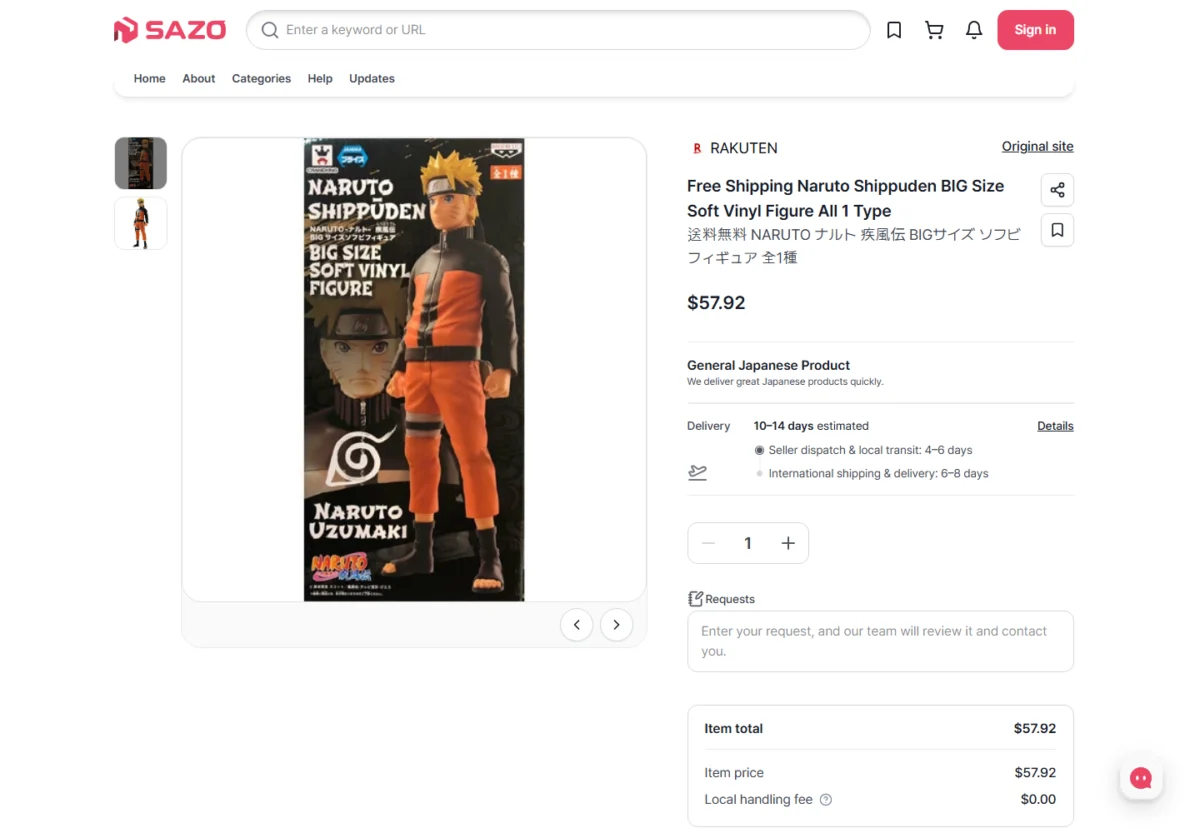
Sazo’s operational model currently focuses on listing products from either Korea or Japan, depending on the consumer’s location. For U.S. shoppers, this means access to Japanese merchandise. The process involves consumers selecting multiple products from various sellers. Sazo then acts as a proxy buyer, purchasing these items on behalf of the customer. A key aspect of their service is the consolidation of these individual purchases into a single shipment, significantly streamlining the delivery process and reducing the complexity for the end consumer.
The company is also exploring proactive inventory management strategies. "We’re also looking into buying products first—not just when consumers make purchases—to stock and sell with better prices," Jung revealed. This potential shift towards holding inventory could further enhance price competitiveness and delivery speeds, positioning Sazo as a more integrated player in the cross-border e-commerce landscape.
Leveraging AI to Overcome Cross-Border Hurdles
At the core of Sazo’s offering is its sophisticated AI technology, designed to tackle the intricate challenges inherent in cross-border transactions. "Our AI handles the parts of a cross-border purchase that usually break down, estimating duty and shipping up front, translating listings and consolidating items from different sellers into a single shipment and clearing customs," Jung stated. This comprehensive approach addresses common pain points for online shoppers engaging in international purchases, such as unexpected fees, language barriers, and complicated shipping logistics.
One of the most significant benefits for Sazo’s customers is the simplicity of the payment process. Consumers pay a single, all-inclusive price in their local currency. This upfront cost incorporates all tariffs, duties, and international shipping fees, eliminating the risk of surprise customs invoices or adverse foreign exchange rate fluctuations. This transparency and predictability are crucial for building consumer trust and encouraging repeat business in the global marketplace.
Sazo is actively developing its technology stack with a long-term vision: to become the foundational cross-border back-end infrastructure that AI agents can seamlessly integrate with. The company plans to release an application programming interface (API) specifically for AI agents. This strategic move is driven by interest from partners in Japan who wish to leverage Sazo’s technology as a service. "As AI agents start shopping on people’s behalf, searching, recommending, eventually buying, the models are great at finding a product," Jung elaborated. "But they can’t clear customs, predict duty by HS code, or run local fulfillment. That execution layer is exactly what we own." This positions Sazo as an essential enabler in the burgeoning era of AI-driven commerce, regardless of which specific AI agents eventually dominate the market.
Sazo Secures Over $10 Million in Series A Funding
The company’s rapid growth and ambitious vision have been bolstered by significant financial backing. Sazo was founded in 2023 by CEO Maro Gil, who conceived the idea while studying in Nagoya, Japan, as an international student from Korea. The inspiration struck Gil when he struggled to purchase items from Korea related to his hobbies, highlighting the persistent difficulties in cross-border shopping despite geographical proximity. Leveraging his background in AI studies, he set out to develop a technological solution.
"Nagoya is not Tokyo. It’s a very humble place. So there’s not much for you to enjoy in the city," Jung remarked, providing a glimpse into the origins of Sazo’s innovation. Gil’s personal experience fueled the development of what was initially a highly inefficient prototype, as Jung described, but one that laid the groundwork for Sazo’s current sophisticated platform.
Sazo recently announced the successful closure of its Series A funding round, raising over $10.3 million. The round was led by Japan Post Capital and Suzuyo & Co., both of whom also participated in Sazo’s pre-Series A financing. This continued support from key investors underscores confidence in Sazo’s business model and future prospects.
Additional strategic investments have come from prominent entities including Naver, Sumitomo Mitsui Banking Corporation (SMBC), and Mizuho Bank. Further backing was provided by Japanese venture capital firm Partners Fund and D4V (Design for Ventures). This diverse investor base highlights broad market recognition of Sazo’s potential.
"Our global service has grown rapidly, with monthly gross merchandise value increasing roughly sevenfold over the past six months," stated CEO Maro Gil, as reported by Wow Tale. "Building on this investment, we plan to hire talent across development, service operations, and other areas, and accelerate our efforts to build a cross-border ecosystem that connects consumers and businesses worldwide." This expansion plan signals Sazo’s intent to scale its operations and solidify its position as a global leader in cross-border e-commerce solutions.
Analyzing Cross-Border Shopping Trends in South Korea and Japan
Sazo is currently experiencing robust growth, with a reported 25% month-over-month increase in business. While Jung does not perceive significant fundamental differences between its Korean and Japanese customer bases, he has observed distinct patterns in their purchasing habits.
Japanese customers who buy from Korea through Sazo often gravitate towards products associated with K-pop stars. However, there is also a notable segment purchasing food items. The demographic profile of Sazo’s Japanese users tends to skew younger, with a majority being male.
In contrast, Sazo’s customer base in Korea presents a different demographic. While Jung initially expected younger consumers, he has found that more than half of their Korean customers are females in their 30s and 40s, with a substantial portion also in their 20s. This unexpected demographic concentration in older age groups for a platform facilitating potentially niche cross-border purchases offers valuable insights into consumer behavior and market penetration.
Jung expressed surprise at Sazo’s average order value (AOV), which exceeds $100. He had anticipated that consumers would primarily use the platform for lower-cost purchases. Furthermore, he noted that the AOV among Sazo customers in Japan is generally lower than that of their Korean counterparts.
"But people actually don’t just cut down the money when it comes to buying something they really want to enjoy for their hobbies or something they really want to appreciate," Jung commented. This observation is particularly relevant when considering the dedicated fan bases for certain cultural products. "And especially for those IP maniacs who are so into Japanese anime, Japanese characters. They spend a lot of money." This highlights the strong purchasing power of enthusiasts who are passionate about specific intellectual property and are willing to invest significantly to acquire desired merchandise, regardless of international shipping complexities.
The company’s strategic entry into the U.S. market, coupled with its AI-driven approach to simplifying cross-border logistics, positions Sazo to capitalize on the growing global e-commerce trend. As consumer demand for international goods continues to rise, despite increasing trade complexities, Sazo’s ability to absorb these challenges and offer a frictionless experience could prove to be a significant competitive advantage. The company’s future trajectory will likely be closely watched by both e-commerce businesses and technology investors alike, as it seeks to establish a new standard for international online shopping.