

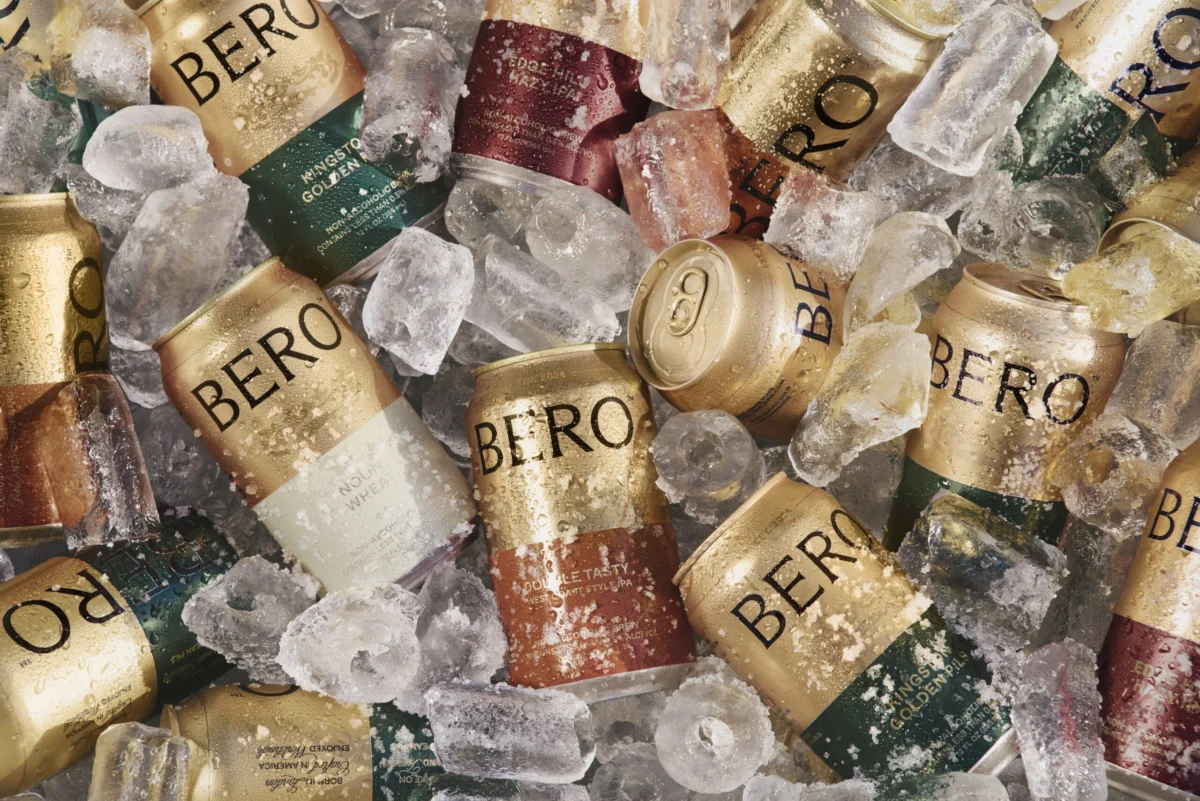
Bero, the non-alcoholic beer brand co-founded by actor Tom Holland and CEO John Herman, has strategically leveraged its "omnichannel loyalty program" to significantly boost its direct-to-consumer (DTC) e-commerce sales. This innovative approach allows customers to earn loyalty credits regardless of their purchasing channel, seamlessly integrating online and offline retail experiences. Launched initially as a DTC e-commerce venture in October 2024, Bero rapidly expanded its footprint by joining Amazon in January 2025 and establishing a presence with mass merchant retailers like Target and Kroger. This multi-channel strategy, underpinned by a unified loyalty system, has proven instrumental in fostering customer engagement and driving sales growth in the burgeoning non-alcoholic beverage sector.
The core of Bero’s strategy lies in its Club Bero loyalty program, which offers members the ability to accrue credits through purchases made across all sales channels. According to Hyojin Park, Bero’s senior director of e-commerce solutions and growth, this is facilitated by QR codes integrated into the brand’s products. "You could never buy online and only buy on Amazon or at Target and scan these QR codes and start to amass credits as a part of the loyalty program," Park explained to Digital Commerce 360. "And then you will have to spend them online, but it’s something that you can just earn. So it’s designed to make sure that you can still earn money back to spend on Bero wherever you buy it. It doesn’t have to be online." This inclusive reward system ensures that customer loyalty is recognized and nurtured, irrespective of their preferred shopping destination.
Chronology of Bero’s Strategic Expansion
Bero’s journey began in October 2024 with a clear vision for its direct-to-consumer e-commerce presence. Co-founders Tom Holland and John Herman aimed to establish a robust online platform from the outset. The brand’s initial operational phase, as described by Park, involved working "in stealth mode" as the brand name and product recipes were finalized. Park, who joined Bero in April 2024 as one of its earliest employees, recognized the critical importance of a well-designed loyalty program as a foundational element for the brand’s e-commerce ambitions.
The subsequent year marked a period of significant strategic expansion. By January 2025, Bero had successfully integrated with Amazon, a move that vastly expanded its online reach and customer accessibility. This was followed swiftly by partnerships with major brick-and-mortar retailers, including Target and Kroger. This phased expansion highlights a deliberate and calculated approach to market penetration, aiming to capture consumers across various shopping habits and preferences. The integration of the omnichannel loyalty program across these diverse channels was not an afterthought but a central tenet of Bero’s growth strategy, designed to create a cohesive brand experience and foster enduring customer relationships.
The Omnichannel Loyalty Framework: Club Bero
The Club Bero program is structured into two tiers: a free membership and a premium paid tier, BeroMaster, which requires an annual subscription of $55. This tiered structure allows for broad customer participation while offering enhanced benefits to more committed brand advocates. The free tier provides a baseline level of engagement, encouraging initial adoption and allowing customers to experience the value of the program. The BeroMaster tier, on the other hand, is designed to cultivate a core group of highly engaged customers, offering exclusive perks that drive higher lifetime value and average order values.
Park emphasized that the loyalty program is "probably our most custom piece" of Bero’s e-commerce infrastructure, which is powered by Shopify. This bespoke development underscores the brand’s commitment to creating a unique and effective loyalty experience that differentiates it in a competitive market. The philosophy behind Club Bero is to "reward them for wherever they choose to buy," acknowledging that modern consumers do not confine their purchasing habits to a single channel. This customer-centric approach is crucial for building lasting relationships and ensuring sustained revenue growth.
Data-Driven Insights: The Impact of Loyalty Tiers
Bero’s data reveals a clear correlation between loyalty program membership and customer value. The BeroMaster tier, in particular, stands out for its superior performance metrics. Members of this elite tier exhibit the highest lifetime value (LTV), the best average order value (AOV), and an exceptionally high repeat purchase rate, reportedly exceeding 80%. This is a significant uplift compared to non-members. Furthermore, BeroMaster members demonstrate an AOV that is approximately $20 higher than that of non-members.
While the allure of exclusive benefits, such as Q&A sessions with co-founder Tom Holland, is a perceived draw, Park suggests that the underlying appeal of the product itself is a primary driver of this loyalty. "One of the benefits of being a BeroMaster is a Q&A session with Tom," Park stated. "And we always thought internally that would be a huge driver. But when it comes down to it, it’s actually we have fewer attendees on the Q&A than we have repeat purchasers. So I feel like it’s a sign that people just love the beer." This insight is invaluable, indicating that the product quality and consumer satisfaction are paramount, with loyalty programs serving as an effective mechanism to capitalize on this intrinsic appeal.
The free tier of Club Bero also shows promising results, with repeat purchase rates ranging from 30% to 35%. Even for new customers, their LTV after just two months is notably higher when they are part of the loyalty program compared to those who are not. This suggests that early engagement with the loyalty program acts as a powerful catalyst for sustained customer relationships.
Enhancing E-commerce Sign-ups Through UX Innovation
Bero has implemented a clever user experience (UX) strategy to significantly increase its loyalty program sign-up rates. Recognizing the challenge of introducing a paid membership in the early stages of brand development, Park’s team integrated the BeroMaster membership as a purchasable product directly within the checkout process. By adding the $55 annual membership to the cart pane, consumers are immediately presented with its value proposition: an instant 10% discount on their current order and free shipping. This transparent and immediate benefit, which disappears if the membership is deselected, has proven remarkably effective.
The implementation of this UX change led to a rapid tripling of membership sign-up rates. By June, the sign-up rate had reportedly increased tenfold since the program’s launch in October 2024. This data-driven approach to optimizing the customer journey at the point of purchase demonstrates a keen understanding of consumer psychology and a commitment to removing barriers to engagement. The success of this tactic highlights the power of subtle yet impactful design choices in driving desired customer behaviors and bolstering e-commerce metrics.
Product Development and Channel Strategy: A Harmonious Balance
Bero’s approach to product development is intrinsically linked to its omnichannel strategy. The brand actively solicits and values customer feedback, with Park personally reviewing post-purchase surveys to glean insights into consumer preferences and requests. This direct line of communication has informed product innovation, such as the development of a darker-style beer in response to customer demand.
This new product was launched in collaboration with Happy, a coffee brand co-founded by Robert Downey Jr. Bero strategically offered an exclusive pre-sale of this collaborative product on its e-commerce site, leveraging early access as a reward for its loyalty members. Similarly, the brand’s shandy product line was given a "head start on [DTC]," indicating a deliberate strategy to prioritize certain channels for new product introductions.
From a strategic standpoint, Bero has learned that "more is not more" when it comes to channel saturation. The brand is focused on achieving a "better balance of format or catalog differentiation across our channels." This involves carefully considering how to introduce product exclusivity to different channels without creating internal competition or cannibalizing sales from other retail partners. This nuanced approach to channel management is essential for fostering sustainable growth and maintaining strong relationships with all its retail partners, from online marketplaces to mass merchants.
Implications for the Non-Alcoholic Beverage Market
Bero’s success offers a compelling case study for other brands operating within the rapidly expanding non-alcoholic beverage market. The emphasis on an integrated, omnichannel loyalty program addresses a key consumer trend: the desire for seamless purchasing experiences and consistent brand engagement across all touchpoints. By rewarding customers regardless of where they choose to buy, Bero is building a strong foundation of brand loyalty that transcends channel preferences.
The strategic use of QR codes for loyalty point accrual is a particularly effective method for bridging the gap between offline purchases and online engagement. This allows brands to gather valuable data on in-store purchasing behavior while simultaneously driving traffic and engagement to their digital platforms.
Furthermore, Bero’s approach to driving loyalty program sign-ups through UX optimization at checkout provides a replicable model for e-commerce businesses looking to increase membership. The immediate presentation of benefits, such as discounts and free shipping, acts as a powerful incentive for consumers to join.
The brand’s commitment to listening to customer feedback and using it to inform product development also highlights the importance of a customer-centric approach in a competitive landscape. The collaborative product launch with Happy, coupled with strategic channel prioritization, demonstrates a sophisticated understanding of how to generate excitement and drive sales through targeted marketing and exclusive offerings.
Bero’s strategic expansion from a DTC e-commerce startup to a multi-channel retailer, all while prioritizing a unified loyalty experience, positions it as a significant player in the non-alcoholic beer sector. The brand’s ability to effectively integrate online and offline sales channels through its innovative loyalty program serves as a benchmark for future growth and customer engagement strategies in the evolving beverage industry. As consumer demand for non-alcoholic options continues to surge, Bero’s model provides valuable insights into how to build a loyal customer base and achieve sustainable success in this dynamic market. The focus on rewarding customers wherever they shop, coupled with a deep understanding of their preferences, underscores a forward-thinking approach that is likely to yield continued dividends for the brand.








