The digital frontier of social media, once primarily a realm for personal connection and casual marketing, has rapidly transformed into a high-stakes battleground for cybersecurity. With the advent of sophisticated artificial intelligence (AI) technologies, the threats of phishing, deepfakes, and elaborate scams are escalating, compelling organizations and individuals alike to rethink their security postures. What was once a concern for IT departments has now become a critical enterprise-wide risk, demanding a comprehensive and continuously updated strategy to safeguard digital assets, reputation, and customer trust.

The Escalating Threat Landscape
Social media platforms like Instagram, Facebook, and LinkedIn are indispensable channels for communication, marketing, and customer service for countless organizations worldwide. This ubiquitous presence, however, makes them prime targets for malicious actors. Social media security encompasses the rigorous practices designed to protect accounts, sensitive information, and privacy. For businesses, this extends to governing access to branded accounts and mitigating a growing array of threats, including phishing, account takeovers, malware, and the increasingly sophisticated challenge of AI-driven deception.

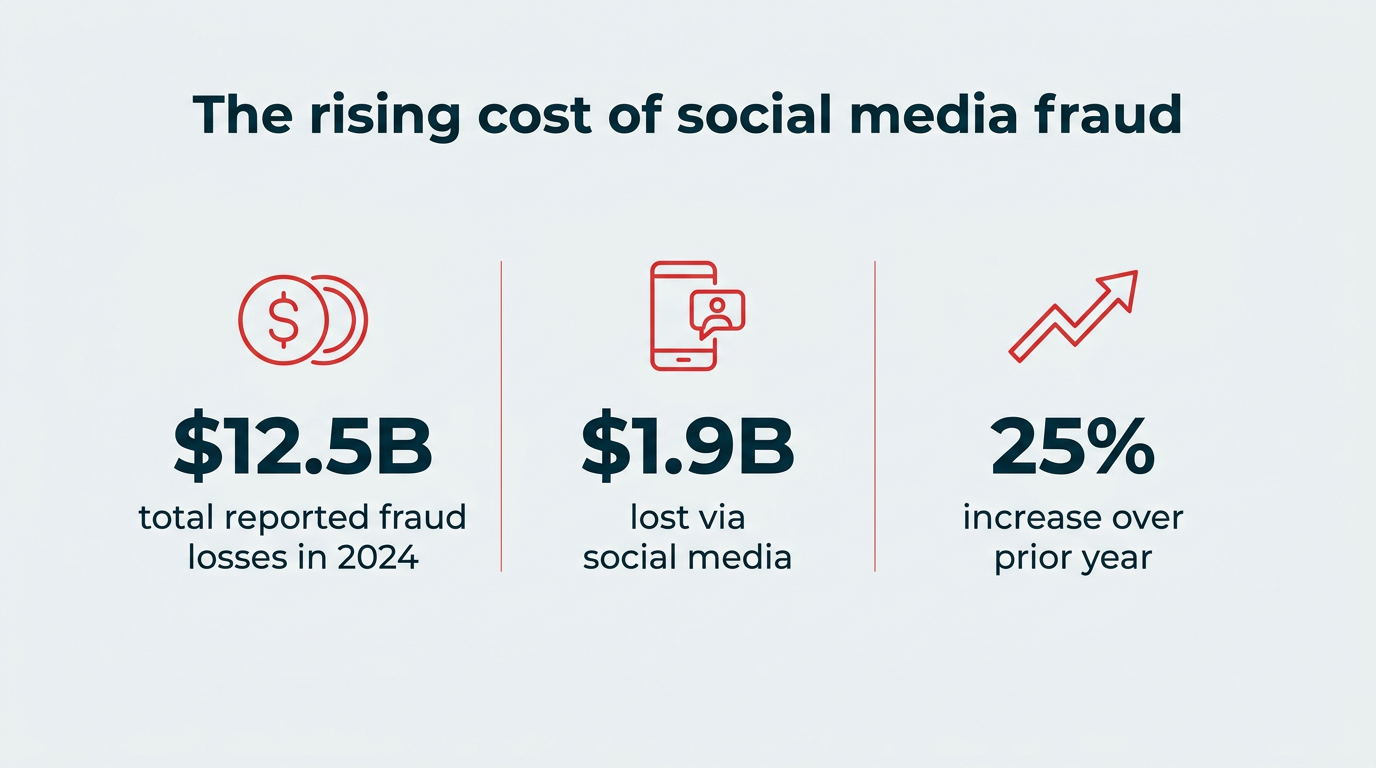
The financial stakes are staggering and continue to climb. The Federal Trade Commission (FTC) reported that consumers lost an alarming $12.5 billion to fraud in 2024, marking a 25% increase over the previous year. Social media emerged as one of the most prevalent channels scammers exploit to reach victims, indicating that brand impersonation carries a direct and substantial cost to both consumers and the brands themselves. This financial fallout is paralleled by significant reputational and regulatory exposure. A single compromised account publishing fraudulent offers or an employee inadvertently sharing regulated information can trigger widespread customer complaints, intense scrutiny from regulators, and severe legal repercussions, particularly in heavily regulated industries. Treating social media accounts as integral components of a broader risk management program is no longer a discretionary choice but an operational imperative for modern enterprises.
Deepfakes and AI Phishing: A New Era of Deception
The evolution of AI has fundamentally reshaped the social engineering landscape, transforming opportunistic scams into highly organized, automated, and scalable attacks. The sheer volume of information publicly available about businesses and their employees on social media platforms, when combined with AI’s generative capabilities, allows attackers to craft incredibly convincing and highly targeted content at an unprecedented scale.
This manifests in several critical ways. AI can generate hyper-realistic phishing messages that mimic legitimate communications, making them exceedingly difficult to discern from genuine interactions. Attackers can leverage AI to create deepfake audio and video content, impersonating executives or key personnel to manipulate employees into divulging sensitive information or transferring funds. For instance, a recent Gartner survey revealed that 62% of organizations had experienced a deepfake attack in the past year. A widely reported case involved a Hong Kong finance employee who transferred approximately $25 million after participating in a video call where all other participants were deepfakes of senior colleagues. This incident underscores the tangible and devastating impact of such advanced AI-powered fraud.
The public’s ability to discern real from fake content is also under severe strain. Approximately 20% of Generation X adults admit to struggling with identifying AI-generated social content, with only slightly better figures for Millennials (15%) and Generation Z (14%). This pervasive uncertainty provides fertile ground for scammers. AI tools also lend a veneer of legitimacy to fraudulent schemes; in one instance, a Canadian man was defrauded by a fake Facebook customer support line after an AI assistant he consulted online erroneously validated the scammer’s phone number.
Beyond AI: Persistent Vulnerabilities

While AI presents new and formidable challenges, traditional social media security risks remain potent and pervasive:
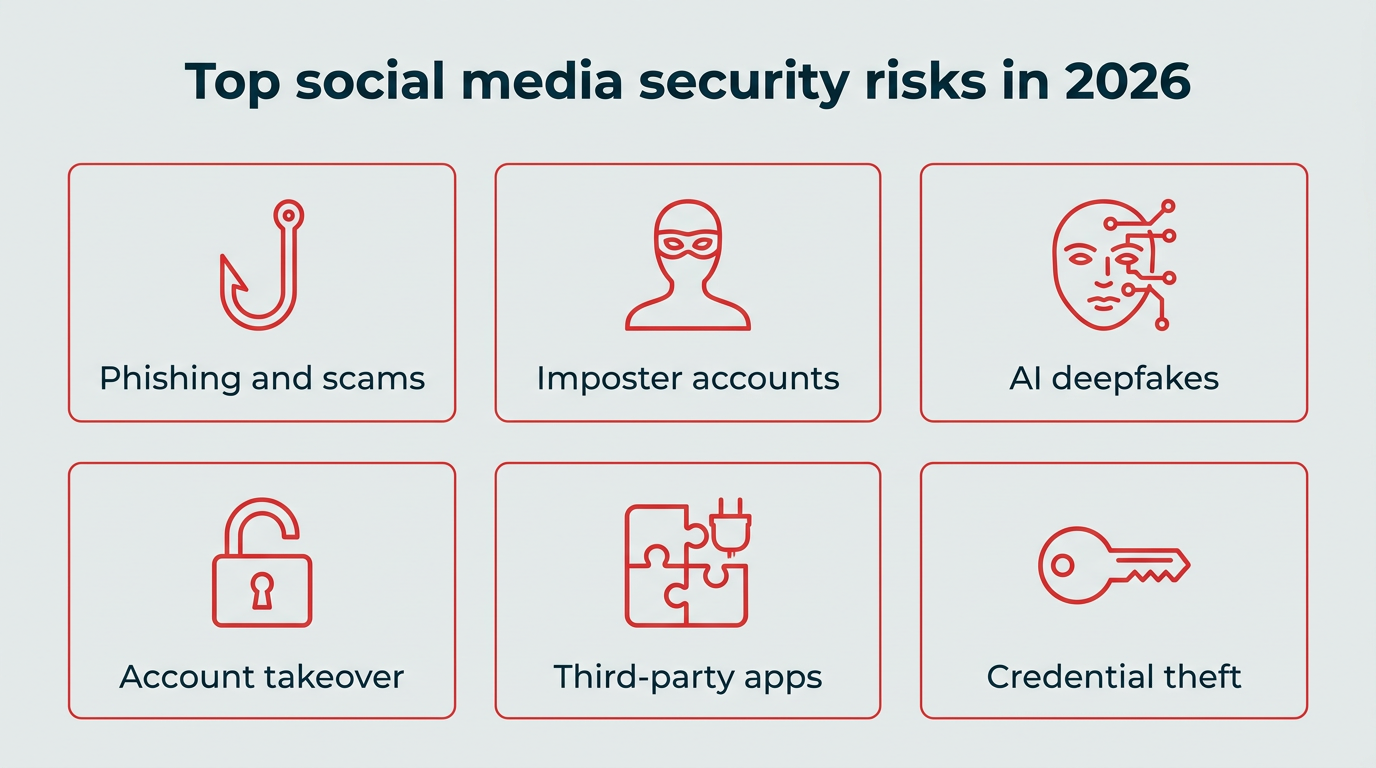
- Phishing and Social Media Scams: These continue to be among the most common cyber security risks, aiming to extract passwords, banking details, or other sensitive information. Tactics range from fake support messages and copyright infringement notifications to urgent account warnings and enticing "free money" offers. Online shopping and investment scams are particularly problematic, with social media accounting for $1.9 billion in reported losses in 2024, making it the leading contact method for fraudsters targeting working-age adults.
- Imposter and Fake Accounts: These profiles, designed to mimic legitimate companies or individuals, are relatively easy to create and pose a significant threat. They target customers, employees, and prospective hires, tricking them into revealing confidential information and severely damaging brand reputation. LinkedIn’s Community Report highlights the scale of this issue, showing the platform took action on tens of millions of fake accounts, though a small percentage still slip through automated defenses and require user reporting. Meta reports similar figures for Facebook, estimating 4-5% of monthly active users are fake accounts.
- Malware Attacks and Account Takeovers: An attacker gaining direct control of a social media profile, often through stolen credentials, malware, or a compromised employee device, constitutes an account takeover. A notable example is the January 2024 hack of the X (formerly Twitter) U.S. Securities and Exchange Commission account, which led to false posts moving markets within minutes. Such incidents cause immense brand reputation damage. A newer, alarming threat involves hijacking social media ad accounts with attached payment methods to run fraudulent ads that appear legitimate but direct users to malware or scams.
- Vulnerable Third-Party Apps: Even with robust internal security, connected third-party applications can introduce critical vulnerabilities. Instagram explicitly warns against apps promising artificial likes or followers, as granting them login information can provide complete account access, exposing personal messages, friend information, and enabling the posting of spam or harmful content. Regular audits of connected apps are crucial to revoke access for unused or unidentifiable tools.
- Password Theft and Credential Attacks: Despite widespread awareness, password hygiene remains a weak link. Social media quizzes designed to gather personal details for forgotten password clues are common, allowing attackers to piece together information. Verizon’s 2025 Data Breach Investigations Report indicated that stolen credentials were involved in 22% of data breaches, with reused passwords granting attackers access across multiple systems once a single set is compromised. Employees unwittingly sharing personal information online (e.g., life events, birthdates) can inadvertently provide clues for password hints, necessitating careful consideration of what is shared publicly.
Proactive Defense: A 2026 Checklist for Robust Security

Mitigating these diverse and evolving threats requires a multi-layered, proactive defense strategy. Organizations should implement the following eight practices as a foundation for their social media security program:
- Strong, Unique Passwords and a Password Manager: This is the most cost-effective security measure. Every social account must have a long, randomly generated, unique password. Policies should mandate a minimum length of 12 characters, a mix of character types, avoidance of dictionary words, and the use of a reputable password manager for secure storage and sharing.
- Enable Two-Factor Authentication (and Passkeys): While not entirely foolproof, 2FA provides a powerful extra layer of protection. It is best practice to enable it for all secure social media accounts. Where supported, passkeys are a superior option, replacing passwords with cryptographic credentials tied to a device, rendering phishing attempts ineffective. Platforms like Facebook, Instagram, X, and LinkedIn support passkey or authenticator-app logins, with app-based codes preferred over vulnerable SMS codes.
- Limit Access with Role-Based Permissions: Restricting the number of individuals who can access and post on social accounts is a critical defensive strategy. Employees are a significant source of accidental data breaches. Implement the principle of least privilege, granting each person the minimum access necessary for their role, and nothing more. Tools like Hootsuite enable collaboration without sharing passwords, assigning permissions via role-based access and routing content through approval workflows.
- Train Employees on Social Media Security Awareness: The human element is often the first target for attackers. Security training should be a continuous process, incorporated into onboarding and refreshed biannually. Training should cover identifying phishing attempts, recognizing social engineering tactics, understanding the risks of oversharing personal information, and adhering to company social media policies.
- Set Up Real-Time Monitoring and Alerts: Early detection is crucial. Real-time monitoring of all social channels, including those actively used and dormant registered accounts, helps catch problems before they escalate. A comprehensive social media monitoring plan should watch for brand mentions, sudden spikes in negative sentiment, imposter accounts, suspicious links, and any deviation from normal activity. Integrated listening tools, such as Hootsuite’s Lumen, can surface these signals across social and web sources, providing alerts as events unfold.
- Review and Update Privacy Settings Regularly: Privacy settings can drift as platforms update, necessitating scheduled reviews. This applies to both personal and business accounts. With 81% of U.S. adults concerned about how companies use their data, and over 5.7 billion active social media users globally, understanding and configuring privacy settings is paramount. Teams should understand platform privacy policies, check public visibility on profiles and employee bios, and set clear audience defaults for new posts.
- Secure Mobile Devices and Connections: Most social publishing occurs on mobile devices, making device security a direct component of social media security. A significant 16% of Americans do not use phone locking features, leaving their data vulnerable. Similarly, only 42% of U.S. smartphone users have automatic software updates enabled, and 3% never update their software, exposing them to known vulnerabilities. For any device accessing brand accounts, enforce screen locks, automatic updates, remote wipe capabilities, and mandatory VPN use on public Wi-Fi networks, which are easily exploited for traffic interception or login page spoofing.
- Audit Security Measures Quarterly: The threat landscape is dynamic. Quarterly security audits of social media measures, alongside regular social media audits, are essential to stay ahead of fraudsters. These audits should review access permissions, connected third-party apps, privacy settings, employee training logs, and the incident response plan.
The Imperative of a Comprehensive Social Media Security Policy

A well-defined social media security policy translates good intentions into enforceable practices. It outlines who can access accounts, what content can be published, and the protocols for handling security incidents. This policy should build upon a broader social media policy for employees rather than existing as a standalone document. Key components include: account ownership, clear access rules and role-based permissions, content guidelines (approved topics, tone, compliance), incident response procedures (reporting, escalation, containment), data retention policies, and a schedule for regular security audits. Ownership typically rests with social media or communications teams, co-signed by IT security and legal departments. In regulated industries, compliance teams must be involved early to shape publishing rules and record-keeping obligations. A policy is only effective if it is read and understood, making integrated training a critical component.
For large enterprises, governance and compliance are paramount. At scale, manual checks are impractical, requiring security controls to be embedded within the publishing systems. This typically involves centralized permissions for streamlined access management, governed approval workflows to ensure proper sign-off before content goes live, and a comprehensive audit trail to demonstrate accountability to regulators or auditors. For teams in finance, healthcare, and the public sector, a robust audit trail can differentiate a manageable incident from a reportable one.

Industry Responses and Expert Recommendations
Social media platforms are continually enhancing their security features. LinkedIn, for instance, has invested heavily in automated defenses to block fake accounts at registration. Meta also deploys significant resources to identify and remove fake profiles. However, these platform-level defenses are not infallible, necessitating proactive measures from users and organizations. Cybersecurity experts universally recommend a layered approach, emphasizing user education as the first line of defense. They stress the importance of understanding the psychological triggers of social engineering and the technical safeguards available.
Tools and Technologies for Enhanced Protection
No single tool provides a complete solution; most teams integrate a governed publishing platform with external threat monitoring.

- Hootsuite Social OS: This platform offers robust governance, monitoring, and publishing capabilities in one system. Team members never need to know direct login credentials, with access controlled via role-based permissions. Content moves through governed approval workflows, ensuring sign-off before publication, and every action is logged for an auditable trail. Hootsuite’s Proofpoint integration adds an extra layer of compliance review for regulated industries, automatically checking content against policies before publishing. Its integrated Lumen app provides real-time social and web monitoring, alerting teams to suspicious brand mentions, sentiment shifts, and impersonation attempts. Hootsuite is also FedRAMP authorized and Cyber Essentials compliant.
- ZeroFOX: This cybersecurity platform provides external threat intelligence and brand impersonation takedown services. It offers automated alerts for fake accounts, malicious links, data leakage, and scams, and supports takedown requests for impersonating accounts and domains.
- 1Password Business: As most account takeovers originate from stolen or reused passwords, a business password manager is indispensable. 1Password Business offers shared vaults with permissions, secure credential management, breach monitoring, and passkey support. It allows for the revocation of a departing employee’s access in a single step, eliminating the need to reset numerous platform passwords. When paired with a publishing platform, it ensures raw social passwords are never directly exposed to employees.
Broader Implications and the Future of Digital Trust
The escalating social media security crisis carries profound implications beyond immediate financial losses. It erodes public trust in digital information, challenges the integrity of corporate communications, and necessitates a fundamental re-evaluation of online interactions. The regulatory landscape is also adapting, with governments worldwide exploring new legislation to combat deepfakes and AI-driven fraud, placing greater responsibility on platforms and organizations. The continuous arms race between attackers leveraging rapidly advancing AI and defenders developing sophisticated countermeasures will define the future of digital security. Organizations must embrace adaptive strategies, foster a culture of security awareness, and leverage cutting-edge tools to navigate this evolving and increasingly complex digital environment.

The urgency for robust social media security cannot be overstated. With AI amplifying the sophistication and scale of attacks, a reactive approach is insufficient. A proactive, multi-layered, and continuously evolving security strategy, grounded in strong policies, advanced tools, and comprehensive employee training, is essential for safeguarding assets, reputation, and trust in an increasingly interconnected and vulnerable digital world.