The landscape of technology hiring has undergone a fundamental shift over the last decade. As the initial hype surrounding "Big Data" matures into a focus on "Business Value," the criteria for evaluating data science candidates have evolved. In the current market, proficiency in Python or R is no longer the primary differentiator. Instead, major tech firms—from FAANG incumbents to high-growth startups—increasingly rely on the case study interview to identify talent. This specific interview format serves as a "live audition," simulating the ambiguity and pressure of a real-world project to determine how a candidate reasons, prioritizes, and communicates under constraints.
In these high-stakes sessions, the "right" model is often the least important part of the evaluation. Interviewers are looking for structured thinking and sound judgment. To navigate this complexity, experts have developed the SCOPE framework—a repeatable system designed to guide candidates through any data science problem, from traditional churn prediction to modern Generative AI implementations.
The Evolution of the Data Science Scorecard
Historically, data science interviews focused heavily on algorithmic trivia and whiteboarding. However, industry leaders realized that being able to derive a Support Vector Machine from scratch does not necessarily translate to solving a supply chain bottleneck. Today’s case study scorecard is typically divided into four critical dimensions:
- Business Intuition: The ability to map a vague business request to a concrete data problem.
- Technical Depth: Understanding the mechanics, limitations, and trade-offs of chosen algorithms.
- Analytical Rigor: The discipline to validate assumptions, check for data leakage, and ensure statistical significance.
- Communication and Synthesis: The skill required to translate complex findings into actionable recommendations for non-technical stakeholders.
A candidate who builds a high-accuracy ensemble model but cannot explain why it was chosen or how the business should use its output will almost certainly fail. Conversely, a candidate who uses a simple linear regression but provides a compelling narrative regarding trade-offs and implementation costs often secures the offer.
The SCOPE Framework: A Tactical Blueprint
The SCOPE framework (Situation, Clarify, Outline, Prototype, Explain) provides a consistent path through any case study prompt. It mirrors the lifecycle of a professional data project, signaling to the interviewer that the candidate possesses the maturity to handle messy, end-to-end assignments.
S – Situation: Establishing the Business Context
The first three minutes of a case study are the most critical. Candidates must resist the urge to suggest algorithms immediately. Instead, they must clarify the "why." Who is the internal stakeholder? What is the cost of inaction? For instance, if the problem is customer churn, the candidate should ask if the goal is to reduce the churn rate by a specific percentage or to maximize the lifetime value of the remaining customers. These are two different problems requiring two different solutions.
C – Clarify: Mapping the Data Landscape
Before writing code, a candidate must understand the "raw materials." This involves asking about data availability, granularity, and quality. Probing for "data leakage"—where information from the future accidentally enters the training set—is a hallmark of a senior-level candidate.
O – Outline: Designing the Pipeline
This stage involves vocalizing the proposed architecture. Candidates should start with a baseline—the simplest possible solution—before introducing complexity. Explaining the logic out loud allows the interviewer to "course-correct" the candidate if they are heading toward a dead end, saving valuable time.

P – Prototype: Building and Validating
In a live coding or whiteboarding environment, the prototype must be lean. The focus should be on the "Minimum Viable Model." Validation metrics must be tied back to the business. For a retailer, "Mean Absolute Error" is less informative than "Estimated Dollars Lost to Overstocking."
E – Explain: Translating Results into Action
The interview concludes with a recommendation. The interviewer is not looking for a table of p-values; they are looking for a decision. A successful candidate will present their findings, acknowledge the limitations of their model, and suggest clear next steps for deployment and monitoring.
Case Study 1: Mitigating Customer Churn in the Subscription Economy
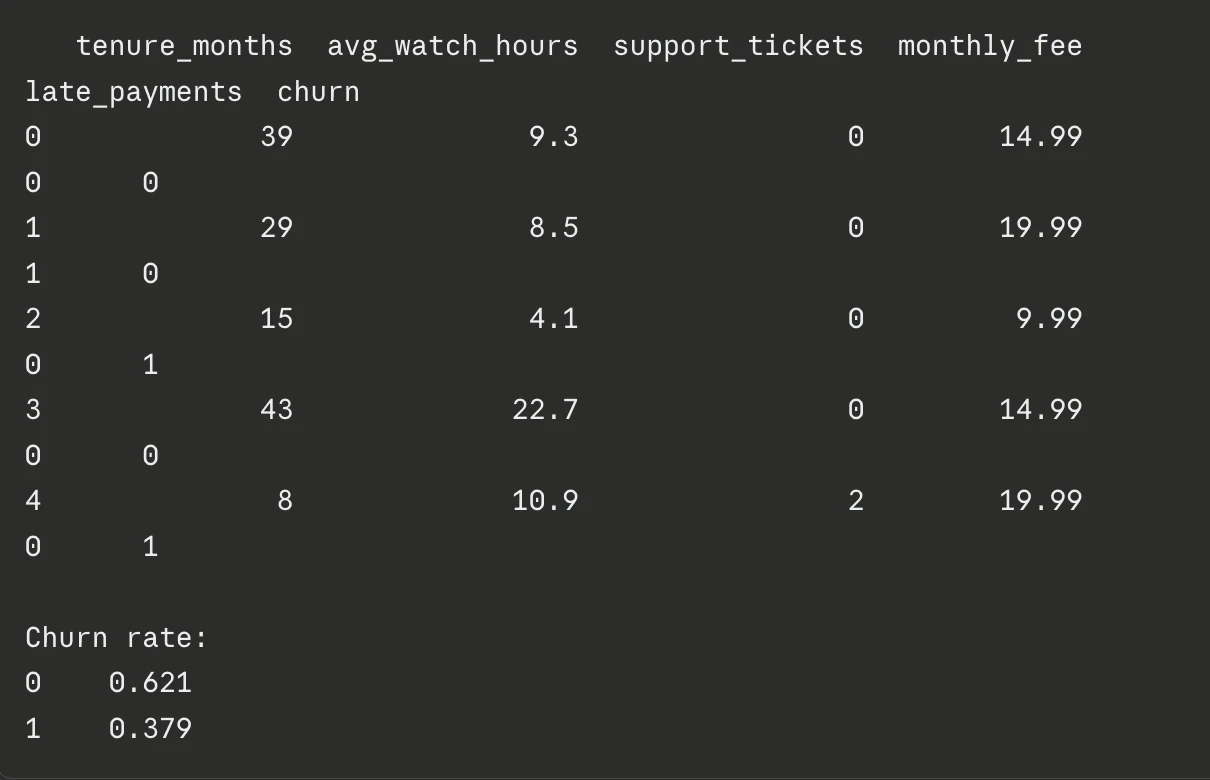
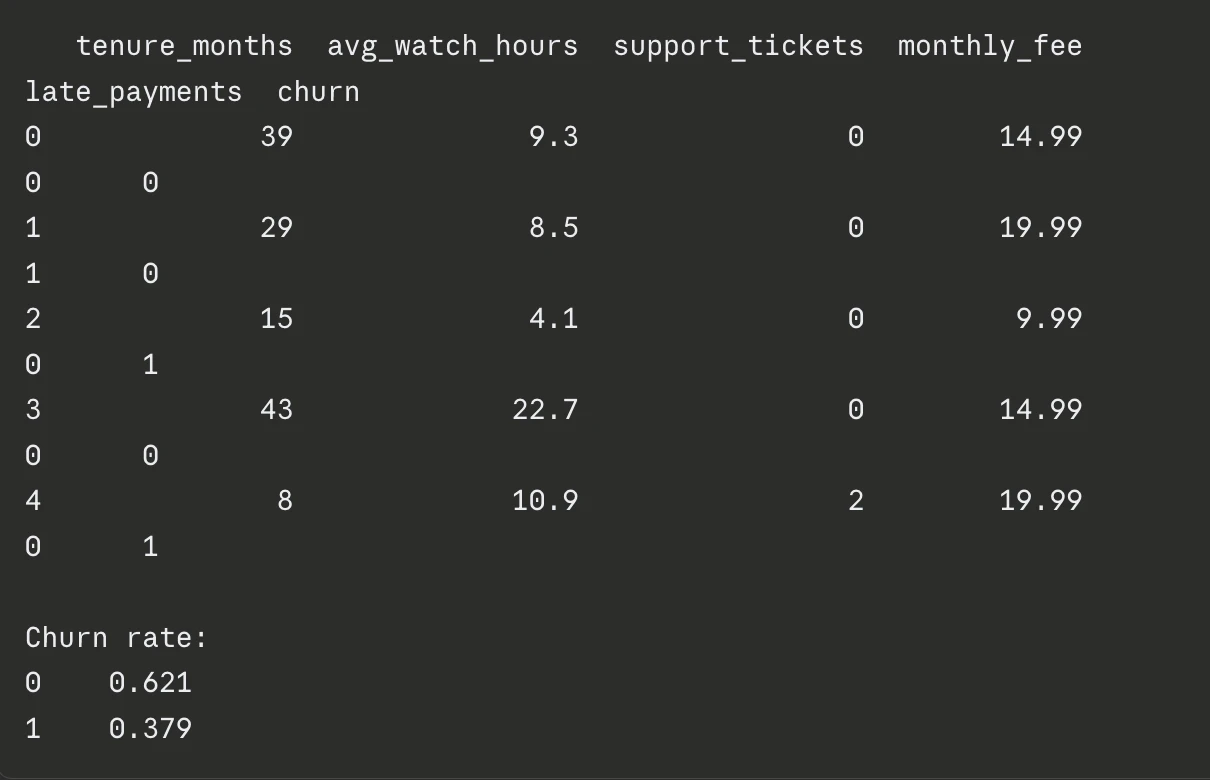
In the modern subscription economy, the cost of acquiring a new customer is often five to ten times higher than retaining an existing one. A typical case study involves a streaming service losing 5% of its subscribers monthly.
The Strategy:
When applying SCOPE here, the candidate must define the "churn window." If a user cancels their subscription today but has already paid for the month, are they "churned" now or in 30 days? Defining this gap is essential to prevent data leakage.
Technical Execution:
Using a Gradient Boosted Model (GBM) is standard, but the value lies in "explainability." Utilizing SHAP (SHapley Additive exPlanations) values to show that "low watch time" is the primary driver of churn allows the retention team to create targeted interventions, such as personalized email recommendations.
Case Study 2: Demand Forecasting and the Bullwhip Effect
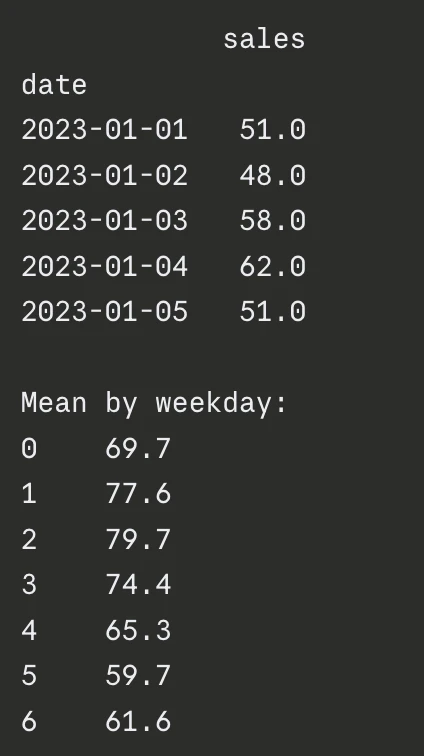
Forecasting demand for perishable goods is a classic time-series challenge. Here, the "Bullwhip Effect"—where small fluctuations in consumer demand cause large swings in inventory orders—can lead to massive waste.

The Strategy:
The candidate must handle temporal order with extreme care. Randomly splitting data into training and test sets is a "fatal error" in time-series cases because it allows the model to "see the future." Instead, a rolling-window backtesting approach must be used to prove the model’s stability over time.
Business Impact:
The final presentation should translate "forecast error" into "capital efficiency." If a model reduces error by 10%, how many millions of dollars does that save in reduced warehouse waste?
Case Study 3: Generative AI and the Rise of RAG Systems
As of 2024, Generative AI (GenAI) case studies have become a staple of the interview loop. A common prompt involves building an internal knowledge assistant using Retrieval-Augmented Generation (RAG).

The Strategy:
The core challenge in GenAI is not fluency, but "faithfulness." A model that provides a beautifully written but factually incorrect answer (a hallucination) is a liability. Candidates must explain why RAG is superior to fine-tuning for this use case: it allows the system to cite sources and stay updated without expensive retraining.
Evaluation:
A sophisticated candidate will propose a "triad" of metrics:
- Context Precision: How relevant were the retrieved documents?
- Faithfulness: Did the answer actually come from the retrieved text?
- Answer Relevance: Did it actually answer the user’s question?
Case Study 4: A/B Testing and Statistical Rigor
Experimentation is the engine of product growth. However, many data scientists fail to account for the "Novelty Effect," where users engage with a new feature simply because it is new, not because it is better.

The Strategy:
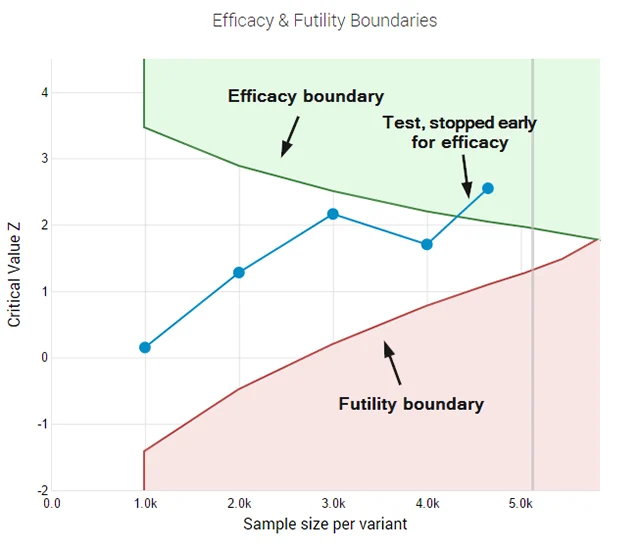
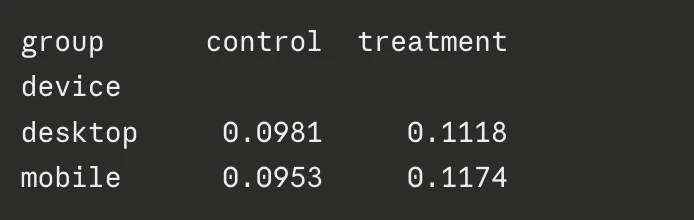
A candidate must demonstrate a deep understanding of power analysis. They need to calculate the required sample size before the test begins to ensure the results are not just due to random noise. Furthermore, they must be vigilant for "Simpson’s Paradox," where a trend appears in different groups of data but disappears or reverses when these groups are combined.
Analysis of Implications: Why Candidates Fail
Despite technical proficiency, many candidates fail case study interviews due to three recurring pitfalls:
- The "Black Box" Trap: Using a complex model like a Neural Network when a Decision Tree would suffice. This suggests a lack of pragmatism.
- The "Metric Mismatch": Optimizing for accuracy on an imbalanced dataset (e.g., fraud detection) where accuracy is a meaningless metric.
- The "Silent Coder": Failing to narrate their thought process. In an interview, the "how" is just as important as the "what."
Conclusion: The Path to Mastery
The data science case study interview is a rigorous test of a candidate’s ability to operate at the intersection of mathematics, computer science, and business strategy. By utilizing the SCOPE framework, candidates can transform a daunting, ambiguous prompt into a structured, professional demonstration of expertise.
As the industry continues to move toward specialized roles in AI engineering and product data science, the ability to frame a problem, validate a solution, and communicate its value will remain the most enduring skill set in the field. Mastery of these interviews does not just lead to a job offer; it prepares the candidate for the actual complexities of a career in data science.