rifanmuazin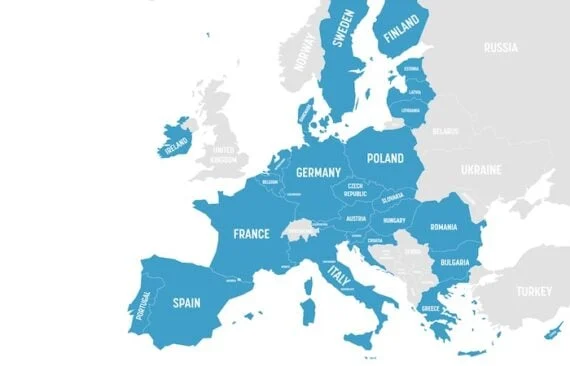
The burgeoning global e-commerce market, while offering unprecedented convenience and choice to consumers, presents a complex web of regulatory and operational challenges for online retailers, particularly when it comes to product returns. A stark divergence exists between the European Union and the United States in how these returns are governed, impacting everything from consumer expectations to business profitability. While the EU operates under a robust, legally mandated framework designed to protect consumers, the U.S. market largely defers to individual retailer discretion, creating a landscape shaped by competition and consumer demand. This fundamental difference necessitates distinct strategic approaches for businesses operating in both territories, underscoring the critical importance of understanding and adapting to region-specific return policies.
The EU’s Unwavering Right of Withdrawal: A Consumer Cornerstone
In the European Union, distance buying is underpinned by a statutory "right of withdrawal," a cornerstone of consumer protection legislation that has been in place for decades, evolving through various directives to solidify its current form under the Consumer Rights Directive. This right empowers consumers to cancel an online purchase within a generous 14-day period following the delivery of goods, without being required to provide any justification. This ‘no-questions-asked’ policy is designed to replicate the in-store shopping experience, where consumers can physically examine products before committing to a purchase.
This fundamental right is not a suggestion but a legal obligation that applies uniformly across all EU member states, forming an integral component of the legal architecture governing e-commerce transactions. While exceptions do exist, primarily for personalized goods that are made to order, perishable items, or sealed products that cannot be returned for hygiene reasons once opened (such as certain health and beauty items), the vast majority of online purchases fall under this protective umbrella. The directive, formally known as Directive 2011/83/EU on consumer rights, which came into full effect in June 2014, consolidated and strengthened existing consumer protections across the bloc, aiming to create a more cohesive and trustworthy online marketplace.
The U.S. Approach: A Free Market of Return Policies
Contrastingly, the United States lacks a federal law that dictates a universal right of withdrawal for online purchases. Instead, the responsibility for establishing and enforcing return policies rests squarely with individual retailers. This decentralized approach fosters a dynamic marketplace where return policies can vary dramatically from one merchant to another, and even across different product categories within the same retailer. These policies are largely shaped by a combination of factors, including intense market competition, consumer expectations cultivated by dominant players, and a retailer’s own operational capacity and risk tolerance.
While this freedom allows U.S. retailers to innovate and tailor their policies to specific customer bases, it also means that consumers cannot rely on a uniform set of rights when shopping online. Some retailers offer exceptionally lenient return policies, including free return shipping and extended return windows, to attract and retain customers. Others may have more restrictive policies, such as shorter return periods, restocking fees, or charges for return shipping, particularly for certain types of goods or for reasons other than defect. This variability necessitates a higher degree of diligence from U.S. consumers, who must carefully review a retailer’s specific return policy before making a purchase. The absence of a federal mandate does not, however, preclude state-level legislation or industry best practices from influencing return policies, although these are generally less prescriptive than the EU’s statutory requirements.
Returns Volume: A Significant Factor in E-commerce Operations
The volume of returned goods is a critical metric for any e-commerce business, and the differing regulatory environments have a noticeable impact on these figures. In the United States, the National Retail Federation (NRF) estimated in October 2025 that approximately 19.3% of all online sales would be returned during that year. This represents a substantial portion of revenue and underscores the logistical and financial implications of managing returns.
The situation in the European Union presents a more nuanced picture. Statista reported that in 2024, EU customers returned around 7% of overall e-commerce revenue. However, this figure masks significant variations among member states. Germany, for instance, stands out with a notably high return rate, where approximately 55% of online buyers reported returning at least one product during a given period. This high rate in Germany, and similar trends in other continental European markets, can be partly attributed to the legally mandated withdrawal right, which removes a significant barrier to impulse purchases and experimentation with new products.
The legally mandated withdrawal right in the EU, particularly within high-return product categories like apparel and electronics, introduces a predictable yet significant cost layer for businesses. This cost is embedded in the operational model, requiring retailers to factor in the expenses associated with processing these returns. In the U.S., conversely, merchants possess the theoretical ability to limit their exposure to return-related losses by implementing stricter policies, although competitive pressures often lead them to offer more generous terms.
Refund Timelines and Processes: A Tale of Two Continents
Under the EU’s Consumer Rights Directive, a crucial aspect of the withdrawal right is the mandated refund timeline. E.U. merchants are legally obligated to issue refunds to consumers within 14 days of receiving the consumer’s notification of withdrawal. However, there’s a caveat: merchants can legally withhold the refund until they have either received the returned items themselves or have been provided with verifiable proof that the consumer has dispatched the goods. This provision is designed to protect retailers from fraudulent claims while still ensuring a timely reimbursement for consumers. Furthermore, the directive mandates that refunds must be processed using the same payment method that the consumer originally used for the purchase, ensuring a consistent and straightforward financial reconciliation.
This 14-day refund deadline can exert considerable pressure on the cash flow of businesses, especially those experiencing high volumes of returns. The immediate outflow of funds for refunds, coupled with the inbound logistics of returned items, can create a significant financial strain.

In the United States, the refund timing is entirely at the discretion of the retailer. While most U.S. retailers aim to process refunds within a few business days to maintain customer satisfaction, there is no statutory requirement forcing them to do so. Payment networks, which facilitate transactions and dispute resolutions, also do not impose universal timeframes for refund processing. This flexibility allows U.S. merchants to align their refund schedules with their internal operational realities, inventory management processes, and broader financial strategies, while also catering to customer expectations that have been shaped by industry norms.
Shipping Costs and Deductions: Where Flexibility Meets Disclosure
The responsibility for return shipping costs is another key area of divergence. In the European Union, the general rule is that consumers are responsible for the cost of returning goods. However, this is contingent upon the retailer clearly disclosing this responsibility to the consumer before the purchase is made. If this information is not transparently communicated, the legal burden can shift back to the merchant. Regardless of who bears the direct return shipping cost, EU merchants are obligated to reimburse the consumer for the original cost of delivery.
Additionally, EU merchants have the right to reduce the refund amount for products that have diminished in value due to handling or use by the consumer beyond what is necessary to establish the nature, characteristics, and functioning of the goods. This provision acknowledges that consumers should be able to inspect goods as they would in a physical store, but not to use them extensively before deciding to return them.
In the United States, retailers enjoy considerably more flexibility regarding shipping costs and potential deductions. They can choose to absorb return shipping costs as a competitive differentiator, a strategy notably employed by giants like Amazon, which offers free return shipping with no additional cost to buyers. Alternatively, they can pass these costs on to the consumer. Retailers also have the latitude to impose restocking fees or deduct amounts from refunds for opened or used items, depending on their individual policies. Despite this significant legal flexibility, competitive dynamics in the U.S. market frequently lead to outcomes that are similar to those in the EU, as retailers strive to meet or exceed customer expectations for convenience and value.
However, the legal frameworks remain fundamentally distinct. In the EU, the primary driver for return cost allocation is clear disclosure and adherence to statutory obligations. Failure to provide transparent information about return conditions can result in the merchant being held responsible for costs that they might otherwise have passed on to the consumer. Conversely, in the U.S., the competitive landscape often dictates policy. Generous return policies, while potentially boosting conversion rates, can also inadvertently increase return rates, particularly in categories where consumers might order multiple sizes or colors with the intention of returning the majority.
Beyond Shipping: The Comprehensive Cost of Returns
It is crucial to recognize that the financial impact of returns extends far beyond mere shipping expenses. Across both the EU and the U.S., the total cost of handling returned items encompasses a multitude of operational activities. These include the meticulous inspection of returned goods to assess their condition, the labor-intensive process of repackaging items for potential resale, the administrative effort involved in restocking inventory, and the potential need for markdowns on items that cannot be resold at full price due to minor damage or being out of season. These reverse logistics costs represent a significant overhead that retailers must meticulously manage to maintain profitability.
Strategic Imperatives for Global E-commerce Expansion
For merchants seeking to expand their operations into both the European Union and the United States, the divergent regulatory landscapes necessitate the development of distinct return strategies. Attempting to implement a single, monolithic global return policy is fraught with peril. Such an approach could lead to compliance risks and legal entanglements in the EU, where strict statutory requirements must be met, or it could result in unnecessary operational costs and reduced competitiveness in the U.S., where more tailored and flexible approaches are often preferred.
In the European Union, the paramount priority for retailers is transparency and clear disclosure. This involves meticulously communicating the consumer’s withdrawal right, clearly outlining responsibilities for return shipping costs (if any), and accurately stating refund timelines before the customer completes their purchase. Maintaining up-to-date documentation and ensuring that refund workflows are designed to adhere to the statutory 14-day window are critical for legal compliance and customer trust. Proactive communication about any exceptions to the withdrawal right, such as for personalized or perishable goods, is also essential.
Conversely, in the United States, the strategic focus for retailers should be on optimization. This involves benchmarking their return policies against industry averages within their specific product categories to understand competitive positioning. It also entails closely tracking the relationship between the generosity of their return policies and their conversion rates, seeking a balance that drives sales without creating an unsustainable return volume. Furthermore, sophisticated modeling of return costs, factoring in all associated expenses, should be integrated into pricing strategies to ensure that profitability is maintained even with a certain level of returns.
Ultimately, retailers that proactively integrate the costs and complexities of returns into their expansion planning will be far better positioned for long-term success than those who treat returns as an afterthought or a purely operational nuisance. A well-defined, region-specific returns strategy is not just about compliance; it is a critical element of customer acquisition, retention, and overall business resilience in the increasingly interconnected world of e-commerce. The differing legal frameworks in the EU and U.S. serve as a powerful reminder that global reach requires local understanding and tailored execution.