The Bill and Melinda Gates Foundation’s inaugural Goalkeepers report, released in 2017, marked a significant shift in how global development progress is tracked, analyzed, and communicated to the public. Designed to monitor the United Nations’ Sustainable Development Goals (SDGs), the report serves as a rigorous data-driven assessment of the fight against poverty and disease. Among the most critical metrics highlighted in the report is maternal mortality, a health indicator that reflects the overall functionality of a nation’s healthcare infrastructure. By synthesizing data from UNICEF and other international bodies, the report provides a sobering yet hopeful look at the strides made in maternal health, particularly in developing regions like Ethiopia, while underscoring the immense work that remains to be done to meet the 2030 global targets.
The Goalkeepers Initiative and the Framework for Global Health
The Goalkeepers report was established as an annual "report card" for the world, intended to hold global leaders accountable and to highlight where interventions are succeeding or failing. The 2017 report focused on the "stories behind the data," utilizing advanced information design—including interactive charts, video testimonials, and longitudinal data sets—to make complex public health issues accessible to a broader audience. The primary objective of this initiative is to accelerate progress by diagnosing urgent problems, identifying scalable solutions, and interpreting key results to spread best practices across borders.
Central to this framework is the understanding that maternal health is a foundational pillar of societal stability. As noted by Bill and Melinda Gates, maternal mortality is a uniquely devastating force; the loss of a mother often precipitates a decline in the health, education, and economic security of her children and the wider community. In 2015, UNICEF recorded approximately 302,530 maternal deaths globally due to complications related to pregnancy or childbirth. This figure translates to a maternal mortality ratio (MMR) of 168.7 deaths per 100,000 live births. While this represents a significant decrease from 1990 levels, the absolute number of deaths highlights a persistent global crisis.
Chronology of Progress: From MDGs to SDGs
The trajectory of maternal health improvement is best understood through the transition from the Millennium Development Goals (MDGs), which spanned from 1990 to 2015, to the current Sustainable Development Goals (SDGs), which aim for completion by 2030.
Under MDG 5, the global community aimed to reduce the maternal mortality ratio by three-quarters between 1990 and 2015. While the world did not reach this specific target, the progress was substantial. Global maternal mortality fell by approximately 44% during this 25-year period. The transition to the SDGs in 2016 introduced Goal 3.1, which sets a more ambitious target: reducing the global maternal mortality ratio to less than 70 per 100,000 live births by 2030.
The Goalkeepers 2017 report arrived at a critical juncture in this chronology, serving as the first major assessment of the world’s standing at the start of the SDG era. It highlighted that while the trend lines are generally positive, the pace of progress must accelerate significantly to meet the 2030 mandate.
Case Study in Transformation: Maternal Health in Ethiopia
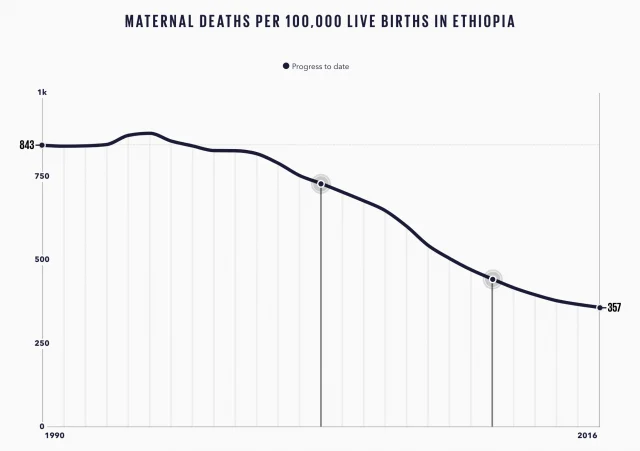
A focal point of the Goalkeepers 2017 report is the dramatic improvement of maternal health outcomes in Ethiopia. The East African nation has emerged as a global leader in health service delivery within a resource-constrained environment. According to the data, Ethiopia’s maternal mortality ratio plummeted from 843 deaths per 100,000 live births in 1990 to 357 in 2015.
This 58% reduction is attributed to a strategic, government-led overhaul of the primary healthcare system. A cornerstone of this success was the Health Extension Program (HEP), launched in 2003. This initiative involved the training and deployment of over 38,000 female health extension workers to rural villages. These workers provided essential services, including prenatal care, immunizations, and education on sanitation and nutrition. By bringing healthcare directly to the doorsteps of those in remote areas, Ethiopia successfully bridged the gap between rural populations and clinical facilities.
Furthermore, the Ethiopian government invested heavily in the "Health Development Army," a network of millions of volunteers who promoted healthy behaviors at the household level. This community-based approach, combined with the expansion of health centers and the improvement of referral systems for emergency obstetric care, created a comprehensive safety net for expectant mothers. The Ethiopian model demonstrates that political will and innovative community-based strategies can yield high returns on investment, even in the absence of a high-tech medical infrastructure.
Supporting Data: Global Disparities and Trends
While Ethiopia’s progress is exemplary, a broader analysis of UNICEF’s maternal mortality datasets reveals stark disparities between regions. The global average of 216 deaths per 100,000 live births (as of 2015) masks a deep divide:
- Sub-Saharan Africa: This region remains the most affected, accounting for roughly 66% of all maternal deaths globally. The MMR in Sub-Saharan Africa was estimated at 546 per 100,000 live births in 2015.
- Developed Regions: In contrast, developed nations maintain an average MMR of approximately 12 per 100,000 live births.
- Causes of Mortality: Data indicates that the majority of maternal deaths are preventable. The primary clinical causes include severe bleeding (postpartum hemorrhage), infections (sepsis), high blood pressure during pregnancy (pre-eclampsia and eclampsia), and complications from delivery.
The UNICEF data also highlights the "horizontal" nature of the challenge. A bar chart analysis of global maternal mortality shows a long tail of countries—primarily in conflict zones or regions with extreme poverty—where mortality rates remain stubbornly high. These "outlier" nations require targeted international support and specialized interventions that account for the breakdown of traditional governance and healthcare delivery systems.
Official Responses and Strategic Imperatives
In response to the findings of the Goalkeepers report and UNICEF data, international health organizations have emphasized the need for a "data-first" approach to policy. The Bill and Melinda Gates Foundation has advocated for increased funding for data collection and analysis, arguing that governments cannot fix what they cannot measure.
"If you were trying to invent the most efficient way to devastate communities and put children in danger, you would invent maternal mortality," stated Bill and Melinda Gates in the report. Their foundation, along with partners like the World Health Organization (WHO) and UNICEF, has called for a three-pronged strategy to address the remaining gaps:
- Quality of Care: Moving beyond simple access to facilities toward ensuring that those facilities provide high-quality, evidence-based clinical care.
- Equity: Ensuring that the most marginalized women—those in the lowest wealth quintiles and those living in remote areas—receive the same level of care as urban populations.
- Resilience: Building healthcare systems that can withstand shocks, such as pandemics or climate-related disasters, which often disproportionately impact maternal and child health services.
Broader Impact and Implications for the Future
The implications of maternal mortality extend far beyond the health sector. There is a direct correlation between maternal survival and the economic health of a nation. When a mother survives and remains healthy, she is more likely to participate in the labor force and invest in the education of her children. Conversely, the death of a mother often leads to the dissolution of the family unit, increased rates of infant mortality, and a reduction in the long-term human capital of the community.
The use of data visualization tools, as seen in the Goalkeepers report, has also set a new standard for transparency in global development. By making raw datasets—such as those from UNICEF—available and interpretable, the foundation encourages "citizen scientists" and independent analysts to engage with the data. This democratization of information fosters a culture of evidence-based advocacy, where civil society can pressure governments to prioritize maternal health in their national budgets.
As the world moves further into the SDG era, the lessons from the 2017 report remains relevant. The success of Ethiopia proves that rapid progress is possible when data-driven strategies are paired with community engagement. However, the sheer volume of maternal deaths occurring annually remains a global crisis that demands sustained attention. The fight against maternal mortality is not merely a medical challenge; it is a test of the world’s commitment to equity and the fundamental right to life. Through continued monitoring, rigorous analysis, and the scaling of proven interventions, the goal of reducing maternal deaths to a minimum remains within reach, provided the global community maintains its focus on the "stories behind the data."