On July 21, 2026, Google Cloud and Google DeepMind announced the surprise release of Gemini 3.6 Flash, a mid-cycle update to its high-speed, high-efficiency model tier. Eschewing the traditional fanfare associated with "frontier" model launches, the tech giant positioned this update as a targeted optimization of the Gemini 3.5 architecture. While the broader artificial intelligence industry remains focused on the anticipated debut of Gemini 3.5 Pro and the next-generation Gemini 4, the 3.6 Flash release signals a strategic pivot by Google toward improving the economic viability and operational reliability of large-scale AI deployments.
The release of Gemini 3.6 Flash is characterized not by a leap in raw reasoning capabilities, but by a significant refinement in how the model processes information. According to technical documentation released alongside the model, Gemini 3.6 Flash achieves comparable performance to its predecessor while requiring fewer tokens and fewer tool calls to complete the same volume of work. This "efficiency-first" approach has split the developer community: while some view it as an incremental update, enterprise users running high-volume production workloads see it as a critical advancement in reducing the total cost of ownership (TCO) for AI-integrated services.
A Chronology of the Gemini 3.0 Series Evolution
To understand the placement of Gemini 3.6 Flash, it is necessary to examine the rapid release cycle Google has maintained throughout 2026. The Gemini 3.5 family originally debuted during the Google I/O conference in May 2026, introducing the "Flash" tier as a low-latency alternative to the "Pro" and "Ultra" models.
By June 2026, however, enterprise feedback indicated that while the 3.5 Flash model was sufficiently fast, the costs associated with long-context window processing and complex tool-use remained a barrier for certain high-frequency agentic applications. In response, Google accelerated the development of version 3.6. The July 21 launch represents one of the fastest iterative cycles in the company’s history, moving from initial feedback to a production-ready model in just under ten weeks.
This release also coincides with Google’s confirmation that pre-training for Gemini 4 has reached its final stages. By refining the 3.0 series now, Google appears to be stabilizing its existing ecosystem to ensure that developers have a cost-effective platform to maintain their services while the industry prepares for the next major architectural shift.
Technical Specifications and the Flash Family Expansion
Google’s launch was not limited to a single model. Instead, the company expanded the "Flash" umbrella into three distinct offerings, each tailored to specific operational needs. All models retain the industry-leading 1-million-token context window and support multimodal inputs including text, image, audio, and video.
The Gemini 3.6 Flash Lineup
- Gemini 3.6 Flash (Standard): The flagship of the release, designed for balanced performance across coding, multimodal reasoning, and general knowledge tasks. It features a reduced output pricing tier and a refreshed knowledge cutoff of March 2026.
- Gemini 3.5 Flash-Lite: A new high-throughput, ultra-low-latency model specifically optimized for agentic search and massive document processing. This model is intended for "sub-second" response requirements where cost-per-query is the primary metric.
- Gemini 3.5 Flash Cyber: A specialized variant currently in a limited-access pilot. This model is fine-tuned for cybersecurity applications, specifically the identification, validation, and automated patching of software vulnerabilities. Google has stated that access to the Cyber variant is restricted to government entities and trusted security partners to prevent misuse by malicious actors.
Economic Impact and Pricing Restructuring
The most significant change for enterprise users lies in the revised pricing structure. Google has reduced the output rate for Gemini 3.6 Flash from $9.00 per million tokens to $7.50 per million tokens. When combined with the model’s inherent efficiency—requiring approximately 17% fewer tokens to generate the same quality of response—the effective cost reduction for output-heavy workloads is substantial. Input pricing remains stable at $1.50 per million tokens, maintaining Google’s competitive edge against rival models from OpenAI and Anthropic.
Performance Benchmarks: Intelligence vs. Efficiency
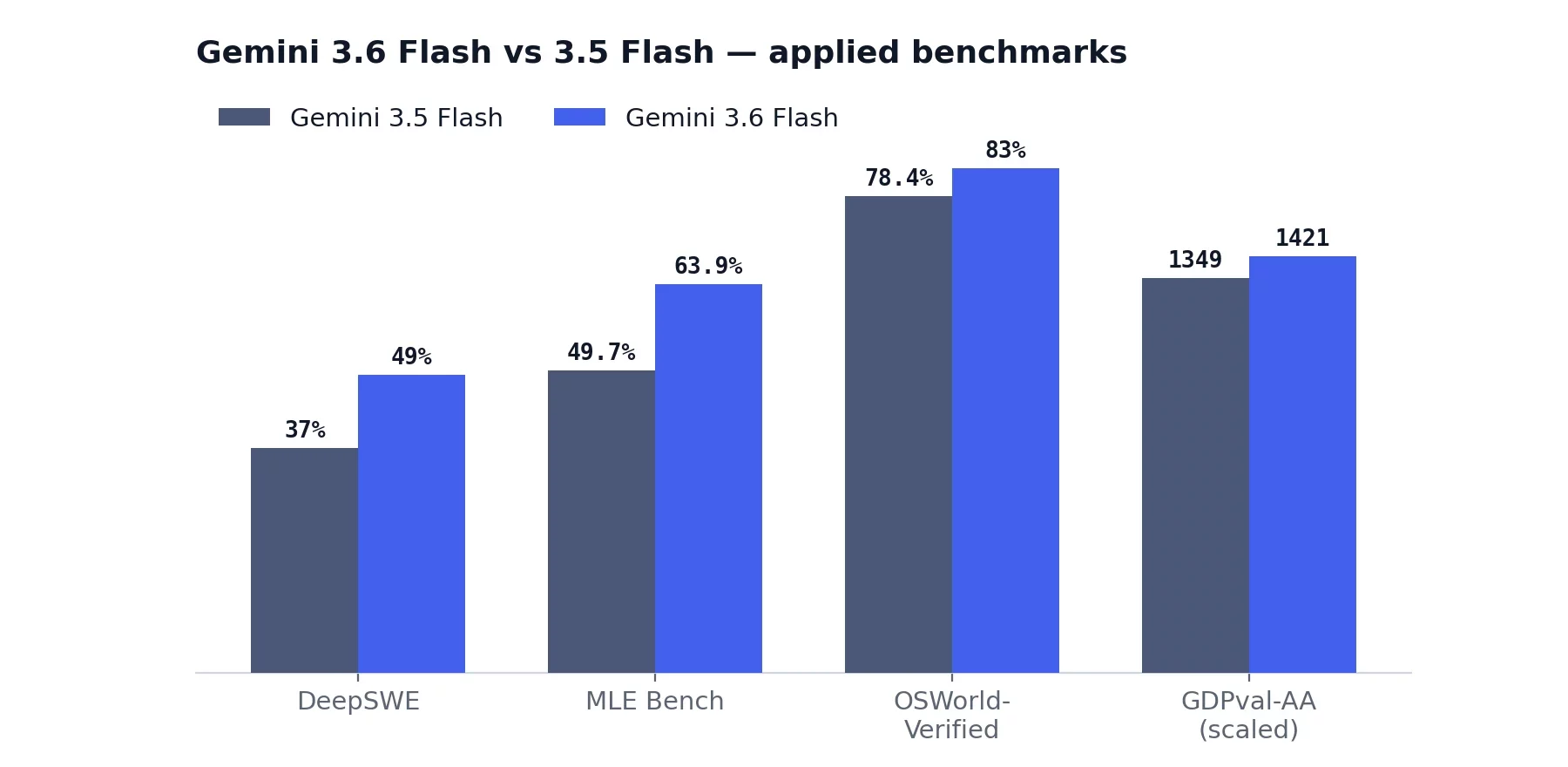
A comparative analysis of Gemini 3.6 Flash against its predecessor, Gemini 3.5 Flash, reveals a clear pattern: raw intelligence scores remain stable, while applied performance in technical domains has seen marked improvements.
| Benchmark | Domain | Gemini 3.5 Flash | Gemini 3.6 Flash |
|---|---|---|---|
| DeepSWE | Production-ready coding | 37% | 49% |
| MLE Bench | Machine Learning Research | 49.7% | 63.9% |
| GDPval-AA | Real-world knowledge work | 1349 | 1421 |
| OSWorld-Verified | Computer/Agentic use | 78.4% | 83% |
| Output Efficiency | Token usage per task | 100% (Baseline) | ~83% |
| Knowledge Cutoff | Training Data Recency | Jan 2025 | March 2026 |
The data indicates that Gemini 3.6 Flash is significantly more capable in agentic environments—tasks where the AI must interact with software, navigate file systems, or conduct research. The 12% jump in DeepSWE scores and the nearly 14% increase in MLE Bench suggest that the model has been specifically tuned for the developer and data science markets.
Rigorous Testing: Real-World Reliability
To validate Google’s claims, independent testers and early adopters have subjected Gemini 3.6 Flash to a series of "stress tests" designed to probe its reasoning, instruction-following, and multimodal capabilities.
Vision and Data Extraction
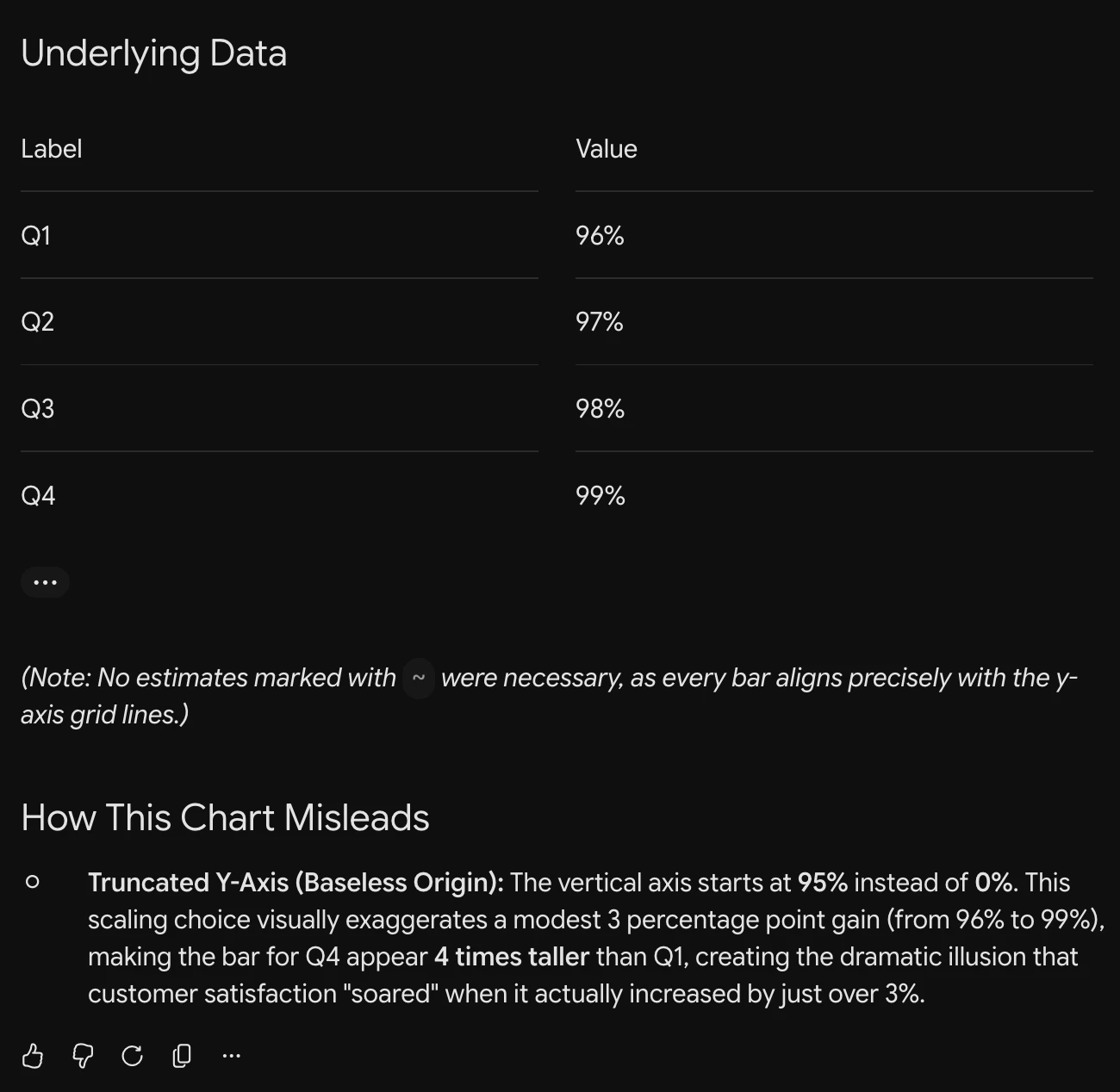
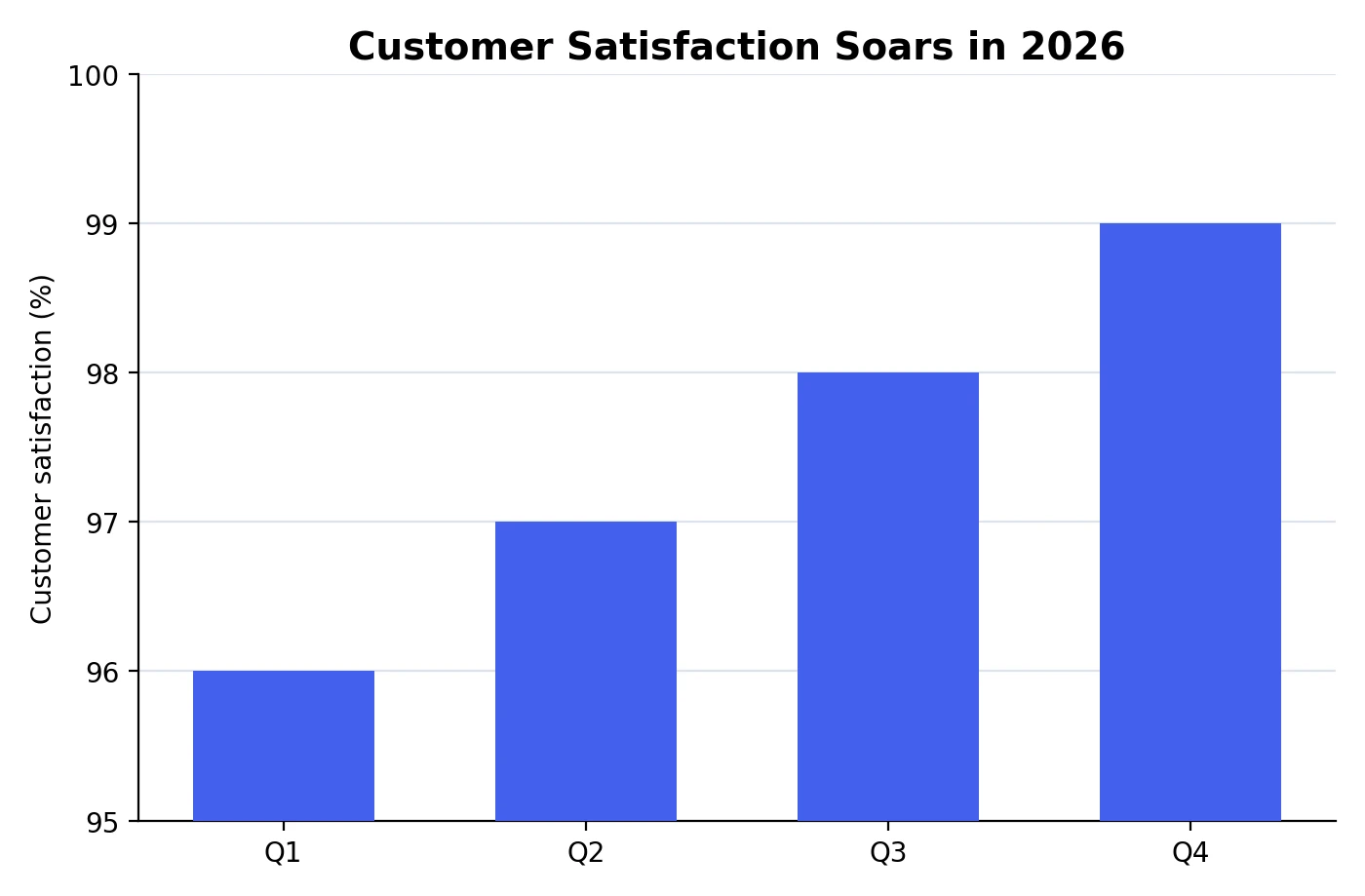
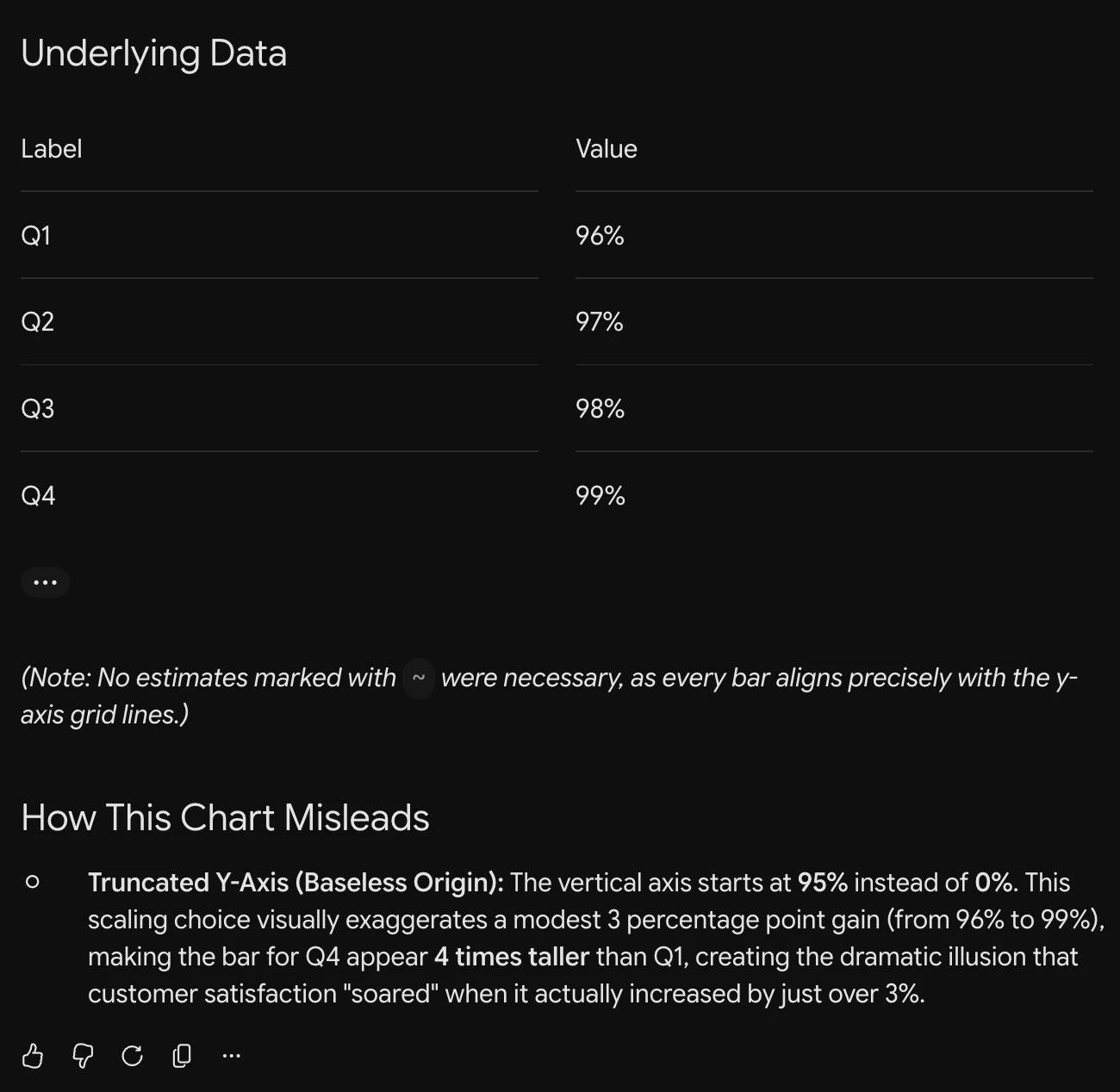
In vision-based tasks, the 3.6 Flash model demonstrated improved "discipline." When tasked with reconstructing data from complex charts and identifying misleading scaling choices (such as truncated axes), the model accurately identified a 95% baseline distortion. Notably, the model adhered strictly to formatting instructions, using markers for estimated values only when necessary, showing a reduction in the "hallucinated precision" that often plagues smaller models.
Coding and Logic Failures
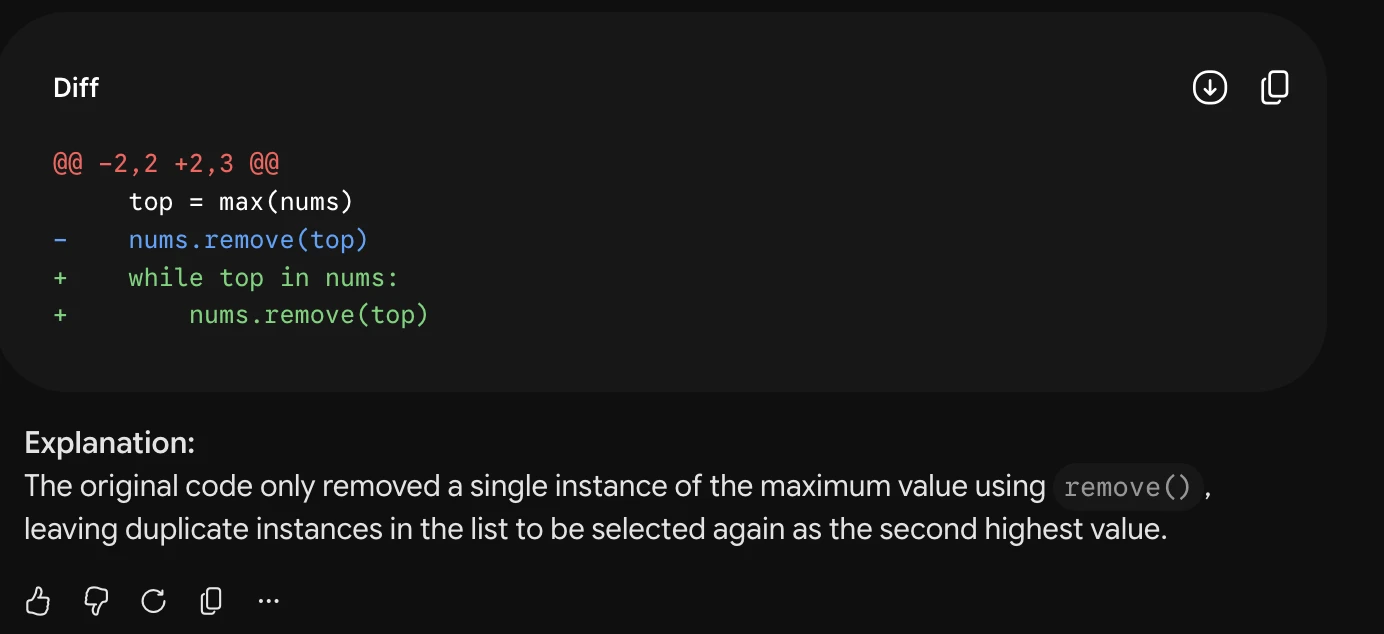
Despite gains in benchmarks, real-world testing revealed that the model is not infallible. In a logic test involving a Python function with duplicate values, Gemini 3.6 Flash correctly identified a bug but provided a "partial fix" that introduced a new ValueError. Analysts suggest that while the model is better at understanding code structure, it can still struggle with the edge cases of complex logic, requiring human-in-the-loop verification for production-level deployments.
Legal Document Analysis
The model excelled in "needle-in-a-haystack" logic tests within legal frameworks. When presented with a Master Services Agreement containing intentionally contradictory clauses regarding "termination for convenience," Gemini 3.6 Flash successfully identified both conflicting sections. It correctly applied "Order of Precedence" rules found elsewhere in the document to resolve the conflict, a task that requires high levels of context retention and logical cross-referencing.
Instruction Following and Grounding
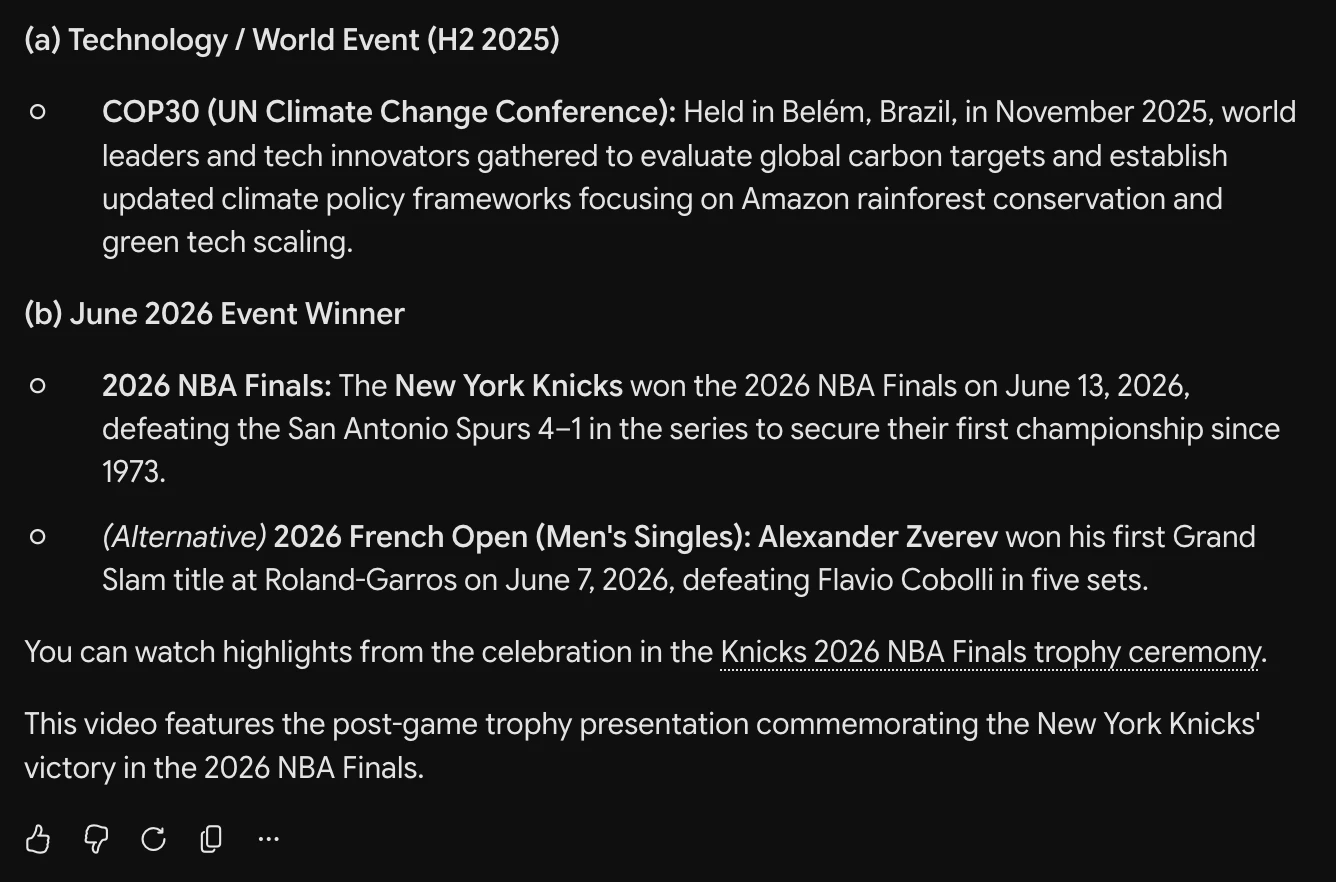
A critical update in the 3.6 version is its behavior regarding "grounding" and real-time search. In tests involving events that occurred after its March 2026 cutoff, the model initially used search results to provide accurate answers without flagging them as external data. However, when search was disabled, the model demonstrated improved "honesty," explicitly stating it could not verify events beyond its training data rather than attempting to guess. This indicates a more robust alignment toward factual accuracy and boundary recognition.
Industry Implications: "Boring" as a Strategic Advantage
The tech industry’s reaction to Gemini 3.6 Flash has been a study in differing priorities. For Silicon Valley observers who track the "S-curve" of AI intelligence, the release was seen as a minor footnote. However, for the burgeoning industry of AI agents and automated services, the release is a major milestone.
"We are entering an era where ‘better’ doesn’t always mean ‘smarter,’" says Marcus Thorne, a senior analyst at TechLogistics. "For a company running a million customer service interactions a day, a 15% reduction in token usage and a lower price point is more valuable than a model that can write poetry or solve unsolved math problems. Google is prioritizing the plumbing of the AI economy."
The focus on "agentic" work—evidenced by the OSWorld-Verified scores—suggests that Google is positioning the Flash tier as the primary engine for "Computer Use" applications. These are systems where the AI acts as a digital employee, filling out forms, managing emails, and navigating internal databases. In these scenarios, speed and cost are the primary constraints, and Gemini 3.6 Flash appears designed to dominate this niche.
Future Outlook and the Road to Gemini 4
Google’s decision to release a mid-cycle update rather than waiting for a full version jump suggests a high degree of confidence in the 3.0 architecture’s longevity. By refreshing the knowledge cutoff to March 2026, Google has also addressed one of the most common complaints regarding AI models: the "recency gap."
As the industry looks toward the end of 2026, the focus will inevitably shift back to the "frontier" models. Google’s ongoing pre-training for Gemini 4 is rumored to be the most computationally expensive project in the company’s history. Until that model arrives, Gemini 3.6 Flash serves as a highly optimized, cost-efficient bridge, allowing enterprises to scale their AI operations without the prohibitive costs that characterized the early years of the LLM boom.
In conclusion, Gemini 3.6 Flash represents the "industrialization" phase of artificial intelligence. It is a model built for the spreadsheet, optimized for the developer, and priced for the enterprise. While it may not capture headlines with displays of creative brilliance, its impact on the operational efficiency of the global AI infrastructure is likely to be profound. Developers are encouraged to begin migrating their 3.5 Flash workloads to the 3.6 tier immediately to take advantage of the compounded cost savings and improved reliability.