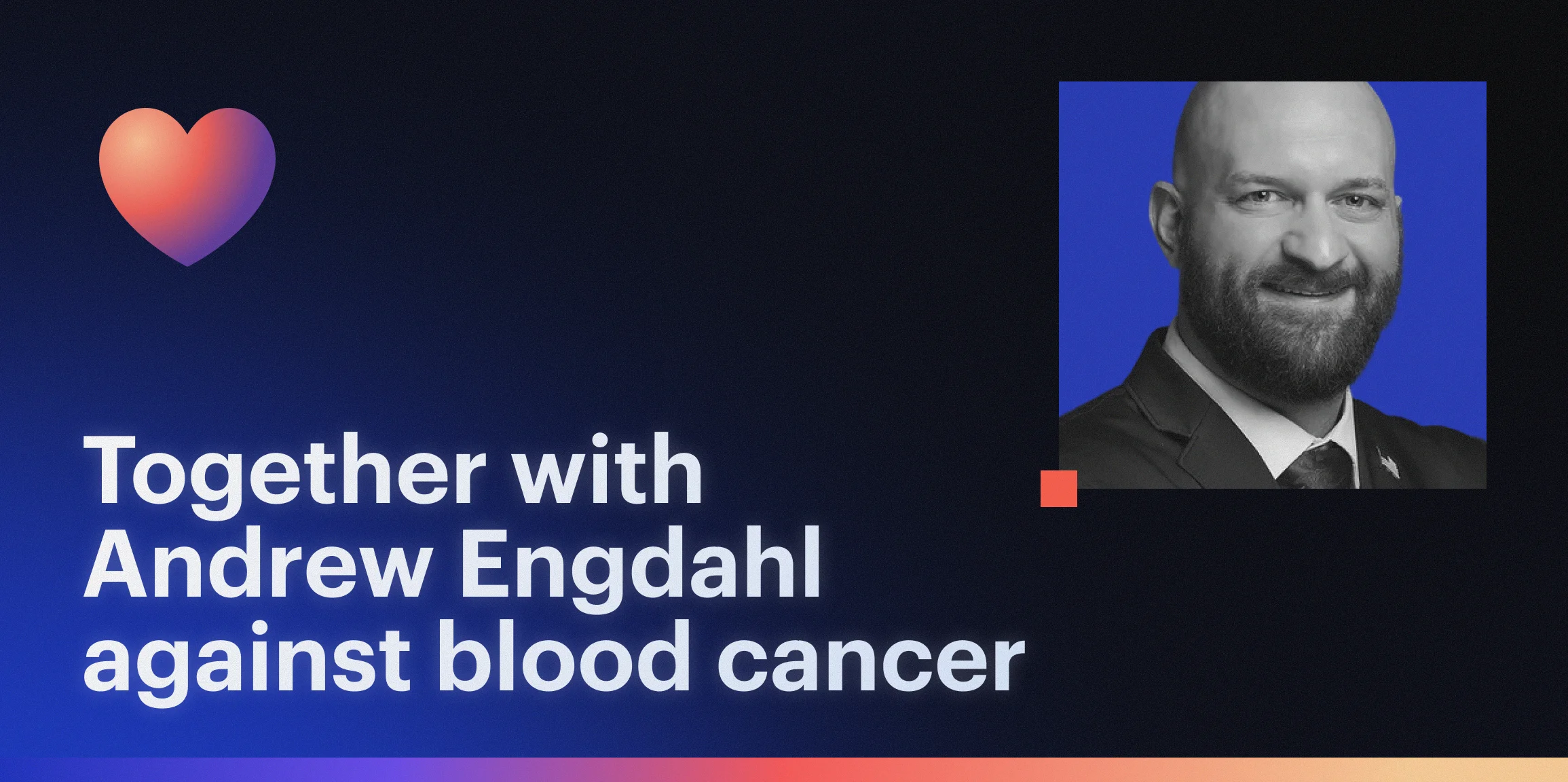
The intersection of corporate leadership and personal advocacy has taken center stage at Instapage, a prominent post-click automation software provider, following the announcement that Andrew Engdahl, the company’s Head of Sales, has been nominated for the Visionaries of the Year award. This nomination, presented by Blood Cancer United—a collaborative effort often associated with the Leukemia & Lymphoma Society (LLS)—serves as a formal recognition of leaders who leverage their professional platforms to advance the fight against hematologic malignancies. Engdahl’s nomination is not merely a reflection of his professional accolades within the technology sector but is deeply intertwined with his survival of Stage 4 Non-Hodgkin’s Lymphoma, a journey that has fundamentally redefined his approach to leadership and philanthropy.
Engdahl, who has been a pivotal figure in Instapage’s recent fiscal growth, is now spearheading a high-profile fundraising campaign with a target of $50,000. These funds are earmarked for critical research, patient support services, and advocacy efforts aimed at reducing the mortality rates associated with blood cancers. The campaign was strategically launched on World Cancer Day, a global initiative intended to raise awareness and move governments and individuals across the world to take action against the disease.
The Medical Chronology: A Journey from Diagnosis to Recovery
The narrative of Engdahl’s candidacy begins in the summer of 2022, a period during which he was simultaneously navigating the high-pressure environment of enterprise sales. What initially presented as localized muscle tension—a common complaint among high-performing professionals—rapidly escalated into a series of debilitating symptoms. Subsequent medical evaluations revealed a diagnosis of Stage 4 Non-Hodgkin’s Lymphoma, a systemic malignancy of the lymphatic system that had reached an advanced phase.
The clinical intervention required was both immediate and aggressive. Engdahl underwent major spinal surgery to address complications arising from the cancer’s progression, followed by a rigorous treatment regimen that included four lumbar punctures and six rounds of chemotherapy infusions. Lumbar punctures, often referred to as spinal taps, are critical in the treatment of certain lymphomas to ensure the malignancy has not breached the central nervous system or to deliver prophylactic treatment.
Following the conclusion of his primary clinical treatments, Engdahl entered a six-month intensive recovery phase. This period was characterized by a combination of specialized physical therapy and yoga, aimed at regaining the physical mobility and neurological function compromised by both the disease and the invasive nature of the surgery. Now approaching his third year in remission, Engdahl has transitioned from a patient navigating the complexities of the healthcare system to a survivor-leader focused on systemic change.
Understanding Non-Hodgkin’s Lymphoma and the Need for Advocacy
To understand the weight of Engdahl’s campaign, it is necessary to examine the broader landscape of blood cancer in the United States and globally. Non-Hodgkin’s Lymphoma (NHL) is one of the most common cancers in the U.S., accounting for about 4% of all cancers. According to data from the American Cancer Society, the risk of developing NHL is approximately 1 in 42 for men and 1 in 52 for women.
Stage 4, the classification of Engdahl’s diagnosis, indicates that the cancer has spread outside the lymph system to other organs, such as the liver, lungs, or bone marrow. While advancements in immunotherapy and targeted treatments have significantly improved the five-year survival rate—which currently stands at approximately 74% for all stages combined—the journey for Stage 4 patients remains fraught with physical and financial hurdles.
The $50,000 goal set by Engdahl is part of a larger philanthropic ecosystem. Organizations like Blood Cancer United utilize these funds to bridge the gap between laboratory research and bedside application. Specifically, funds raised through the Visionaries of the Year program often support:
- Research Grants: Funding for scientists exploring CAR T-cell therapy and other next-generation treatments.
- Patient Financial Aid: Assisting families with the indirect costs of cancer treatment, such as transportation and lodging.
- Policy Advocacy: Pushing for legislative changes that lower the cost of prescription drugs and increase access to clinical trials.
Corporate Resilience: The Instapage Connection
Engdahl’s professional trajectory at Instapage continued despite the significant health challenges he faced. During the same period he was undergoing treatment, he remained instrumental in securing some of the company’s most substantial enterprise contracts. This duality of personal struggle and professional excellence has been highlighted by Instapage leadership as a testament to his resilience.
Now leading the global sales team, Engdahl’s leadership style is reportedly informed by his experiences in the oncology ward. In a statement regarding his campaign, Engdahl emphasized a sense of duty toward the medical community and future patients. "I feel that I owe it to my physicians, my friends, family, and teammates, and all those affected by the scourge of blood cancer to pay it forward and make a difference while I still have the strength and ability to do so," he noted.
The tech industry has increasingly recognized the importance of supporting employees through major health crises. Instapage’s public endorsement of Engdahl’s campaign reflects a broader trend of corporate social responsibility (CSR) where companies align themselves with the personal causes of their executive leadership. By amplifying Engdahl’s story, Instapage is not only supporting a key executive but also participating in a global conversation regarding health equity and cancer research.
The Visionaries of the Year Program: Mechanics and Impact
The "Visionaries of the Year" is a competitive philanthropic program that typically spans a ten-week period. Candidates are selected based on their leadership skills, community involvement, and ability to mobilize networks for a common cause. Every dollar raised counts as one "vote," and the individual who raises the most funds in their respective community is named the Visionary of the Year.
However, participants frequently emphasize that the title is secondary to the collective impact. The program is designed to create a "force multiplier" effect, where the professional networks of business leaders are tapped to provide resources that traditional non-profit outreach might miss. For Engdahl, the campaign is a platform to transform his individual survival into a collective benefit for the 1.6 million people in the United States currently living with or in remission from blood cancer.
Broader Implications and Analysis of Survivor Leadership
Engdahl’s transition from a Stage 4 patient to a "Visionary" candidate illustrates the emerging concept of the "survivor leader" in the corporate world. This demographic of leadership often brings a heightened level of emotional intelligence, a focus on long-term sustainability, and a robust perspective on risk management.
From a business analysis perspective, Engdahl’s ability to maintain high-level sales performance while undergoing chemotherapy suggests a high degree of organizational support and personal fortitude. It also highlights the critical role of "return-to-work" programs and inclusive corporate cultures that allow high-value employees to navigate health crises without forfeiting their career trajectories.
The impact of such campaigns also extends to the scientific community. Blood cancer research has historically served as a "proving ground" for treatments that eventually benefit patients with other types of tumors. For instance, many of the foundational principles of chemotherapy and modern immunotherapy were first developed in the fight against leukemia and lymphoma. Therefore, Engdahl’s $50,000 goal contributes to a research pipeline that has implications far beyond hematology.
Conclusion and Call to Action
As the campaign progresses, the focus remains on the $50,000 milestone and the awareness generated by Engdahl’s personal narrative. His story serves as a reminder of the unpredictability of health and the profound impact of medical innovation. For the team at Instapage and the broader tech community, Engdahl’s journey is a case study in resilience, demonstrating how personal adversity can be synthesized into a mission for public good.
The campaign continues to accept contributions through Engdahl’s official Visionaries of the Year page. As he enters his third year of remission, the success of this initiative will be measured not just in dollars raised, but in the continued advancement of treatments that offer other patients the same "second chance at life" that Engdahl has utilized to lead his team and support his community.
In an era where corporate leaders are increasingly expected to stand for something beyond quarterly earnings, Andrew Engdahl’s campaign represents a significant alignment of personal history and professional influence. The fight against blood cancer is a marathon, and through the Visionaries of the Year program, Engdahl is ensuring that he is not just a survivor of the race, but a leader helping to pave the way for those following behind him.