

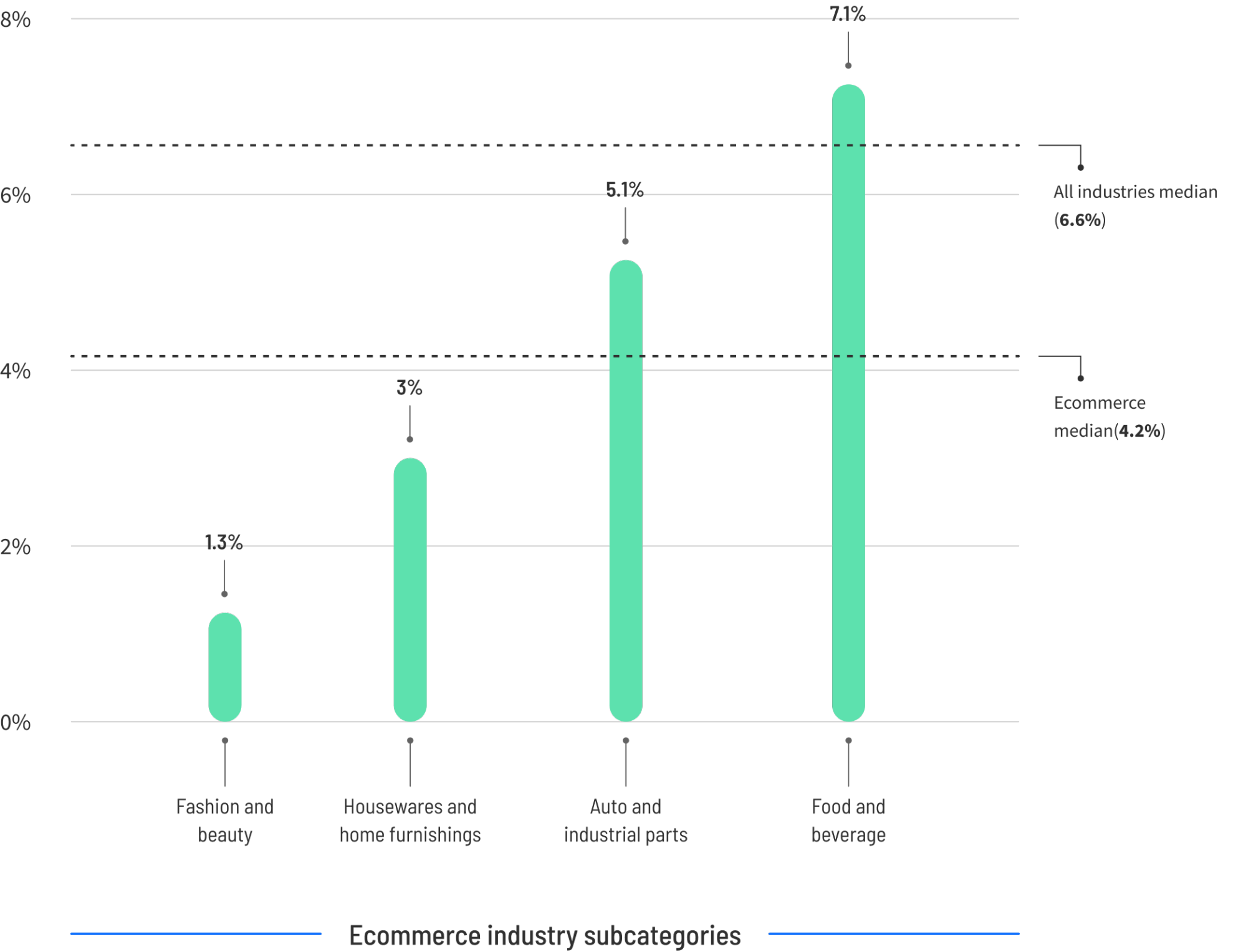
The median conversion rate for landing pages across all global industries has reached 6.6% in 2024, serving as a critical baseline for digital marketers navigating an increasingly competitive online landscape. According to the latest data compiled from over 57 million conversions and 464 million pageviews, the definition of a "good" conversion rate has become highly localized to specific sectors, traffic sources, and device types. While the 6.6% figure represents the mathematical middle of the market, top-tier performers in the 75th percentile are now seeing rates ranging from 11.4% to as high as 40.8%, depending on the nature of their offering and the intent of their audience.

The 2024 Conversion Landscape: A Statistical Overview
The current digital marketing environment is characterized by rising customer acquisition costs (CAC) and a saturation of traditional advertising channels. In this context, conversion rate optimization (CRO) has moved from a secondary tactic to a primary business necessity. The 2024 Conversion Benchmark Report, which analyzed real-world data from 41,000 landing pages, reveals that generic averages often obscure the nuances of consumer behavior.
Marketers are increasingly moving away from "average" calculations in favor of "median" values. This shift is statistically significant; while an average can be skewed by a handful of "unicorn" pages with 90% conversion rates or failing pages with near-zero engagement, the median provides a more accurate reflection of what a typical business can expect. For instance, in a room of ten teachers and one billionaire, the average income is in the millions, but the median income reflects the reality of the majority.

Industry-Specific Benchmarks and Performance Data
The variance between industries highlights the impact of consumer intent and product complexity on landing page performance.
Ecommerce and Retail
The median conversion rate for ecommerce landing pages stands at 4.2%. While this may seem lower than the cross-industry median, it reflects the broad spectrum of retail activity, from high-consideration electronics to impulse-buy fashion. Top-tier ecommerce sites—those in the top 25%—achieve conversion rates of 11.4% or higher.
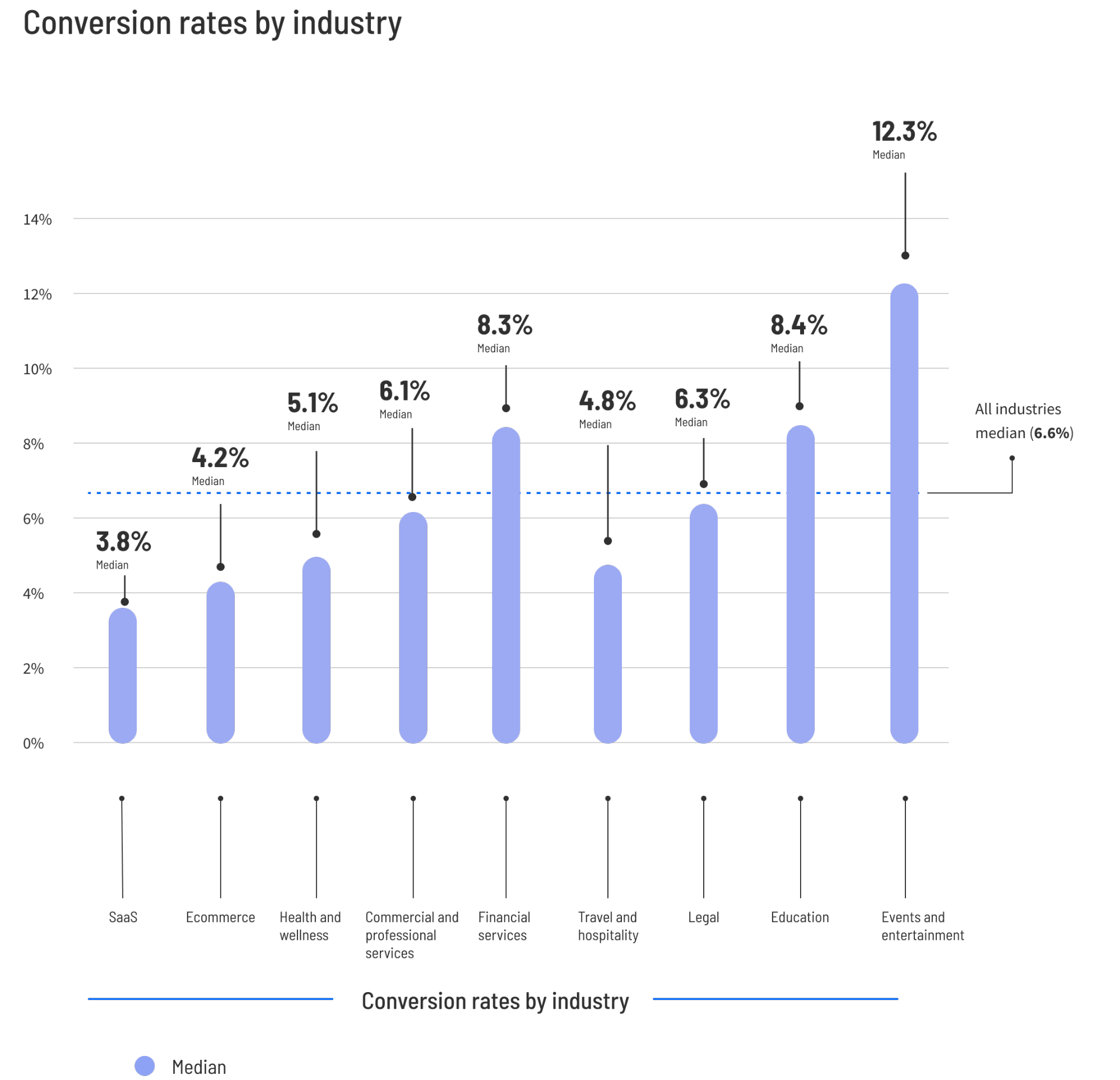
Data analysis shows that food and beverage subcategories lead the sector with a 7.1% median, likely due to lower price points and high repeat-purchase intent. Conversely, the fashion and beauty niches struggle with a 1.3% median, as these categories often require significant visual comparison and have higher return rates.
Software as a Service (SaaS)
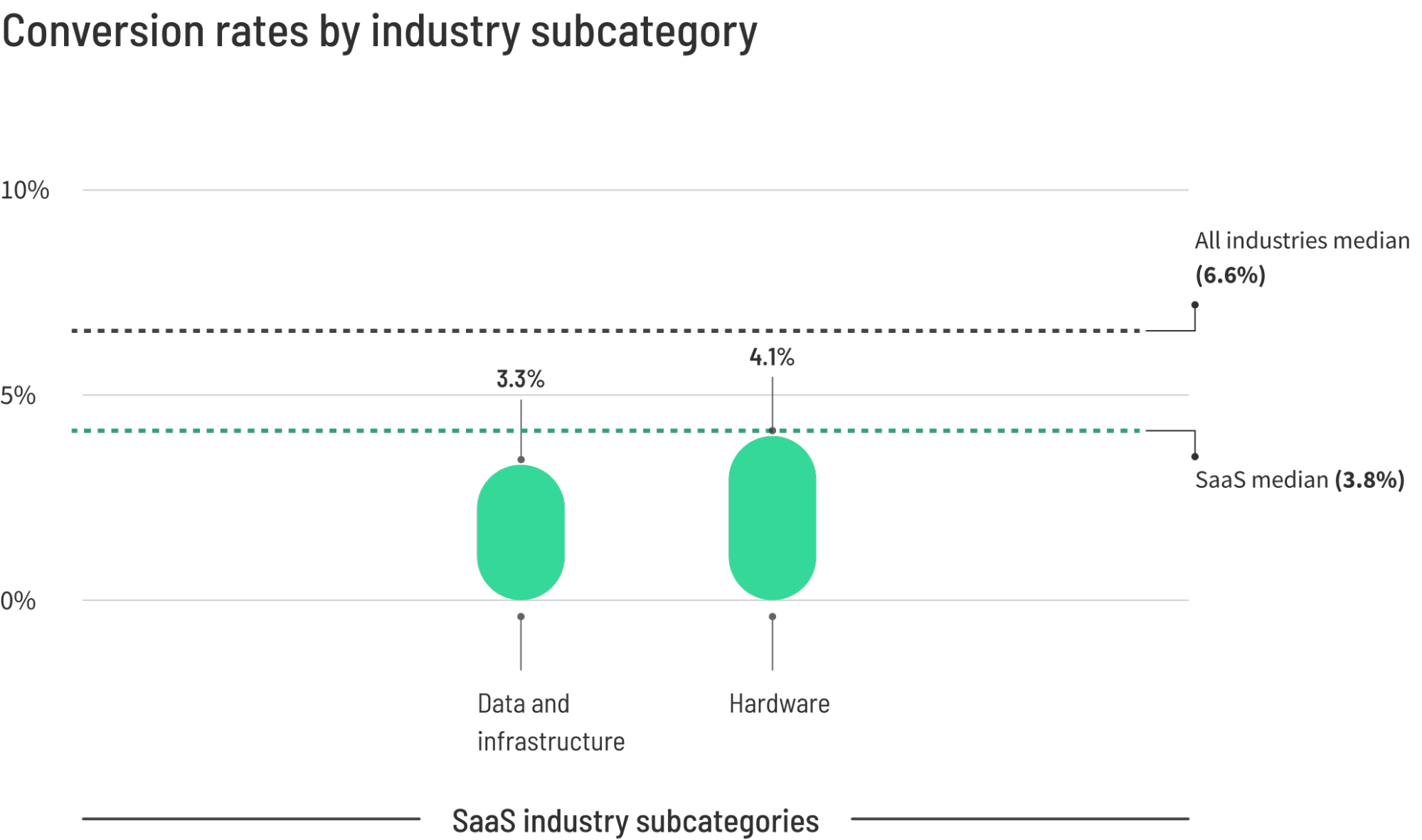
SaaS companies face a median conversion rate of 3.8%. Analysts attribute this to the complexity of software products and the longer sales cycles typical of B2B environments. The "good" threshold for SaaS—the 75th percentile—is 11.6%. Successful SaaS pages often mitigate the friction of complex products by offering "low-threat" conversions, such as free trials that do not require credit card information or comprehensive "freemium" tiers.
Financial Services and Insurance
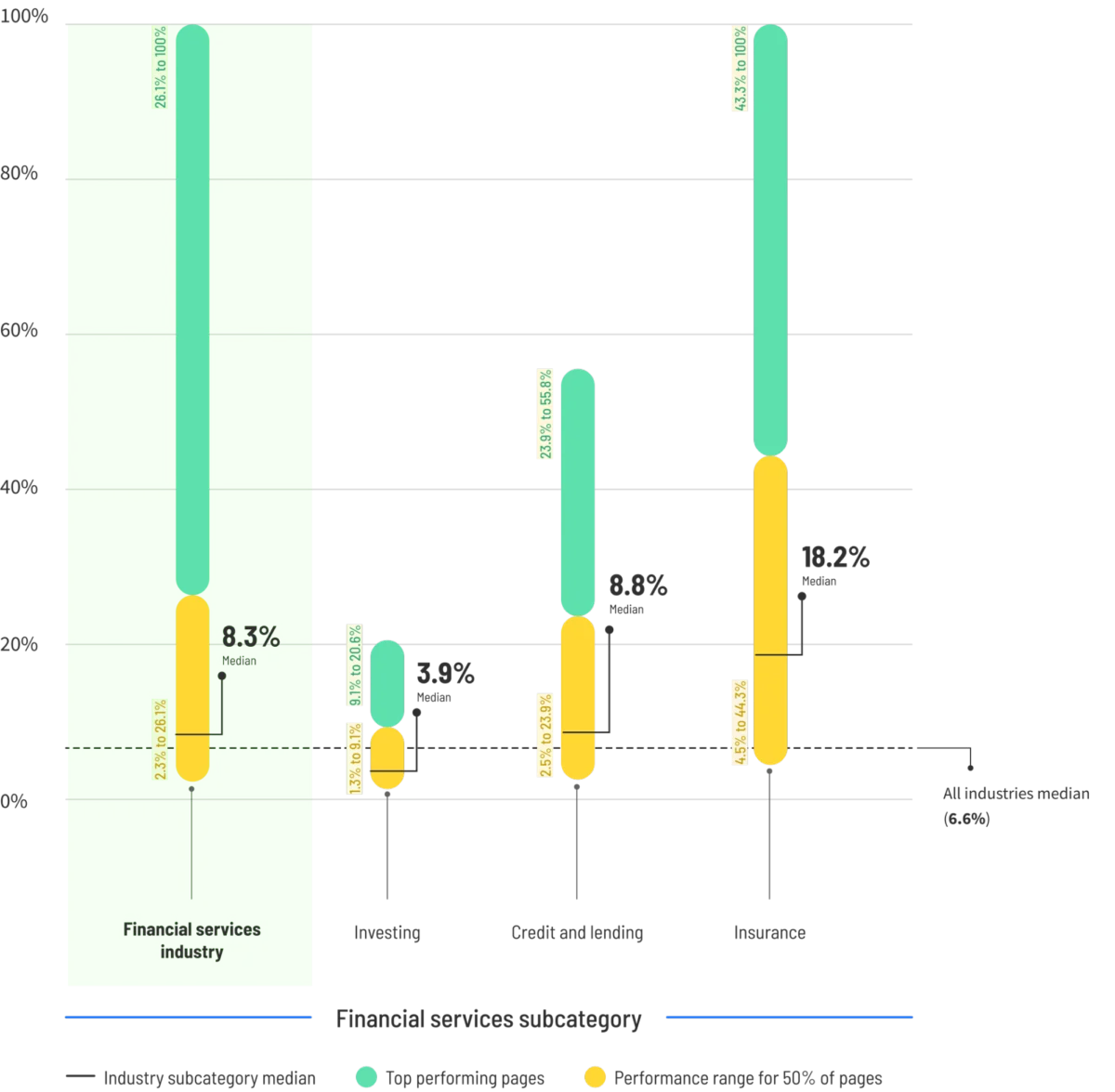
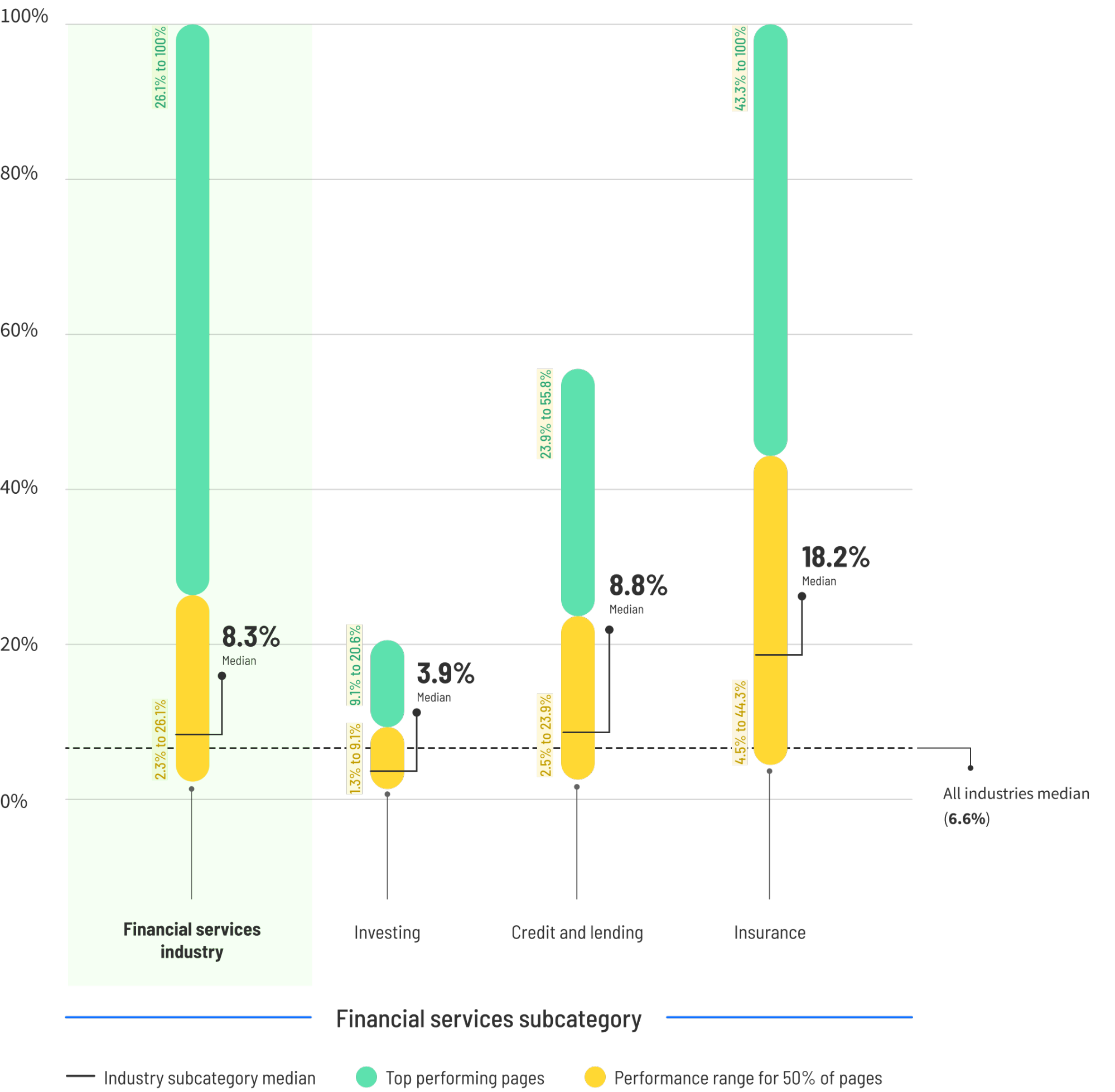
Financial services outperform many other sectors with a median conversion rate of 8.3%. This is largely driven by the high-intent nature of the traffic; users searching for insurance or investment options are usually further down the funnel. Notably, insurance subcategories see a median of 18.2%, while investing landing pages sit much lower at 3.9%, reflecting the different levels of risk and commitment required for each action.
Professional and Legal Services
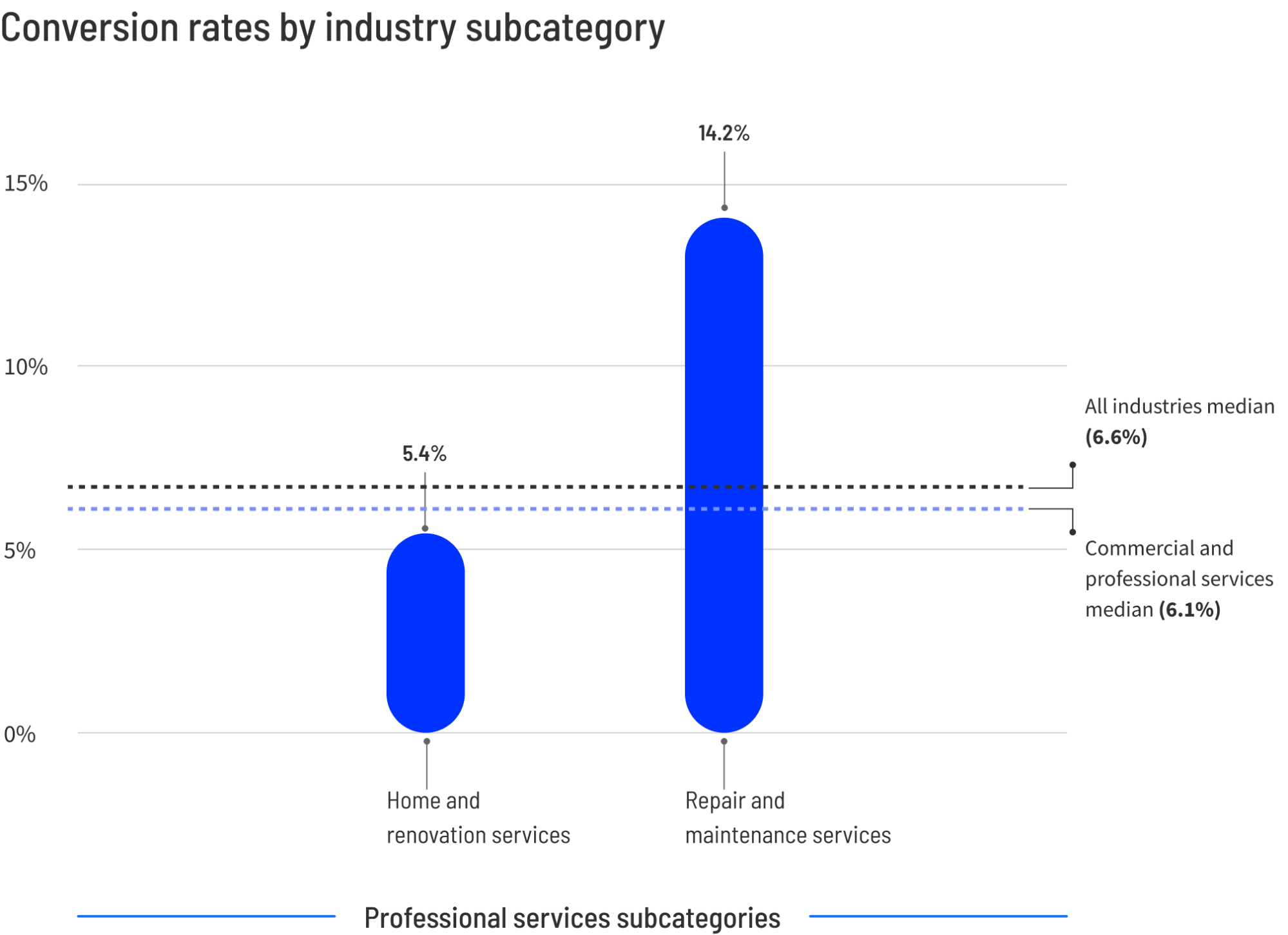
Professional services, including consulting and home maintenance, maintain a 6.1% median. Within this group, a sharp divide exists between urgent needs and long-term projects. Repair and maintenance services convert nearly three times better than home renovation services, as the former is driven by immediate necessity (e.g., a burst pipe).
The legal sector reports a 6.3% median, with top performers hitting 13.1%. A significant trend in legal marketing is the dominance of mobile traffic. Legal landing pages convert at 21% on mobile compared to 15.9% on desktop, as individuals often search for legal assistance immediately following accidents or urgent legal events using their smartphones.
The Chronology of Conversion Evolution
The methodology of landing page construction has undergone three distinct phases over the last decade. In the mid-2010s, the focus was primarily on "Lead Capture," where long forms were the standard. By 2019, the "Mobile-Responsive" era took hold, as Google’s mobile-first indexing forced marketers to prioritize smartphone users.
In 2024, the industry has entered the "Intent-Matching" phase. Modern landing pages are no longer static brochures; they are dynamic environments that use AI and machine learning to route traffic. For example, tools like Smart Traffic now automatically direct visitors to the page variant most likely to convert based on their historical behavior and demographic data. This evolution has led to the current benchmarks, where the gap between the median and the top 25% is wider than ever before, rewarding those who utilize advanced optimization technologies.
Traffic Channels and Device Influence
The source of a visitor is often a stronger predictor of conversion than the landing page itself. Data from 2024 indicates a clear hierarchy of traffic quality:
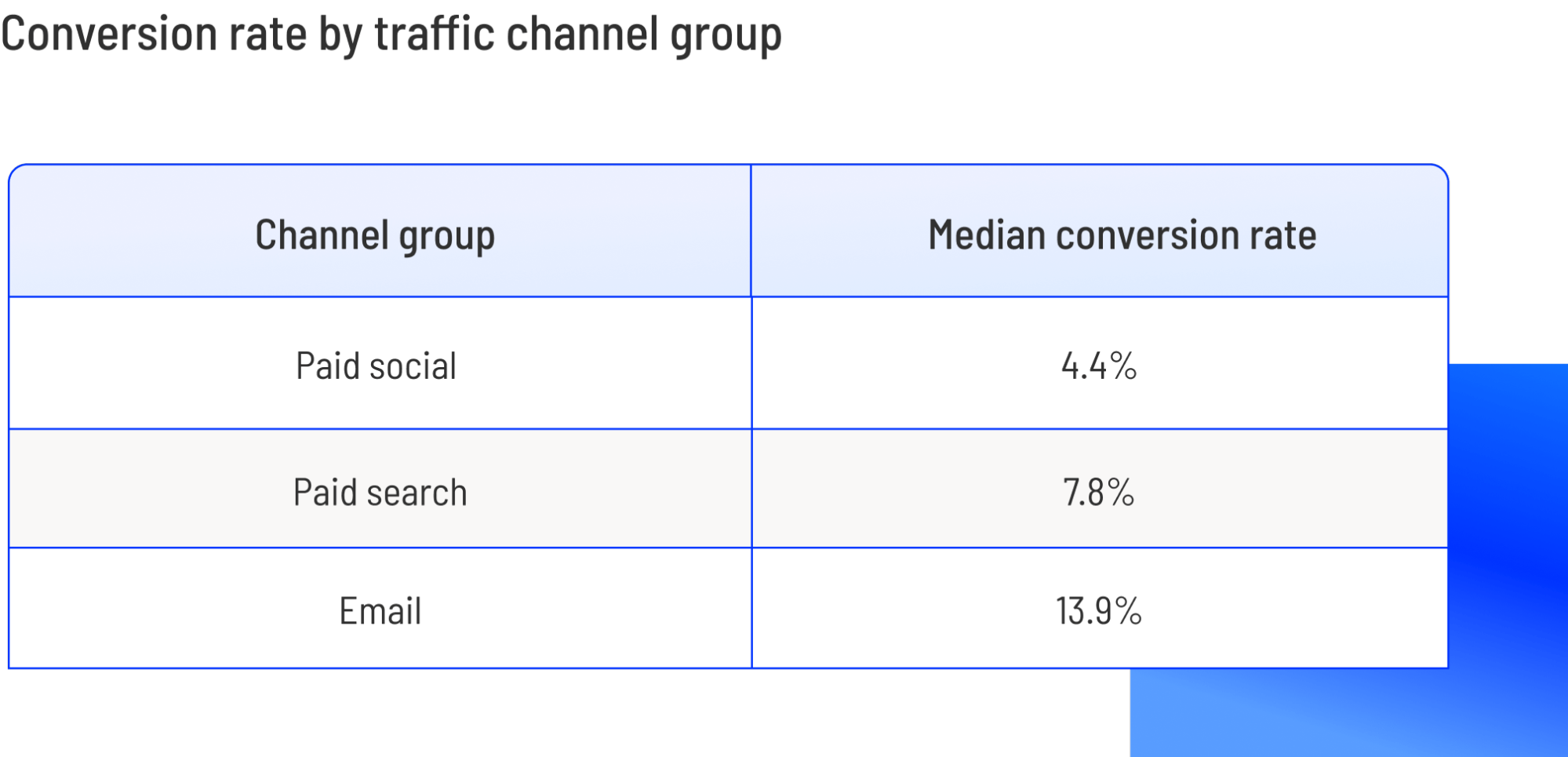
- Email Marketing: Consistently the highest-converting channel, with sectors like professional services seeing nearly 14% conversion from email leads. This is attributed to the pre-existing relationship and trust between the sender and the recipient.
- Paid Search: Dominates high-urgency sectors like legal and financial services. In the legal industry, paid search converts at nearly double the rate of any other source.
- Paid Social: Often sees lower conversion rates (averaging 4.4% in professional services) as it frequently captures users in a "discovery" or "distraction" mindset rather than a "buying" mindset.
Device usage continues to shift, with mobile now accounting for 83% of all landing page visits. However, conversion rates on mobile often lag behind desktop due to technical friction and shorter attention spans. The exception remains the financial and legal sectors, where mobile’s immediacy outweighs the convenience of a larger screen.
Strategic Implications for Marketers
The 2024 data suggests that technical "best practices" are evolving. One of the most significant findings involves the readability of landing page copy. Research indicates that pages written at a 5th-to-7th-grade reading level convert at 11.1%, which is 56% better than pages written at an 8th-to-9th-grade level. Analysts suggest that in an era of information overload, simplicity and clarity act as a competitive advantage.
Furthermore, the "distraction-free" model has become the industry standard. Top-performing pages typically remove all navigation menus and external links, forcing a singular focus on the Call to Action (CTA). This "1:1 Attention Ratio"—one goal for one page—is a hallmark of the top 25% of performers across all industries.
Expert Reactions and Broader Impact
Industry analysts observe that these benchmarks reflect a broader shift in the digital economy. "The 2024 data proves that there is no longer a ‘standard’ internet experience," says a senior CRO strategist. "A user looking for a lawyer on their phone has a completely different psychological profile than a user looking for a SaaS solution on their work laptop. Marketers who fail to segment their conversion targets by industry-specific behaviors are essentially wasting 50% of their ad spend."
The broader impact of these findings relates to the sustainability of digital advertising. As click-through rates on major platforms like Google and Meta fluctuate, the efficiency of the landing page becomes the primary lever for maintaining profitability. The "good" conversion rate of 11.4% to 40.8% is increasingly viewed not just as a goal, but as a necessary threshold for businesses to survive rising media costs.
Future Outlook
Looking toward 2025, the integration of generative AI in landing page creation is expected to further disrupt these benchmarks. With the ability to generate personalized copy and imagery in real-time, the "median" conversion rate is expected to rise as the "average" page becomes more relevant to the individual user. However, the core principles identified in the 2024 data—simplicity, social proof, and intent-matching—are expected to remain the foundation of high-performance digital marketing.
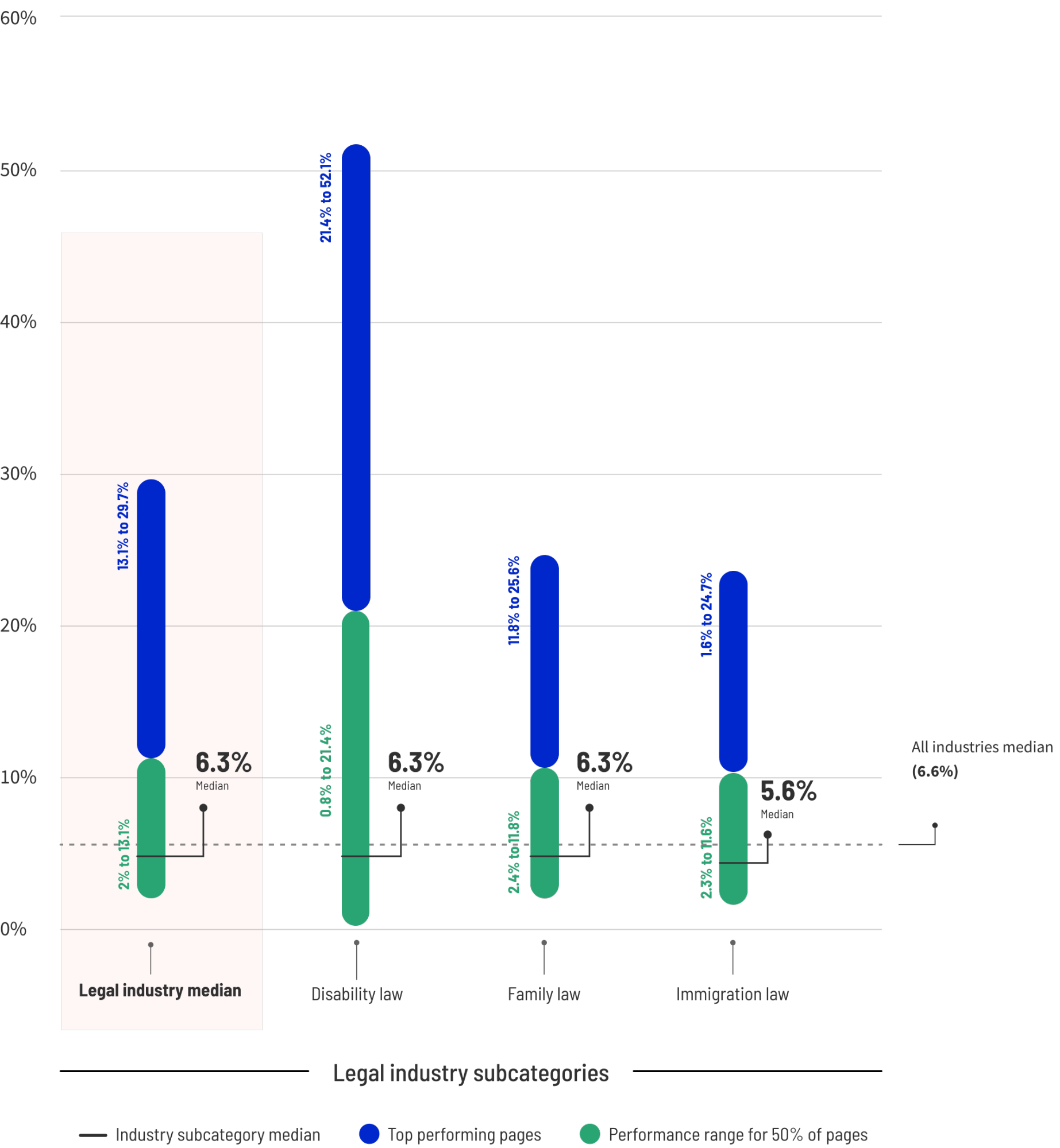
For businesses currently sitting at or below the 6.6% median, the path to the top quartile involves a systematic approach: simplifying language, optimizing for mobile speed, and ruthlessly testing CTAs to align with the specific psychological triggers of their industry. In a data-driven market, the most successful companies are those that view benchmarks as a starting point for experimentation rather than a final destination.







