The digital marketing landscape is undergoing a seismic transformation, driven by the rapid ascent of artificial intelligence in search. According to recent findings by McKinsey, a staggering 50% of consumers now actively engage with AI-powered search interfaces, with over 70% relying on these sophisticated tools to pose questions and synthesize information. This profound shift from traditional keyword-based search to conversational, answer-driven queries necessitates a fundamental evolution in search engine optimization (SEO) strategies. Marketing leaders are now tasked with incorporating Answer Engine Optimization (AEO) into their core workflows, not merely to secure a coveted spot on Google’s first page, but to guarantee visibility and influence within the AI-generated responses that increasingly define the modern "front door to the internet." Platforms such as Google AI Overviews, ChatGPT, and Perplexity are reshaping information discovery, making it imperative for brands to understand how their content is being interpreted, cited, and presented by these intelligent systems.
The Shifting Sands of Search: From SEO to AEO
For decades, the bedrock of digital visibility has been SEO, focusing on optimizing websites to rank highly in organic search results for specific keywords. Marketers meticulously crafted content, built backlinks, and optimized technical elements to appeal to search engine algorithms, primarily Google’s. However, the advent of large language models (LLMs) and generative AI has introduced a new paradigm. Instead of presenting a list of blue links for users to sift through, AI-powered answer engines synthesize information from various sources to provide direct, often conversational, answers. This represents a monumental leap in user experience but poses a significant challenge for brands.
The transition from SEO to AEO is not merely a linguistic tweak; it signifies a strategic pivot. AEO goes beyond ranking for keywords; it focuses on optimizing content to be the source for AI-generated answers. This involves ensuring content is accurate, authoritative, comprehensive, and structured in a way that AI models can easily ingest and reference. Brands need to know precisely how AI tools are referencing them, what specific search queries trigger their brand’s appearance, and the context in which they are cited. This new frontier demands specialized tools capable of monitoring, measuring, and ultimately improving a brand’s AI visibility.

Navigating the New Frontier: The Imperative for AI Visibility Tools
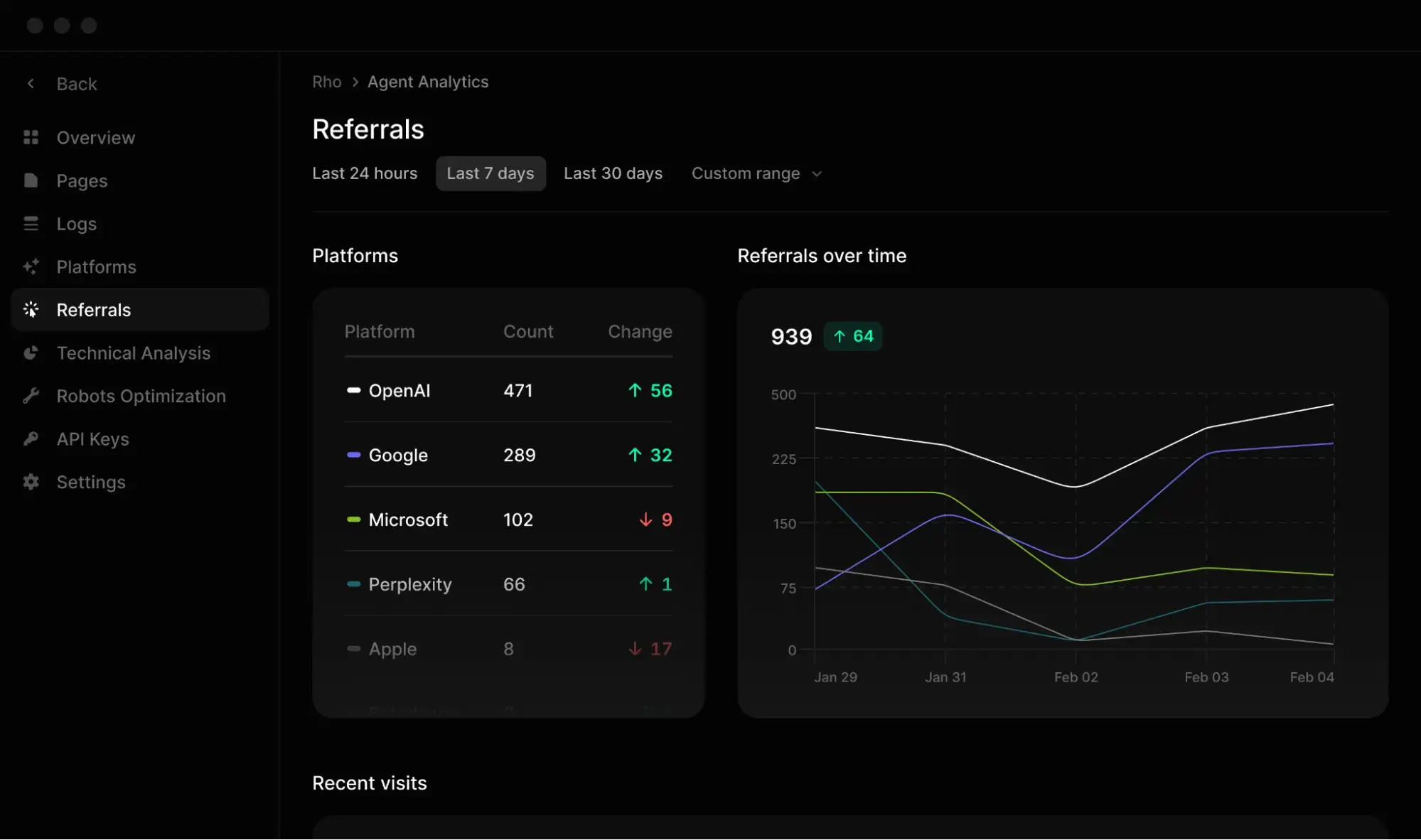
The urgency for dedicated AI visibility tools has become palpable. As AI answer engines increasingly mediate the information flow, they become critical gatekeepers of brand perception and trust. A brand’s absence or misrepresentation in AI-generated answers can have tangible consequences on customer acquisition, reputation, and competitive standing. It is within this context that platforms like Profound AI and Peec AI have emerged, designed to empower marketing teams with the intelligence needed to thrive in the AEO era. These tools are built to track how a brand’s content performs within Search Generative Experiences (SGEs) and other AI answer engines, offering insights into mentions, citations, and overall brand presence.
While both Profound AI and Peec AI aim to solve the overarching problem of AI visibility, they approach it with varying degrees of depth, complexity, and target user profiles. Marketers are now evaluating these solutions to determine which best aligns with their specific strategic objectives, team capabilities, and existing technological infrastructure. The choice hinges on factors ranging from the scope of AI engine coverage and reporting granularity to integration capabilities and pricing models.
Profound AI vs. Peec AI: A Deep Dive into AEO Platforms
Understanding the nuances between leading AEO platforms is critical for informed decision-making. Here, we delve into a detailed comparison of Profound AI and Peec AI across key operational dimensions.

Supported AI Engines and Platform Coverage: A Critical Assessment
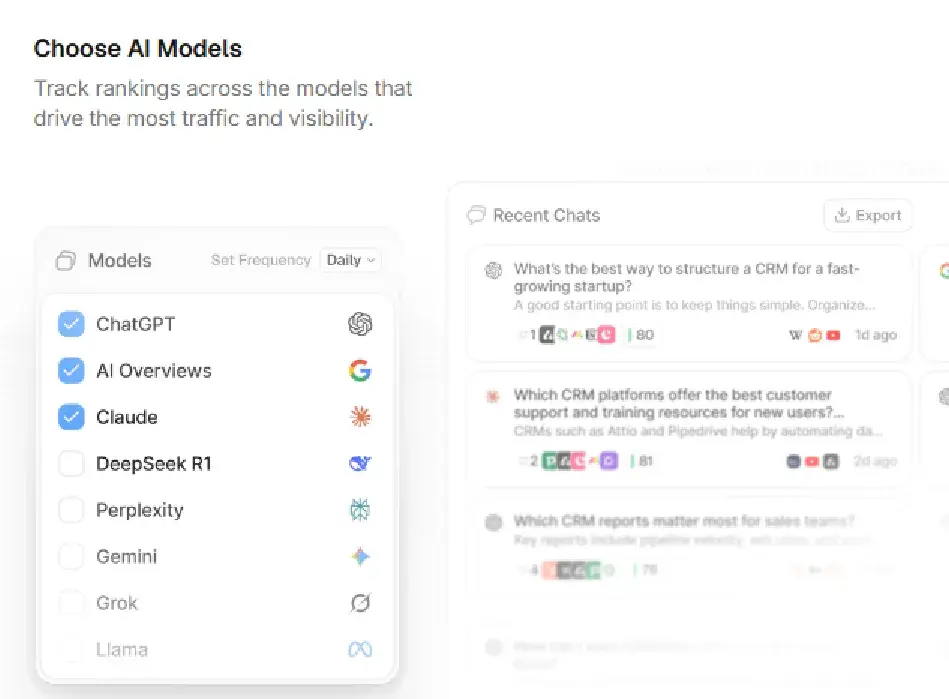
The efficacy of an AEO tool is fundamentally tied to its breadth of coverage across the diverse and expanding ecosystem of AI answer engines. Partial visibility means operating with blind spots, a perilous position in a rapidly evolving landscape where buyers fluidly move between platforms like Google AI Overviews, ChatGPT, Perplexity, Claude, Gemini, and Grok.
-
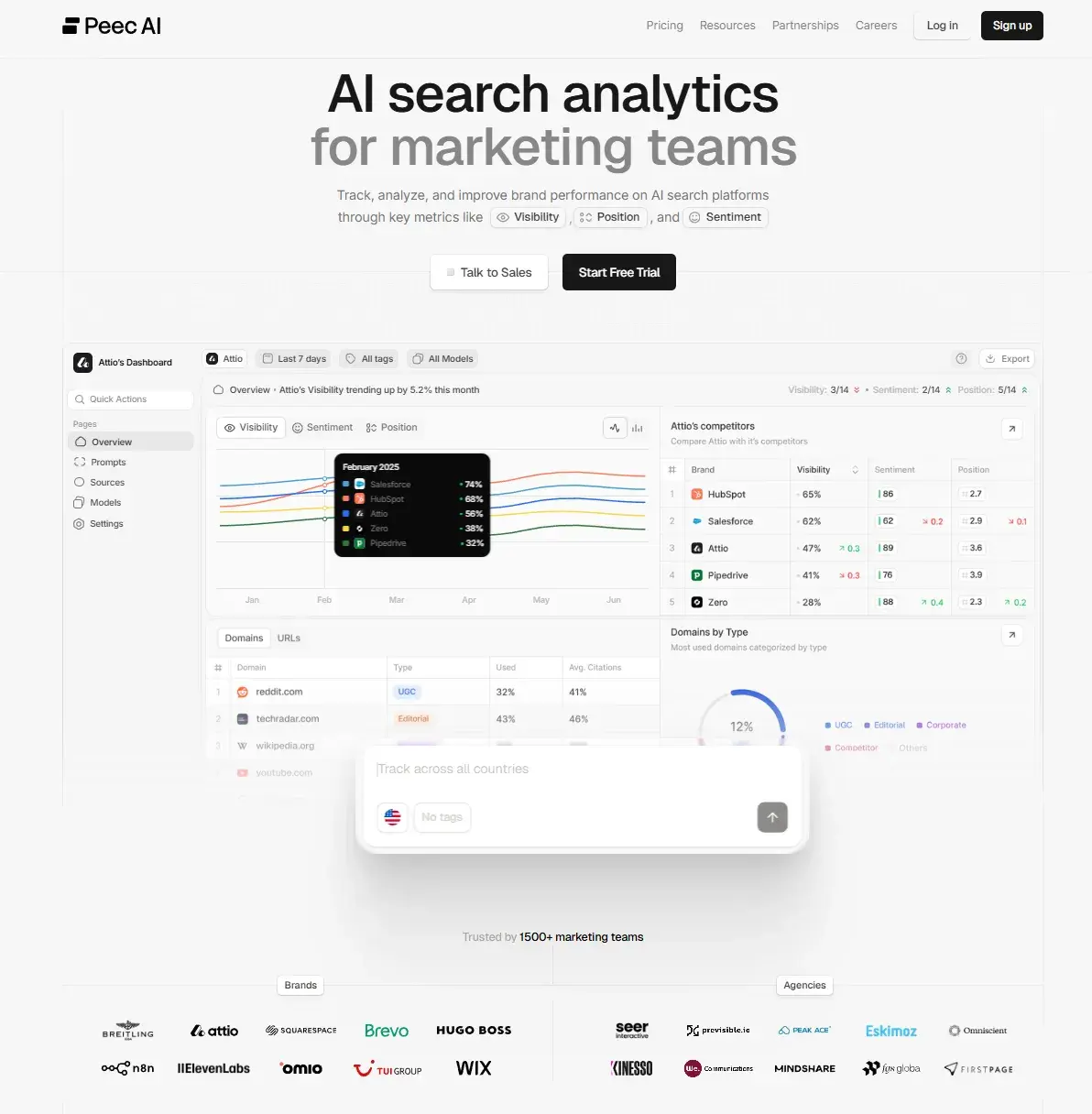
Peec AI’s Approach to Platform Coverage: Peec AI offers robust support for Google AI Overviews and a range of other prominent answer engines. For its Starter, Advanced, and Pro plans, users can select up to three engines for monitoring, with options to purchase additional coverage. Enterprise-level clients benefit from unlimited model tracking, encompassing an expansive list including Grok, Claude, and GPT 5 Search. This tiered approach allows businesses to scale their monitoring as their needs evolve, focusing on core platforms before expanding. Peec’s strategy prioritizes monitoring core generative platforms that significantly influence buyer research, providing a balanced approach to tracking mentions, citations, and competitive presence without necessitating overly complex configurations for entry-level users.
-
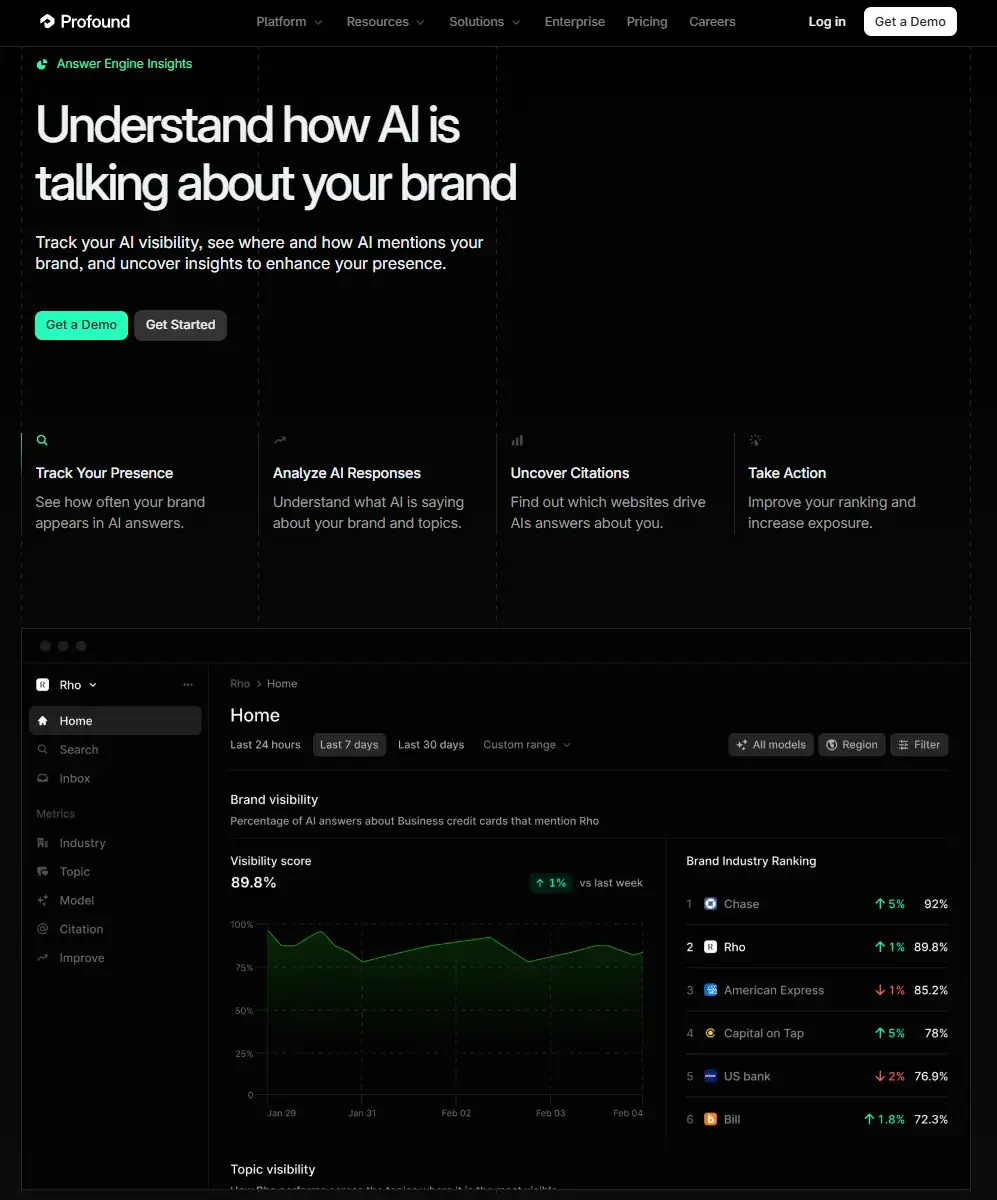
Profound AI’s Approach to Platform Coverage: Profound AI employs a front-end capture mechanism for tracking AI answers, offering a granular view of how responses appear in live environments. However, its Starter plan is more restrictive, focusing solely on ChatGPT coverage. To unlock monitoring for additional critical models, teams must upgrade to the Growth plan, which includes ChatGPT, Perplexity, and Google AI Overviews, or opt for the Enterprise plan, which expands coverage to Gemini, Copilot, Meta AI, Grok, DeepSeat, Claude, and AI Mode. While this ensures comprehensive coverage at the higher tiers, it implies a more significant initial investment for broader visibility. Profound’s front-end capture is particularly valuable for analyzing the structure and citation patterns within live AI responses.
-
Analysis: While both platforms offer comprehensive coverage at their higher tiers, Peec AI provides more flexibility for initial adoption with its ability to choose three engines on mid-tier plans. Profound’s starter plan limitation to ChatGPT may be a barrier for businesses seeking immediate multi-platform visibility without a significant upgrade. The "winner" here depends on the immediate need for broad coverage versus a willingness to invest in higher tiers for comprehensive monitoring.
Reporting Depth and Actionable Competitive Intelligence
Raw data on AI visibility is only truly valuable if it translates into actionable insights that inform strategic decisions and drive measurable outcomes. The depth of reporting and the quality of competitive intelligence are therefore paramount.
-
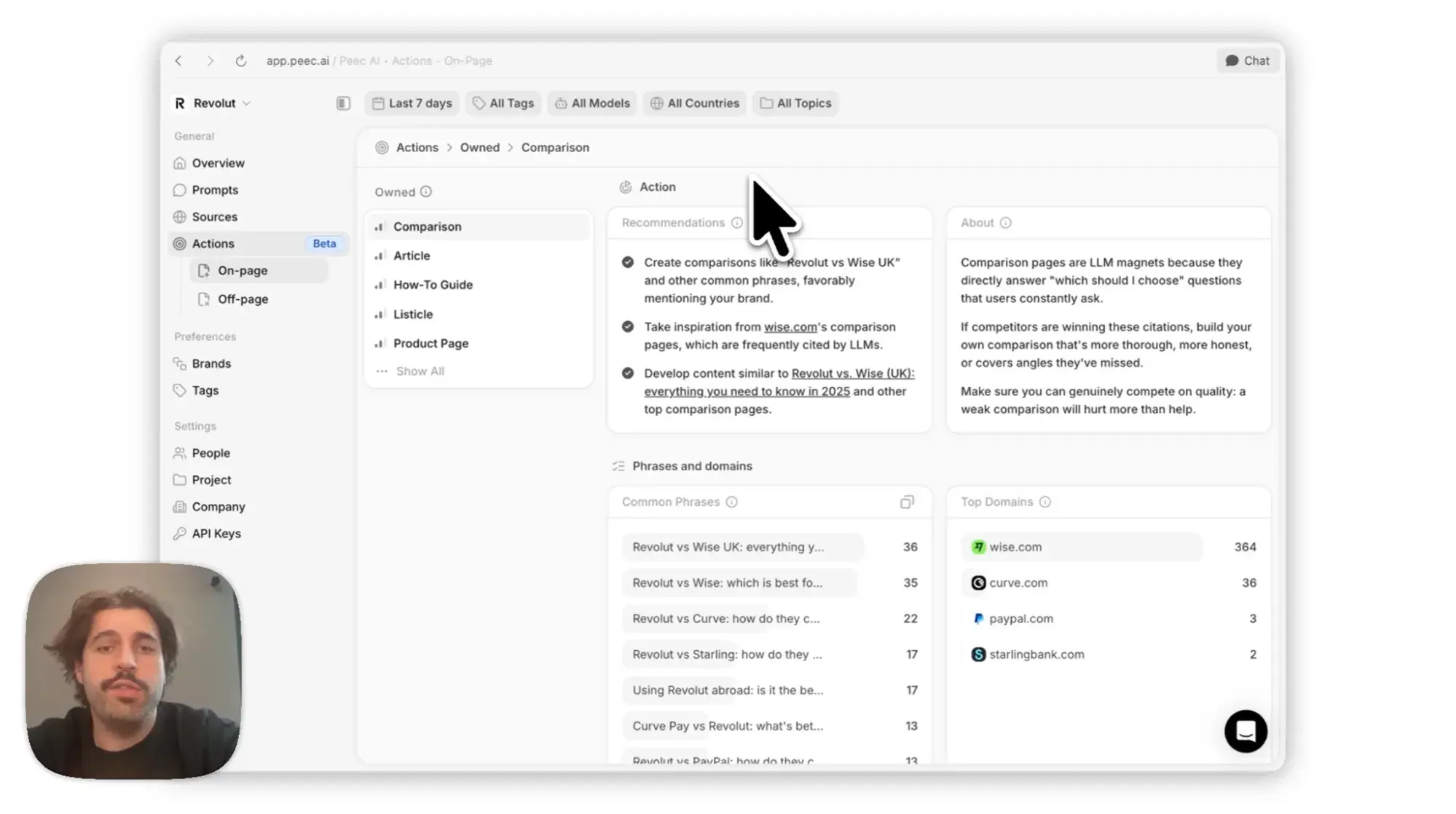
Peec AI’s Reporting and Competitive Intelligence: Peec AI distinguishes itself with an integrated "Act on Insights" feature, which directly translates AEO data into concrete, prioritized next steps for marketers. Instead of merely presenting whether a brand appeared in an AI answer, Peec provides specific recommendations, such as building presence on particular cited review platforms or engaging in relevant community discussions. This intelligent layer helps teams identify and prioritize authority-building opportunities that are genuinely influencing AI citations, making it particularly useful for teams seeking clear, immediate direction. The platform’s interface is designed for quick insights, making it accessible for rapid performance benchmarking and gap identification.
-
Profound AI’s Reporting and Competitive Intelligence: Profound AI leans into deeper, more contextual analysis through its front-end capture methodology. This approach allows for meticulous monitoring of how AI responses are structured, the order in which brands are cited, and how different prompts can influence the generated outcomes. This granular level of detail provides sophisticated competitive intelligence, enabling teams to understand not just if competitors are cited, but how they are positioned, what content is driving those citations, and how to strategically counter or emulate successful patterns. For advanced AEO programs, this deep analysis supports highly deliberate optimization efforts and refined content strategy decisions, making it ideal for organizations that require a forensic understanding of AI answer dynamics.
-
Analysis: Peec AI excels in translating data into immediate, actionable recommendations, making it highly efficient for teams that need clear strategic guidance. Profound AI, conversely, offers a more profound, analytical view of AI answer mechanics and competitive positioning, better suited for organizations with the resources and expertise to leverage highly granular data for complex strategic adjustments. The choice depends on whether the priority is quick actionability or deep analytical insight.
Integrations and Workflow Connectivity: Bridging Data and Action
For AEO to drive measurable growth, it cannot exist in a vacuum. Its data must seamlessly integrate with existing marketing technology stacks, including CRM, content management systems, and revenue analytics platforms. Disconnected metrics lead to inefficiencies and hinder the ability to quantify impact.
-
Peec AI’s Integrations and Workflow Connectivity: Peec AI offers practical data export and integration capabilities. Its direct integration with Looker Studio allows teams to export and visualize AEO data within customizable dashboards, centralizing core metrics alongside traditional SEO and other performance data. Additionally, a data API and CSV exports are available, providing flexibility for teams to pull visibility data into their existing workflows. While the Looker Studio integration is beneficial for basic dashboards and trend visualization, Peec’s overall integration footprint remains relatively lean. For workflows requiring deeper, native connectivity into enterprise systems—such as direct CRM integration or advanced content hub synchronization—Peec’s current offerings might be perceived as lightweight.
-
Profound AI’s Integrations and Workflow Connectivity: Profound AI demonstrates a clear leadership in integrations, offering a broad ecosystem designed to embed AEO insights directly into content and marketing workflows. Beyond standard dashboard exports, Profound Agents provide native connections to popular content management systems (e.g., WordPress, Sanity, Contentful, Webflow), productivity and collaboration tools (e.g., Slack, Gamma), and Google Search Console. This extensive connectivity allows teams to operationalize AEO data without needing to leave their preferred platforms. This means AI visibility signals can directly influence content creation, SEO optimizations, brand messaging, and even sales enablement, fostering a truly integrated approach to digital strategy.
-
Analysis: Profound AI is the unequivocal leader in integrations and workflow connectivity. Its robust ecosystem allows for a much more seamless and impactful integration of AEO insights into daily operations, making it ideal for larger organizations with complex tech stacks and a need for unified data flows. Peec AI offers functional integrations for reporting but lacks the deep, native connectivity that Profound provides.
Pricing Structure, Onboarding, and Scalability: Tailoring to Business Needs
The financial commitment and ease of adoption are often decisive factors in platform selection, particularly for emerging technologies like AEO.
-
Peec AI’s Pricing, Onboarding, and Scalability: Peec AI is known for its competitive pricing and streamlined onboarding process, making it an attractive option for startups, mid-market businesses, and agencies requiring rapid deployment. The low barrier to entry allows marketing teams to quickly initiate AI visibility tracking. Peec supports this with an extensive knowledge base and video tutorials, facilitating quick setup. Its appeal lies in enabling organizations to experiment with AEO and scale their efforts gradually, making it a strong fit for agencies managing multiple clients who benefit from a lighter-weight rollout process.
- Pricing: Peec AI offers a 7-day free trial. Paid packages commence from:
- Starter: $149/month
- Advanced: $399/month
- Pro: $799/month
- Enterprise: Custom pricing
- Pricing: Peec AI offers a 7-day free trial. Paid packages commence from:
-
Profound AI’s Pricing, Onboarding, and Scalability: Profound AI is strategically positioned towards enterprise organizations, reflecting its comprehensive feature set, deep analytics, and robust integration capabilities. It offers enterprise-grade security and compliance features, which are often non-negotiable for large brands, especially those in regulated sectors or global markets. Profound’s pricing and onboarding model typically align with enterprise procurement processes, often involving structured implementation, stakeholder alignment, and governance considerations. While this may entail a longer ramp-up period, it supports larger organizations that require stringent data controls, auditability, and scalable deployment across diverse global teams.
- Pricing: Profound AI does not typically offer a free trial, though calls-to-action may suggest free demos. Paid packages start from:
- Starter: $500/month (Note: only includes ChatGPT coverage)
- Growth: $1,500/month
- Enterprise: Custom pricing
- Pricing: Profound AI does not typically offer a free trial, though calls-to-action may suggest free demos. Paid packages start from:
-
Analysis: Peec AI clearly wins on pricing accessibility, ease of onboarding, and flexibility for smaller teams or those new to AEO. Its free trial and lower entry price point make it more approachable. Profound AI, while more expensive and potentially complex to onboard, delivers enterprise-grade features and scalability necessary for large, complex organizations with stringent requirements.
HubSpot AEO: An Emerging Player in the AI Visibility Landscape
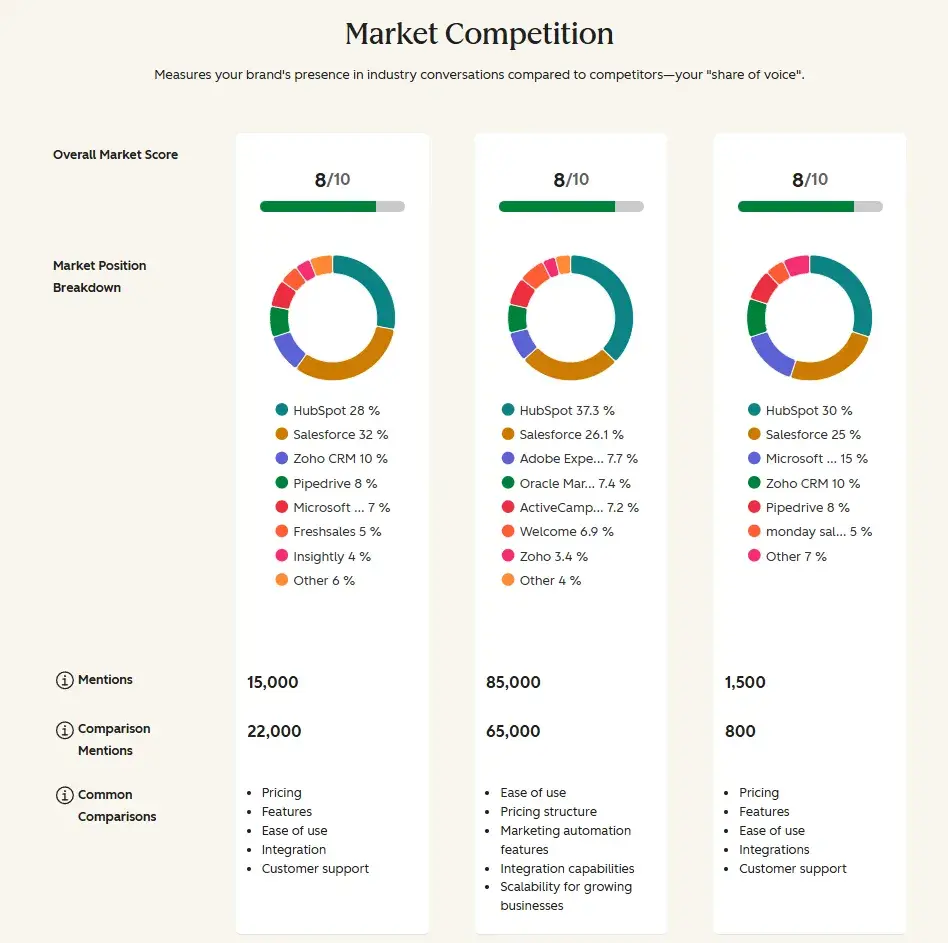
Amidst the competitive landscape of AEO tools, HubSpot has introduced its own comprehensive solution, HubSpot AEO, positioned as a powerful alternative for in-depth analysis and ongoing AI visibility strategy. Leveraging its established position in marketing automation and CRM, HubSpot aims to integrate AEO seamlessly into existing content and marketing workflows.
The AEO Grader: Benchmarking Brand Visibility
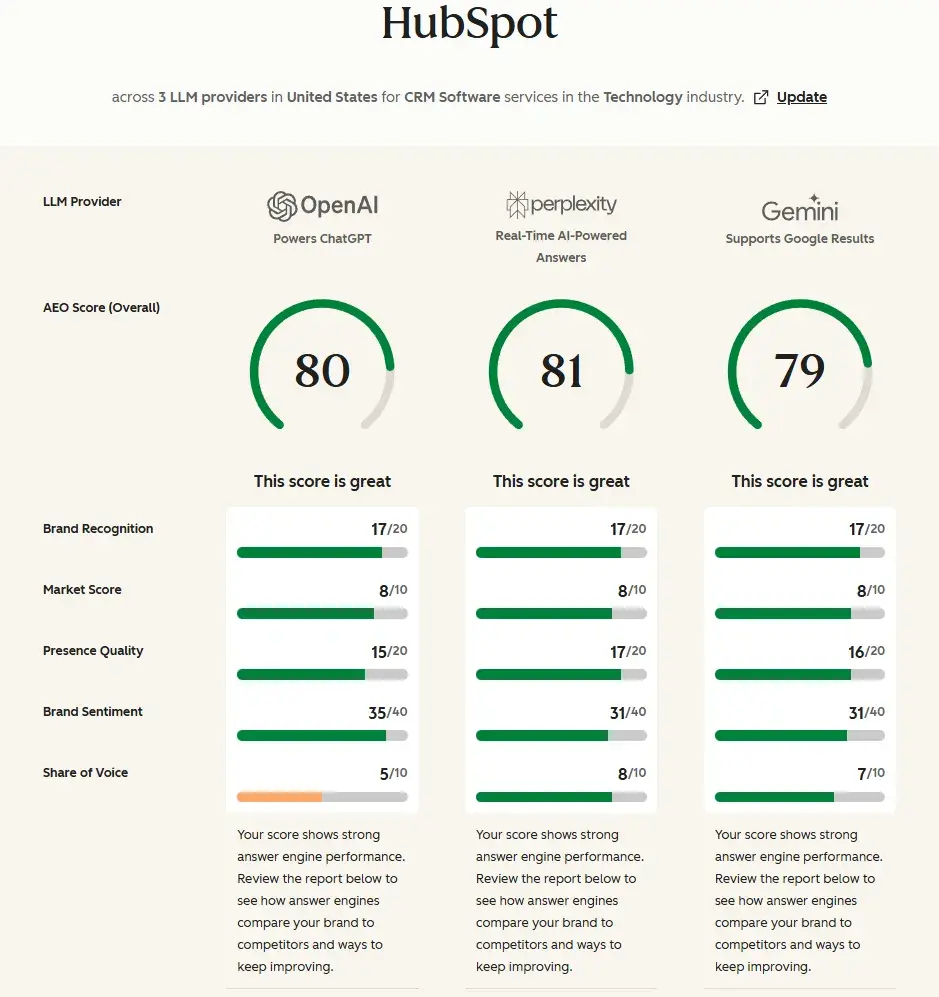
A key entry point to HubSpot’s AEO offering is its free AEO Grader. This practical tool provides an immediate snapshot of any brand’s AI visibility without requiring a credit card or complex setup. The grader offers:
- Visibility Snapshots: A quick overview of how answer engines currently represent a brand.
- Competitive Insights: Analysis of how a brand performs against key competitors in AI answers.
- Sentiment Analysis: An understanding of the prevailing sentiment associated with the brand in AI-generated responses.
- Practical Recommendations: Specific, actionable advice for improving AI visibility, tailored to the brand’s current performance.
This free tool serves as an excellent starting point for marketers to objectively benchmark their current AEO standing before committing to a paid platform.
Comprehensive HubSpot AEO Platform Features
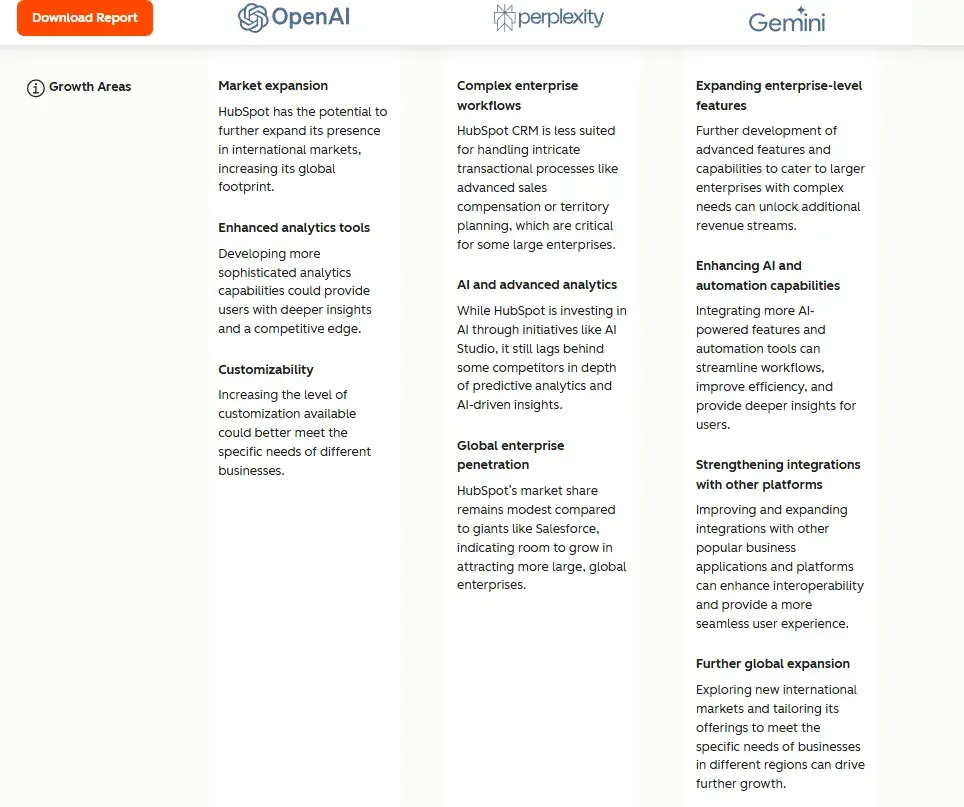
Beyond the free grader, the full HubSpot AEO platform offers a robust suite of features designed for continuous monitoring and optimization:
- Continuous Monitoring: Tracks brand performance across various answer engines over time, with visibility scores updated dynamically as AI platforms evolve.
- Content Gap Analysis: Identifies areas where a brand’s content is underperforming or absent in AI answers, guiding future content strategy.
- Brand Mentions & Citations: Provides detailed reports on where and how a brand is mentioned and cited by AI.
- Sentiment Tracking: Offers ongoing analysis of the sentiment surrounding brand mentions in AI contexts.
- Direct Recommendations: Provides actionable insights that connect directly to HubSpot’s content and social tools, allowing teams to implement improvements within their existing platform.
HubSpot AEO is available as a standalone tool at $50 per month or as an integrated feature within Marketing Hub Pro and Enterprise subscriptions. This positioning makes it particularly attractive for existing HubSpot users who can leverage integrated workflows, ensuring that AEO insights translate directly into content creation and distribution within a unified platform.
Strategic Implications for Modern Marketing
The rise of AI-powered search and the necessity of AEO tools carry profound implications for the entirety of modern marketing strategy.
Re-evaluating Content Strategy for AI Answers
Content is no longer just for human readers or traditional search algorithms. It must now be meticulously crafted to be "AI-friendly"—clear, factual, well-structured, and authoritative. Marketers must move beyond keyword stuffing and focus on providing comprehensive, unbiased answers to user queries, ensuring their content serves as a credible source for AI models. This may involve creating more FAQ sections, structured data, and long-form, expert-driven content.
Brand Reputation in the Age of AI
AI answer engines can significantly influence brand perception. If a brand is consistently cited negatively, inaccurately, or not at all, its reputation can suffer. AEO tools become critical for proactive brand reputation management, allowing marketers to monitor AI mentions, correct inaccuracies, and strategically position their brand as a trusted authority.
Competitive Advantage Through AEO
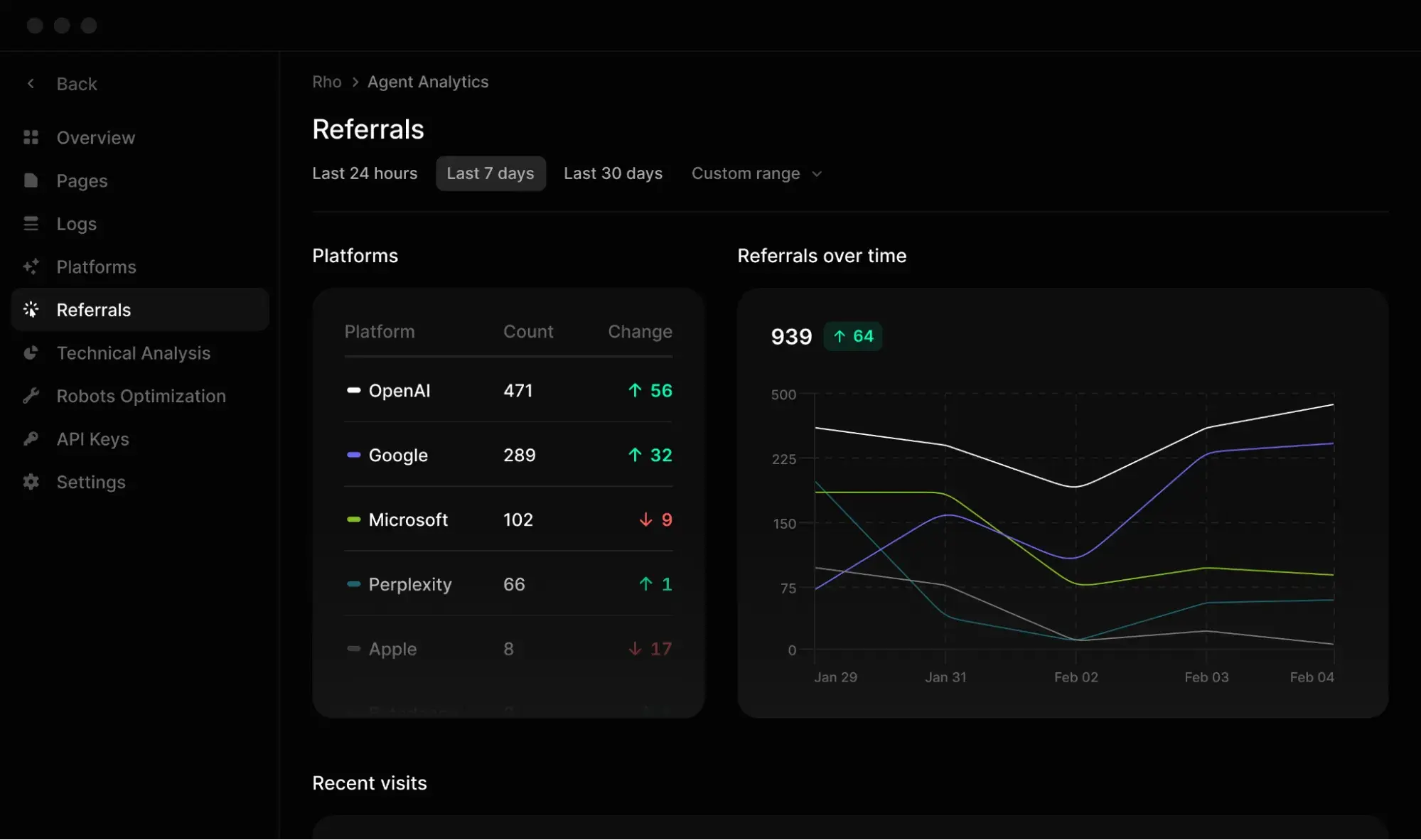
Early adopters and proficient users of AEO tools will gain a significant competitive edge. By understanding how competitors are being cited, identifying content gaps, and optimizing for AI visibility, brands can capture a larger share of voice in the emerging AI search landscape. This proactive approach ensures relevance and sustained growth in a rapidly changing digital environment.
Choosing the Right AEO Partner for Sustainable Growth
The selection of an AEO platform—be it Peec AI, Profound AI, or HubSpot AEO—is not a trivial decision. It must align with an organization’s current AEO maturity, team structure, budget, and long-term strategic goals.
Peec AI is ideally suited for teams seeking to quickly establish AI visibility, benchmark against competitors, and generate clear, actionable insights without a heavy implementation burden. Its simplicity and speed to insight make it a strong fit for organizations beginning their AEO journey or those prioritizing agility.
Profound AI, conversely, delivers maximum value to enterprises where AEO is recognized as a core growth driver, demanding deeper analytics, extensive integrations into complex content and CRM workflows, and robust governance features. For organizations aiming to operationalize AEO at scale and directly link AI visibility to critical business outcomes, Profound provides the necessary infrastructure for sustained execution.
HubSpot AEO offers a compelling alternative, particularly for businesses already integrated into the HubSpot ecosystem. Its ability to connect AEO insights directly with content creation and distribution workflows within a familiar platform, combined with its accessible pricing and free AEO Grader, makes it a powerful choice for holistic marketing operations.
Regardless of the chosen platform, the foundational step for any organization is to understand its current standing. Leveraging free tools like HubSpot’s AEO Grader allows businesses to objectively analyze their brand’s AI visibility, gain competitive insights, and receive practical recommendations. This objective performance data provides invaluable clarity, informing not only platform selection but also the overarching AEO strategy that will define future digital success.
Frequently Asked Questions About Profound AI vs. Peec AI for AEO
What is the main difference between Profound AI and Peec AI for Answer Engine Optimization?
Profound AI prioritizes comprehensive analytics, broad AI engine coverage, and deep enterprise-grade integrations, making it ideal for teams requiring granular insight into how AI answer engines interpret and display content. Peec AI focuses on straightforward visibility tracking, rapid insights, and actionable recommendations, enabling teams to quickly identify their brand’s appearance and the strategic steps to take.
Which AI engines and platforms do Profound AI and Peec AI monitor?
Peec AI supports a wide range of platforms, allowing users on mid-tier plans to choose three engines to monitor, with unlimited coverage for Enterprise clients across platforms like ChatGPT, Perplexity, Claude, Google AI Mode, AI Overviews, Gemini, Copilot, and Grok. Profound AI also offers broad coverage across major and emerging engines, including Perplexity, Claude, Google AI Mode, Gemini, Copilot, and Grok, but its Starter plan is limited to ChatGPT, requiring upgrades for broader multi-platform monitoring.
Does Profound AI or Peec AI offer better enterprise-grade features and compliance?
Profound AI generally leads in enterprise-grade readiness, providing features tailored for security, governance, and large-scale deployments. Organizations in regulated industries or with strict data policies often prefer Profound’s robust compliance and integration capabilities. Peec AI remains valuable for teams prioritizing quick adoption and clear insights, though it may require additional controls or manual processes for complex enterprise governance needs.
Is Profound AI or Peec AI better suited for agencies managing multiple clients?
Peec AI’s competitive pricing and ease of onboarding make it highly attractive for agencies needing to quickly roll out AEO tracking across a diverse client portfolio. Its actionable reporting helps agencies demonstrate impact efficiently. Profound AI can also serve agencies, particularly those supporting enterprise clients or complex global strategies, but its depth and governance features may better align with larger, more structured agency engagements.