


The global eCommerce landscape has reached a critical inflection point where the traditional reliance on disparate point solutions for search, recommendations, and merchandising is increasingly viewed as a liability rather than a standard operational procedure. In a significant move to address this systemic inefficiency, VWO AB Tasty has announced the launch of its new Commerce platform, a unified solution designed to collapse the silos between these three critical discovery functions. For years, eCommerce teams have operated under the assumption that search and product recommendations were separate engineering and marketing challenges, leading to a fragmented user experience that often results in lost revenue and increased operational overhead. The launch of the VWO AB Tasty Commerce platform signals a shift toward a consolidated architectural approach, centering product discovery around a single catalog, a unified workspace, and a shared artificial intelligence layer.
The Evolution of Product Discovery and the Fragmentation Crisis
To understand the significance of this launch, one must look at the chronology of eCommerce technology. In the early 2010s, the market was dominated by "best-of-breed" point solutions. A retailer would typically purchase one tool for site search, another for personalized recommendations, and use the native capabilities of their eCommerce platform—such as Shopify, Magento, or Salesforce Commerce Cloud—for basic merchandising. While this allowed for specialized functionality, it created a "data silo" problem.
By the mid-2020s, the limitations of this fragmented approach became undeniable. When search logic is disconnected from merchandising rules, a retailer might "boost" a specific high-margin item on a category page, only to have that same item buried on page four of a search result for a relevant query. This inconsistency confuses shoppers and dilutes brand authority. According to industry benchmarks, nearly 30% of eCommerce visitors use the search bar, and these users are often the highest-intent shoppers. However, if the search experience does not mirror the promotional logic found elsewhere on the site, conversion rates can drop by as much as 20% to 50%.

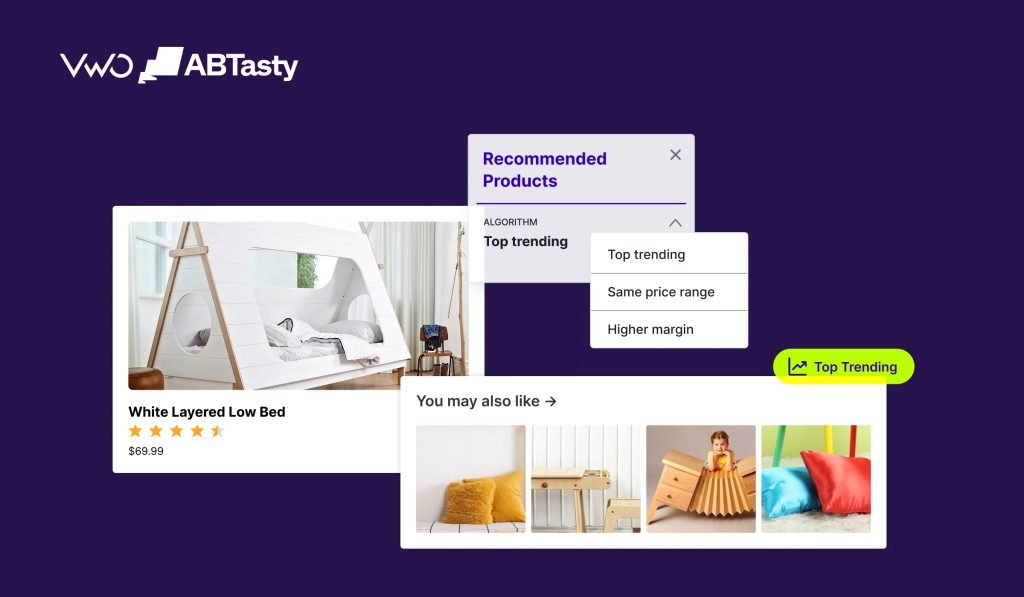
VWO AB Tasty’s new platform is built on the premise that product discovery is a singular, continuous journey. By unifying these elements, the platform ensures that a boost rule set in the merchandising module is automatically inherited by the search engine. Behavioral signals captured during a search session—such as a user filtering for "sustainable materials"—immediately inform the recommendation engine, creating a coherent and personalized shopping experience in real-time.
Architectural Innovation: A Single Source of Truth
The core differentiator of the VWO AB Tasty Commerce platform lies in its underlying architecture. Most legacy competitors offer integration between search and recommendations, but these are often "stitched together" via APIs rather than being natively unified. VWO AB Tasty has redesigned the discovery stack from the ground up to operate from a single product catalog.
This unified catalog approach eliminates the latency and synchronization errors common in multi-tool environments. When a product goes out of stock or a price changes, the update is reflected across search results, recommendation widgets, and product listing pages (PLPs) simultaneously. This architectural shift addresses a major pain point for digital merchandisers who previously had to manually update multiple systems to ensure data consistency.
Four Pillars of the New Commerce Platform
The platform introduces four primary capabilities that represent a departure from traditional eCommerce management workflows:
1. AI-Powered Strategy Creation
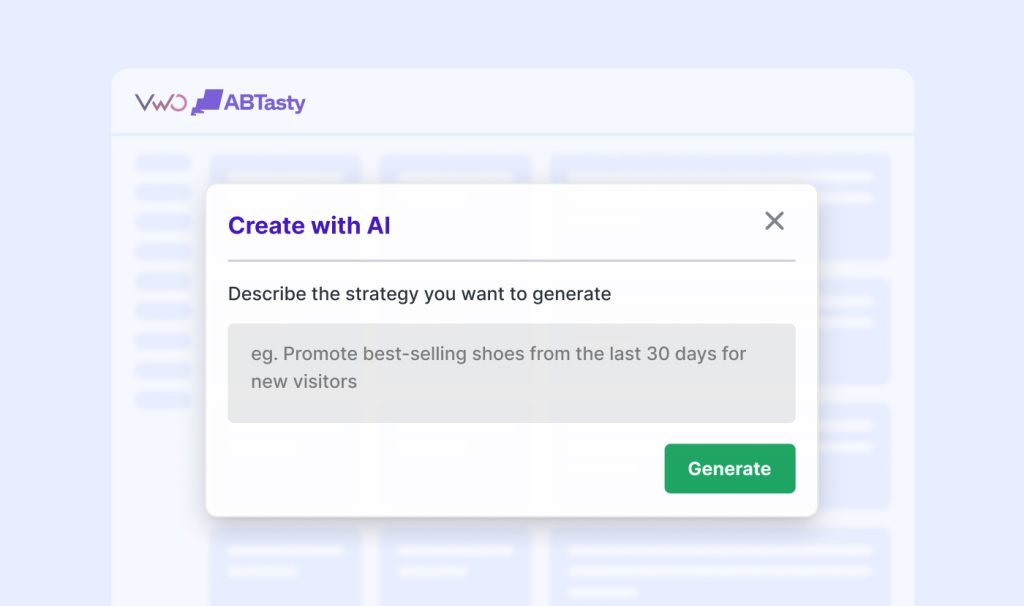
Traditional merchandising requires teams to manually construct complex "if-then" logic to promote products. VWO AB Tasty has replaced this cumbersome process with a natural language interface. Merchandisers can now describe their business goals in plain English—for example, "Promote high-margin summer footwear to returning customers in coastal regions"—and the platform’s AI translates this intent into a deployable strategy. This reduces the time-to-market for promotional campaigns from days to minutes, allowing teams to iterate based on real-time market trends.
2. Global Boost and Bury Rules
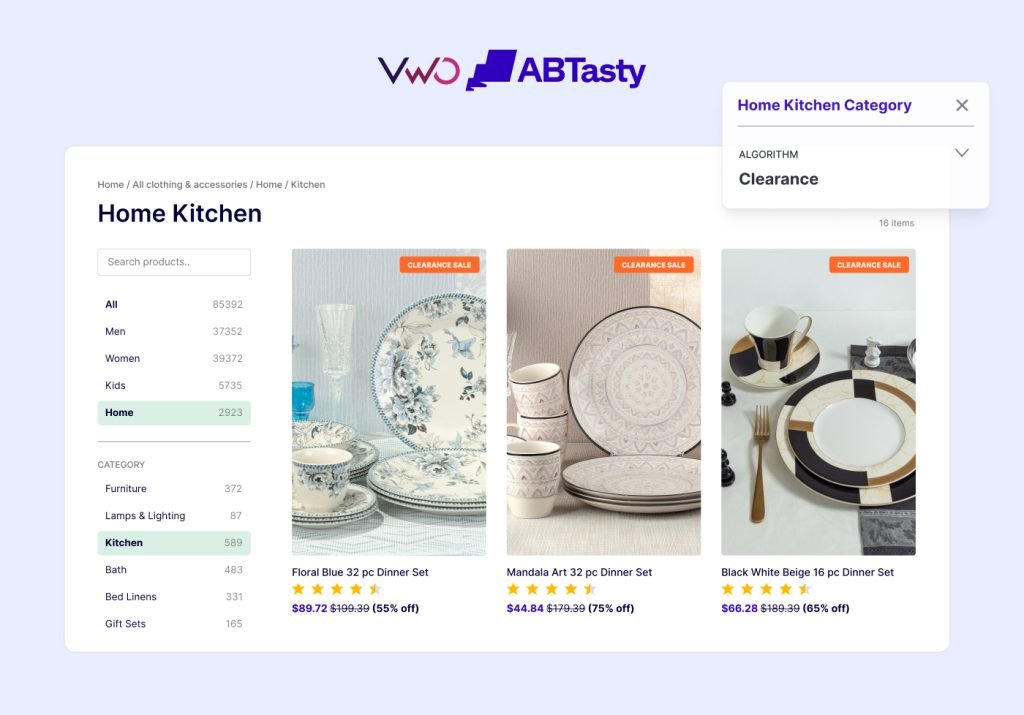
In a siloed environment, launching a new product line requires independent configuration across various site modules. The Commerce platform introduces "Global Boost and Bury" functionality, which allows a single rule to govern product visibility across the entire site. If a brand needs to liquidate inventory for a specific SKU, they can apply a global boost that elevates that product in search results, category pages, and "you might also like" sections simultaneously. This ensures a consistent push across all discovery touchpoints.
3. Unified Facet and Sort Management
Facets—the filters that allow users to narrow down products by size, color, or price—are among the most critical tools for conversion. However, managing these across different tools often leads to inconsistencies where a "blue" filter in search might yield different results than a "blue" filter on a category page. VWO AB Tasty centralizes facet and sort logic, ensuring that the navigation experience remains stable regardless of how the customer arrived at a product list.
4. Revenue-First Reporting and AI Optimization
Perhaps the most significant shift is in how performance is measured. While traditional tools focus on technical metrics like Click-Through Rate (CTR) or "No Results Found" rates, the VWO AB Tasty Commerce platform prioritizes financial outcomes. The reporting dashboard highlights "Assisted Revenue" and "Revenue Uplift," providing clear attribution for discovery strategies. Furthermore, the AI layer proactively suggests optimizations. For instance, the system might identify that a specific sorting order is underperforming for mobile users and suggest an alternative "trending now" sort logic to recover potential lost sales.
Market Context and Industry Implications
The release of this platform comes at a time when eCommerce margins are under pressure from rising customer acquisition costs (CAC) and increased competition. Retailers are increasingly looking inward to optimize their existing traffic rather than spending more on external advertising. Research indicates that improving product findability can lead to a 10% to 15% increase in Average Order Value (AOV), as customers are more likely to discover complementary items when the recommendation engine is properly synced with their search intent.
Industry analysts suggest that the move by VWO AB Tasty is a direct challenge to established players like Algolia, Bloomreach, and Coveo. While those companies have historically dominated the search and discovery space, VWO AB Tasty’s advantage lies in its heritage of experimentation and personalization. By embedding discovery into a platform already known for A/B testing and user experience optimization, the company offers a more holistic "conversion rate optimization" (CRO) ecosystem.
Analysis of Operational Efficiency
Beyond the customer-facing benefits, the operational impact on eCommerce teams is substantial. In a typical mid-to-large enterprise, the "fragmentation tax" is paid in human hours. Merchandisers, SEO specialists, and developers often spend a significant portion of their week reconciling data between tools. By consolidating these functions into a single workspace, VWO AB Tasty claims to significantly reduce the manual labor required to maintain an online storefront.
This consolidation also simplifies the technical stack, reducing the number of third-party scripts running on the front end. In an era where Google’s Core Web Vitals heavily weight page load speed as a ranking factor, reducing "script bloat" by moving to a unified discovery platform can provide a secondary benefit in the form of improved search engine rankings.
Expert Perspectives and Future Outlook
While VWO AB Tasty has not released specific client testimonials in the initial launch phase, the industry’s reaction has been one of cautious optimism. Digital transformation consultants note that the success of such a platform depends heavily on the ease of integration with existing eCommerce backends like Shopify Plus or BigCommerce.
"The industry has been moving toward ‘composable commerce’ for years, but the missing piece has always been a unified orchestration layer for discovery," says one industry analyst. "If VWO AB Tasty can truly deliver a ‘single source of truth’ for product data and promotional logic, they will have solved one of the most persistent headaches in digital retail."
Looking ahead, the integration of generative AI into the merchandising workflow is expected to be the next frontier. VWO AB Tasty’s inclusion of a plain-language strategy creator is a first step in this direction. As AI models become more adept at predicting consumer trends, the platform may eventually move from "suggesting" strategies to autonomously executing them in response to shifts in global supply chains or social media trends.
Conclusion
The launch of the VWO AB Tasty Commerce platform represents a strategic pivot toward simplicity and unity in an increasingly complex digital world. By challenging the long-standing assumption that search, recommendations, and merchandising should exist in isolation, VWO AB Tasty is positioning itself as a leader in the next generation of eCommerce infrastructure. For retailers, the promise is clear: less time spent managing tools, and more time spent understanding and serving the customer. As the platform begins its rollout, the focus will shift to how effectively it can scale across diverse retail sectors and whether the promised "revenue-first" outcomes materialize for early adopters. In a market where every click counts, the ability to provide a seamless, intelligent, and consistent discovery experience may well be the defining factor for eCommerce success in the coming decade.







