
 rifanmuazin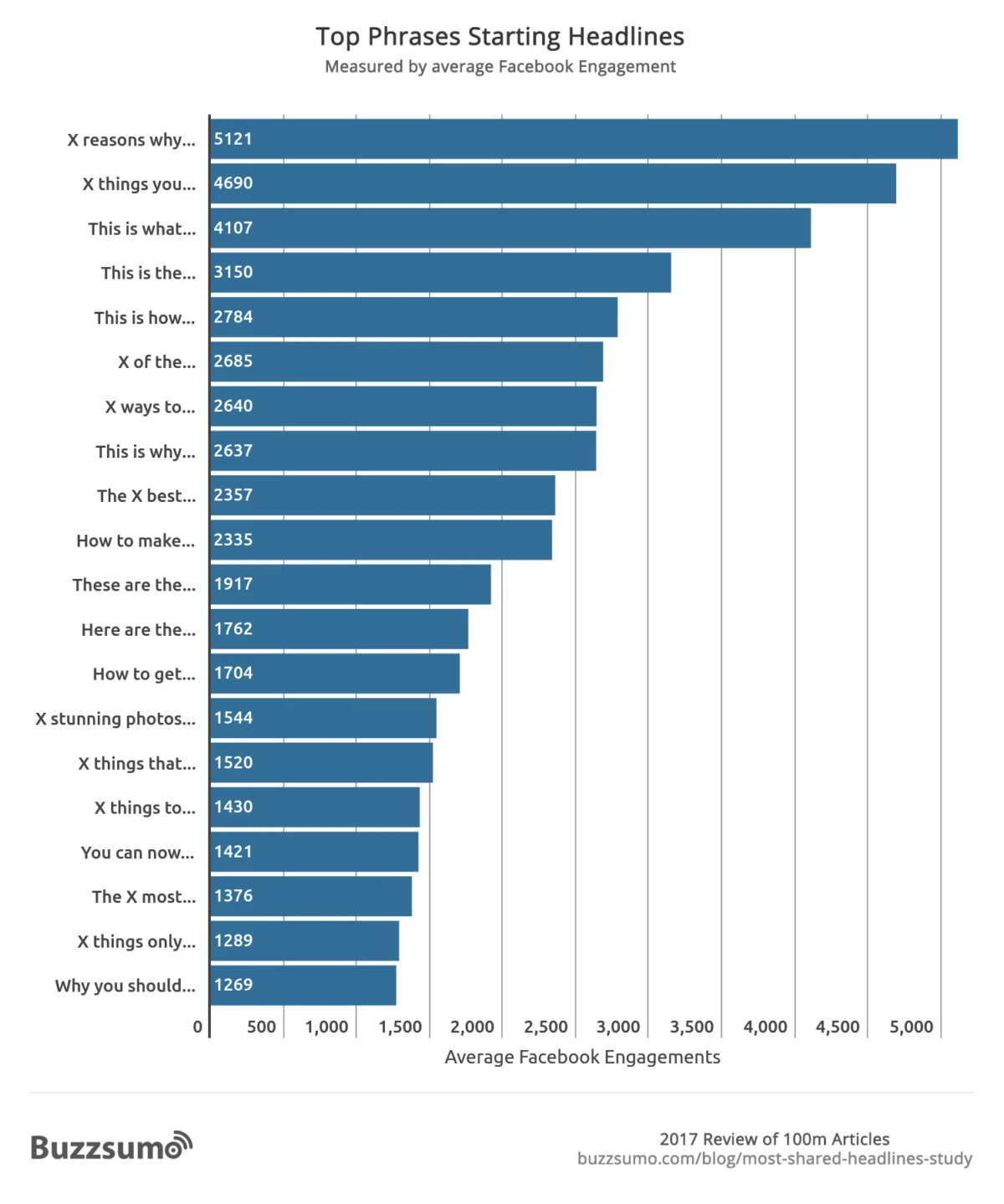
A groundbreaking study by BuzzSumo, building on its seminal 2017 research, has meticulously analyzed 100 million article headlines published between 2019 and 2020, revealing a dramatic transformation in what captures audience attention on Facebook and Twitter. The findings underscore the critical role headlines play as the primary gateway to content, functioning not merely as titles but as potent tools for audience connection, subject lines, tweets, and video titles. In an era marked by algorithmic sophistication, escalating competition, and increasingly discerning audiences, mastering headline craft has become paramount for publishers and content creators aiming to cut through the digital noise. This updated analysis, enriched by insights from leading marketing experts, offers a vital roadmap for navigating the evolving landscape of social media content.
The Dynamic Digital Content Ecosystem
The digital content sphere has witnessed unprecedented growth, with online content publication surging by an astounding 64% since 2016, as revealed in a separate BuzzSumo study of 1.7 billion articles. This explosion of information has created a challenging environment where audiences are constantly barraged with content, leading to what experts term “content overload.” Consequently, the demands on headlines have intensified: they must be concise, informative, and compelling enough to warrant a click in a split second. Algorithms, particularly on platforms like Facebook, have also matured, moving away from rewarding sensationalism towards prioritizing valuable, trustworthy, and engaging content. This shift necessitates a strategic re-evaluation of headline best practices.
Key Findings from the 2019-2020 Headline Analysis
The updated BuzzSumo research offers several crucial insights into contemporary headline effectiveness:
-
Optimal Headline Length: Precision Over Brevity
Contrary to outdated advice advocating for extremely short headlines, the 2019-2020 study found that the ideal headline length for maximum engagement on Facebook and Twitter is 11 words and 65 characters. This marks a significant departure from the 2017 finding of 15 words and 95 characters, indicating a trend towards snappier, yet still descriptive, titles. The modern audience, facing information overload, seeks headlines that are specific and reveal enough detail to pique interest without requiring an immediate click. This preference reflects a desire for “speed to insight,” where readers quickly ascertain the value proposition of an article before committing their attention. -
The Enduring Power of Numbers: The Magic of 10
Numbers continue to be a potent tool in headlines, with the number 10 reigning supreme in driving engagement. Beyond this “magic number,” single-digit numbers from three to nine consistently secure the top positions for shared headlines on social media. Interestingly, there is no strong preference for odd or even numbers within the top performers. However, larger numbers like 15 and 20, which were more popular in 2017, have seen a decline in favor, further reinforcing the audience’s preference for concise, digestible lists and immediate value. -
Dominant Headline Themes on Facebook: Instruction and Hyperbole Rule
An in-depth categorization of the top 60 three-word phrases (trigrams) on Facebook revealed eight primary themes, with Instructional and Hyperbolic headlines emerging as particularly powerful.- Instructional Headlines: Phrases like “you need to,” “need to know,” “you should,” and “how to” demonstrate exceptional engagement. These headlines are direct, place responsibility on the reader, and often subtly invoke a “Fear Of Missing Out” (FOMO). As marketing expert Brian Dean notes, this is a significant shift from the “BuzzFeed-style clickbait” of Facebook’s organic heyday, indicating that users now seek content that “will teach them something new.” Amanda Milligan adds that such language inherently “demonstrates authority,” as the source is not just providing information but asserting what’s best. Ross Simmonds highlights this as an insight into “human psychology and the human desire of not missing out on information that is important to our circles.”
- Hyperbolic Headlines: Exaggerated statements, often employing superlatives like “one of the most,” “of the best,” and “of the greatest,” continue to perform strongly. While overtly emotional headlines have waned, this form of hyperbole focuses on referencing exceptional content, promising a high-quality experience rather than raw emotional manipulation.
- Ranking & Newness: Phrases like “of the year” (for awards/rankings) and “in X years” or “for the first time” (highlighting rarity or unique circumstances) also generated significant shares, often by fostering discussion or intrigue.
- Curiosity & Guidance: These themes, including declarative statements like “here are the” and “X reasons why,” as well as “how-to” tutorials, also proved highly effective, particularly at the beginning of headlines.
-
Headline Composition: Starting and Ending Strong
On Facebook, listicles (headlines starting with a number) remain popular, promising clear information and actionable takeaways. Instructional and curiosity-driven phrases also dominate headline beginnings. When examining the most common single words starting headlines, “The” was predictably number one, but “new” and “how” also featured prominently, indicating a desire for fresh information and practical guidance.
Time-centric phrases were most successful at ending headlines, especially those related to 2020 and 2021, reflecting the impact of the pandemic. Numbers were also used at the end to induce surprise or to signify “speed to insight.” Furthermore, social media trends themselves began fueling content headlines, turning viral conversations into widely shared articles.
Twitter’s Distinctive Engagement Landscape
While sharing some commonalities with Facebook, Twitter exhibits unique preferences:
- Future-Focused and Research-Driven: The phrase “future of” was the most engaging trigram on Twitter, suggesting an audience keenly interested in forward-looking analysis and trends. Words like “study” and “report” also frequently initiated top-performing headlines, indicating a strong appetite for data-backed research and expert insights.
- Immediacy and Reactivity: Twitter audiences showed a clear preference for headlines focused on current affairs, with phrases ending in “2020” dominating. At least 13 of the top 20 ending bigrams were concerned with immediacy, highlighting Twitter’s role as a platform for real-time news and discussion.
- Storytelling and Curiosity: Curiosity-driven headline phrases (hinting, teasing, questioning) performed better on Twitter than on Facebook. Additionally, “story” themed headlines (e.g., “the story of,” “the history of,” “the rise of”) resonated strongly, suggesting Twitter users appreciate narratives around people and topics.
A Decade of Transformation: 2017 vs. 2019-2020
The most striking revelation of the updated study is the radical shift in headline effectiveness over just a few years.
- The Demise of Overt Emotionalism, Quizzes, and Tribalism: The 2017 study found that explicitly emotional phrases like “will make you,” “melt your heart,” and “shocking” were highly effective on Facebook. Similarly, quiz-based headlines (“can we guess”) and tribal identifiers (“things only X will understand”) were prevalent. The 2019-2020 analysis saw these types of headlines largely disappear. This change directly correlates with Facebook’s algorithmic adjustments, starting in May 2017, to demote “clickbait” and sensational language, followed by further updates in January 2018 and June 2020 to prioritize “trustworthy sources” and “original and authoritative news reporting.” The digital landscape has evolved to value authenticity and utility over manipulative tactics.
- Homogenization of Social Media Headline Strategies: In 2017, Facebook and Twitter shared only one common headline phrase among their top 20. By 2019-2020, this similarity jumped to eight phrases, with 10 starting phrases crossing over between platforms. This suggests that while nuances remain, a core set of compelling headline strategies now transcends individual social networks, allowing for more unified content distribution approaches for certain types of content.
- Divergent Engagement Trajectories: While Facebook saw a significant increase in average shares for its top-performing phrases (the top phrase garnered 3x more shares than in 2017), Twitter experienced a 14% drop in overall shares between 2017 and 2020, despite its monthly active users remaining largely stable. This indicates a potential shift in how users engage with content on Twitter, possibly due to increased content volume or changing consumption habits.
- Transformation of the Publisher Landscape: The domains generating top headlines also changed dramatically. On Facebook, there was a clear shift towards established news organizations like CNN, Daily Mail, NBC News, and The Washington Post, reflecting Facebook’s prioritization of authoritative news sources. On Twitter, while news outlets remained strong, there was a more diverse mix of publishers, indicating different content ecosystems at play.
Strategic Implications for Content Marketers and Publishers
The findings from BuzzSumo’s comprehensive analysis offer critical guidance for anyone crafting headlines in today’s dynamic digital environment. The era of generic, sensational, or overly emotional headlines is largely over, replaced by a demand for value, clarity, and specific utility.
- Prioritize Value and Instruction: Headlines that promise to teach, inform, or guide (“you need to know,” “how to”) are highly effective, particularly on Facebook. Content creators should clearly articulate the benefit readers will gain from clicking.
- Embrace Strategic Hyperbole: While overt emotionalism is out, exaggerated language that genuinely signals exceptional content (“one of the most beautiful,” “of the best”) can still capture attention. The key is to deliver on that promise within the article.
- Be Concise and Specific: The optimal length of 11 words and 65 characters emphasizes the need for impactful, information-rich headlines that get straight to the point. Longer, rambling titles are less likely to perform well.
- Leverage Numbers Wisely: Listicles, especially those using the number 10 or single digits, remain effective. They provide a clear structure and promise digestible information.
- Tailor for Platform Nuances: While some headline strategies cross over, understanding platform-specific preferences is crucial. Twitter audiences lean towards research, forward-looking discussions, and immediate news, while Facebook users respond well to instructional content and content that sparks discussion (e.g., rankings). Content strategist Rand Fishkin advises reviewing this data to contrast “what’s worked in the past vs. what works today,” highlighting the need to “illuminate the nuance of what’s really working.”
- Adapt to Algorithmic Shifts: Facebook’s continuous refinement of its News Feed algorithm means content strategies must remain agile. Prioritizing quality, authority, and genuine engagement over clickbait is no longer optional but essential for visibility. Heidi Cohen, Chief Marketing Officer at Actionable Marketing Guide, recommends marketers “focus on core marketing basics to ensure that they get the most out of their marketing investment over the long-term,” and “continue to talk to your existing customers to determine how their needs may have changed.”
- Continuously Test and Analyze: The rapid evolution of content consumption patterns demands ongoing experimentation. Tools like BuzzSumo’s Content Analyzer allow creators to test headline phrases, analyze engagement metrics, and adapt strategies in real-time. As Julian Shapiro, Founder of Demand Curve, puts it, “This is the type of data that BuzzSumo can uniquely put together.”
Methodology
This comprehensive study by BuzzSumo analyzed 100 million article headlines published between March 1, 2017, and May 10, 2017 (for the original study), and then between 2019 and 2020 (for the updated analysis). The research primarily focused on three-word phrases, or “trigrams,” that garnered the highest average shares on Facebook and Twitter. To ensure data integrity and prevent popular sites from skewing results, the analysis included only one headline trigram/phrase per domain. For instance, if a particular trigram was highly popular on BuzzFeed, only one instance from that domain would be included in the analysis. The methodology also involved removing the three most shared examples of each trigram to mitigate the impact of extreme outliers. Engagement was measured by average median shares, providing a robust indicator of consistent performance. This meticulous approach, inspired by the original research by BuzzSumo co-founder Steve Rayson and painstakingly executed by Co-Founder and CTO Henley Wing Chiu, ensures the findings are grounded in reliable data.
In conclusion, the digital content landscape is in a constant state of flux, driven by evolving audience preferences and sophisticated platform algorithms. The latest BuzzSumo research unequivocally demonstrates that headline effectiveness is not static. Publishers and content creators who embrace data-driven insights, prioritize genuine value, and remain agile in their strategies will be best positioned to unlock engagement and thrive in this competitive environment.









