
Yoast, a leading developer of search engine optimization (SEO) tools for WordPress, has announced the immediate release of Yoast SEO Premium version 27.6.1. This urgent update contains a critical security fix for a vulnerability found within the Redirect Manager feature, primarily affecting users who have configured their sites to utilize .htaccess files for redirect management. While the vulnerability presented a serious risk, potentially leading to remote code execution (RCE) in the most severe scenarios, Yoast has reassured its vast user base that the overwhelming majority of customers are not impacted. The company strongly recommends that all users, particularly those on Yoast SEO Premium, Yoast WooCommerce SEO, or Yoast SEO AI+, review their configurations and update their plugins without delay to ensure continued site security.
Background of the Yoast SEO Ecosystem and WordPress Security
Yoast SEO is one of the most widely used WordPress plugins globally, boasting millions of active installations. Its comprehensive suite of tools helps website owners optimize their content for search engines, manage sitemaps, control meta descriptions, and handle redirects, among other functions. The Premium version, alongside specialized offerings like Yoast WooCommerce SEO and Yoast SEO AI+, provides advanced features, including the Redirect Manager, which is central to the recently identified vulnerability. Given Yoast’s pervasive presence in the WordPress ecosystem, any security flaw in its software carries significant implications for a substantial portion of the internet.
WordPress, powering over 40% of all websites, is a frequent target for malicious actors. While the core WordPress software is robustly maintained, vulnerabilities often arise from third-party themes and plugins. This makes the diligence of plugin developers like Yoast crucial for the overall security posture of millions of websites. Regular updates, transparent security advisories, and prompt patching are fundamental to maintaining user trust and safeguarding the digital landscape.
Understanding the Vulnerability: Authenticated .htaccess Injection
The specific vulnerability addressed in Yoast SEO Premium 27.6.1 allowed an authenticated user to inject unexpected configuration into a site’s .htaccess file. This could occur by including special characters within a redirect rule managed by the plugin. The .htaccess file, a directory-level configuration file supported by Apache and compatible web servers (like LiteSpeed), allows for decentralized management of web server configuration. It can override global server settings for a specific directory and its subdirectories, controlling aspects such as URL rewrites, access restrictions, custom error pages, and security directives.
The severity of such an injection ranges from a site crash, caused by malformed or conflicting directives, to the far more serious consequence of remote code execution (RCE). RCE vulnerabilities are considered among the most dangerous as they allow an attacker to execute arbitrary code on the target server. In this context, an authenticated user – meaning someone with legitimate login credentials to the WordPress site, even if they have limited privileges – could potentially manipulate the .htaccess file to:

- Redirect users to malicious sites: By injecting rewrite rules that silently forward visitors to phishing pages or sites hosting malware.
- Execute arbitrary PHP code: If the server is configured to allow
.htaccessto execute PHP or if the injection allows for the creation of new files with malicious PHP code. - Disable security measures: Altering server configurations to bypass existing security rules or logging mechanisms.
- Denial of Service: Introducing syntax errors or conflicting rules that could render the website inaccessible, leading to a site crash.
While the potential for RCE is alarming, Yoast has emphasized that the vulnerability requires a very specific set of conditions to be exploitable, significantly limiting the number of affected sites.
Conditions for Exposure: A Detailed Breakdown
Yoast has clearly outlined three prerequisite conditions that must all be met for a site to be potentially at risk:
- Use of Specific Yoast Premium Products: The vulnerability is present only in Yoast SEO Premium, Yoast WooCommerce SEO, or Yoast SEO AI+. Users of the free Yoast SEO plugin are not affected by this particular vulnerability. These premium products offer the advanced Redirect Manager feature where the flaw resided.
- Web Server Processing .htaccess Files: The site must be hosted on a web server that processes
.htaccessfiles. This primarily includes Apache web servers and compatible alternatives like LiteSpeed. Nginx, another popular web server, does not utilize.htaccessfiles, meaning sites hosted on Nginx servers are inherently immune to this specific vulnerability. Apache continues to hold a significant market share among web servers, estimated to be around 25-30% of all active websites, indicating a substantial potential attack surface. - Enabled .htaccess Redirect Method in Yoast SEO: Within the Yoast SEO Redirect Manager settings, the
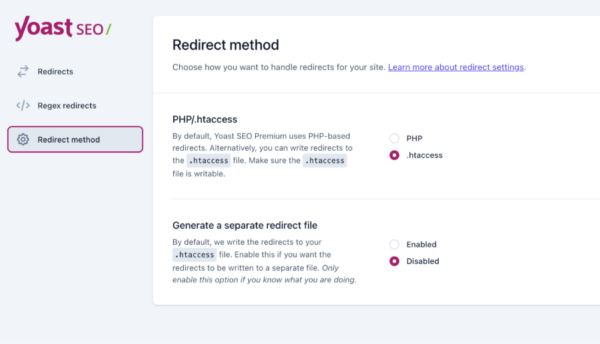
.htaccessredirect method must be explicitly enabled. Yoast SEO offers alternative redirect methods, such as using PHP-based redirects, which would not interact with the.htaccessfile and thus would not be susceptible to this vulnerability. This setting can be checked by navigating to[www.yoursite.com]/wp-admin/admin.php?page=wpseo_redirects#/redirect-methodin the WordPress admin area. If the.htaccessmode is not enabled, the site is not at risk from this specific issue.
Timeline and Yoast’s Proactive Response
The discovery of the vulnerability, whether through internal auditing, external security researchers, or user reports, prompted a swift response from the Yoast development team. While a detailed chronology of the discovery and patching process is awaiting the full security advisory, the rapid release of version 27.6.1 indicates an expedited development and testing cycle to mitigate the risk as quickly as possible.
Yoast’s immediate actions included:
- Vulnerability Confirmation: Verifying the existence and potential impact of the flaw.
- Patch Development: Engineering a solution to remediate the vulnerability across its affected premium products.
- Internal Review: Testing the patch to ensure it effectively closes the security gap without introducing new issues or breaking existing functionality.
- Expedited Release: Pushing out the 27.6.1 update to all users through the standard WordPress plugin update mechanism.
- Public Notification: Issuing an immediate announcement to users, detailing the nature of the vulnerability, the conditions for exposure, and the necessary steps for remediation.
- Monitoring: Reviewing a sample of sites using the affected configuration, with Yoast reporting “no evidence of exploitation” and “no known cases of abuse” at the time of the announcement. This is a critical piece of information that should reassure users, indicating that the vulnerability was likely addressed before widespread exploitation could occur.
- Forthcoming Full Security Advisory: Yoast has committed to publishing a comprehensive security advisory in the near future, which is expected to provide more technical details about the vulnerability, the exact date of discovery, and the full scope of the fix.
The Solution: Three Layers of Protection
The patch introduced in Yoast SEO Premium 27.6.1 incorporates “three layers of protection” to comprehensively address the .htaccess injection vulnerability. While the specific technical details of these layers are reserved for the full security advisory, standard best practices for preventing such vulnerabilities typically involve:
- Robust Input Validation and Sanitization: Ensuring that any user-supplied data, particularly in fields that interact with server configuration files, is rigorously validated against expected formats and sanitized to remove or escape any potentially malicious characters or sequences. This prevents the initial injection attempt.
- Output Escaping and Encoding: When data is written to the
.htaccessfile, it must be properly escaped or encoded to ensure that it is interpreted as literal data rather than executable commands or configuration directives. This prevents injected characters from being parsed by the web server. - Strict Permissions and Privilege Separation: While not directly a code fix, reinforcing file permissions and ensuring that the WordPress application only has the necessary privileges to write to the
.htaccessfile when absolutely required can add an additional layer of defense. The vulnerability, in this case, relied on an “authenticated user,” suggesting that the WordPress application itself, operating under the privileges of a logged-in user, was the vector. The fix likely ensures that even if an authenticated user attempts injection, the plugin’s code prevents the harmful characters from reaching the.htaccessfile.
These layered defenses are designed to create a robust barrier against future attempts at similar injection attacks, even if one layer is somehow bypassed.
What Users Should Do: Urgent Recommendations
Yoast’s primary recommendation for all users is to update to version 27.6.1 immediately. The update process is straightforward and can be completed by a site administrator in under two minutes via the WordPress plugins screen.
Specific advice is tailored to different user groups:
- Affected Users (Meeting all three conditions): Those whose sites meet all three conditions (using a premium Yoast SEO product, on an Apache/LiteSpeed server, with
.htaccessredirect mode enabled) are strongly urged to update as soon as possible. The urgency for these users cannot be overstated, given the potential for remote code execution. - Unaffected Users: Even if a site does not meet all three conditions, and thus the security fix doesn’t directly apply to their setup, Yoast recommends updating to 27.6.1. This aligns with general cybersecurity best practices: keeping all plugins, themes, and the WordPress core up-to-date is crucial for overall site security. Updates often include not only security patches but also bug fixes, performance improvements, and new features. Version 27.6.1 is now the recommended stable release for all users of the premium products.
- Unsure Users: For those uncertain about their site’s configuration, Yoast provides a direct method to check. Navigating to
[www.yoursite.com]/wp-admin/admin.php?page=wpseo_redirects#/redirect-methodin the WordPress admin panel will display the redirect settings. If the option for.htaccessmode is not enabled, the site is not currently at risk from this specific vulnerability.
Broader Implications for Web Security and WordPress Community
This incident serves as a pertinent reminder of several critical aspects of web security:
- The Importance of Plugin Security: With the extensive reliance on third-party plugins in platforms like WordPress, the security of these components is paramount. Developers bear a significant responsibility to implement secure coding practices, conduct regular security audits, and respond promptly to vulnerabilities.
- Complexity of Server Configurations: The
.htaccessfile, while powerful, is also a common source of misconfigurations and vulnerabilities if not handled with extreme care. Developers integrating with server-level configuration files must implement stringent security measures. - The Role of Authentication: Even vulnerabilities requiring authentication can be dangerous. If an attacker gains access to a low-privilege WordPress account (e.g., through phishing or brute-force attacks on weak passwords), such a flaw could be leveraged to escalate privileges or compromise the entire site. This underscores the need for strong password policies and multi-factor authentication for all WordPress users.
- Community Collaboration: The rapid identification and patching of such vulnerabilities often involve collaboration between security researchers, the plugin developers, and the broader WordPress security community. Platforms like WPScan and Wordfence regularly monitor and report on vulnerabilities, contributing to a safer ecosystem.
- User Responsibility: Ultimately, site owners and administrators play a crucial role by staying informed about security advisories and applying updates diligently. A failure to update can leave a site exposed to known vulnerabilities, making it an easy target for automated attacks.
Beth Parker, Product Marketing Manager at Yoast, whose avatar is prominently displayed in the announcement, represents the company’s commitment to transparent communication and user support. Her background in digital marketing and project management positions her well to articulate the importance of such updates to the user base. Yoast’s support team remains available to address any questions or concerns users may have regarding the update or the vulnerability.
In conclusion, the release of Yoast SEO Premium 27.6.1 is a significant event for users of Yoast’s premium products. While the vulnerability posed a serious threat, Yoast’s swift action, clear communication, and confirmation of no observed exploitation should instill confidence. The imperative for all users is clear: update to the latest version, verify site configurations, and maintain a proactive approach to WordPress security to safeguard digital assets in an ever-evolving threat landscape.

 Jia Lissa
 Siti Muinah