
 rifanmuazin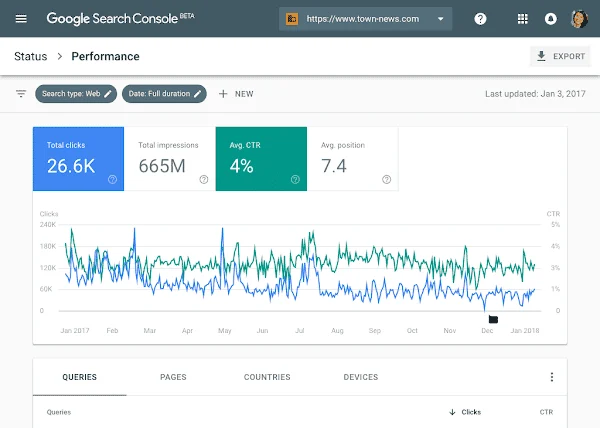
The paradigm of digital performance measurement has undergone a radical transformation as the industry approaches 2026, moving far beyond the traditional metrics of traffic, speed, and keyword rankings that defined the previous decade. In the current landscape, a website’s success is no longer determined solely by its ability to attract human visitors through search engine result pages (SERPs), but by its discoverability within artificial intelligence ecosystems, its machine readability for large language models (LLMs), and its ability to mitigate conversion friction in an era of “zero-click” searches. As digital ecosystems become increasingly fragmented across traditional search engines, AI chatbots like ChatGPT, and generative discovery tools such as Perplexity and Google’s AI Overviews, the methodology for website analysis has shifted from a simple health check to a complex multi-dimensional audit of credibility, user behavior, and technical interoperability.
The Evolution of Search: From Blue Links to Generative Answers
The catalyst for this shift in website analysis is a fundamental change in how information is consumed. According to data from Gartner, traditional search engine volume is projected to drop by approximately 25% by 2026, a direct result of users migrating toward AI chatbots and virtual agents for immediate answers. This shift is corroborated by findings from the Pew Research Center, which indicate a significant decline in user engagement with traditional links when AI-generated summaries are present. Specifically, research shows that users click on a traditional organic result in only 8% of visits when an AI summary is provided, compared to 15% when no such summary exists.
This data suggests that website analysis must now prioritize “Generative Engine Optimization” (GEO) alongside traditional SEO. For modern enterprises, being “indexed” is no longer the final goal; the new objective is being “cited” by AI models. Analysis now requires measuring how often a brand is included in the training sets or real-time retrieval-augmented generation (RAG) processes of tools like ChatGPT, Gemini, and Claude.
The Five Pillars of Modern Website Analysis
To remain competitive in 2026, digital strategists are adopting a five-pillar framework for comprehensive website evaluation. This framework integrates technical health with cognitive psychology and machine learning compatibility.
1. AI Visibility and Machine Readability
The first phase of modern analysis involves assessing how effectively a site communicates with both humans and machines. Analysts are now tasked with answering two critical questions: How does the brand appear in AI-driven summaries, and what is the “citation share” within generative search?
Technical audits now include an evaluation of Schema.org markups and structured data, which act as the primary language for AI agents. Furthermore, analysis involves “prompt testing”—manually querying AI tools with high-intent buyer questions to see if a website’s content is used as a primary source. For example, a firm selling Conversion Rate Optimization (CRO) software must analyze whether ChatGPT recommends their tool when asked, “What is the best platform for reducing cart abandonment?” If the brand is absent, the analysis must identify gaps in topical authority or technical accessibility.
2. Technical Health and Performance Infrastructure
While AI has changed discovery, the underlying technical infrastructure remains the foundation of user retention. Website analysis in 2026 continues to prioritize Core Web Vitals, but with an added emphasis on “interaction to next paint” (INP) and server-side rendering efficiencies. A site that loads slowly or exhibits layout shifts not only frustrates human users but can also be penalized by AI crawlers that prioritize high-performance data sources. Technical audits now routinely include checks for broken links, duplicate canonical issues, and robots.txt configurations that may inadvertently block AI scrapers essential for brand visibility.
3. User Behavior and the Qualitative Experience
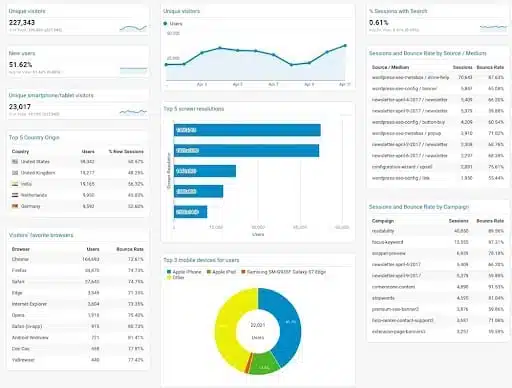
Quantitative data—such as bounce rates and session durations—provides the “what,” but qualitative data provides the “why.” Modern analysis utilizes sophisticated behavior tracking tools, such as FigPii, to generate heatmaps and session recordings. This allows analysts to witness the “user journey” in real-time, identifying points of friction where messaging fails to resonate.
A critical component of this pillar is messaging alignment. In a world where users may have already read an AI summary of a brand before visiting the site, the landing page must provide immediate value and validation. Analysis involves checking for “message match”—ensuring that the content a user sees on the site aligns perfectly with the snippets they encountered in search or social media.
4. Heuristic Evaluation and Usability Standards
Usability analysis has evolved into a standardized expert review process known as heuristic analysis. Based on the ten principles developed by Jakob Nielsen, this aspect of website analysis examines the interface for “visibility of system status,” “user control and freedom,” and “consistency.”
In 2026, these heuristics are applied to mobile-first and voice-first environments. Analysts look for violations of these rules, such as hidden navigation menus or non-standard icons that confuse visitors. Functionality assessments are conducted to ensure that every button, form, and interactive element works seamlessly across all device types, as even minor technical glitches are now recognized as significant drivers of customer churn.
5. Conversion Funnel and Trust Signals
The final pillar focuses on the transition from visitor to customer. This involves a granular look at the conversion funnel, identifying where “leaks” occur. Content quality is audited not just for SEO keywords, but for trust signals—such as verified reviews, case studies, and clear privacy policies—which are increasingly prioritized by both users and AI algorithms as indicators of E-E-A-T (Experience, Expertise, Authoritativeness, and Trustworthiness).
The Strategic Implementation Roadmap
Conducting a comprehensive analysis requires a structured approach to prevent data overload. Industry experts recommend a six-step roadmap for successful execution:

Step 1: Objective Definition. Analysts must establish clear baselines, such as current conversion rates or specific drops in organic rankings, to guide the investigation.
Step 2: Tool Selection. A multi-layered tech stack is required, including SEO suites (Ahrefs, Semrush), quantitative analytics (Google Analytics 4), and behavioral tools (FigPii, Hotjar).
Step 3: Roadmap Creation. Benchmarking data against industry standards allows for the creation of a step-by-step plan that maps the ideal customer journey.
Step 4: Data Collection. This involves gathering both “hard” metrics (clicks, impressions) and “soft” insights (user feedback, survey responses).
Step 5: Optimization and Remediation. Once loopholes are identified—such as high bounce rates on key educational pages—resources are deployed to improve content relevance and technical performance.
Step 6: Iterative Analysis. Modern digital strategy views website analysis as a continuous cycle rather than a one-time event, ensuring the site evolves alongside changing search algorithms.
The Role of Competitive Intelligence
A significant debate within the digital marketing community involves the necessity of competitor website analysis. While some argue for a singular focus on internal metrics, the prevailing consensus in 2026 is that competitive intelligence is vital for market positioning.
Analysis of competitor organic traffic helps identify “content gaps”—topics that rivals are ranking for but the brand is missing. Furthermore, studying competitor customer demographics through tools like Similarweb can reveal underserved market segments. Finally, monitoring a competitor’s Pay-Per-Click (PPC) strategy through platforms like iSpionage provides insights into their most profitable keywords and creative approaches, allowing a brand to refine its own ad spend for maximum ROI.
Industry Implications and Future Outlook
The shift toward deep-dive website analysis has profound implications for the role of the Chief Marketing Officer (CMO) and digital strategists. The reliance on “vanity metrics” is ending; in its place is a demand for “revenue-centric” data. As AI continues to mediate the relationship between brands and consumers, the website is transitioning from a mere digital brochure to a high-performance data node that must be optimized for both human intuition and algorithmic precision.
Market analysts suggest that companies failing to adapt their analysis techniques to include AI visibility and behavioral heuristics will face a “discovery deficit” by 2027. Conversely, those who treat their website as a living laboratory—constantly analyzed and optimized—will capture a greater share of the declining “click-through” market.
In conclusion, website analysis in 2026 is an exercise in holistic digital health. It requires a synthesis of technical SEO, generative AI strategy, psychological behavior mapping, and rigorous competitive benchmarking. By moving beyond simple traffic stats and embracing a multi-dimensional auditing process, businesses can ensure their digital presence remains not only visible but indispensable in an AI-driven world. The power of comprehensive analysis lies in its ability to turn raw data into actionable intelligence, satisfying both the immediate needs of the user and the long-term requirements of the machine.








