Google has officially launched a new “Generative AI” section within its Search Console, a move that provides website owners with a dedicated dashboard to track their content’s visibility within Google’s burgeoning AI-powered search features. This significant update, detailed in a recent post by Google Search Central, aims to offer greater transparency into how content performs across AI Overviews, AI Mode, and generative AI features within Google Discover. However, early analysis by SEO professionals and webmasters reveals a critical lack of granular data and filters, leading to questions about the true utility and interpretation of the newly presented metrics.
The new section, accessible via Performance > Search Results > Generative AI, is designed to aggregate data points related to a page’s presence in these evolving AI search formats. While the exact list of features being reported on is still being detailed, initial reports indicate it will encompass visibility within AI Overviews, the broader AI Mode experience, and potentially other generative AI integrations within platforms like Google Discover. The core metric currently presented in this section is “impressions,” a term that has quickly become a focal point of discussion and confusion among users.
Understanding “Impressions” in the Age of Generative AI
A key point of contention and confusion surrounding the new Generative AI reporting is the definition and interpretation of an “impression.” Google’s John Mueller, a prominent figure in Google’s Search Relations, has clarified that an impression in this context is recorded when a URL appears “anywhere in an AI answer.” Crucially, this definition does not necessitate user interaction or even direct viewing of the URL.

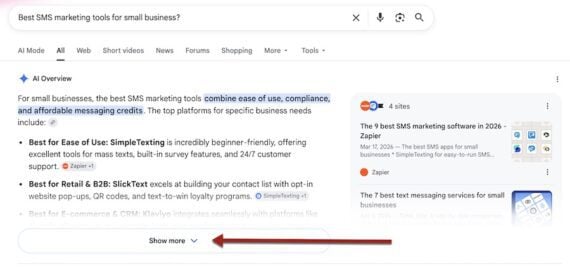
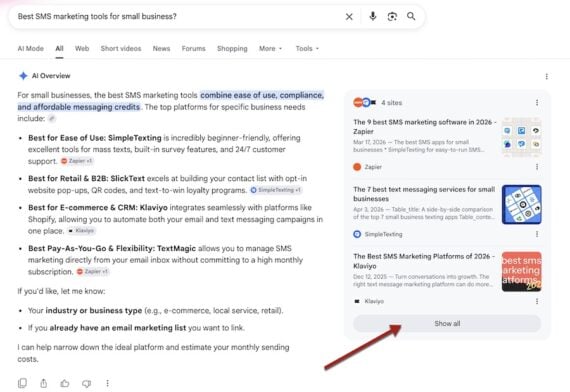
This distinction is particularly important when considering the user experience of AI Overviews. For instance, an AI Overview might initially present a summary, requiring users to click “Show More” to expand the full answer and then potentially “Show all” to reveal the complete list of cited sources. According to Mueller’s clarification, a URL will be counted as an impression even if a user never clicks to expand the answer or view the full list of citations. This means that a URL appearing in the initial, collapsed state of an AI Overview, or within a section that a user scrolls past without further interaction, can still register as an impression.
This broad definition raises concerns about the accuracy of the data as a reflection of actual user engagement or content discovery. While an impression signifies that Google’s AI has identified and potentially surfaced a piece of content, it does not equate to a click, a view, or any measurable form of user engagement. For example, if an AI Overview lists three sources in its initial display, and a user clicks “Show More” to see a more detailed answer and then closes the search result page without ever viewing the full list of citations, the initial three URLs would still be logged as impressions. Similarly, if a user clicks “Show all” to reveal all cited sources, those URLs are then counted.
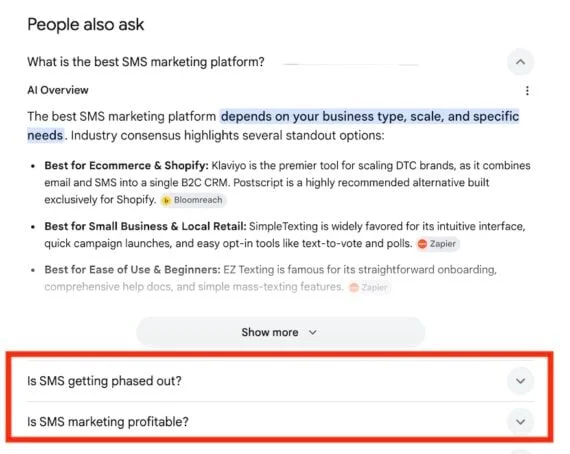
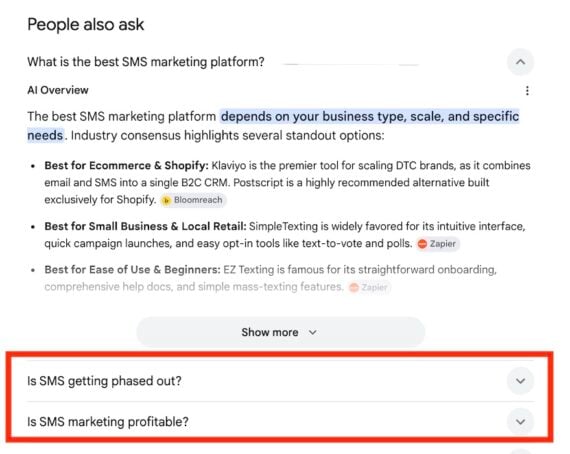
The “People also ask” (PAA) feature, a long-standing element of Google Search that often incorporates AI-driven summaries, presents a similar scenario. Answers within PAA boxes are not fully revealed without an explicit click on the question itself. Therefore, it is presumed that impressions for cited URLs within these expanded PAA answers are only registered after the user has engaged by clicking to reveal the information. This suggests a user-initiated action is required for PAA impressions, potentially differing from the broader definition applied to AI Overviews and AI Mode.
Furthermore, the introduction of AI Mode, a more interactive and conversational search experience, adds another layer of complexity. If a user asks a follow-up question within AI Mode, and the system generates an answer that includes citations, those cited URLs are likely to be counted as impressions, even if they were also included in a previous AI answer provided during the same search session. This highlights a potential for duplicated or overlapping impression counts across different AI-generated interactions within a single user query.
Limited Functionality and User Feedback
A significant limitation of the current Generative AI section in Search Console is the absence of filters. Users cannot currently differentiate between impressions generated by AI Overviews, AI Mode, or other AI features. This lack of segmentation makes it challenging for webmasters and SEO professionals to understand which specific AI application is driving visibility for their content. Without these filters, it is difficult to tailor optimization strategies or diagnose performance issues related to particular AI integrations.
Moreover, the report does not provide click-through rate (CTR) data, a crucial metric for evaluating the effectiveness of search appearances. While impressions indicate presence, CTR reveals how often users click on a result after seeing it. The absence of this data means that while website owners can see if their content is being featured by Google’s AI, they cannot ascertain how often that feature leads to a user visiting their site.
To gain more detailed insights, users are currently advised to export the data from Search Console into a spreadsheet program like Excel. The exported data reportedly includes columns for “Query,” “Pages,” “Impressions,” and “Date.” This allows for basic analysis of impression trends over time and by specific pages or search terms. However, even with this export, the fundamental lack of feature-specific segmentation remains a significant hurdle for actionable insights.
Blocking AI Content: A New Control for Publishers
Coinciding with the rollout of the Generative AI performance reports, Google has also introduced a new capability allowing website owners to control whether their content is used in AI-generated answers. This new feature, located within Search Console under Settings > AI controls > Search generative AI, defaults to allowing Google to use website content for AI features.
However, a separate toggle within this section enables publishers to explicitly block their content from being used in AI answers. This provides website owners with a degree of control over how their data is leveraged by Google’s generative AI systems. While the implications for this blocking feature are still being explored, it offers a direct mechanism for publishers to opt-out of AI inclusion.
The potential impact of this blocking feature is a subject of ongoing discussion. Some experts suggest that for most e-commerce businesses, blocking AI usage might not be a strategic move, given the potential for increased visibility and traffic that AI features could offer. However, the ability to opt-out provides a crucial safeguard for content creators concerned about attribution, potential misuse, or a desire to maintain direct control over their content’s distribution. The default setting of “allow” suggests Google’s intention to integrate content widely, while the blocking option provides a clear opt-out pathway.
Broader Implications for SEO and Content Strategy
The introduction of Generative AI reporting in Search Console marks a significant step in Google’s ongoing integration of artificial intelligence into its core search product. As AI Overviews and similar features become more prominent, understanding how content performs within these new formats is paramount for SEO professionals and content creators.
The current limitations of the reporting, particularly the broad definition of “impression” and the lack of granular filters, present immediate challenges. Webmasters will need to exercise caution in interpreting the data, understanding that impressions in this context do not equate to direct user engagement. The focus may need to shift towards analyzing trends over time and correlating these impressions with other engagement metrics available through different analytics platforms.
The development also underscores the evolving nature of search engine optimization. Strategies will need to adapt to not only target traditional search result rankings but also to optimize content for inclusion and prominence within AI-generated summaries and conversational search experiences. This could involve structuring content to be more easily digestible by AI, providing clear and authoritative information, and ensuring factual accuracy.
Furthermore, the ability to block content from AI answers introduces a new layer of strategic decision-making. Publishers will need to weigh the potential benefits of AI inclusion against concerns about control and attribution. As AI technology continues to advance and its integration into search deepens, the relationship between content creators, search engines, and AI systems will undoubtedly remain a dynamic and evolving landscape. The initial rollout of Search Console’s Generative AI reporting, while offering a glimpse into this new frontier, also highlights the need for continued development and clarification from Google to provide truly actionable insights for the web ecosystem. The industry will be closely watching for future updates and enhancements to this critical reporting tool.