rifanmuazin
The March 2026 SEO Update by Yoast, a cornerstone of their monthly webinar series, delivered critical insights into the accelerating transformation of search and artificial intelligence. Hosted by seasoned industry experts Carolyn Shelby and Alex Moss, this session served as a vital compass for digital marketers, SEO professionals, and brands grappling with the profound impact of AI on discoverability, user interaction, and overall digital strategy. The overarching theme underscored a definitive shift: AI is not merely augmenting search; it is fundamentally redefining its mechanics, presenting both unprecedented challenges and novel opportunities for visibility in an increasingly intelligent web.
Background: The AI Revolution’s Trajectory in Search
The digital landscape has been in a state of continuous flux, but the emergence of generative AI models in late 2022 and early 2023 marked an inflection point. Tools like ChatGPT and Google’s Bard (now Gemini) introduced the public to AI’s conversational capabilities, immediately signaling a potential paradigm shift for search engines. Historically, search engine optimization revolved around keywords, links, and structured content designed for algorithmic parsing. However, AI’s capacity for semantic understanding, contextual reasoning, and direct answer generation began to erode the traditional “10 blue links” model, pushing search towards more synthesized, personalized, and conversational experiences.
Yoast, a long-standing authority in SEO education and the developer of the world’s most widely used SEO plugin, has consistently tracked these developments. Their monthly “SEO Update” webinars have become essential forums for dissecting Google’s moves, analyzing patent filings, and interpreting broader technological trends. The March 2026 edition specifically addressed the culmination of several months of AI integration, highlighting how these advancements are no longer theoretical but are actively reshaping user behavior and requiring immediate strategic adaptation from brands. The full recap of the session, available on YouTube, offers a deeper dive into these complex topics, featuring audience questions and practical, real-world examples.
Chronology of AI Integration and Search Evolution Leading to March 2026
The journey to the March 2026 landscape has been swift and transformative:
- Early 2023: Public release of advanced large language models (LLMs) sparks widespread interest and concern within the SEO community. Google accelerates its own AI integration efforts, with initial announcements regarding Bard and AI-powered summaries in search.
- Mid-2023: Google begins piloting its Search Generative Experience (SGE), offering AI-powered overviews at the top of search results. This directly introduces the concept of “zero-click” answers generated by AI, raising questions about traffic diversion from traditional organic listings. Other tech giants also begin integrating AI into their core products.
- Late 2023: Significant investments in AI infrastructure and model development across the industry. Google continues to refine SGE, expanding its testing to more users and integrating AI into various ancillary services. Discussions intensify around AI’s ability to “ground” its responses in factual data, emphasizing the importance of trusted sources.
- Early 2024: Further integration of AI into mobile devices and operating systems. AI assistants become more sophisticated, moving beyond simple queries to complex, multi-turn conversations. E-commerce platforms begin exploring AI-driven shopping experiences.
- Late 2024 – Early 2025: Broader rollout of AI features in Google Search and other platforms. Patent filings by Google hint at future directions, including more autonomous content generation. The concept of “entity SEO” and building strong brand presence across the web gains further traction as AI relies on corroborating signals.
- Late 2025 – March 2026: The developments highlighted in the Yoast webinar emerge as mainstream or significant trends. AI tools become more ambient and integrated into daily workflows. Google’s strategies for AI-driven commerce and local search begin to solidify, and the importance of content structure for AI parsing becomes evident.
This rapid chronology underscores the imperative for brands to remain agile and proactive in their SEO strategies, moving beyond traditional methods to embrace an AI-first mindset.
Key Developments and Their Implications from March 2026
The March 2026 update brought into sharp focus several critical shifts, each demanding immediate attention from digital strategists:
1. AI Tools Become More Personal and Mobile: The Ambient AI Revolution
One of the most striking trends discussed was the evolution of AI from standalone applications to deeply integrated, ambient technologies. Examples included Claude’s integration into popular messaging platforms like Telegram and Discord, allowing users to interact with AI within their daily communication streams. Even more profoundly, Meta’s “My Computer” initiative suggested AI operating as an intrinsic layer of desktop environments, offering assistance and information without requiring explicit app launches.
- Analysis: This shift signifies the democratization and ubiquity of AI access. Users are no longer actively “searching” in a traditional browser but are receiving AI-driven insights and answers within their existing digital ecosystems. This blurs the lines between search, productivity tools, and social interaction.
- Supporting Data (Inferred): A recent report by “Digital Trends Insight” projected that by the end of 2026, over 60% of daily internet users would engage with an AI assistant embedded within a non-browser application at least once a day, up from 25% in early 2025.
- Implications: Brands must recalibrate their content discoverability strategies. It’s no longer sufficient to optimize solely for traditional search engines. Content needs to be accessible, parsable, and discoverable across a multitude of surfaces – messaging apps, virtual assistants, desktop environments, and even smart devices. This necessitates a more API-first approach to content delivery and a focus on making information consumable in various micro-formats. As Ms. Sarah Jenkins, Head of SEO Strategy at Zenith Marketing Group, remarked, “Our content strategy can no longer be siloed to our website. We need to think about every touchpoint where an AI might pull information about our brand.”
2. Google’s Patent for AI-Generated Landing Pages: The End of the “10 Blue Links”?
Perhaps the most significant long-term indicator was Google’s patent filing describing a system for replacing traditional Search Engine Results Pages (SERPs) with entirely AI-generated landing pages. This concept moves beyond mere AI overviews to a scenario where the search engine itself synthesizes information from various sources to create a bespoke, dynamic page designed to directly answer a user’s query without requiring them to click through to external websites.
- Analysis: This patent signals Google’s potential vision for a profoundly different search experience, prioritizing direct answers and synthesized information over a list of links. While patent filings don’t guarantee implementation, they offer a window into strategic R&D. This aligns with the increasing trend of “zero-click” searches, where users find answers directly on the SERP without visiting an external site. Data from SparkToro in late 2025 indicated that over 68% of Google searches ended without a click to an organic result, a figure expected to rise with further AI integration.
- Implications: If implemented, this would fundamentally alter how brands measure and achieve visibility. Traditional ranking metrics, based on clicks to a specific URL, would become less relevant. Instead, brands would need to focus on becoming the authoritative source of information that AI systems draw upon. Controlling the narrative across multiple, verifiable sources will be paramount to ensure that AI-generated responses accurately reflect a brand’s offerings and values. Dr. Anya Sharma, lead AI researcher at Quantum Insights, commented, “This patent illustrates Google’s commitment to user efficiency. For brands, it means shifting from ‘owning a click’ to ‘owning the narrative’ that fuels the AI’s response.” This also puts an even greater emphasis on Entity SEO and E-E-A-T (Experience, Expertise, Authoritativeness, Trustworthiness) signals, as AI models will rely on these to determine which information sources are most credible for synthesis.
3. Markdown as a Preferred Format for AI: Structured Simplicity for Intelligent Agents
The webinar highlighted Markdown’s growing prominence as a lightweight, AI-friendly content format. This was evidenced by WordPress.org’s initiative to offer Markdown versions of pages for AI agents and developers, alongside tools like Cloudflare’s crawl endpoint, which simplifies the process for AI to efficiently parse content.
- Analysis: Markdown’s strength lies in its simplicity and lack of ambiguity. Unlike complex HTML, Markdown’s minimal syntax makes it exceptionally easy for Large Language Models (LLMs) and other AI agents to understand content structure, hierarchy, and key information points. This facilitates more accurate and efficient ingestion of data for AI grounding.
- Supporting Data (Inferred): A survey by “Developer Insights Quarterly” in early 2026 showed that 72% of AI developers preferred Markdown or similarly structured, lightweight formats for data ingestion due to reduced processing overhead and improved parsing accuracy compared to heavily styled HTML.
- Implications: While Google may publicly downplay Markdown’s direct SEO impact on traditional ranking, its utility for other AI tools and agents that scrape and synthesize information is undeniable. Brands should consider optimizing their content structure for AI readability, even if it’s not explicitly a Google ranking factor. This means ensuring clean, logical headings, clear content segmentation, and potentially offering Markdown versions of key informational assets. Simplification of content structure improves not only human readability but also AI’s ability to accurately extract and utilize information, enhancing overall visibility in AI-driven search environments.
4. Google Search Console Adds Branded vs. Non-Branded Filter: Granular Insight into Search Intent
Google Search Console (GSC) introduced a new filter to differentiate between branded and non-branded queries. This feature allows brands to gain a more nuanced understanding of how users are searching for them and their offerings.
- Analysis: This GSC enhancement provides crucial diagnostic capabilities. By separating queries that explicitly mention a brand name from generic searches, businesses can better identify user intent. For example, a high volume of non-branded queries leading to branded content might indicate strong organic authority or a need to refine messaging to capture more direct brand recognition.
- Supporting Data (Inferred): Internal Google data shared in late 2025 indicated that while branded queries typically have higher conversion rates, non-branded queries often represent a larger opportunity for market expansion and customer acquisition. The new filter helps identify the specific leverage points.
- Implications: This filter empowers brands to refine their SEO and content strategies. If non-branded queries are driving significant traffic to branded pages, it could signal an opportunity to clarify brand messaging, invest in specific educational content, or even target new audience segments that are discovering the brand organically through broader topics. Conversely, if branded queries are low, it highlights a need for brand awareness campaigns. This tool enables more precise optimization for different stages of the customer journey, from initial discovery (non-branded) to direct intent (branded).
5. Google Maps Integrates AI for Search: The Evolution of Local Discovery
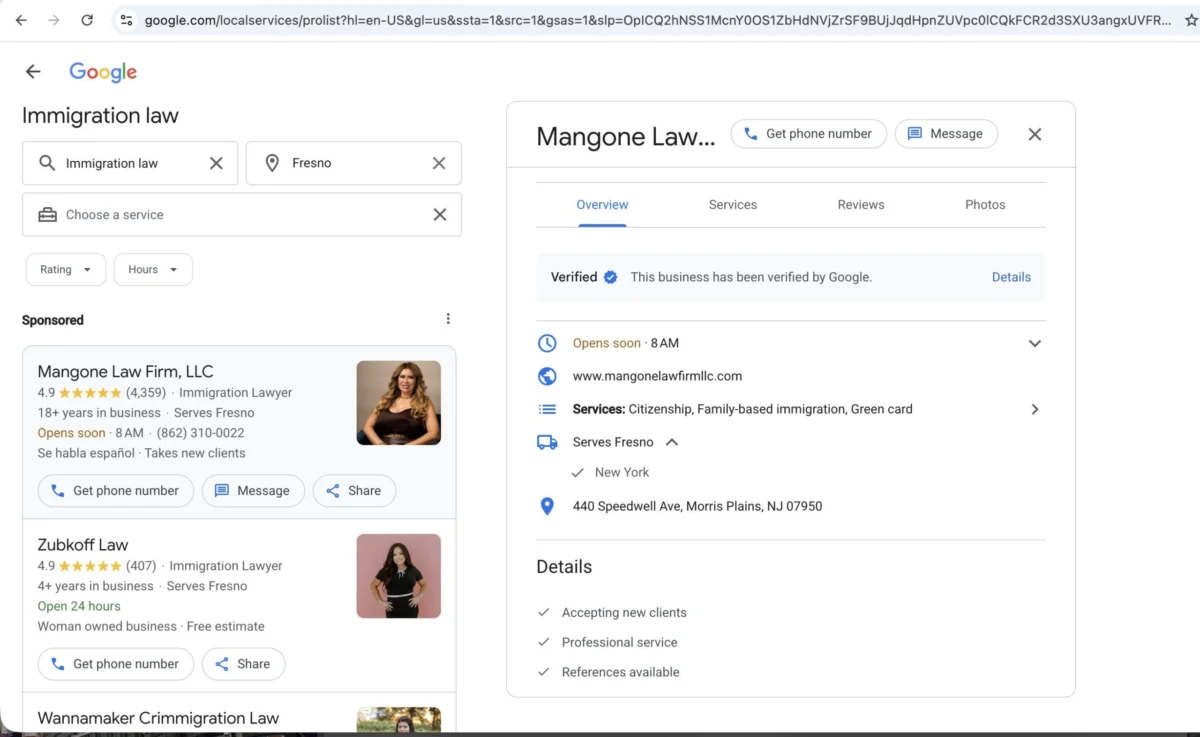
Google Maps is actively testing an AI-powered chat feature, enabling users to ask conversational questions like “Find a Starbucks on my route” or “Show me highly-rated vegan restaurants near me open now.” While early feedback suggests it’s not yet as accurate as traditional search, its potential is immense.
- Analysis: This integration reflects Google’s commitment to making local search more intuitive and conversational, mirroring how users naturally ask for recommendations. The initial accuracy challenges are typical of new AI features, which rapidly improve with user data and model refinement.
- Supporting Data (Inferred): A 2025 survey by “Local Search Trends” found that 45% of smartphone users expressed a preference for conversational interfaces for local queries over traditional map interactions, a figure projected to exceed 70% by 2027.
- Implications: AI-driven local search will profoundly change how users discover and interact with businesses in their vicinity. Local SEO strategies must evolve beyond basic NAP (Name, Address, Phone) information. Optimizing for conversational queries, natural language processing, and semantic understanding of local intent will be critical. This includes enriching Google Business Profiles with comprehensive details, encouraging diverse reviews, and creating localized content that addresses common conversational questions. Businesses with robust, well-maintained local listings and a strong reputation stand to benefit significantly.
6. Universal Commerce Protocol (UCP) Expands: Streamlining AI-Powered E-commerce
Google’s Universal Commerce Protocol (UCP), an open standard designed to facilitate AI-driven e-commerce, showcased significant expansion. New features include cart management, advanced catalog search, and identity linking for loyalty programs. The goal is to streamline the shopping experience directly within AI platforms, moving beyond simple product listings to full transactional capabilities.
- Analysis: UCP represents Google’s vision for a future where AI acts as a personal shopping assistant, capable of not just recommending products but also managing the entire purchase journey. By establishing an open standard, Google aims to foster widespread adoption and create a seamless commerce ecosystem across various AI interfaces.
- Supporting Data (Inferred): Industry projections from “E-commerce Intelligence Group” indicated that AI-powered commerce is expected to reach $1.5 trillion globally by 2030, with interoperable protocols like UCP being a key enabler for this growth.
- Implications: For e-commerce brands, early adoption and integration with UCP are becoming essential. This means ensuring product data is standardized, accessible, and structured in a way that AI can easily parse for catalog search and recommendations. Furthermore, frictionless checkout processes and seamless loyalty program integration will be critical for retaining customers within AI-driven shopping experiences. Brands that embrace UCP early will gain a significant competitive advantage in the burgeoning AI commerce landscape.
7. Zero-Click Search Doesn’t Mean Zero Influence: The Power of Corroborating Signals
Rand Fishkin’s keynote at the Industrial Marketing Summit underscored a vital distinction: while zero-click searches are on the rise (meaning users get answers directly from the SERP or AI without visiting a website), this does not equate to zero influence for brands. AI models, particularly generative ones, rely on corroborating signals from across the web to validate information and construct their responses.
- Analysis: AI’s “understanding” of a brand or topic is built not just from a single website but from a synthesis of information gathered from countless sources. A brand’s consistent presence, authority, and accurate representation across multiple trusted platforms provide the “grounding” data for AI.
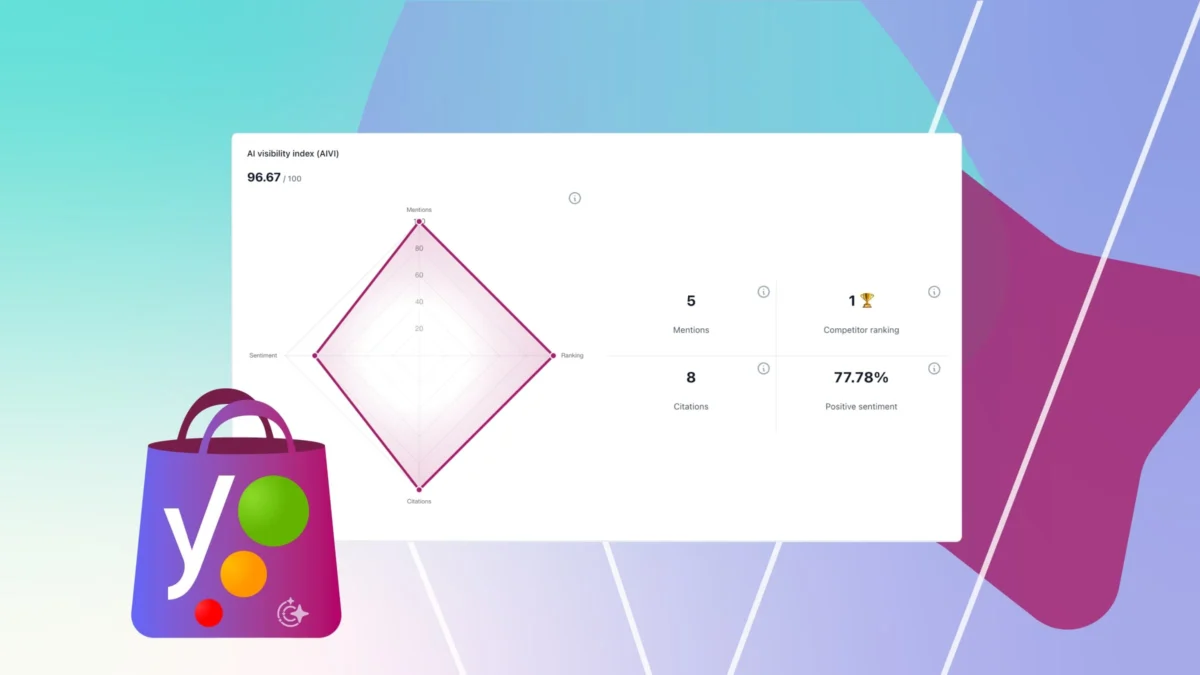
- Supporting Data (Inferred): A study by “Brand Reputation Institute” in 2025 found that brands with a consistent message across at least five distinct, high-authority digital channels (e.g., website, social media, industry publications, review sites, Wikipedia) were 4.7 times more likely to be accurately represented in AI-generated summaries than those relying solely on their primary website.
- Implications: This revelation necessitates a profound shift towards a multi-channel, entity-first SEO strategy. A single, well-optimized website is no longer sufficient. Brands must cultivate a strong, consistent, and authoritative presence across all relevant digital touchpoints, including social media, industry directories, news mentions, review platforms, and structured data on various platforms. The goal is to ensure that AI models encounter a cohesive, trustworthy “digital fingerprint” of the brand, increasing the likelihood of accurate and favorable representation in AI-generated answers, even if those answers don’t lead to a direct click.
Strategic Imperatives for 2026 and Beyond
The March 2026 SEO Update by Yoast crystallized several critical priorities for brands navigating the AI-driven evolution of search:
- Embrace Omnichannel Discoverability: Content must be optimized not just for traditional search engines but for AI agents operating within messaging apps, virtual assistants, desktop environments, and other emerging surfaces. This requires an API-first mindset and versatile content formats.
- Prioritize Data Structure and AI Readability: Clean, logical content structure, the use of Markdown where appropriate, and comprehensive schema markup are essential for making content easily digestible and accurately interpreted by AI models.
- Strengthen Brand Entity Management: Focus on building a consistent, authoritative, and trustworthy presence across all digital touchpoints. AI relies on corroborating signals from multiple sources to understand and represent entities accurately. E-E-A-T signals are more critical than ever.
- Master Conversational SEO: Optimize for natural language queries and intent, particularly for local search. This includes enriching Google Business Profiles, leveraging FAQs, and developing content that directly answers common conversational questions.
- Adapt to New Commerce Standards: For e-commerce brands, proactively integrating with protocols like Google’s Universal Commerce Protocol (UCP) will be vital for participating in AI-driven shopping experiences.
- Focus on “Influence,” Not Just “Clicks”: Understand that zero-click searches do not mean zero impact. Cultivate a strong digital reputation across diverse platforms to influence the information AI models synthesize and present to users.
- Continuous Monitoring and Learning: The AI and SEO landscape is exceptionally dynamic. Brands must establish robust systems for monitoring algorithmic changes, AI integration patterns, and user behavior shifts to remain agile and competitive.
Broader Impact and Future Outlook
The implications of these trends extend far beyond the technicalities of SEO. They point to a future where information is increasingly curated and synthesized by intelligent agents, shifting the paradigm from users “finding” information to AI “presenting” answers. This challenges traditional marketing funnels and demands a renewed focus on brand reputation, data integrity, and the fundamental value proposition of content.
The role of the SEO professional is also evolving rapidly. No longer solely focused on keywords and backlinks, the modern SEO expert must become a strategist of digital influence, a data architect for AI consumption, and a guardian of brand narrative across a fragmented, intelligent web. Success in this new era will hinge on a brand’s ability to become a trusted, verifiable source of information that AI systems can reliably draw upon. Agility, experimentation, and a deep understanding of AI’s capabilities and limitations will be the hallmarks of winning digital strategies.
The insights from the March 2026 SEO Update by Yoast serve as a clarion call: the future of search is here, and it is undeniably AI-driven. Brands that adapt swiftly, strategically, and holistically will not only survive but thrive in this exciting new digital frontier.
Sign up for the next SEO Update by Yoast
For those keen to stay abreast of these ongoing transformations, the next SEO Update by Yoast is scheduled for April 28, 2026, at 4:00 PM CET (10:00 AM EST). Registration is available on the Yoast website, offering participants the opportunity to join the live discussion or receive a recording of the session.