

The digital economy has entered an era where user experience (UX) is no longer a luxury but a fundamental requirement for commercial survival. As businesses shift from simple traffic acquisition to sophisticated conversion rate optimization (CRO), the choice of analytical tooling has become a strategic pivot point for marketing and development teams. Two of the most prominent contenders in this space, Crazy Egg and Mouseflow, represent two distinct philosophies of web optimization. While both platforms provide essential insights into how visitors interact with a website, they cater to different operational needs: Crazy Egg offers a broad, integrated suite designed for end-to-end testing and analysis, while Mouseflow provides a high-precision diagnostic environment focused on identifying technical and behavioral friction.
The Evolution of User Behavior Analytics
To understand the current competition between Crazy Egg and Mouseflow, one must look at the chronology of the web analytics industry. In the mid-2000s, traditional analytics tools like Google Analytics provided quantitative data—telling site owners "what" was happening in terms of pageviews and bounce rates—but failed to explain the "why" behind user behavior.
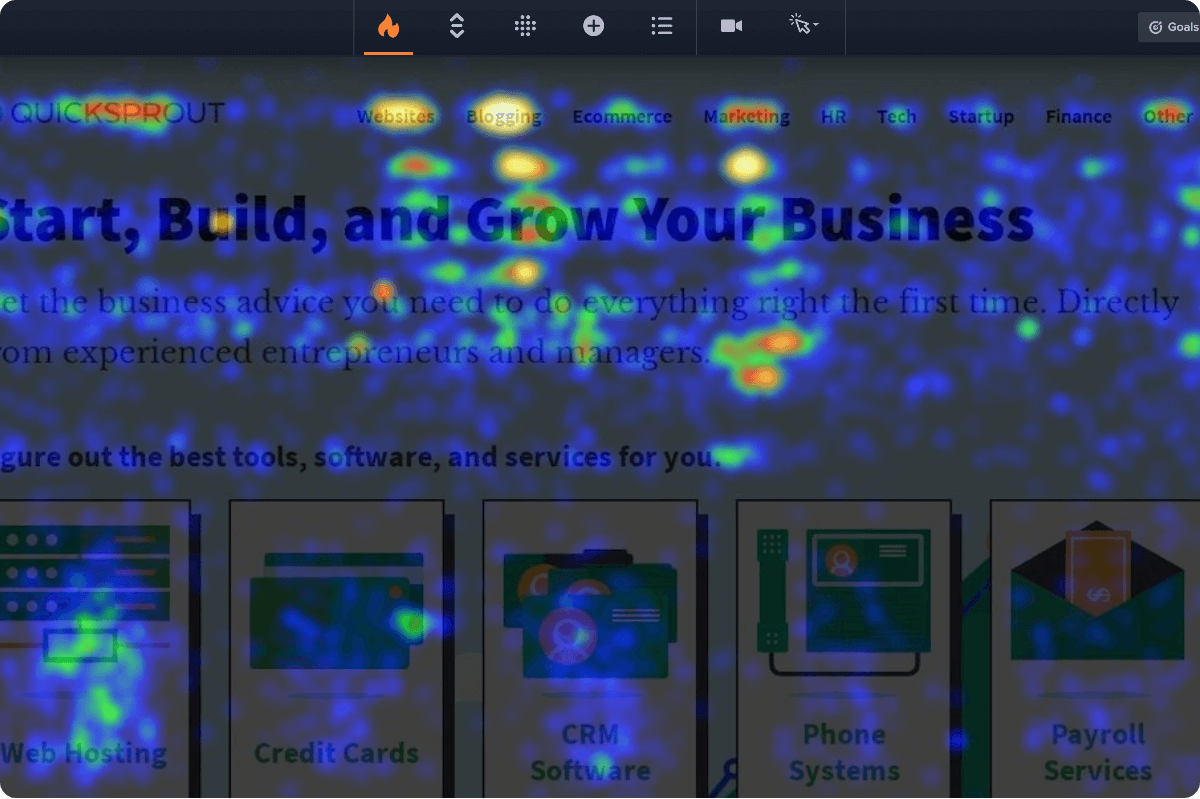
Crazy Egg was founded in 2006 by Hiten Shah and Neil Patel, pioneering the visual heatmap. This allowed marketers to see exactly where users were clicking, effectively launching the visual analytics category. Mouseflow entered the market later, in 2010, at a time when the industry was shifting toward session replays and more complex data processing. Since then, both companies have expanded their feature sets to include session recordings, funnels, and surveys. However, their development trajectories have diverged. Crazy Egg has focused on becoming a "one-stop-shop" by integrating native A/B testing, while Mouseflow has doubled down on data science, introducing proprietary "Friction Scores" to automate the detection of user frustration.
Core Capability Analysis: Visualizing the User Journey
The primary draw for both platforms remains the heatmap, yet the technical execution differs significantly. Crazy Egg’s flagship feature is the "Confetti Map," which provides high-resolution segmentation. Unlike a standard heatmap that shows an aggregate of clicks, the Confetti Map allows users to filter clicks by over 17 different metrics, including referral source, search terms, and even day of the week. This level of granularity is critical for performance marketers who need to know if paid traffic from a specific Facebook ad is interacting with the page differently than organic search traffic.
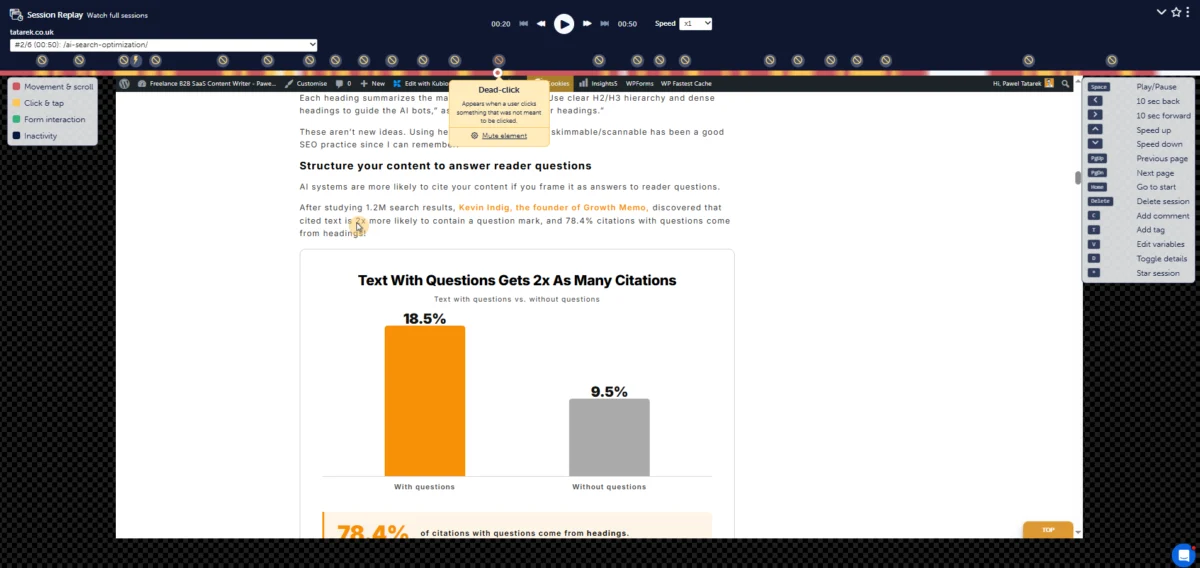
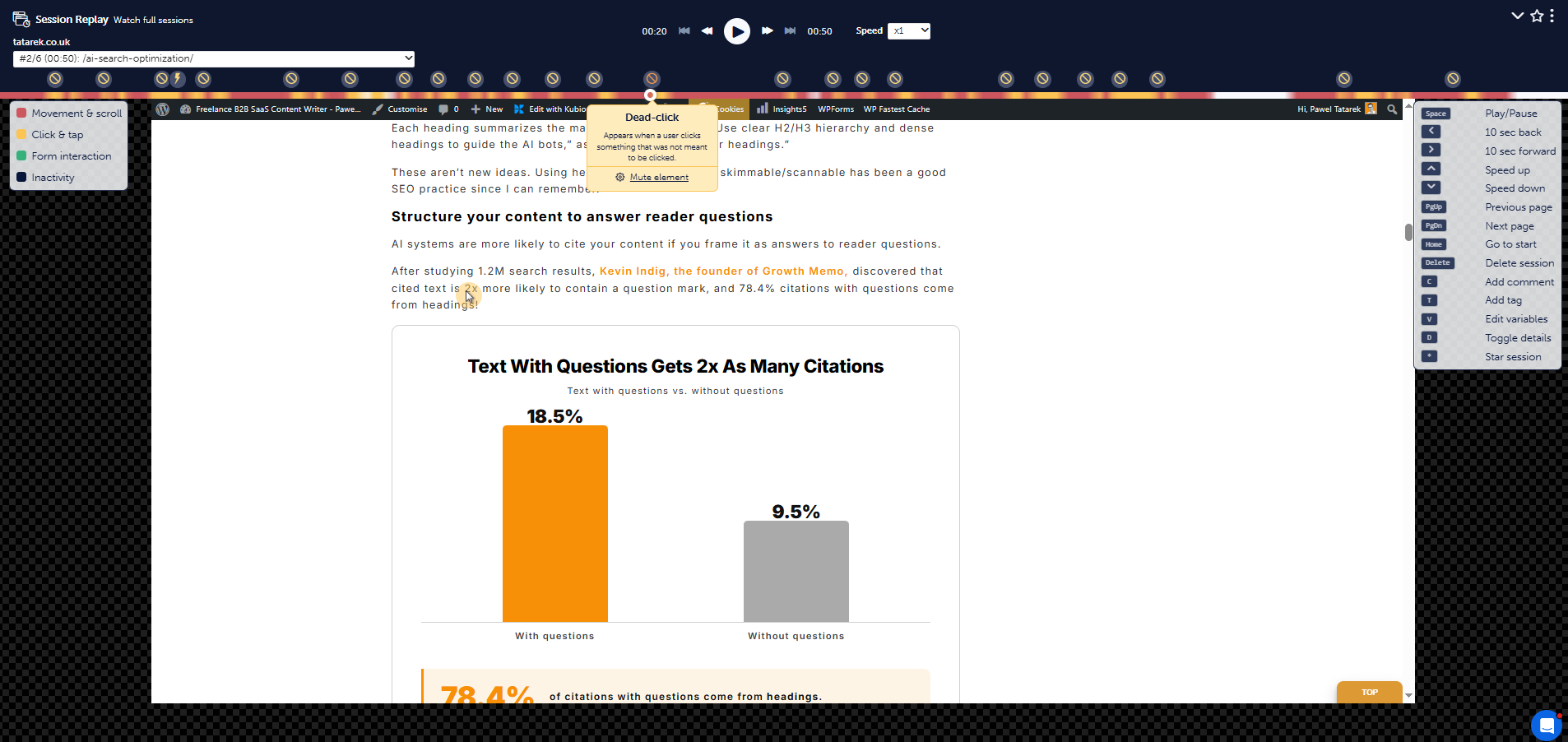
Mouseflow, conversely, offers a broader variety of map types, totaling seven distinct visualizations. These include "Attention Maps," which measure how much time users spend looking at specific sections, and "Geo Maps," which visualize engagement by location. Mouseflow’s most significant contribution to this category is the "Friction Map." By analyzing mouse movement patterns, Mouseflow can automatically highlight areas of a page where users are experiencing difficulty, such as clicking on non-clickable elements or oscillating the mouse in confusion.
Session Recordings and the Integration of Artificial Intelligence
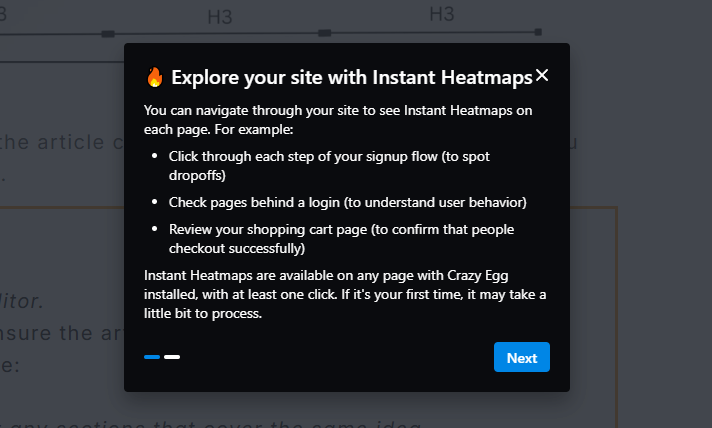
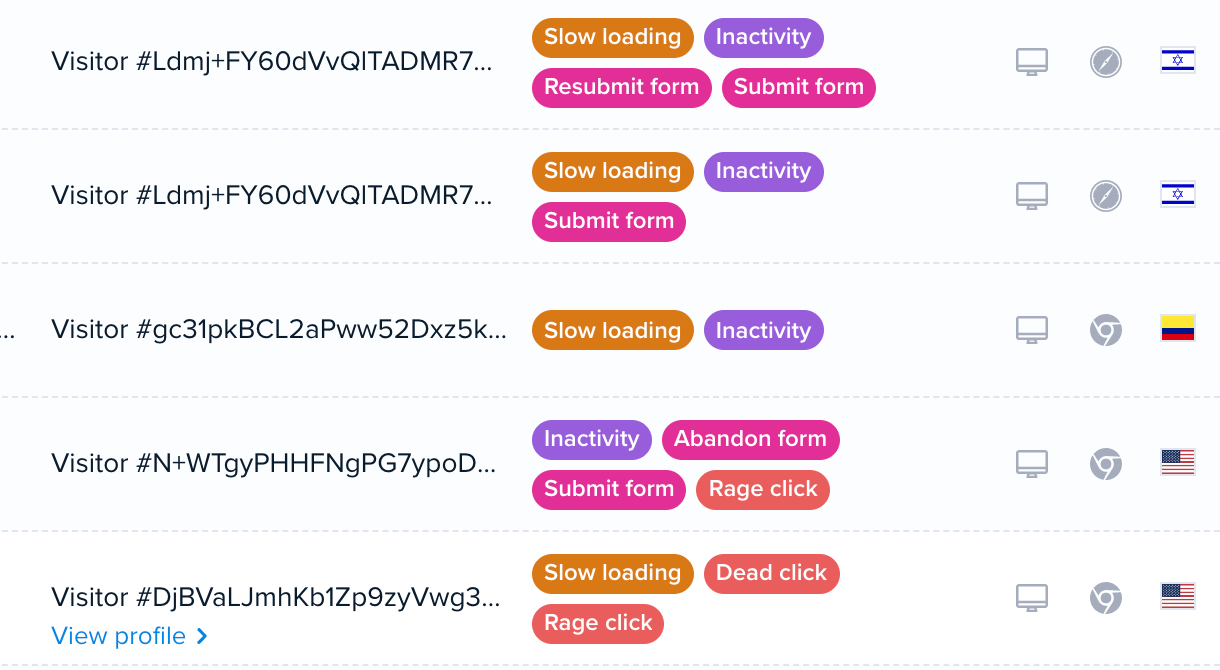
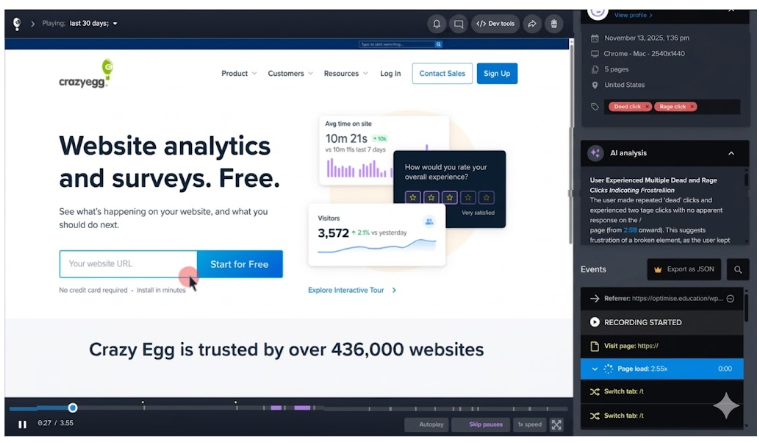
As the volume of web traffic increases, manually watching session recordings has become a bottleneck for many teams. This has led to a surge in AI-driven features designed to summarize data. Crazy Egg’s approach to session recordings emphasizes the "Event Timeline." The platform automatically tags recordings with 18 different behavior signals, ranging from rage clicks to JavaScript errors. More recently, Crazy Egg has integrated AI insights that scan these recordings to provide a summarized narrative of what went wrong, allowing a researcher to understand a 10-minute session in seconds.
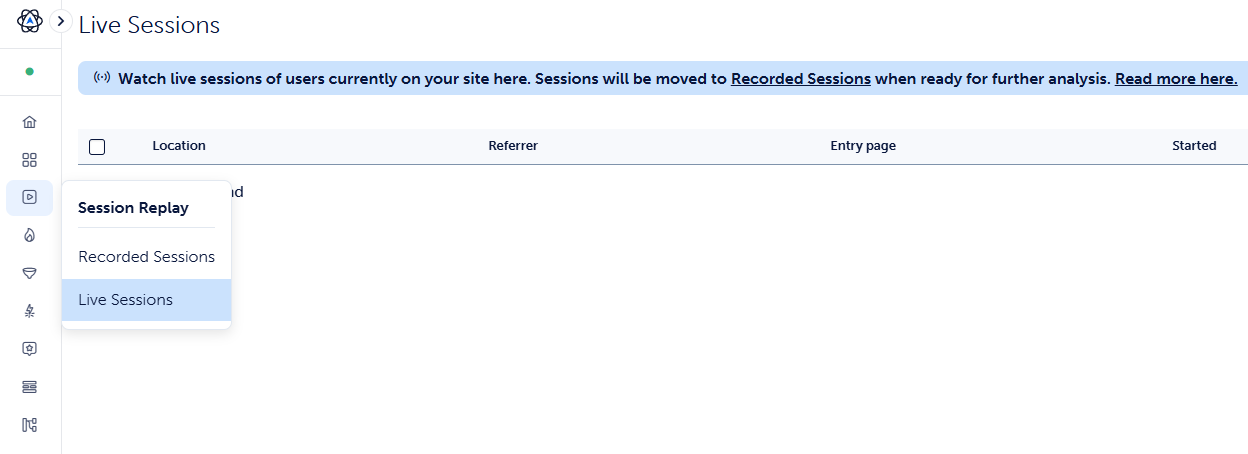
Mouseflow distinguishes itself in this category through "Live Session Viewing." This feature allows site administrators to watch users navigate the site in real-time. This is particularly valuable for customer support teams who can assist a user while they are actively struggling with a checkout process. Furthermore, Mouseflow’s AI assistant, "Mina," acts as a conversational interface. Instead of navigating menus, a user can ask Mina, "Why are people dropping off the pricing page?" and the AI will analyze current data to provide a hypothesis based on friction scores and click patterns.
Strategic Divergence: A/B Testing vs. Friction Diagnostics
The most significant fork in the road for potential buyers is the presence—or absence—of native A/B testing. Crazy Egg includes a visual editor and URL split testing within its subscription. This creates a closed-loop system: a marketer identifies a problem via a heatmap, builds a variant in the visual editor, and launches a test without ever leaving the Crazy Egg ecosystem. This integration uses a "multi-armed bandit" approach, which automatically shifts traffic to the winning variant to minimize lost conversions during the testing phase.
Mouseflow does not offer a native page-testing environment. Its philosophy assumes that enterprise-level teams are already using dedicated experimentation platforms like Optimizely or VWO. Instead of trying to be a testing tool, Mouseflow focuses on "Form Analytics." This feature provides field-level data, showing exactly which box in a signup form causes the most "refills" or "blank submissions." Given that form abandonment is a multi-billion dollar problem in e-commerce, this specialized focus provides a depth of data that Crazy Egg’s higher-level submission tracking cannot match.
Supporting Data and Market Implications
Recent industry data suggests that the average conversion rate across all websites sits at approximately 2.35%. However, the top 10% of websites achieve conversion rates three to five times higher by employing the exact type of behavioral analytics offered by these two tools.
The move toward "All-in-One" platforms like Crazy Egg reflects a trend in the Small to Medium Business (SMB) and agency sectors, where budget consolidation and ease of use are paramount. By providing web analytics, heatmaps, recordings, and testing in one package, Crazy Egg reduces the "total cost of ownership" and the technical debt associated with managing multiple tracking scripts.
In contrast, Mouseflow’s model appeals to the "Best-of-Breed" stack preferred by larger enterprises. These organizations often require the specialized "Friction Score" and industry benchmarking that Mouseflow provides. The ability to see how your site’s friction levels compare to industry averages offers a quantitative KPI that can be reported to executive leadership—a feature that transforms UX data into business intelligence.
Accessibility and Global Standards
A noteworthy point of comparison is the commitment to web accessibility. Crazy Egg’s survey tools are built to meet WCAG AAA standards, the highest level of web accessibility guidelines. This is a critical factor for government agencies, educational institutions, and public sector organizations that are legally mandated to provide accessible digital experiences. While Mouseflow offers robust survey capabilities, the specific focus on AAA compliance gives Crazy Egg a significant advantage in regulated industries.
Pricing Models and Economic Value
The financial structures of the two platforms reveal their target demographics. Crazy Egg uses a "Tracked Pageview" model. This is advantageous for large sites because the owner can choose to only monitor high-value pages—like the checkout or landing pages—while ignoring low-value blog posts, thereby keeping costs low. It also offers unlimited domains and seats across its paid plans, making it the preferred choice for digital marketing agencies managing dozens of clients.
Mouseflow utilizes a "Session-Based" billing model. A session is defined as a single visit that can include up to 100 pageviews. While this is more intuitive for some, it can lead to higher costs for sites with high traffic but low page-depth. However, Mouseflow’s "Essential" plan starts at a slightly lower price point than Crazy Egg’s entry-tier, making it accessible for solo entrepreneurs who only need to monitor a single site.
Final Assessment of Impact
The competition between Crazy Egg and Mouseflow highlights a broader shift in the technology sector: the battle between integrated simplicity and specialized depth.
For organizations that prioritize speed and a unified workflow, Crazy Egg remains the dominant choice. Its ability to not only identify a problem but also provide the tools to test a solution makes it an indispensable asset for lean teams. It effectively democratizes CRO, allowing non-technical marketers to run sophisticated experiments.
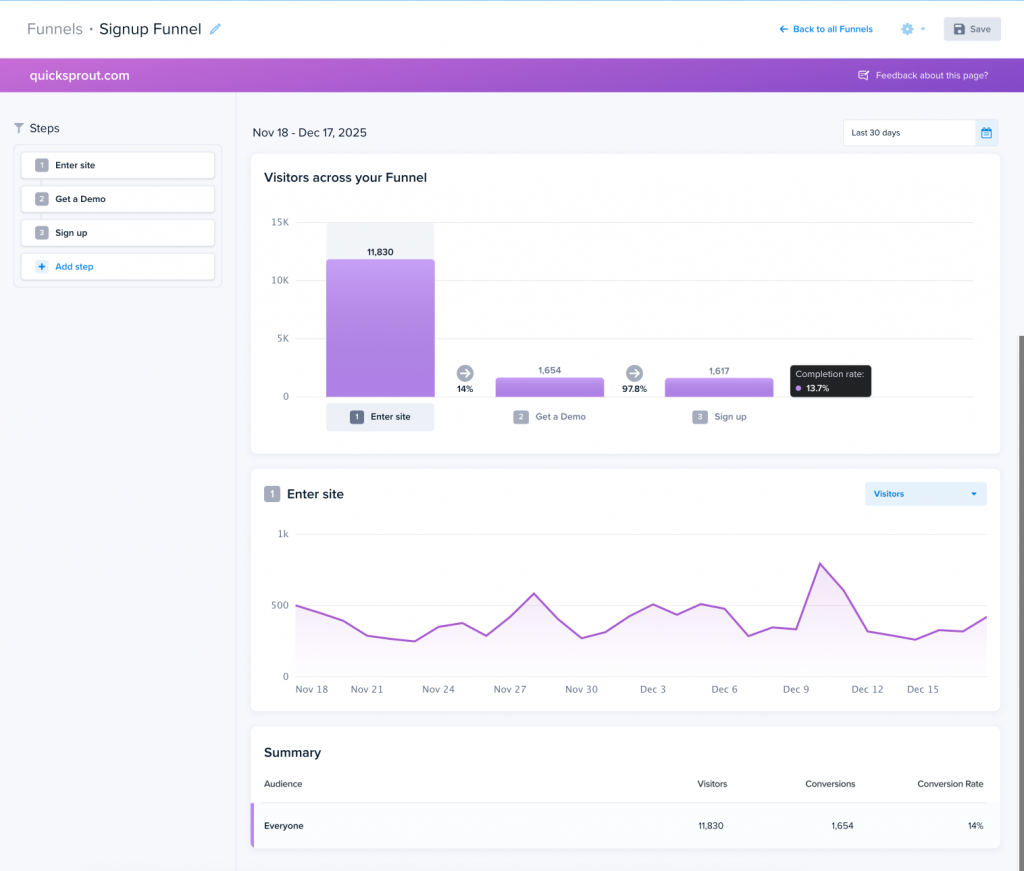
For organizations that are data-heavy and focused on technical optimization, Mouseflow provides a superior diagnostic engine. Its Friction Insights and Form Analytics offer a level of "under-the-hood" visibility that is necessary for troubleshooting complex user journeys and high-stakes checkout flows.
Ultimately, the choice depends on the existing tech stack. If a company lacks an A/B testing tool, Crazy Egg is the logical investment. If a company is already testing but finds their data lacks the "friction" context necessary to explain user drop-off, Mouseflow is the necessary upgrade. Both tools, however, represent the pinnacle of current user behavior science, turning the "black box" of the internet into a transparent, actionable map of human intent.







