rifanmuazin
The trajectory of most digital marketing teams follows a predictable pattern: a small victory in A/B testing—perhaps a headline change that nudges conversions by 0.5%—leads to a systemic dependency on binary experimentation for every incremental decision. What begins as a data-driven initiative often devolves into a “default mode” of operation where button colors and product images are tested in isolation, while fundamental business questions regarding pricing, brand positioning, and user experience go unaddressed. This phenomenon, increasingly recognized by industry experts as a marker of low Conversion Rate Optimization (CRO) maturity, suggests that while A/B testing is a foundational tool, its over-application is creating a ceiling for digital growth.
The Rise of the Experimentation Culture
The institutionalization of A/B testing as the primary metric for digital success did not happen in a vacuum. It was propelled by the success stories of “Big Tech” and the democratization of testing software. Microsoft’s Bing team provides the most cited benchmark for this movement; by merging two ad title lines into a single informative headline, the team generated an additional $100 million in annual revenue. Today, Microsoft executes upwards of 20,000 controlled experiments annually on the Bing platform alone, validating everything from micro-UI adjustments to complex backend ranking algorithms.
The ease of use provided by modern experimentation platforms has further reinforced this behavior. With “low-code” or “no-code” interfaces, marketing and product teams can launch variants without the direct oversight of data scientists or research departments. This convenience has birthed an industry culture where “experimentation” has become synonymous with “A/B testing.” Industry data suggests that 77% of all digital experiments are simple A/B tests involving only two variants, rather than more complex multivariate or multi-treatment designs. This indicates a strong preference for the simplest possible approach, regardless of its suitability for the problem at hand.
The Statistical Constraints of Modern E-commerce
A primary challenge facing the majority of e-commerce brands is the lack of sufficient traffic to achieve statistical power. For an A/B test to be valid, it requires a large enough sample size to distinguish a genuine behavioral shift from random statistical noise. When testing for a small lift—such as a 1% or 2% increase in conversion—a site may require hundreds of thousands of visitors per variant to reach a 95% confidence level.
For brands generating fewer than one million monthly sessions, this statistical requirement creates a significant bottleneck. Many teams find themselves running tests for six to twelve weeks just to reach a conclusion. This slow pace of learning often leads to three common failure modes:
- The “Underpowered” Test: Drawing conclusions from data that has not reached statistical significance, leading to “false positives.”
- The “Local Maxima” Trap: Making endless micro-adjustments to a fundamentally flawed page, essentially “polishing a sinking ship.”
- The Velocity Crisis: Testing so slowly that the market or consumer behavior changes before the test concludes, rendering the results obsolete.
Beyond the “What”: The Problem of Hidden Intent
While A/B testing is excellent at identifying what happened—Variant B outperformed Variant A—it is notoriously poor at explaining why. This creates a significant blind spot for UX designers and product managers. A “win” in an A/B test does not necessarily mean the user experience was improved; it may simply mean the variant was the “least harmful” option among two poor choices.
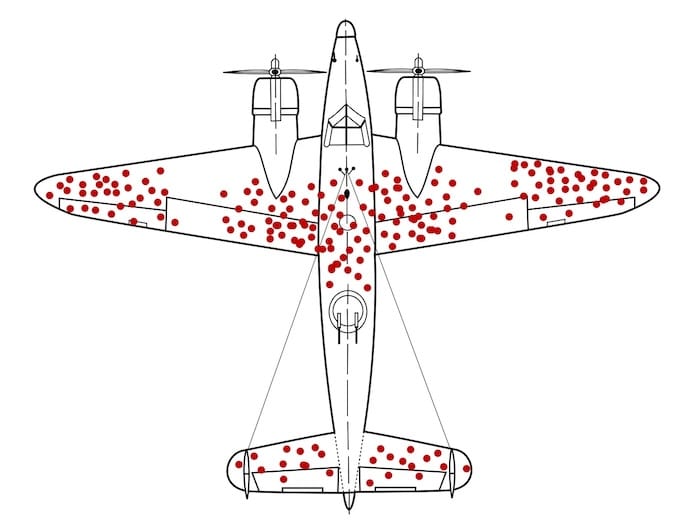
Statisticians often compare this to the “survivorship bias” observed during World War II. When the military analyzed bullet holes in returning aircraft to determine where to add armor, they initially focused on the riddled fuselages. However, statistician Abraham Wald noted that they were only looking at the planes that survived. The planes hit in the engines never returned to be measured. Similarly, A/B tests focus on the “survivors”—the users who completed the funnel. They often fail to capture the insights of those who dropped off, leaving teams to optimize the “bullet holes” rather than addressing the fatal vulnerabilities in the user journey.
Short-Term Lifts vs. Long-Term Business Health
A/B tests are typically optimized for immediate, session-based metrics: clicks, add-to-cart actions, and immediate purchases. However, high-growth e-commerce businesses rely on long-term health metrics, such as Customer Lifetime Value (CLV), return rates, and brand loyalty.
Conflict frequently arises when a short-term “win” undermines long-term profitability. For example:
- Aggressive Promotions: A high-discount pop-up may increase immediate conversions but erode profit margins and train customers to never pay full price.
- Clickbait Navigation: Changing navigation labels to be more provocative might increase click-through rates (CTR) to product pages but lead to higher bounce rates if the product doesn’t match the user’s expectations.
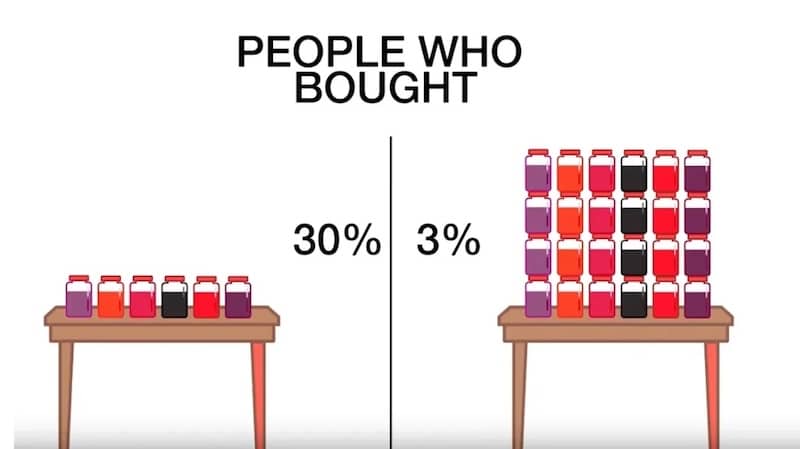
- Choice Overload: Increasing the number of options on a page might increase initial engagement (clicks) but ultimately reduce total purchases due to the “paradox of choice,” where users become overwhelmed and abandon the site.
The High-Maturity Alternative: A Diversified Toolkit
Organizations with high CRO maturity recognize that A/B testing is just one instrument in a broader diagnostic toolkit. According to research in Trustworthy Online Controlled Experiments by Kohavi, Tang, and Xu, mature teams utilize a variety of experimental designs to match the complexity of the business question.
1. Sequential Testing and Holdout Groups
When testing long-term impacts like a new subscription model or a loyalty program, mature teams use holdout groups. A small percentage of the audience is kept away from the new feature for months to measure the true impact on retention and CLV, providing data that a standard two-week A/B test cannot capture.
2. Quasi-Experiments and Switchbacks
In scenarios where splitting traffic is impossible or unethical—such as testing regional pricing or logistics changes—teams employ quasi-experiments. Switchback tests, which alternate treatments over specific time intervals rather than per-user, are frequently used by marketplace platforms (like Uber or DoorDash) to account for supply-and-demand variables that standard A/B tests ignore.
3. Evidence-Led Hypotheses
High-maturity teams move away from “opinion-based” testing. Instead, they ground every experiment in qualitative research. This involves a rigorous pre-test phase including:
- Session Recording Analysis: Identifying exactly where users stumble.
- Customer Support Audits: Identifying recurring pain points in the post-purchase journey.
- Heuristic Evaluations: Using UX experts to identify friction points before a single line of code is written for a test.
A robust hypothesis in this framework follows a strict logical structure: “Because [Research Evidence], we believe [User Problem], so we will [Proposed Change], and we expect [Specific Metric Improvement].”
Shifting Focus to “Big Levers”
The final hallmark of a mature experimentation program is the transition from testing “cosmetic details” to “business levers.” While changing a button from green to blue is easy to ship, it rarely impacts the bottom line. High-leverage testing focuses on how users understand, trust, and compare products.
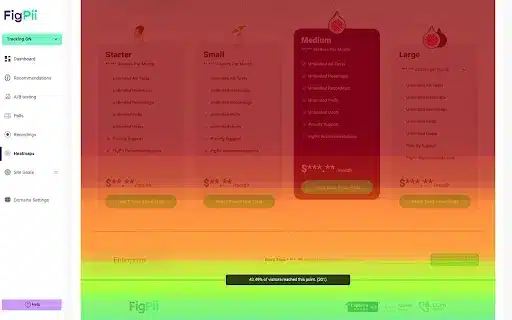
Key areas for high-impact testing include:
- Value Proposition: Testing how the brand’s unique benefits are communicated.
- Information Architecture: How products are categorized and discovered.
- Pricing Models: Testing bundles, tiered pricing, or “subscribe and save” options.
- Trust and Social Proof: Testing the placement and type of reviews, certifications, and guarantees.
As evidenced by the Bing headline example, even a UI change can be a “big lever” if it fundamentally improves a core decision-making moment for the user. The focus is not on the aesthetics of the change, but on its cognitive impact on the consumer.
Implications for the Future of Digital Strategy
As the digital landscape becomes increasingly competitive and privacy regulations (like GDPR and the phasing out of third-party cookies) make tracking more complex, the era of “randomized testing” is evolving into an era of “strategic experimentation.”
Companies that continue to rely solely on simple A/B tests for incremental gains risk being outpaced by competitors who use data to solve fundamental user problems. The path forward for digital teams is not to abandon A/B testing, but to integrate it into a wider culture of research and long-term strategic thinking. By prioritizing the “why” over the “what,” and business health over session-based wins, organizations can move beyond the plateau of small gains toward compounding, meaningful growth.