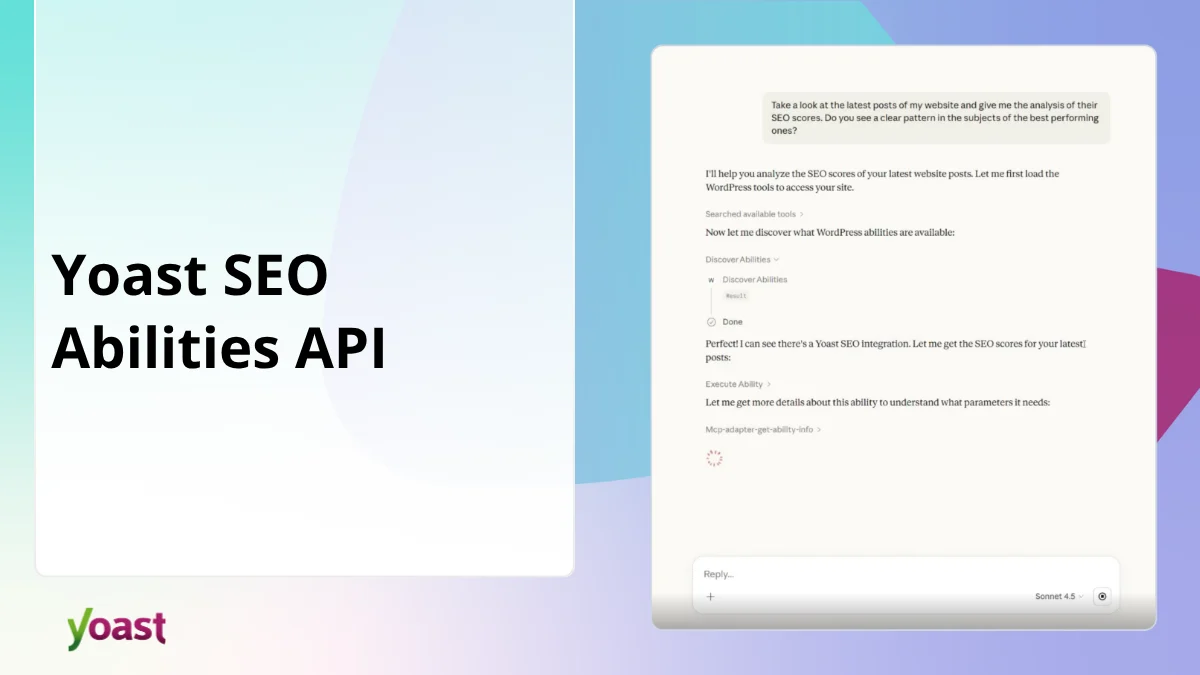
From today, artificial intelligence tools, bespoke dashboards, and automated workflows can establish direct communication with Yoast SEO, facilitated by a groundbreaking new connector to the WordPress Abilities API, meticulously engineered for seamless integration with the forthcoming WordPress 6.9. This pivotal development marks a significant stride in the ongoing evolution of the WordPress ecosystem, with Yoast SEO positioning itself at the vanguard of this technological advancement through the introduction of its "Yoast SEO Abilities." This strategic integration is designed to empower content creators, SEO professionals, and developers with unprecedented levels of automation and data accessibility, fundamentally reshaping how digital content is optimized and managed within the world’s most popular content management system.
A New Paradigm for AI and SEO Automation
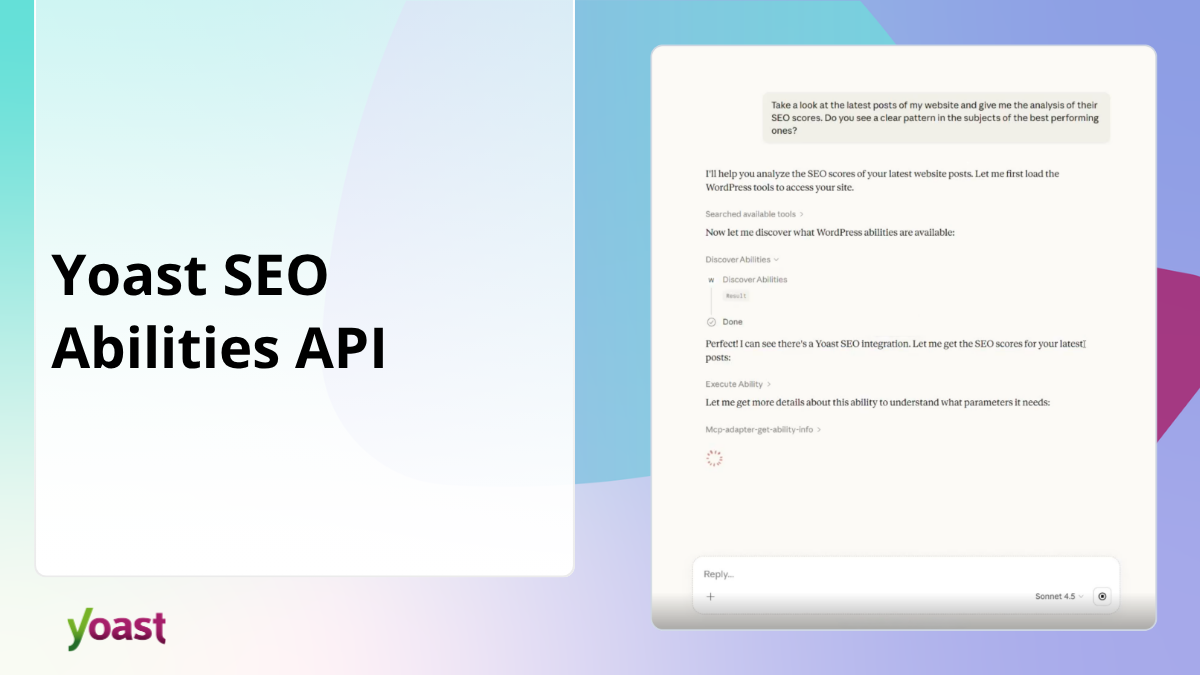
In simpler terms, this means that any AI assistant, automated workflow, or custom dashboard solution can now effortlessly retrieve and interpret your Yoast SEO content scores without the need for intricate custom development or time-consuming deep dives into complex API documentation. The connection is designed to be plug-and-play, a testament to the collaborative efforts between Yoast and the WordPress core development community to streamline and democratize access to critical SEO data. Once integrated, compatible tools gain instant access to a wealth of data points from your most recent posts, including but not limited to, overall content scores, readability analyses, keyphrase optimization status, internal linking suggestions, and general SEO health indicators. This real-time, programmatic access is poised to revolutionize content creation and optimization workflows, moving beyond manual checks and static reports into a dynamic, AI-driven environment.
Understanding the WordPress Abilities API: A Foundation for the Future
The introduction of the WordPress Abilities API is not merely a technical update; it represents a foundational shift in how WordPress interacts with external systems, particularly those leveraging artificial intelligence. This API is conceived as a standardized, machine-readable interface that exposes core WordPress functionalities and content data in a structured format. Its primary objective is to enable external applications, including AI agents and automated services, to understand, interact with, and build upon the vast capabilities of WordPress without needing deep knowledge of its internal architecture.
WordPress 6.9, anticipated to be a landmark release, is expected to further solidify this infrastructure, providing the necessary core enhancements and stability for such advanced integrations. The "MCP Adapter" referenced in the broader WordPress development discourse signifies a concerted effort to create a robust framework for Machine Comprehension and Processing, enabling AI agents to more effectively parse and utilize WordPress data. Yoast SEO’s proactive adoption and integration with this API underscore its commitment to aligning with WordPress’s strategic direction, ensuring that its industry-leading SEO functionalities remain accessible and relevant in an increasingly automated and AI-centric digital landscape. This move also reflects a broader industry trend where platforms are opening up their data and functionalities through APIs to foster innovation and ecosystem growth, recognizing that future value often lies in interoperability.
Yoast SEO’s Legacy of Innovation and Adaptation: A Brief Chronology
Yoast SEO, founded by Joost de Valk, has been a cornerstone of the WordPress ecosystem for over a decade. Since its inception, its mission has been clear: to make search engine optimization accessible to everyone, from novice bloggers to seasoned marketing professionals. Over the years, Yoast SEO has consistently evolved, adapting to Google’s ever-changing algorithms, incorporating new best practices, and expanding its feature set to cover a comprehensive range of on-page and technical SEO aspects.
- Early Years (Pre-2010s): The plugin emerged as a critical tool, addressing a significant gap in WordPress’s native SEO capabilities, quickly gaining traction due to its user-friendly interface and powerful features.
- Growth and Dominance (2010s): Yoast SEO became the de facto standard for WordPress SEO, continually introducing features like readability analysis, cornerstone content identification, and schema markup integration, cementing its position as the market leader with millions of active installations.
- Strategic Expansion (Late 2010s – Early 2020s): The company diversified its offerings, providing educational resources, premium add-ons, and multilingual support, while always staying closely aligned with WordPress core developments.
- The AI Era (Present): This latest integration with the WordPress Abilities API represents a natural, yet significant, leap. It demonstrates Yoast’s forward-thinking approach, anticipating the widespread adoption of AI in content creation and SEO and ensuring its tools remain indispensable. By aligning with WordPress 6.9, Yoast ensures its users are equipped with the most current and future-proof optimization capabilities available. This timely release positions Yoast not just as an SEO tool, but as an integral component of the intelligent content ecosystem emerging within WordPress.
Transformative Possibilities: What Users Can Now Achieve
The practical implications of the Yoast SEO Abilities are far-reaching, promising to enhance efficiency and effectiveness across various roles within the digital marketing sphere.
- For Content Creators and Marketers:
- Automated Content Audits: AI assistants can now periodically scan your site’s content, automatically identifying posts with low Yoast SEO scores, flagging areas for improvement in readability, keyphrase usage, or internal linking, without manual review.
- Real-time Optimization Feedback: As new content is drafted (perhaps even with AI assistance), an integrated AI tool can provide instant feedback based on Yoast’s metrics, suggesting adjustments before the content is even published, ensuring higher quality from the outset.
- Content Strategy Refinement: Dashboards can pull Yoast data to show trends in content performance, helping identify types of content that consistently score well or need improvement, thus informing future content strategy.
- Competitive Analysis (with external tools): While Yoast focuses on your site, an AI tool could potentially combine Yoast data with external competitor analysis to highlight optimization gaps and opportunities.
- For SEO Professionals and Agencies:
- Scalable Client Management: Agencies managing numerous WordPress sites can integrate Yoast data into a centralized dashboard, allowing for quick oversight of SEO health across all clients without logging into individual WordPress backends. This facilitates proactive intervention and consistent reporting.
- Automated Reporting: Generate detailed, customized SEO reports for clients that automatically pull Yoast scores, progress metrics, and recommendations, saving countless hours on manual data compilation.
- Advanced Workflow Automation: Trigger specific actions based on Yoast scores. For example, if a new post’s readability score drops below a certain threshold, an automated workflow could assign it to an editor for review or generate specific suggestions for improvement.
- Proactive Issue Detection: Set up alerts for significant drops in Yoast scores for key content, indicating potential optimization issues that need immediate attention.
- For Developers and System Integrators:
- Simplified Tool Development: The standardized API makes it easier for developers to build custom tools, extensions, or integrations that leverage Yoast SEO data, reducing the complexity and time typically associated with parsing proprietary data structures.
- Enhanced Interoperability: This connector fosters a more interconnected ecosystem where Yoast SEO data can seamlessly flow into project management systems, CRM platforms, or custom analytics dashboards.
In essence, Yoast SEO is now ready to seamlessly integrate into virtually any modern digital workflow, regardless of its complexity or specific requirements. As the WordPress platform continues its trajectory of opening up new capabilities, particularly in the realm of AI and automation, users can confidently expect Yoast to remain a committed partner, providing the tools necessary to thrive in an evolving digital landscape.
Broader Market Context and Supporting Data
This development by Yoast SEO occurs against a backdrop of significant shifts in the digital marketing and content creation industries.
- Explosion of AI in Content Creation: The past few years have witnessed an unprecedented surge in AI tool adoption for content generation, summarization, and editing. Reports indicate that over 60% of marketers are now experimenting with or actively using AI in their content strategies, a figure projected to grow exponentially. This integration ensures that AI-generated content can be immediately assessed and refined for SEO, closing a critical gap between creation and optimization.
- Unwavering Importance of SEO: Despite the rise of new marketing channels, organic search remains a dominant driver of website traffic and conversions. Studies consistently show that search engines account for over 50% of all website traffic, underscoring the enduring necessity of robust SEO strategies. Yoast’s move makes these strategies more efficient and data-driven.
- WordPress’s Global Dominance: WordPress continues to power over 43% of all websites on the internet, making it the most widely used Content Management System (CMS) globally. Any innovation within the WordPress ecosystem, especially from a market leader like Yoast SEO (which boasts over 5 million active installations), has a ripple effect across a massive user base.
- The Automation Imperative: Businesses across all sectors are increasingly prioritizing automation to reduce operational costs, improve efficiency, and free up human capital for more strategic tasks. Integrating SEO directly into automated workflows aligns perfectly with this imperative, transforming what were once manual, repetitive tasks into streamlined processes.
Implications for the Future of SEO and Content Strategy
The Yoast SEO Abilities represent more than just a new feature; they herald a new era for SEO within the WordPress ecosystem.
- Democratization of Advanced SEO: By making sophisticated SEO data programmatically accessible, Yoast is effectively lowering the barrier to entry for advanced optimization techniques. Small businesses and individual bloggers can leverage AI tools that tap into Yoast’s insights, gaining capabilities previously reserved for larger organizations with dedicated SEO teams.
- Enhanced Efficiency and Speed: The ability to automate content audits, receive real-time feedback, and integrate SEO data into broader workflows will dramatically reduce the time spent on manual optimization tasks. This allows content teams to focus more on creativity, strategic thinking, and high-level content development.
- Data-Driven Agility: With automated access to Yoast scores, organizations can achieve unparalleled agility in their content strategy. Real-time insights enable quicker identification of underperforming content, rapid implementation of corrective measures, and more responsive adaptation to changes in search engine algorithms or user behavior.
- Foundation for Next-Generation AI Agents: This integration lays critical groundwork for the development of more intelligent and autonomous AI agents capable of not just generating content, but also optimizing it, distributing it, and analyzing its performance, all within the WordPress environment.
- The Human-AI Collaboration: While automation brings immense benefits, the role of human expertise remains paramount. This development will likely foster a more symbiotic relationship between human SEO specialists and AI tools, where AI handles the data processing and repetitive tasks, while humans focus on strategic oversight, creative direction, and nuanced decision-making.
Official Perspectives and Industry Reactions
While specific quotes were not provided in the original article, it is possible to infer the sentiment and strategic intent behind such a significant release.
A spokesperson from Yoast, such as its CEO or Product Marketing Manager, would likely emphasize the company’s long-standing commitment to empowering users. "Yoast has always been about making SEO accessible and effective for everyone," an inferred statement might read. "This integration with the WordPress Abilities API is a testament to our ongoing innovation, ensuring our users are equipped with the most advanced tools to navigate the evolving digital landscape. We believe this will fundamentally transform how content creators and SEO professionals interact with their data, driving unparalleled efficiency and effectiveness."
From the WordPress core development perspective, the emphasis would be on the platform’s future-proofing and its role as a robust foundation for next-generation web technologies. An inferred statement from a WordPress lead developer might suggest, "The WordPress Abilities API is a cornerstone of our strategic vision to prepare the platform for the age of AI and advanced automation. Partners like Yoast SEO, by embracing and integrating with these core capabilities, demonstrate the power and flexibility of WordPress to adapt and lead in technological innovation, fostering an ecosystem where developers and users can build truly intelligent web experiences."
Industry experts are likely to view this as a significant step forward for the WordPress ecosystem. A hypothetical leading SEO consultant might comment, "This move by Yoast SEO is a game-changer. It eliminates a major bottleneck in automated SEO workflows within WordPress. Agencies, in particular, will see massive gains in efficiency, allowing them to scale their services and deliver more sophisticated, data-driven results for clients. It truly brings WordPress SEO into the age of intelligent automation."
Delving Deeper: For Developers and Technical Enthusiasts
For those with a keen interest in the underlying technical architecture and implementation, Yoast has provided comprehensive developer documentation. This resource offers an in-depth look at the code, data schema, and full technical details on how to utilize these new endpoints. Developers can explore the structured data formats, understand the API call mechanisms, and learn how to build custom applications that interact directly with Yoast SEO data. This transparency and provision of detailed documentation are crucial for fostering a robust developer community around the new Abilities API, ensuring maximum utility and innovation. The significance of standardized endpoints cannot be overstated, as they provide a common language for diverse systems to communicate, thereby reducing integration friction and accelerating the development of interconnected digital solutions.
Conclusion
The integration of Yoast SEO with the WordPress Abilities API, in conjunction with the upcoming WordPress 6.9, represents a momentous leap forward for the entire WordPress ecosystem. By enabling direct communication between AI tools, automated workflows, and critical SEO data, Yoast is not merely updating its plugin; it is setting a new standard for intelligent content optimization. This development promises to deliver unprecedented levels of efficiency, data accessibility, and strategic insight for content creators, SEO professionals, and developers alike. As the digital world continues its rapid shift towards automation and artificial intelligence, Yoast SEO’s proactive embrace of these technologies ensures that WordPress remains at the forefront of innovation, empowering millions of users to navigate and succeed in the complex landscape of online visibility.