Pevita Pearce
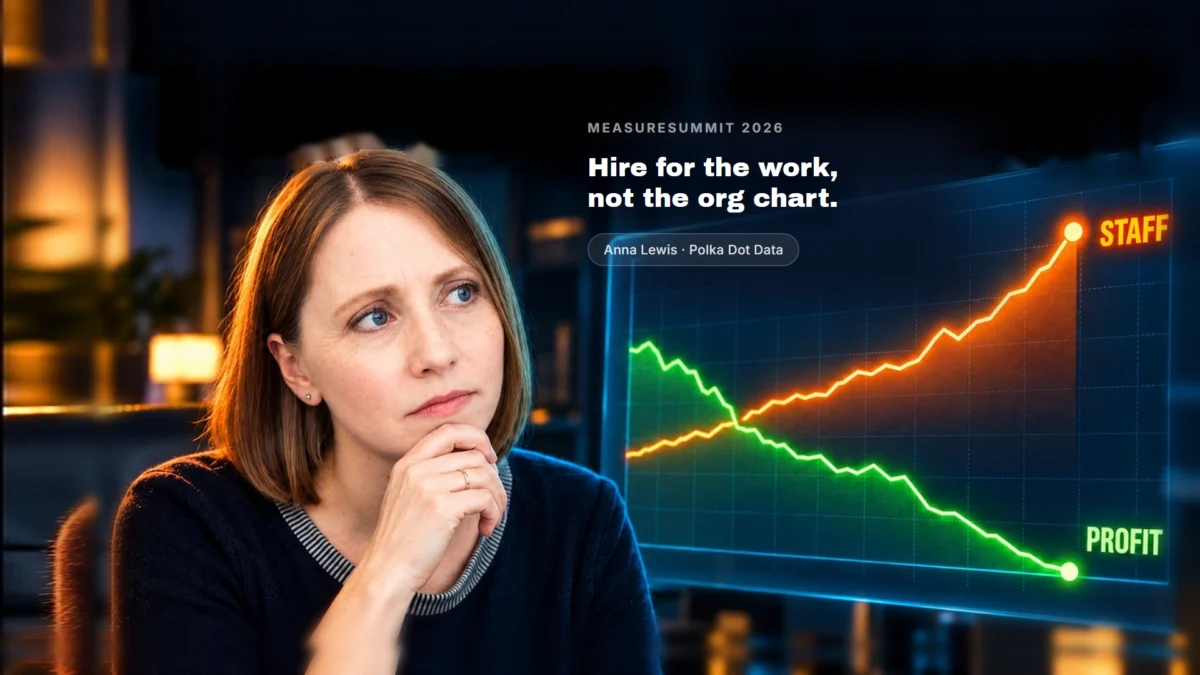
The challenge of maintaining healthy profit margins while managing a fluctuating workload has become a central concern for boutique consultancies and data analytics agencies. At the MeasureSummit 2026 conference, Anna Lewis, founder of the analytics consultancy Polka Dot Data, presented a retrospective analysis of a decade’s worth of operational data. Her findings suggest that the most significant threat to agency sustainability is not a lack of technical expertise, but rather a series of systematic hiring errors that decouple headcount from revenue growth.
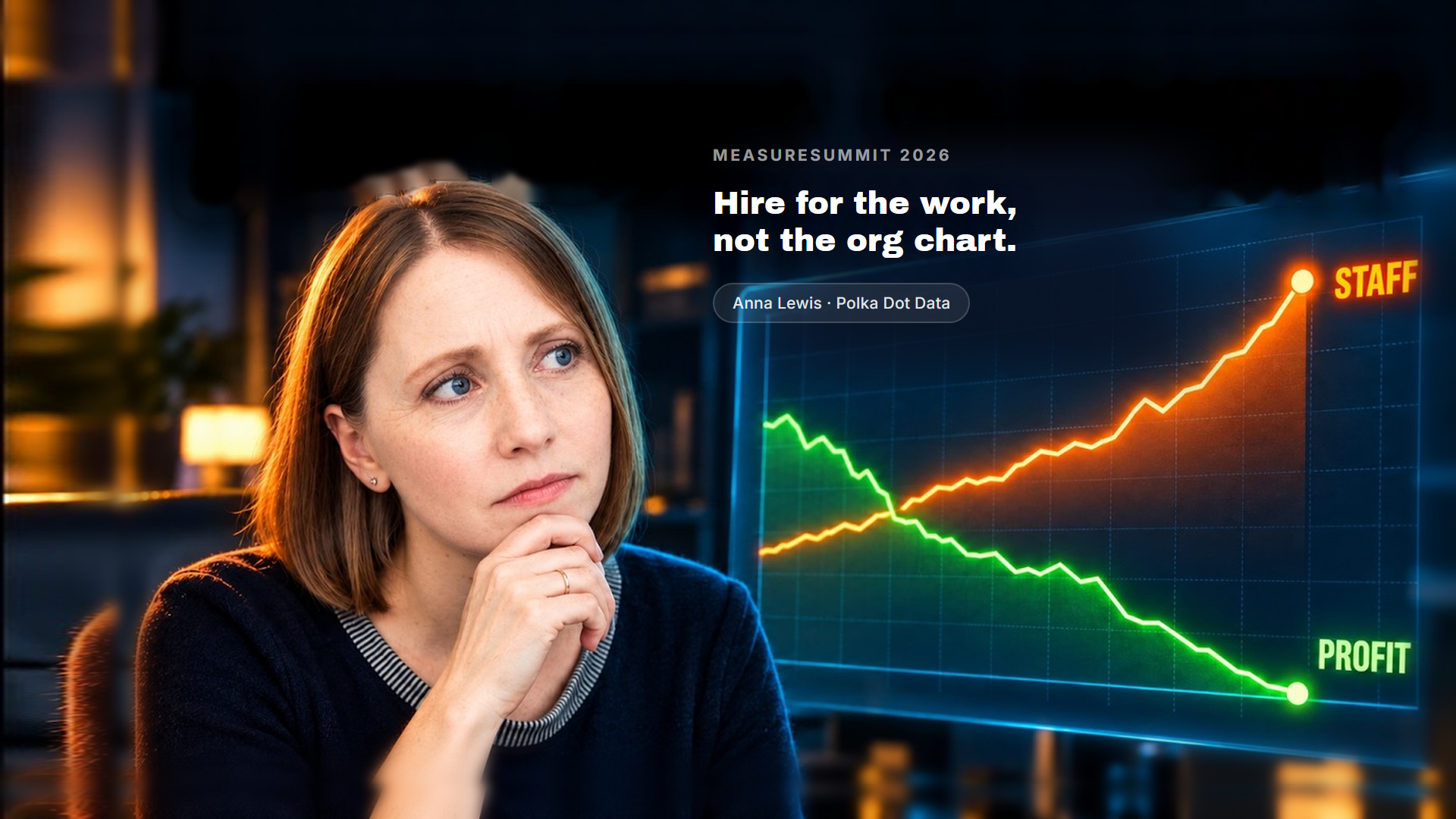
Lewis’s presentation centered on a ten-year longitudinal study of her own firm’s performance. The data revealed a common but dangerous pattern: while headcount remained steady or increased, revenue and profit experienced high volatility. In several fiscal years, the "lines" on the financial chart—representing overhead and gross income—converged so closely that the business operated at near-zero profit. This phenomenon, often referred to in the industry as "profitless growth," prompted a fundamental shift in how Polka Dot Data approaches human resource management and financial forecasting.
The Evolution of Polka Dot Data: A Case Study in Scaling
Founded over a decade ago, Polka Dot Data began as a specialized analytics consultancy. Like many founders in the professional services sector, Lewis initially focused on talent acquisition as the primary lever for growth. However, she identified a critical inflection point where the company reached eight employees without a commensurate increase in stable, long-term contracts. This period was characterized by "pinball" financials, where the high fixed cost of salaries created immense pressure to close any available work, regardless of its profitability or strategic fit.
The chronology of this realization led to the development of a framework designed to prevent "ego-driven scaling"—the practice of hiring based on a desired organizational chart rather than actual market demand. Lewis’s subsequent strategy involved a rigorous audit of six specific hiring mistakes that frequently erode margins in the analytics and marketing sectors.
Analysis of the Six Critical Hiring Errors
1. Prioritizing Credentials Over Cultural Environment
The first major pitfall identified in the MeasureSummit session is the tendency to "hire the CV" rather than the individual’s suitability for a specific working environment. Lewis used a botanical analogy, comparing a high-performing candidate to a "perfect rose." Even the most qualified candidate will fail to bloom if the soil—the agency’s internal processes, client types, and management style—is incompatible.

Industry data suggests that the cost of a bad hire can range from 30% to 150% of the employee’s annual salary when factoring in recruitment costs, training, and lost productivity. Lewis argued that "resilience" often outweighs academic credentials in a fast-paced agency setting. Candidates who look excellent on paper but lack the adaptability to handle shifting client requirements often become a liability to the firm’s margins.
2. The "Sunflower Field" Problem: Lack of Cognitive Diversity
A second common error is the unintentional "cloning" of the existing team. When leadership hires individuals who mirror their own thinking styles and problem-solving approaches, the agency develops blind spots. To combat this, Lewis implemented the DISC personality profiling system (Dominance, Influence, Steadiness, and Conscientiousness).
By mapping her team, Lewis discovered that her own "Dominant" (Red) profile needed to be balanced by "Conscientious" (Blue) profiles—individuals who prioritize systems, follow-through, and data integrity. An agency composed entirely of "visionaries" will often struggle with project completion and quality control, while a team of only "analyzers" may lack the communication skills necessary to manage client relationships.

3. Misalignment of Context: Agency vs. In-House Roles
The requirements for a data analyst in an in-house role differ fundamentally from those in an agency environment. Lewis noted that agencies require "T-shaped" individuals who can manage multiple client personalities, handle varied tech stacks, and maintain a high billable-hour consciousness. Conversely, in-house roles often require deep, singular focus and the ability to navigate internal corporate politics over several years. Hiring a specialist who thrives in the stability of a single-product environment into a chaotic multi-client agency often leads to rapid burnout and high turnover costs.
4. Premature Structural Expansion
Perhaps the most financially damaging mistake cited was building an organizational structure "too big, too fast." Lewis warned against the "ego trap" of designing a dream hierarchy—complete with BI Developers, Data Governance Leads, and Client Success Managers—before the revenue pipeline can support them.
The recommended approach is a tiered growth strategy:

- Small Teams (1-3 people): Focus on generalists who can handle the end-to-end customer journey.
- Mid-sized Teams (4-10 people): Introduction of specialists (e.g., a dedicated developer or account manager).
- Large Teams (11+ people): Formalized departments and middle management.
Lewis’s own experience of hiring eight people prematurely served as a cautionary tale of how a "beautiful hierarchy" can lead to redundancies if the market shifts.
5. The Stagnation of Job Specifications
In the rapidly evolving field of data analytics, a job description that remains unchanged for two years is effectively a "work of fiction." Lewis advocates for integrating job specifications into monthly one-on-one reviews. This ensures that the role evolves alongside the technology. If a team member’s daily tasks no longer align with their original contract, it creates a "drift" that can lead to inefficiency and dissatisfaction.
6. Failure to Track Granular Profitability Metrics
The final mistake is operating without a "stats pack" that tracks team-level profitability. In collaboration with Fred Pike, a veteran in the analytics space, Lewis identified three essential metrics that every agency owner must monitor monthly:
- Staff-Profit Ratio: The total revenue generated per person divided by their salary. This identifies which roles are truly "profit centers" and which are "cost centers."
- Salary Percentage of Turnover: Staff costs should ideally remain within a specific percentage of total revenue (typically between 40% and 60% for healthy agencies). Lewis noted that her own firm’s ratio fluctuated between 20% and 70% during its most volatile periods.
- Revenue Per Person: A high-level sanity check to ensure that as the team grows, the efficiency of the organization is not diluting.
The Human Element: Addressing "Dementors" and Trust
Beyond the numbers, the MeasureSummit session addressed the psychological impact of hiring. Lewis introduced the concept of "dementors"—employees who, despite their technical proficiency, negatively impact the morale and productivity of the entire team. The "Hardest Truth" in agency management, according to Lewis, is the necessity of "hiring slowly and firing quickly." Delaying the termination of a bad fit not only drains financial resources but also risks the resignation of high-performing staff who must compensate for the underperformer.

Trust was identified as the ultimate currency of a successful team. If the relationship between the founder and an employee suffers a fundamental breach of trust, the "margin" on that relationship becomes negative, regardless of the individual’s billable hours.
Broader Industry Implications and Analysis
The insights shared by Lewis reflect a broader trend in the professional services industry toward "lean scaling." In an era where AI and automation are beginning to handle routine data cleaning and reporting tasks, the value of an analytics hire is shifting toward strategic interpretation and client management.
The "8-person mistake" is a classic example of the "Valley of Death" in small business growth, where an agency is too large to be managed by a single founder but too small to have a professional management layer. By focusing on the staff-profit ratio and DISC diversity, agencies can navigate this transition more safely.

For the wider analytics community, this data-driven approach to human resources marks a departure from traditional "gut-feeling" hiring. As profit margins in digital services face downward pressure from global competition and automated tools, the ability to link every headcount decision to a specific financial metric is becoming a prerequisite for survival.
Conclusion: The Strategic Checklist
To conclude her session, Lewis provided a summary checklist for sustainable growth:
- Define the Environment: Ensure the candidate’s temperament matches the agency’s "soil."
- Audit for Diversity: Use DISC or similar tools to avoid hiring clones.
- Match Context: Distinguish clearly between agency-ready talent and in-house specialists.
- Scale to Workload: Build the team based on current revenue, not future aspirations.
- Evolve the Role: Review job specs monthly to keep them relevant.
- Monitor the Stats: Keep salary costs and revenue-per-person within healthy benchmarks.
By adhering to these principles, Lewis argues that agencies can break the cycle of "swinging profits" and build a resilient organization that thrives on both technical excellence and financial stability.

 Neng Nana
 Sagoh