rifanmuazin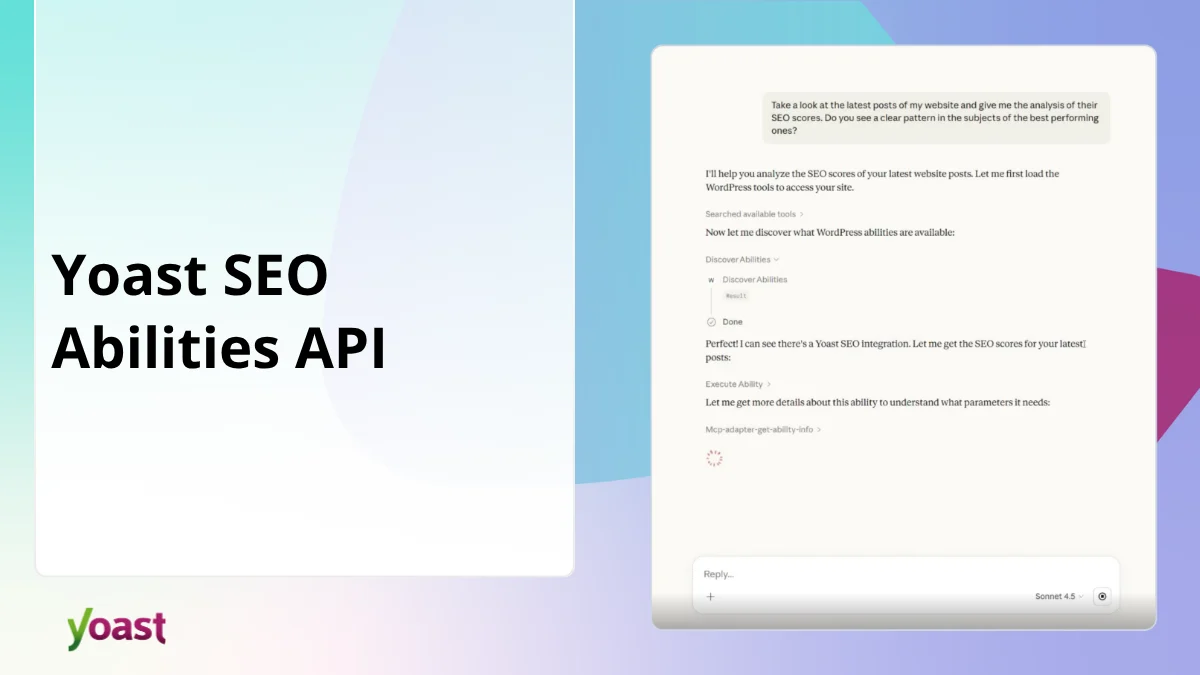
Utrecht, The Netherlands – Yoast SEO, a dominant force in the WordPress ecosystem for search engine optimization, has officially unveiled its new Abilities API, marking a significant stride towards deeper integration with artificial intelligence (AI) tools, advanced dashboards, and automated workflows. This strategic development, designed to seamlessly interoperate with the forthcoming WordPress 6.9 update and its foundational “Abilities” framework, promises to revolutionize how content creators and marketers manage and optimize their digital presence. Effective immediately, compatible AI assistants and automated systems can directly access and interpret critical SEO insights generated by Yoast, bypassing the traditional need for manual data extraction or bespoke integration efforts.
The release of the Yoast SEO Abilities API represents a pivotal moment in the ongoing evolution of both Yoast SEO and the broader WordPress platform. As WordPress continues its trajectory towards enhanced extensibility and AI readiness, Yoast’s latest offering positions itself at the forefront of this transformation. The API simplifies the process of integrating Yoast’s comprehensive content analysis scores and recommendations into external applications, making sophisticated SEO guidance more accessible and actionable than ever before. This “it just works” philosophy aims to empower users to leverage the power of AI to refine their content strategies with unprecedented efficiency.
Demystifying the Abilities API: What It Means for Users
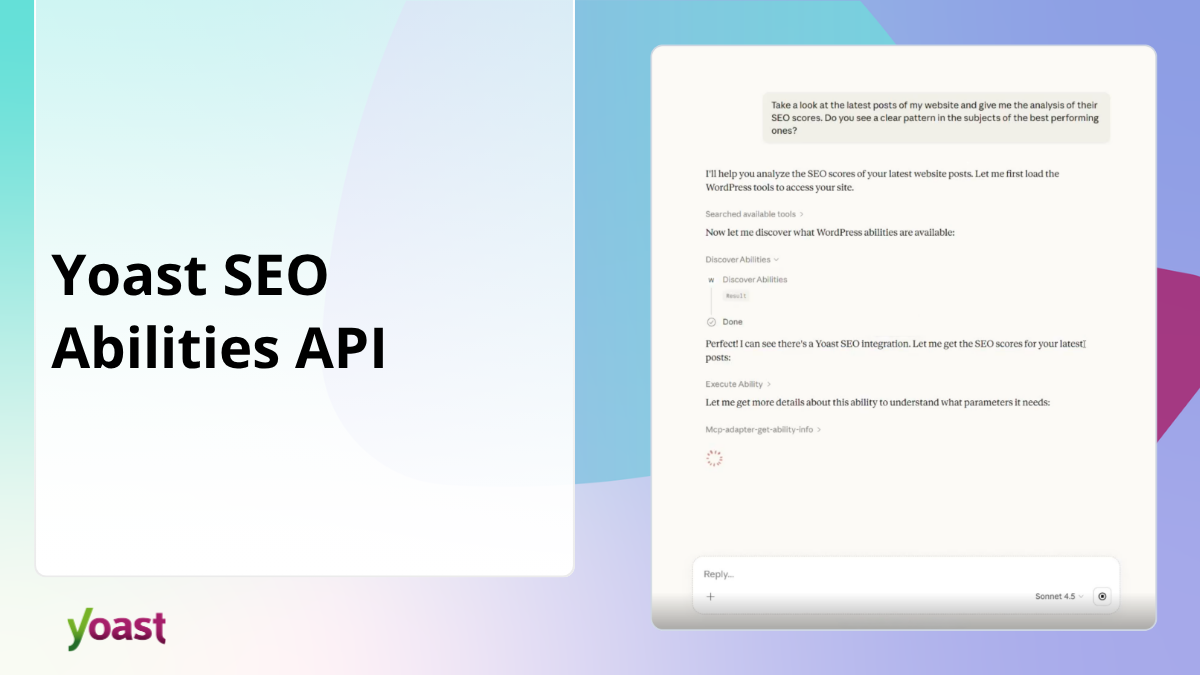
In practical terms, the Yoast SEO Abilities API acts as a standardized conduit, allowing external AI-driven applications, custom analytical dashboards, and workflow automation platforms to programmatically retrieve specific SEO data points from content published on WordPress websites using Yoast SEO. This eliminates the arduous task of developing custom connectors or sifting through extensive documentation to understand how to interpret Yoast’s internal data structures. Once connected via the WordPress MCP Adapter, which facilitates these new “abilities,” any compatible tool can instantly pull a rich array of data from a user’s most recent posts.
While the original announcement did not explicitly list all data points, a logical inference based on Yoast SEO’s core functionalities suggests that the API provides access to crucial metrics such as:
- Overall SEO Score: A comprehensive evaluation of a post’s optimization for its target keyphrase.
- Readability Score: An assessment of content clarity and ease of comprehension for the target audience.
- Keyphrase Analysis Feedback: Specific recommendations related to keyphrase density, distribution, and presence in critical SEO elements (title, meta description, headings, content).
- Internal Linking Suggestions: Data on suggested internal links to improve site structure and user navigation.
- Content Analysis Insights: Feedback on content length, image alt attributes, outbound links, and other on-page SEO factors.
- Schema Markup Status: Information regarding the implementation and validity of structured data.
- Meta Description and SEO Title Analysis: Evaluation of these critical elements for click-through rate optimization.
This standardized access to actionable SEO data means that the technical barriers to integrating advanced AI capabilities into content workflows are significantly lowered. The API essentially translates Yoast’s expert SEO knowledge into a machine-readable format, ready for interpretation and utilization by intelligent systems.
Transformative Applications: What You Can Do with the New API
The implications of the Yoast SEO Abilities API are far-reaching, opening up a plethora of innovative use cases for content creators, digital marketers, and web developers. Here are some of the transformative possibilities that are now within reach:
- AI-Powered Content Optimization: Imagine an AI writing assistant that, as you type, receives real-time SEO and readability feedback from Yoast. The assistant could automatically suggest alternative phrasing, optimal keyphrase placement, or even structural adjustments to improve scores before publication. This moves beyond simple grammar checks to intelligent, SEO-aware content generation.
- Automated Performance Monitoring Dashboards: Marketing teams can build custom dashboards that automatically track the SEO health of hundreds or thousands of articles across multiple WordPress sites. These dashboards could flag underperforming content, identify posts with low readability scores, or highlight opportunities for keyphrase optimization, all without manual data entry.
- Proactive SEO Auditing and Reporting: Automated systems can now conduct continuous SEO audits, comparing current content scores against predefined benchmarks. If a post’s SEO score drops or readability declines after an update, the system could automatically generate a report, notify the content team, or even suggest corrective actions.
- Intelligent Internal Linking Strategies: AI could analyze an entire website’s content, identify relevant articles, and automatically suggest or even implement internal links based on Yoast’s recommendations, optimizing link equity distribution and improving user experience.
- Personalized Content Recommendations: E-commerce sites or news portals could use AI to analyze the SEO performance of various content pieces and then recommend specific articles to users or even dynamically adjust on-page elements to better target individual search queries, enhancing relevance and engagement.
- Streamlined Content Update Workflows: For websites with vast archives, AI could periodically re-evaluate older content using the API, identifying articles that could benefit from updates to their SEO title, meta description, or core content to improve search visibility, automating a typically time-consuming task.
- Competitive Analysis and Benchmarking: While primarily focused on a user’s own content, agencies could potentially leverage aggregated, anonymized data (if made available by Yoast, or by clients providing access) to benchmark their clients’ performance against industry averages or even inform competitive strategies.
In essence, the Yoast SEO Abilities API positions Yoast SEO not just as a tool for manual optimization but as an intelligent, interoperable component within a larger, increasingly automated digital marketing ecosystem. It allows Yoast’s expertise to scale beyond individual human interaction, becoming an integral part of sophisticated content workflows.
The Broader Context: WordPress, AI, and the Evolution of SEO
The introduction of the Yoast SEO Abilities API is not an isolated event but rather a strategic response to, and a driver of, broader trends within the digital landscape. It is deeply intertwined with the ongoing evolution of WordPress and the accelerating integration of AI into everyday tools.
WordPress’s Strategic Evolution:
WordPress, which powers over 43% of all websites on the internet, has been on a deliberate path to modernize its architecture and enhance its capabilities. The “Abilities” framework, anticipated with WordPress 6.9, is a testament to this commitment. This framework is designed to provide a standardized way for plugins and themes to expose their functionalities and data to external applications, particularly those powered by AI. The “WordPress MCP Adapter” (a reference to the “Machine-Consumable Protocol Adapter” from developer previews) is crucial here, acting as the translator that allows diverse AI tools to understand and interact with WordPress data. Yoast SEO, by aligning its API with this core WordPress initiative, demonstrates its commitment to the platform’s future and ensures its continued relevance in an AI-centric world. This move mirrors previous significant WordPress developments, such as the introduction of the REST API in 2015, which revolutionized headless WordPress implementations, and the ongoing evolution of the Gutenberg editor, which aims to provide a more intuitive and extensible content creation experience.
The Rise of AI in Content and SEO:
The past few years have witnessed an explosion in AI capabilities, particularly in natural language processing and generation. From AI writing assistants like ChatGPT to sophisticated data analysis platforms, AI is reshaping how content is created, optimized, and distributed. SEO, traditionally a blend of technical expertise, content strategy, and market research, is increasingly benefiting from AI’s ability to process vast amounts of data, identify patterns, and automate repetitive tasks. Tools are emerging that can analyze SERPs, generate content ideas, optimize existing articles, and even build entire content calendars. The Yoast SEO Abilities API directly addresses this trend by providing a robust and standardized way for these AI tools to access the foundational SEO insights that Yoast has perfected over more than a decade. This integration is crucial because while AI can generate content, it often lacks intrinsic SEO intelligence; Yoast provides that critical layer of expert guidance.
A Brief Chronology of Yoast SEO and WordPress Integration:
- 2010: Yoast SEO (then WordPress SEO by Yoast) is launched, quickly becoming the de facto SEO plugin for WordPress, democratizing complex SEO principles for millions of users.
- Early 2010s: Yoast consistently adds features like readability analysis, keyphrase analysis, XML sitemaps, and breadcrumbs, solidifying its position.
- 2015: WordPress introduces its REST API, opening doors for more dynamic and external integrations, albeit often requiring custom development.
- Late 2010s: Yoast SEO continues to evolve, adding schema markup, internal linking suggestions, and local SEO functionalities, staying ahead of Google’s algorithm updates.
- Early 2020s: The broader tech landscape sees a rapid acceleration in AI development and adoption, particularly in content generation and analysis. Discussions within the WordPress community begin to formalize plans for better AI integration.
- 2023: WordPress core contributors hint at new “Abilities” and “MCP Adapter” concepts, signaling a push towards standardized machine-readable data and AI readiness for the platform.
- Expected WordPress 6.9 Release (Future): The core WordPress platform is set to include the foundational “Abilities” framework and the MCP Adapter, providing the infrastructure for plugins like Yoast to connect.
- Today: Yoast SEO releases its Abilities API, demonstrating proactive alignment with WordPress’s future, enabling seamless AI integration from day one of the new framework’s availability.
Statements and Reactions: A Glimpse into the Future
While specific quotes from Yoast leadership or WordPress core developers were not provided in the original text, the strategic nature of this release allows for logical inferences regarding their perspectives.
From Yoast SEO Leadership (e.g., Joost de Valk, Thijs de Valk, Beth Parker):
“This is a monumental step in our mission to ‘SEO for everyone’,” a hypothetical statement from a Yoast executive might read. “By opening up Yoast SEO data through the Abilities API, we are empowering content creators and marketers with unprecedented tools to optimize their online presence. We envision a future where AI acts as a co-pilot for SEO, working hand-in-hand with our proven analysis to drive better results. This API ensures that Yoast SEO remains at the cutting edge, evolving in lockstep with WordPress and the accelerating pace of AI innovation.” Beth Parker, Product Marketing Manager at Yoast, whose insights are featured in the original announcement, would likely emphasize the user-centric benefits, stating, “Our goal is always to make SEO simpler and more effective. This API isn’t just a technical achievement; it’s about giving our users more power and flexibility in how they integrate SEO into their daily workflows, without the need for complex custom solutions.”
From the WordPress Community and Developers:
The WordPress community, known for its open-source ethos and collaborative spirit, would likely welcome this development as a positive indicator of the platform’s adaptability. A hypothetical statement from a prominent WordPress core contributor could highlight, “The release of the Yoast SEO Abilities API is a fantastic demonstration of how plugins can leverage WordPress’s evolving architecture. It validates the direction we’re taking with the ‘Abilities’ framework and the MCP Adapter, showing the real-world utility of standardizing data access for AI and automation. This kind of integration is crucial for maintaining WordPress’s leadership as a versatile and future-proof CMS.” Developers and agencies would likely express enthusiasm for the reduced development overhead and the new opportunities to build more sophisticated, AI-driven solutions for their clients, seeing it as a significant unlock for innovation within the ecosystem.
Broader Impact and Implications
The Yoast SEO Abilities API is poised to have a profound impact on several fronts:
The Future of SEO: The industry is moving towards greater automation and data-driven decision-making. This API accelerates that trend, making sophisticated SEO more accessible and less dependent on manual intervention. It could lead to a shift where SEO professionals spend less time on routine analysis and more time on strategic planning, creative content development, and competitive differentiation, leveraging AI to handle the tactical execution.
Strengthening the WordPress Ecosystem: By aligning with WordPress’s core development, Yoast reinforces the platform’s reputation as a robust and extensible environment. This move encourages other major plugin developers to follow suit, fostering a richer ecosystem of interoperable, AI-ready tools that benefit the entire user base. It demonstrates WordPress’s capability to integrate cutting-edge technologies effectively.
Developer Opportunities: The API creates fertile ground for developers to innovate. New plugins, standalone applications, and agency services can be built around this standardized data stream. This could lead to a new wave of tools focused on niche SEO challenges, advanced reporting, or highly customized content workflows, all powered by Yoast’s insights.
Ethical Considerations and Human Oversight: While AI integration offers immense benefits, it also necessitates a continued focus on human oversight. Content generated or optimized solely by AI, without human review, risks lacking nuance, creativity, or authenticity. The Abilities API provides data to AI, not from AI, ensuring that Yoast’s established, human-validated SEO principles guide the automation. The challenge will be for users to strike a balance between automation efficiency and maintaining human quality control, ensuring that AI enhances, rather than replaces, human ingenuity in content creation.
Competitive Landscape: This move by Yoast SEO could put pressure on competing SEO plugins and tools to develop similar, robust API integrations. In an increasingly AI-driven market, the ability to seamlessly connect with external systems will become a critical differentiator, pushing the entire SEO software industry forward.
In conclusion, the launch of the Yoast SEO Abilities API is more than just a technical update; it’s a strategic declaration of intent. It signifies Yoast’s commitment to leading the charge in AI-powered content optimization within the WordPress universe. By democratizing access to its profound SEO insights for intelligent systems, Yoast is not only future-proofing its own offering but also empowering millions of websites to navigate the complexities of search engines with unprecedented efficiency and intelligence. The era of truly integrated, AI-driven SEO for WordPress has officially begun.