rifanmuazin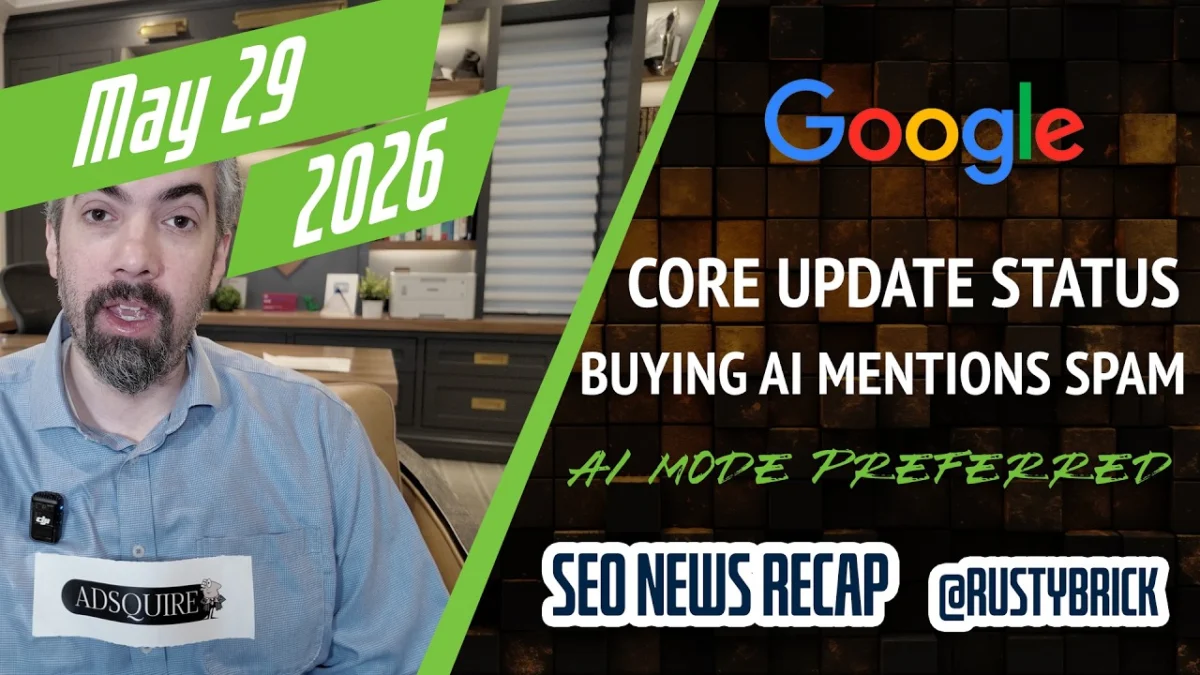
The digital marketing and search engine optimization landscape witnessed a whirlwind of significant developments this past week, touching upon core algorithm updates, unprecedented warnings regarding artificial intelligence (AI) manipulation, a suite of new advertising features, and persistent legal challenges for tech giant Google. From the ongoing rollout of the Google May 2026 core update to critical policy shifts concerning AI-generated content and the advertising ecosystem, stakeholders across industries are grappling with an evolving digital frontier. These changes underscore Google’s relentless pursuit of search relevance and user experience, while also navigating complex regulatory environments and an increasingly AI-driven competitive arena.
Google’s Core Algorithm Updates and AI Policy Shifts
The May 2026 Core Update: Status and Implications for the Digital Ecosystem
Google’s May 2026 core update continues its gradual rollout, leaving many website administrators and SEO professionals closely monitoring their analytics for shifts in rankings and traffic. Core updates are broad changes to Google’s search algorithm and systems designed to improve the overall quality and relevance of search results. Unlike specific bug fixes or minor tweaks, core updates can lead to noticeable fluctuations in search rankings, impacting various websites across different niches. Google typically provides advanced notice for these updates, but the specific mechanics and detailed impacts are rarely disclosed, fostering a period of analysis and adaptation for the SEO community.
Historically, core updates have emphasized content quality, user experience, and E-E-A-T (Experience, Expertise, Authoritativeness, Trustworthiness) principles. Websites that demonstrate strong adherence to these foundational elements tend to fare better, while those with thin, low-quality, or spammy content often see declines. The ongoing nature of the May 2026 update means that its full impact is still unfolding, prompting webmasters to review their content strategies, technical SEO, and backlink profiles to align with Google’s evolving quality standards. The digital marketing community anticipates further guidance from Google or industry analysis as the update concludes, offering clearer insights into its specific targets and lasting effects.
Google’s Stern Warning Against AI Brand Mention Manipulation
In a significant policy statement, Google issued a strong warning against the practice of buying or manipulating brand mentions specifically for AI responses. This directive signals Google’s proactive approach to maintaining the integrity of its AI-powered search features, such as those integrated into Search Generative Experience (SGE) or other AI answer functionalities. The concern is that artificial inflation of brand mentions could distort the perception of a brand’s authority, popularity, or trustworthiness when AI systems are tasked with synthesizing information and generating responses.
This warning is rooted in Google’s long-standing fight against artificial link building and manipulative SEO tactics. As AI becomes more integral to information retrieval, the methods used to influence search results are also evolving. Google aims to prevent a new wave of “AI spam” where entities attempt to game the system by creating an artificial footprint of mentions to appear more prominent or credible to AI models. The implication for marketers is clear: focus on genuine brand building, organic engagement, and valuable content that earns natural mentions, rather than attempting to engineer them through paid or manipulative schemes. Google’s stance reinforces the need for authentic digital presence, warning that violations could lead to penalties, similar to how it handles link scheme infractions.
Real-time AI Responses: The End of Indexing Lag
A crucial technical advancement announced this week is Google’s removal of the indexing lag between traditional search results and AI responses. Previously, there might have been a delay between when new content was indexed and made available in standard search results versus its inclusion in AI-generated summaries or answers. This lag could hinder the freshness and immediacy of AI responses, particularly for breaking news or rapidly evolving topics.
The elimination of this lag signifies Google’s commitment to making its AI features as current and dynamic as its traditional search index. For publishers and content creators, this means their newly published, high-quality content can be immediately considered by AI systems when formulating responses, enhancing the relevance and timeliness of information delivered to users. This development is particularly vital in a world where real-time information is paramount, and AI’s utility is directly tied to its access to the most up-to-date data. It also emphasizes the ongoing convergence of traditional search and AI-driven information retrieval, positioning AI as an even more integral component of the search experience.
The Role of Search Quality Raters Guidelines Clarified by John Mueller
John Mueller, a prominent figure in Google’s Search Relations team, reiterated a crucial distinction for the SEO community: Google’s Search Quality Raters Guidelines (SQRG) are not a direct guide for search rankings. Instead, these comprehensive documents serve as training materials for human quality raters, who evaluate the quality of Google’s search results based on a set of objective criteria. Their feedback helps Google engineers refine the algorithms, but the guidelines themselves do not dictate how websites are ranked.
This clarification is important because many SEO professionals meticulously study the SQRG to understand Google’s conceptualization of “quality” and “relevance,” often inferring potential ranking factors. While the guidelines provide invaluable insights into what Google values in a website (such as E-E-A-T, user intent satisfaction, and content quality), they are not a prescriptive checklist for achieving higher rankings. Mueller’s statement reminds the industry that while aligning with the spirit of the guidelines is beneficial for creating user-centric content, direct manipulation based on these guidelines will not necessarily lead to improved rankings, as the algorithms operate on a far more complex set of signals. The ultimate goal remains creating genuinely valuable and helpful content for users.
Enhancements and Challenges in Google’s User Experience
Google Discover Bug and Its Impact on Publishers
On May 21st, a reported bug in Google Discover caused a noticeable drop in clicks and impressions for numerous publishers. Google Discover is a personalized content feed that appears on Android devices and within the Google app, delivering articles, videos, and other content based on a user’s interests and browsing history. It represents a significant source of traffic for many news outlets and content creators, particularly for mobile users.
A bug leading to decreased visibility in Discover can have immediate and substantial financial implications for publishers, affecting ad revenue and overall audience engagement. While the specifics of the bug were not detailed, such incidents underscore the intricate dependencies publishers have on Google’s various platforms for traffic distribution. Google typically acknowledges and works to resolve such issues swiftly, often with a period of recovery as the bug is patched and indexing/distribution returns to normal. However, these events highlight the fragility of relying on a single platform for audience reach and emphasize the importance of diversified traffic acquisition strategies for content creators.
UI/UX Refinements: Favicons and Sitename Layouts
Google is reportedly testing new visual layouts in search results, specifically concerning favicons and sitename displays. Favicons are the small icons associated with a website, often displayed next to the URL in browser tabs or search results. Sitename refers to the official name of the website. These seemingly minor UI/UX changes can have a significant impact on how users perceive and interact with search results.
The consistent display of a site’s favicon and clear sitename helps users quickly identify the source of information, improving trust and navigability. Google periodically experiments with these visual elements to optimize the search interface for readability, brand recognition, and overall user experience. For website owners, having a distinct and well-designed favicon becomes even more important as it serves as a visual identifier in a crowded search landscape. These tests are part of Google’s ongoing effort to refine its visual presentation, ensuring clarity and utility for billions of daily searches.
Transforming the Advertising Landscape with Google Ads and Merchant Center
Streamlining Ad Creation: Real-time Policy Reviews
Google Ads is introducing a significant enhancement for advertisers: real-time policy reviews during the ad creation process. This feature aims to provide immediate feedback to advertisers on whether their ad copy, keywords, and landing pages comply with Google’s advertising policies. Historically, policy reviews could take some time, leading to delays in ad campaign launches if violations were detected post-submission.
The implementation of real-time reviews represents a major step towards improving efficiency and compliance for advertisers. It allows for instant corrections, reducing the frustration of delayed approvals and helping campaigns go live faster. This proactive approach will likely lead to fewer rejected ads, a smoother advertising workflow, and a better overall experience for businesses leveraging Google Ads. It underscores Google’s commitment to maintaining a high-quality advertising ecosystem while empowering advertisers with the tools to meet policy requirements from the outset.
Data Retention Changes and Advertiser Adjustments
Starting June 1st, Google Ads will begin deleting shorter-term data. While the exact scope of “shorter-term data” was not fully specified, this change likely pertains to granular user-level data or specific metrics with limited historical utility, rather than aggregated campaign performance data. This move could be influenced by evolving privacy regulations (like GDPR and CCPA) and a broader industry shift towards more data-minimal approaches.
For advertisers, this change necessitates a review of their data retention and analysis strategies. Businesses that rely on very granular, short-term historical data for specific optimizations or custom reporting may need to adjust their data warehousing practices or export relevant information before the deletion date. It also highlights Google’s ongoing balancing act between providing robust advertising tools and upholding user privacy expectations, prompting advertisers to focus on real-time insights and more strategic, aggregated data analysis for long-term campaign success.
Innovations in Lead Generation: Prospect Mode
Google Ads is rolling out a new “prospect mode” specifically designed for targeting cold leads. This feature likely leverages Google’s vast data and AI capabilities to identify potential customers who have shown interest in products or services similar to an advertiser’s offering but have not yet directly engaged with the brand. This mode could utilize lookalike audiences, intent signals, and broader behavioral patterns to reach new, high-potential customer segments.
Prospect mode offers a valuable tool for businesses looking to expand their customer base beyond existing remarketing lists or warm leads. By focusing on cold leads, advertisers can tap into previously unreached markets, driving brand awareness and initiating new customer journeys. This innovation reflects the growing sophistication of Google Ads in audience targeting, moving beyond basic demographics to more predictive and intent-driven approaches, which is crucial for scalable growth in competitive markets.
AI-Driven Evolution of Shopping Ads
The realm of e-commerce advertising is also seeing significant AI integration. Google is testing “growing shopping ads” and has introduced “AI Mode tests new styles for shopping ads.” “Growing shopping ads” could refer to dynamic ad formats that expand or adapt based on user interaction, product availability, or other real-time signals, aiming to capture more attention and drive conversions. The “AI Mode tests new styles” suggests that artificial intelligence is being used to automatically generate or optimize visual layouts, copy, and overall presentation for shopping ads, tailoring them to individual user preferences or performance metrics.
These developments highlight the increasing role of AI in personalizing and optimizing the shopping experience. For retailers, this means more efficient ad creation, potentially higher conversion rates, and the ability to present products in the most appealing way to diverse audiences without extensive manual effort. AI’s ability to analyze vast amounts of data and adapt ad creatives in real-time is poised to revolutionize how products are marketed and sold online, making advertising more dynamic, relevant, and ultimately, more effective.
Merchant Center’s AI Performance Insights and Conversational Attributes
Further enhancing its e-commerce offerings, Google Merchant Center has introduced a new AI performance insights report and conversational attributes for AI responses. The AI performance insights report provides retailers with data-driven recommendations and analytics powered by AI, helping them understand how their product listings are performing and identify areas for optimization. This could include insights into pricing, product descriptions, image quality, and more.
Conversational attributes for AI responses signify a move towards making product information more accessible and interactive through AI. This means that AI systems, when asked about a product, can draw upon rich, structured data provided through Merchant Center to give detailed and relevant answers. For instance, a user might ask an AI, “Does this specific shirt come in green?” and the AI could directly access the product attributes to provide an accurate, immediate response. These features empower retailers with better data for decision-making and enhance the consumer experience by providing more dynamic and comprehensive product information, bridging the gap between product catalogs and natural language queries.
Local Search and Business Profile Innovations
Real-time Stock Availability for Local Businesses
In a significant update for local businesses and consumers, Google Local is testing real-time stock buttons. This feature would allow users searching for products locally to see whether a particular item is currently in stock at nearby stores directly from their Google search results or Google Maps. This functionality addresses a long-standing pain point for shoppers who often call stores or make unnecessary trips only to find an item is out of stock.
For local businesses, real-time stock information can be a powerful driver of foot traffic and sales. By providing immediate answers, businesses can attract ready-to-buy customers, reduce customer frustration, and improve the overall shopping experience. This feature leverages inventory data from businesses, likely integrating with their point-of-sale or inventory management systems, and further blurs the lines between online search and offline commerce, making local shopping more efficient and convenient.
Empowering Businesses with Image and Video Analytics
Google Business Profiles has added view counts to images and videos uploaded by businesses. This new analytic tool provides valuable insights to business owners, allowing them to see how often their visual content is being viewed by potential customers. Images and videos are critical components of a compelling Google Business Profile, influencing customer decisions and engagement.
By offering view counts, Google empowers businesses to understand which visual assets resonate most with their audience. This data can inform future content strategies, helping businesses optimize their profiles with high-performing visuals that attract more attention and drive engagement. It underscores the importance of visual marketing in local search and provides a tangible metric for measuring the effectiveness of visual content within Google’s ecosystem.
The Broader AI Ecosystem and Competitive Landscape
Bing’s Entry into AI-Curated Image Interface
Microsoft’s Bing has officially released its AI-curated image interface, marking another significant move in the ongoing AI arms race between tech giants. This interface likely leverages advanced AI models to not only search for images but also to curate, categorize, and potentially even generate or enhance them based on user queries. This innovation positions Bing as a strong contender in the visual search and creative AI space.
Bing’s investment in AI-driven image capabilities is part of Microsoft’s broader strategy to integrate AI across its product suite, including its Copilot assistant and Bing Chat. This move intensifies the competition with Google, which also heavily invests in AI for image recognition, generation, and search. For users, it promises more intuitive and powerful ways to discover and interact with visual content, while for developers and content creators, it opens new avenues for creating and distributing image-based information.
ChatGPT’s Growing Influence on Web Referrals: A Similarweb Report
A report from Similarweb, a leading digital intelligence company, revealed that ChatGPT is showing more links in its responses, leading to a substantial 150% increase in referrals to external websites. This finding is highly significant for the future of web traffic and content monetization. Early iterations of large language models like ChatGPT often provided summarized answers without explicit links to source material, raising concerns about traffic diversion from publishers.
The increase in referrals suggests a shift towards integrating more source attribution and external linking within AI-generated responses. For publishers and website owners, this represents a new and potentially lucrative source of traffic. As AI models become more sophisticated and widely adopted, being cited and linked within their responses could become a critical SEO objective. This trend indicates that AI, rather than solely cannibalizing organic search traffic, could also act as a powerful new discovery channel, prompting content creators to optimize for AI visibility and direct linking opportunities.
Mounting Legal and Regulatory Pressures on Google
Appealing the Monopoly Ruling: A High-Stakes Legal Battle
Google has officially appealed the monopoly ruling against it, signaling its intent to vigorously contest the landmark antitrust judgment. The initial ruling, often stemming from cases brought by the U.S. Department of Justice and various state attorneys general, alleged that Google engaged in anti-competitive practices to maintain its dominance in search and search advertising markets. These allegations often centered on exclusive agreements with device manufacturers, pre-installation practices, and the use of its market power to stifle competition.
The appeal process is expected to be lengthy and complex, with profound implications for Google’s business model and the broader tech industry. A final decision could reshape how Google operates its search engine and advertising platforms, potentially leading to divestitures or mandated changes in its commercial practices. The outcome of this high-stakes legal battle will not only affect Google but also set precedents for how governments regulate dominant technology companies in an era of increasing digital scrutiny.
The European Union’s Continued Scrutiny: Potential Multi-Million Euro Fines
Compounding its legal challenges, Google faces potential fines from the European Union, possibly in the triple-digit millions of euros, over allegations of favoring its own services in its search results. This is not a new battleground for Google in Europe, which has a history of imposing substantial fines on the company for similar anti-competitive behaviors, notably in cases related to Google Shopping and Android. The EU’s competition commission has consistently taken a tough stance on tech giants, aiming to ensure a level playing field for smaller competitors.
The current investigation likely revolves around how Google displays its own products and services (such as Google Flights, Google Maps, or specialized search features) more prominently or favorably than those of third-party competitors within its general search results. Such practices are seen as an abuse of Google’s dominant market position. A fine in the triple-digit millions would be a significant financial blow and a strong signal from EU regulators that they will continue to enforce competition laws rigorously, potentially forcing Google to alter its search display algorithms and business practices in the European market. These ongoing legal pressures underscore a global trend of increased regulatory oversight on powerful technology companies.
The past week has highlighted a dynamic and challenging environment for Google and the digital ecosystem it underpins. From continuous algorithm refinements and proactive AI policy enforcement to transformative advertising innovations and relentless legal scrutiny, the landscape is in constant flux. Businesses and digital professionals must remain agile, adapting their strategies to Google’s evolving technical capabilities, policy mandates, and the broader competitive and regulatory forces shaping the internet.
This episode is sponsored by ADSQUIRE, known recently for being the first ad agency to get a lawyer advertisement to show on ChatGPT.