rifanmuazin
The digital landscape is undergoing a profound transformation as artificial intelligence increasingly reshapes search engine optimization, demanding new strategies from webmasters and content creators. This pivotal shift was the central theme of the April 2026 SEO Update by Yoast, where SEO experts Carolyn Shelby and Alex Moss dissected the latest advancements from Agentic AI to Google’s rigorous spam and core updates. Their analysis underscored a critical paradigm shift: merely publishing more content is no longer a viable strategy and can, in many instances, actively detract from a site’s performance. The session, accessible via a detailed recap or the full video on YouTube, highlighted that the future of search visibility hinges on adaptability, quality, and a deep understanding of evolving AI-driven interactions.
Google’s Unwavering Stance: Core Updates and Enhanced Spam Policy Enforcement
April 2026 marked a period of heightened enforcement from Google, reinforcing its commitment to a high-quality search experience. The month saw the completion of both the March 2026 spam update and the March 2026 core update. These updates were not isolated events but rather continuations of Google’s long-standing effort to refine its ranking algorithms and combat manipulative practices. The spam update, in particular, introduced updated policies explicitly targeting tactics like “back button hijacking,” a deceptive practice designed to trap users on a site. Concurrently, Google improved its spam reporting tools, empowering users and webmasters to flag problematic content more effectively.
This tightening of enforcement signals a granular approach to content quality. Historically, Google has iteratively refined its guidelines, moving from broad directives to highly specific policy updates. The current wave of updates emphasizes that Google’s algorithms are becoming increasingly sophisticated at identifying both technical manipulations and the proliferation of low-value, unoriginal content. For website owners, the implication is clear: a renewed focus on genuine value, user experience, and ethical SEO practices is paramount. Content farms, automated spam, and attempts to game the system through superficial means are facing stricter penalties, making authentic authority and relevance the only sustainable path to visibility. The trend indicates that future updates will likely continue this trajectory, pushing webmasters towards practices that prioritize the end-user’s informational needs above all else.
The Emergence of Agentic AI: Restructuring the Web for Machine Interaction
Perhaps the most significant development discussed in the Yoast update was the rapid evolution of Agentic AI and Google’s proactive steps to integrate it into its search infrastructure. Google introduced a new “Google-agent user agent,” a clear signal of explicit support for AI-driven crawling and interaction. This is not merely an incremental change; it represents a fundamental restructuring of how the web is accessed and interpreted. Instead of solely catering to human browsing patterns, websites must now increasingly consider interaction with intelligent, autonomous AI agents.
The concept of Agentic AI posits that AI systems will not just retrieve information but will actively perform tasks, make decisions, and interact with web content in complex ways. This vision aligns with proposals like WebMCP (Web Machine Comprehension Protocol), which aims to standardize how these AI agents interact with websites, ensuring a predictable and manageable environment. Google leadership has openly articulated that search is evolving into an “AI agent manager,” implying that future search results may not just be lists of links but curated interactions facilitated by AI agents. This paradigm shift means that visibility will increasingly depend on how well a website’s content and structure can be interpreted and utilized by AI agents, moving beyond traditional keyword matching to semantic understanding and task fulfillment. Websites must prepare for a future where their primary audience includes not just human users but also sophisticated AI systems designed to extract, synthesize, and act upon information.
Google’s Relentless Pursuit of AI Efficiency and User-Centric Features
Google’s commitment to AI extends beyond agent interaction to enhancing the efficiency and user experience of its AI models. A notable innovation is “TurboQuant,” a novel approach to AI model compression designed to significantly improve efficiency without compromising performance. This technological leap enables Google to deploy more powerful AI capabilities across its vast infrastructure, making AI processing faster and more scalable.
Simultaneously, Google is expanding “task-based features in AI Mode” and refining user interactions with AI-driven search experiences. This means that users are increasingly presented with direct answers, summarized information, or even actionable steps within the search interface, rather than just a list of links. For instance, a user searching for “how to bake a cake” might receive an AI-generated recipe with interactive steps directly in the search results, alongside options to order ingredients or schedule a delivery. This shift indicates a move towards anticipatory and assistive search, where AI proactively helps users complete tasks. The implication for SEO is profound: as AI becomes faster and more integrated, user expectations will continue to shift from finding information to accomplishing tasks. Websites that offer clear, structured, and actionable content will be better positioned for inclusion in these AI-driven experiences.
Structured Data and Documentation: Adapting for an AI-First Web
In anticipation of an AI-first web, Google is also evolving its structured data and documentation practices. A key development is the addition of “AI bot labels to forum and Q&A structured data.” This initiative aims to help search engines distinguish between human-generated and AI-generated contributions in public forums and Q&A sections. The rationale behind this move is to maintain the integrity and trustworthiness of information presented in search results, especially as AI-generated content becomes more prevalent and sophisticated. Users and AI agents alike need to know the provenance of information.

Furthermore, Google updated its documentation with “read more” deep link best practices. This guidance helps webmasters properly implement links that allow search engines and AI agents to understand the context and hierarchy of content, facilitating deeper engagement and extraction of specific information. These updates underscore Google’s ongoing effort to adapt its systems to better interpret, label, and present AI-generated content. For webmasters, this translates into an increased imperative to utilize structured data meticulously, ensuring that their content is not only crawlable and indexable but also semantically rich and clearly identifiable in terms of its origin and purpose. Accurate labeling and structured data become crucial signals for AI systems evaluating content quality and relevance.
The AI-Powered Toolkit: Platforms and Tools Expand Workflows
The integration of AI is not limited to Google’s search algorithms; it is rapidly permeating content creation and workflow platforms. The April 2026 update highlighted several such advancements. Elementor, a popular WordPress page builder, launched “Angie,” an agentic AI designed for WordPress, empowering users with AI-driven content generation and design capabilities directly within their website building environment. Similarly, Cloudflare introduced “EmDash” as a WordPress alternative, continuing its work on agent readiness standards, indicating a broader industry push towards AI-enabled web infrastructure.
Beyond content management systems, leading AI research companies are also releasing more advanced tools. Anthropic released “Claude Design” and previewed “Mythos,” signaling continued innovation in large language models and their application in creative and complex tasks. OpenAI, a frontrunner in generative AI, tested an “AdsBot” and introduced a ChatGPT ad manager interface, illustrating the embedding of AI into monetization and advertising systems. These developments collectively indicate that AI is increasingly becoming an integral part of content creation, workflow optimization, and digital monetization. Businesses and content creators must embrace these tools not just as optional enhancements but as essential components for maintaining efficiency, competitiveness, and relevance in a rapidly evolving digital landscape. The pressure is mounting for organizations to integrate AI into their operational fabric to stay abreast of industry trends and consumer expectations.
Authority, Trust, and Content Quality: The Enduring Pillars of Visibility
Amidst the surge of AI, Google consistently reinforced a fundamental truth: authority, trust, and content quality remain paramount. The Yoast update highlighted Google’s explicit stance that “commodity content does not perform well.” This refers to content that is generic, unoriginal, or easily replicable, often mass-produced without genuine insight or expertise. Such content, regardless of its volume, struggles to gain traction in search results.
Broader analysis continues to underscore the critical importance of E-E-A-T (Experience, Expertise, Authoritativeness, Trustworthiness), freshness, and first-party signals. As AI systems become more adept at synthesizing answers and generating content, their reliance on trusted, differentiated sources intensifies. Google’s algorithms are designed to prioritize content from entities that demonstrate genuine expertise and have a proven track record of providing accurate, reliable information. First-party signals, such as direct engagement with a brand’s website or unique data generated by the business, are becoming increasingly valuable. This emphasis means that original research, unique perspectives, and demonstrable expertise will be more crucial than ever for standing out. Websites that invest in building genuine authority and producing truly valuable, human-centric content will be the ones that thrive, serving as trusted sources for both human users and sophisticated AI agents.
Shifting Metrics: Measurement and Reporting for AI Visibility
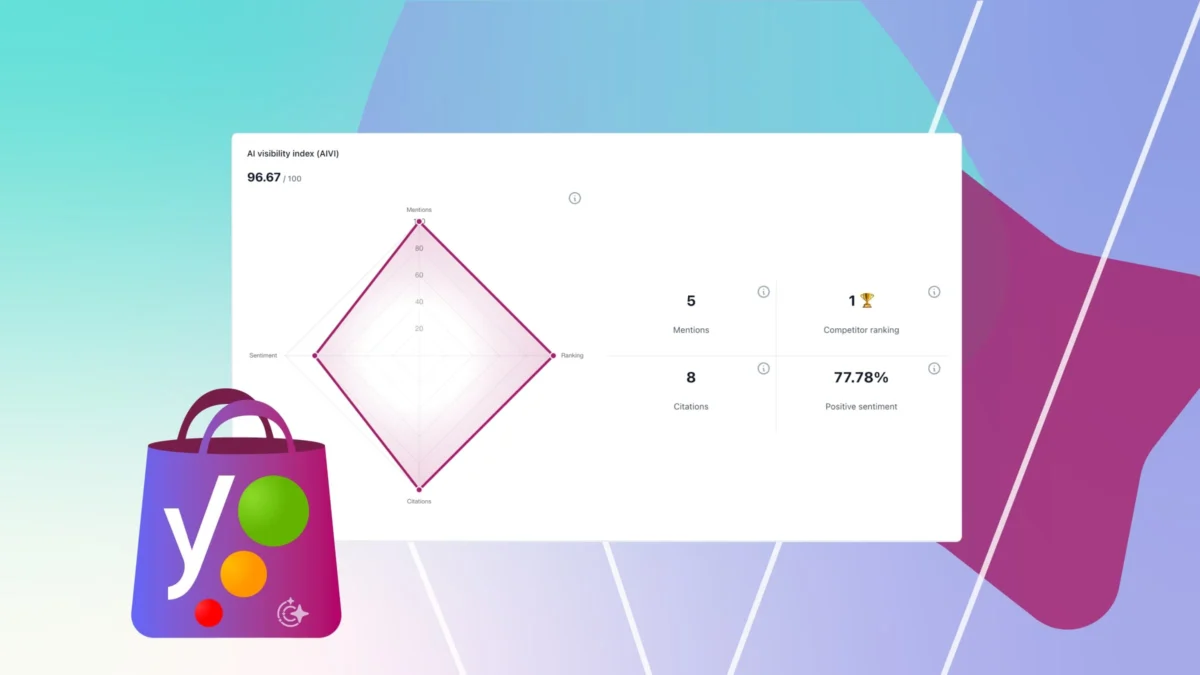
The evolving search landscape also necessitates a re-evaluation of how online performance is measured. The traditional focus on keyword rankings, while still relevant, is beginning to broaden. The Yoast update suggested that “visibility is moving beyond rankings into citation, inclusion, and influence within AI-generated responses.” This implies that success metrics will need to incorporate how often a website’s content is cited by AI, included in AI-generated summaries, or influences the output of AI agents.
For instance, appearing as a direct answer in an AI-powered search feature, even without a click-through to the website, represents a significant form of visibility and influence. Businesses will need to adapt their analytics to track these new forms of AI engagement, potentially using tools that monitor AI citations, semantic mentions, and the impact of their content on AI-driven task completion. This shift challenges marketers and SEO professionals to think beyond traditional traffic and conversion metrics, embracing a more holistic view of digital influence in an AI-centric world. The future of measurement will involve understanding how well content contributes to the knowledge base of AI, thereby shaping information dissemination at a foundational level.
Conclusion: Navigating the AI Frontier in Search
The April 2026 SEO Update by Yoast paints a clear picture of a search ecosystem rapidly evolving under the influence of artificial intelligence. From Google’s sophisticated core and spam updates demanding higher quality, to the emergence of Agentic AI restructuring web interaction, and the proliferation of AI-driven tools, the industry is in a state of dynamic flux. The overarching message is one of adaptability and an unwavering commitment to quality. As Carolyn Shelby and Alex Moss articulated, simply publishing more content is no longer a winning strategy; instead, focusing on authority, trustworthiness, and optimizing for both human and AI agent consumption will define success.
The ongoing developments underscore that SEO is no longer a static discipline but a continuous journey of understanding and adapting to technological advancements. Staying informed about these changes is crucial for anyone operating in the digital sphere. Professionals are encouraged to sign up for the next SEO Update by Yoast on May 21, 2026, at 4:00 PM CET (10:00 AM EST), to continue delving into these critical industry shifts and glean actionable insights for navigating the increasingly complex, AI-driven world of search.