
 rifanmuazin
The digital marketing landscape has reached a critical inflection point where the demand for hyper-personalized consumer experiences has outpaced the manual capabilities of even the most robust creative teams. Instapage, a leading provider of landing page optimization solutions, has officially addressed this operational bottleneck with the release of AI Collections, a sophisticated automation suite designed to streamline the creation and management of personalized web pages at scale. While the marketing industry has long acknowledged that personalization is a primary driver of conversion and return on ad spend (ROAS), the logistical complexity of executing individual pages for diverse audience segments has historically served as a deterrent. AI Collections seeks to eliminate this "execution gap" by allowing teams to deploy personalized content up to three times faster than traditional manual workflows.
The Personalization Paradox in Modern Marketing
For over a decade, the core challenge in performance marketing has not been the conceptualization of personalized campaigns, but rather the labor-intensive nature of their implementation. In a standard high-performance campaign, a brand might target dozens of different keywords, geographic locations, and buyer personas. To maintain a high Quality Score on platforms like Google Ads and provide a seamless user journey, each of these segments requires a dedicated landing page that mirrors the specific messaging of the advertisement.
Prior to the advent of AI-driven automation, creating these pages necessitated a repetitive cycle of duplicating existing templates, manually editing copy, swapping images, and managing a chaotic array of individual URLs. This process often led to "campaign fatigue," where marketing teams, overwhelmed by the administrative burden, would revert to using generic landing pages. Industry data suggests that generic pages can lead to significantly lower conversion rates, as they fail to meet the specific intent of the user. According to recent market research, companies that excel at personalization generate 40% more revenue from those activities than average players. By automating the mechanical aspects of page creation, AI Collections enables marketers to reclaim the "lost" revenue inherent in generic campaigns.
Technical Architecture of AI Collections
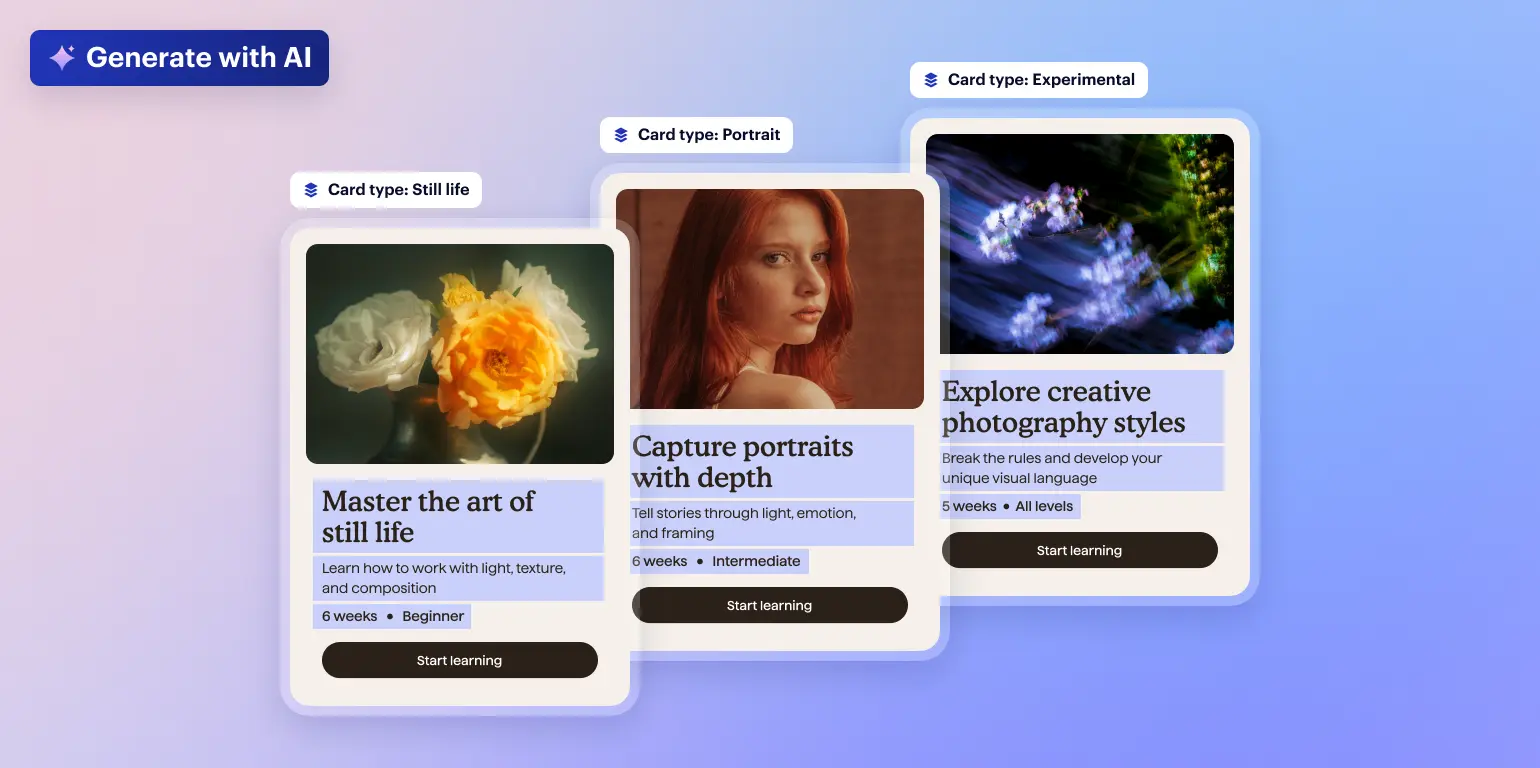
The functional core of AI Collections is a paradigm shift away from individual page management toward a centralized, database-driven approach. Rather than treating each landing page as a separate file, the system utilizes a "Collection" model where a single master template governs the layout, while a structured content table dictates the variations.
Each row within the AI Collections table represents a unique live page, while each column corresponds to a specific dynamic element—such as headlines, body copy, or calls to action (CTAs). This structural framework allows marketing managers to oversee hundreds of pages from a single dashboard, providing a bird’s-eye view of campaign consistency that was previously impossible. The integration of artificial intelligence into this workflow occurs at two primary stages: the identification of placeholders and the generation of content.
Automated Placeholder Identification and Layout Analysis
One of the most significant time-savers within the new suite is the AI-driven placeholder generator. In traditional dynamic text replacement (DTR) setups, developers or high-level marketers had to manually code or tag specific areas of a page to receive dynamic data. AI Collections automates this by analyzing the design of a page and identifying optimal locations for dynamic content based on visual hierarchy and user experience principles.
Once the AI analyzes the layout, it suggests text placeholders across the template. Marketers retain full editorial control, with the ability to review, modify, or remove these suggestions before finalizing the template. This automated mapping ensures that the transition from a static design to a dynamic collection is seamless, reducing the technical barrier to entry for non-technical marketing staff.
Generative Content Capabilities for Rapid Scaling
Beyond the structural mapping, the platform leverages generative AI to populate the content table itself. Once a template is established, users can input specific prompts or context—such as target audience demographics, unique selling propositions (USPs), or specific campaign goals—and the system will generate publish-ready copy for every page in the collection simultaneously.
This capability is further enhanced when used in conjunction with Instapage’s Fluid Grid blocks. Because generative AI can produce text of varying lengths, static layouts often break or require manual adjustment when content is swapped. The Fluid Grid technology allows the layout to automatically adjust its proportions to accommodate the AI-generated text, ensuring that the visual integrity of the page remains intact regardless of the volume of content. This synergy between generative copy and responsive design allows for the "instant" launch of high-volume campaigns.
Industry Data and the Economic Impact of Automation
The launch of AI Collections comes at a time when the cost per click (CPC) on major advertising platforms continues to rise. With rising acquisition costs, the efficiency of the landing page—the final destination of the paid click—becomes the most influential factor in campaign profitability.
A study by McKinsey & Company highlights that 71% of consumers expect companies to deliver personalized interactions, and 76% get frustrated when this doesn’t happen. Furthermore, operational data indicates that the manual creation of a single landing page variation can take anywhere from 30 minutes to two hours, depending on the complexity of the design and the approval process. For a campaign requiring 100 variations, this represents a minimum of 50 man-hours. AI Collections’ claim of a 3x speed increase suggests that this same workload could be reduced to under 17 hours, representing a massive reduction in overhead and a significantly faster time-to-market.
Chronology of Implementation: From Setup to Deployment
The workflow for deploying a campaign via AI Collections follows a logical progression designed for maximum efficiency:
- Template Selection: The user selects a high-performing base page to serve as the master template for the collection.
- AI Analysis: The AI engine scans the page to identify "dynamic zones" and inserts placeholders for headlines, subheadlines, and descriptions.
- Data Structuring: The system generates a content table where the user can define the parameters for each page variation (e.g., "Page A for New York," "Page B for Los Angeles").
- Content Generation: Using the built-in AI writer, the user generates tailored copy for each row in the table based on specific prompts.
- Review and Optimization: The marketer reviews the auto-populated table, making manual tweaks where necessary to ensure brand voice consistency.
- Global Deployment: With a single click, the entire collection is published, with each page existing at its own unique URL or as a dynamic parameter of a primary URL.
Market Implications and Competitive Landscape
The introduction of AI Collections places Instapage at the forefront of the "No-Code" and "AI-Ops" movement in digital marketing. Competitors in the space, such as Unbounce and Leadpages, have also begun integrating AI features, but the specific focus on "Collections"—treating page sets as manageable databases—targets the enterprise and agency sectors where scale is the primary challenge.
Industry analysts suggest that this move will likely force a shift in how digital agencies bill their clients. Historically, agencies charged "per page" or based on the hours required for manual localization. As automation tools like AI Collections become standard, the value proposition will shift from "execution" to "strategy and prompt engineering." Agencies that adopt these tools early will be able to offer their clients higher volumes of personalized content at lower costs, potentially disrupting traditional pricing models in the performance marketing sector.
Expert Analysis: The Future of the "1:1" Web
The long-term implication of tools like AI Collections is the realization of the "1:1 web," where no two users see the same version of a website. By lowering the cost and effort of personalization, Instapage is enabling a future where landing pages are as dynamic as social media feeds.
"The problem has never been a lack of desire for personalization; it has been a lack of bandwidth," says one industry consultant familiar with the platform’s rollout. "By treating content as data that can be manipulated through AI, we are moving away from the ‘web page’ as a static document and toward the ‘web experience’ as a fluid, real-time response to user data."
Conclusion and Availability
As organizations continue to navigate a data-driven economy, the ability to act on consumer insights with speed and precision will define the winners of the next decade. Instapage’s AI Collections represents a significant technological leap in solving the scalability issues that have plagued the industry for years. By combining template-based management, AI-driven layout analysis, and generative content, the platform provides a comprehensive solution for modern marketers who require high-relevance pages without the associated maintenance headaches.
AI Collections is currently being rolled out to Instapage users, with the company offering a 14-day free trial to allow marketing teams to benchmark the speed and efficiency gains against their current manual processes. As the era of manual page duplication draws to a close, the focus for marketers will now turn toward crafting the high-level strategies and data inputs that feed these powerful automation engines.








