

The landscape of digital marketing and product development has undergone a fundamental transformation over the last twenty-four months, driven primarily by the democratization of generative artificial intelligence. For marketing and experimentation teams, AI is no longer a futuristic concept but a daily utility used to draft copy, synthesize research, and automate repetitive manual tasks. However, as the novelty of general-purpose AI tools begins to wane, a significant structural flaw has emerged in how these tools are applied to professional experimentation: the "context gap." While tools like ChatGPT and Claude are proficient at processing text, they lack the deep, integrated visibility required to manage the complexities of a professional A/B testing program. This realization has led to a major shift in the industry, culminating in the integration of specialized AI layers directly into testing platforms, a move recently punctuated by the merger of industry leaders AB Tasty and VWO under the new banner of Wingify.
The Evolution of the Experimentation Workflow
Historically, experimentation teams—comprising data scientists, growth hackers, and UX designers—have relied on a fragmented workflow. After a test concluded, the standard operating procedure involved exporting raw data into spreadsheets, capturing screenshots of various UI treatments, and manually compiling performance notes. With the rise of Large Language Models (LLMs), teams began dropping this data into general-purpose AI interfaces to ask questions such as "Which variation performed best for mobile users?" or "Based on these results, what should we test next?"
While this "copy-paste" workflow offered a temporary boost in speed, it introduced significant risks and inefficiencies. General-purpose AI tools operate in a vacuum. They have no inherent knowledge of a company’s specific traffic allocation, the nuances of its success metrics, or the historical relationship between the current campaign and previous iterations. Without direct access to the testing environment, these tools cannot verify the statistical significance of the data they are analyzing, nor can they transition an insight into an actionable experiment without human intervention. This fragmentation has created a ceiling for teams attempting to scale their experimentation practices.
The Strategic Merger: AB Tasty, VWO, and the Birth of Wingify
In a move to address these systemic inefficiencies, AB Tasty and VWO recently announced their union to become Wingify. This merger represents a consolidation of two of the most influential players in the Experience Optimization (EXO) market. Prior to this merger, both companies had developed their own proprietary AI assistants: AB Tasty’s "Evi" and VWO’s "Copilot."
The integration of these technologies has resulted in the creation of Wandz, Wingify’s unified AI layer. Unlike standalone AI tools, Wandz is designed to be an omnipresent intelligence woven throughout the entire experimentation lifecycle. By embedding AI directly into the platform where the data lives, Wingify aims to eliminate the friction between data analysis and campaign execution. This move reflects a broader industry trend where SaaS providers are moving away from "AI as a feature" toward "AI as a foundation."
The Technical Limitations of General-Purpose AI in Testing
The primary downfall of using external AI for experimentation lies in the lack of environmental awareness. A professional A/B test involves dozens of variables that are not always captured in a simple CSV export. These include:
- Traffic Dynamics: General AI does not understand real-time traffic fluctuations or the specific segmentation rules applied to a campaign.
- Metric Hierarchies: Most experiments have primary, secondary, and guardrail metrics. An external AI might mistake a secondary lift for a primary success if not explicitly told otherwise.
- Historical Context: Experimentation is iterative. A "losing" test often provides the necessary data for a future "winner." Generic tools treat every prompt as an isolated event, losing the cumulative knowledge of the brand’s testing history.
- Actionability: An external AI can suggest a new headline, but it cannot log into the CMS, adjust the CSS, or set the traffic split to 50/50.
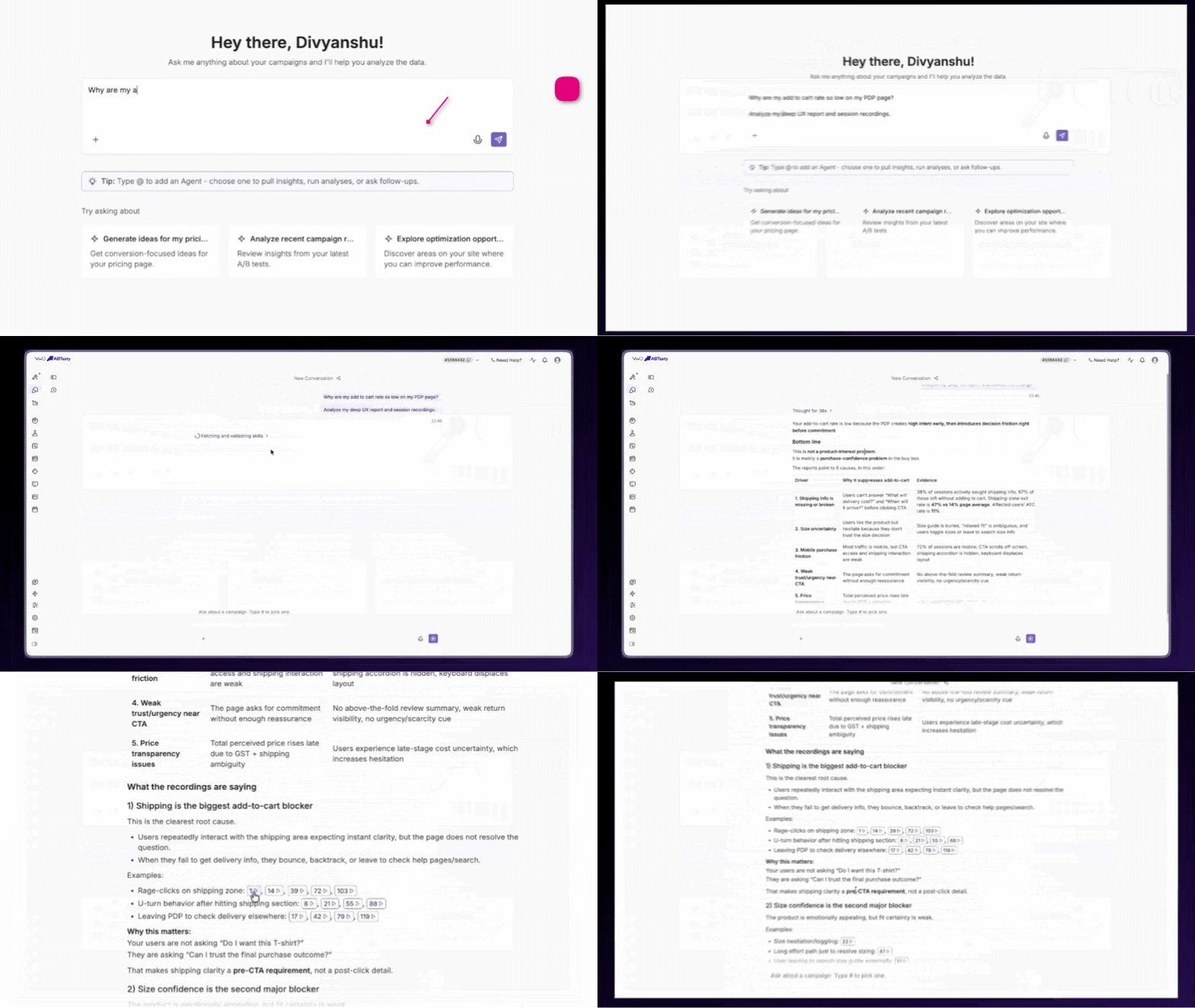
By contrast, an integrated AI layer like Wandz has access to the full "state" of the experimentation platform. It understands the variation descriptions, the hypotheses being tested, and the specific audience segments involved. This allows users to engage with their data through natural language queries without leaving their dashboard, ensuring that every insight is grounded in the actual technical configuration of the test.
Wandz: Bridging the Gap Between Insight and Execution
The functionality of Wingify’s Wandz layer extends beyond simple data recitation. It is designed to act as a smart interface that facilitates a more sophisticated level of inquiry. For example, instead of manually filtering reports, a user can ask Wandz, "Compare the conversion rate of Variation A and B specifically for returning users on Chrome," or "Which segments showed the highest friction during the checkout process in the last three tests?"
Because the AI is connected to the environment, it can surface details that are often lost in translation when using external tools, such as specific report links, traffic splits, and the current status of a decision-making process. This contextual awareness ensures that the AI’s responses are not just fast, but accurate and relevant to the business objective.
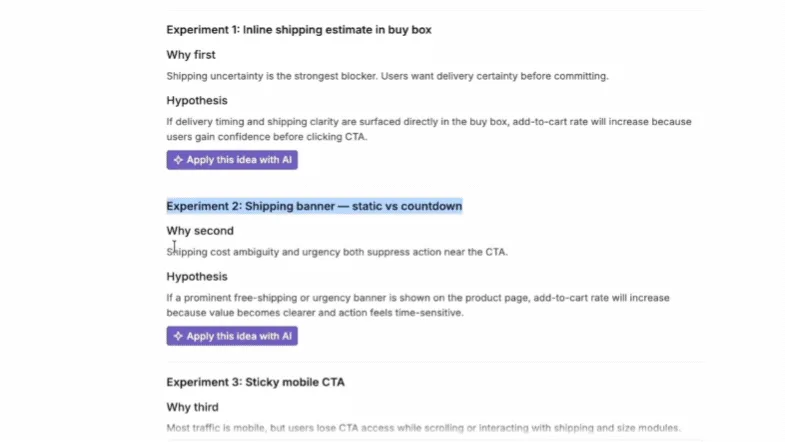
Furthermore, the most critical value of AI in this space is its ability to predict and suggest "what comes next." Wandz can generate new experiment ideas by analyzing a combination of actual campaign performance, user behavior patterns, and broader business goals. It also allows teams to upload external context—such as competitor screenshots, design mockups, and project briefs—to ensure that recommendations are shaped by both internal data and external market realities.
Enhancing Quality Assurance and Operational Speed
One of the most overlooked aspects of experimentation is Quality Assurance (QA). A misconfigured test—such as an incorrect traffic split or a broken tracking pixel—can result in weeks of wasted time and corrupted data. Integrated AI addresses this by acting as an automated reviewer.
Wandz includes capabilities to review campaigns before they go live, checking configurations against best practices and flagging potential issues in metrics or audience targeting. This serves as a critical safety net for high-velocity teams. Additionally, the platform’s AI Editor allows users to build or adjust campaigns using natural-language instructions. A marketer can instruct the tool to "Change the CTA button color to navy blue for all mobile visitors," and the AI handles the technical execution. Crucially, the "human-in-the-loop" model remains intact; teams can review and adjust every change, ensuring that AI accelerates the work without removing human judgment.
Industry Implications and the Future of Experience Optimization
The shift toward integrated experimentation AI has significant implications for the digital economy. According to recent industry reports, the global A/B testing software market is expected to grow at a CAGR of over 12% through 2030. As companies face increasing pressure to optimize every dollar of ad spend, the ability to run more tests with higher accuracy becomes a competitive necessity.
Market analysts suggest that the Wingify merger and the launch of Wandz signal the end of the "experimental" phase of AI in marketing. We are entering an era of "operational AI," where the value is measured not by the novelty of the output, but by the reduction in "time to insight." For data scientists, this means less time spent on data cleaning and more time on high-level strategy. For product managers, it means a faster transition from a hypothesis to a live user experience.
Conclusion: Data-Centric AI as the New Standard
The popularity of general-purpose AI tools has proven that there is a massive appetite for faster analysis and better idea generation within marketing teams. However, the unique demands of experimentation—where precision, context, and actionability are paramount—require a more specialized approach.
The mantra for the next generation of growth teams is clear: Stop sending your data to the AI; let the AI come to your data. By housing intelligence within the testing platform itself, organizations can eliminate the friction of the copy-paste workflow and ensure that their AI-driven insights are rooted in reality. As Wingify moves forward with Wandz, the industry will likely see a wave of similar integrations as platforms compete to provide the most seamless, context-aware experience for digital optimizers. The future of experimentation is not just about having more data; it is about having an intelligent system that understands the work as well as the people performing it.







