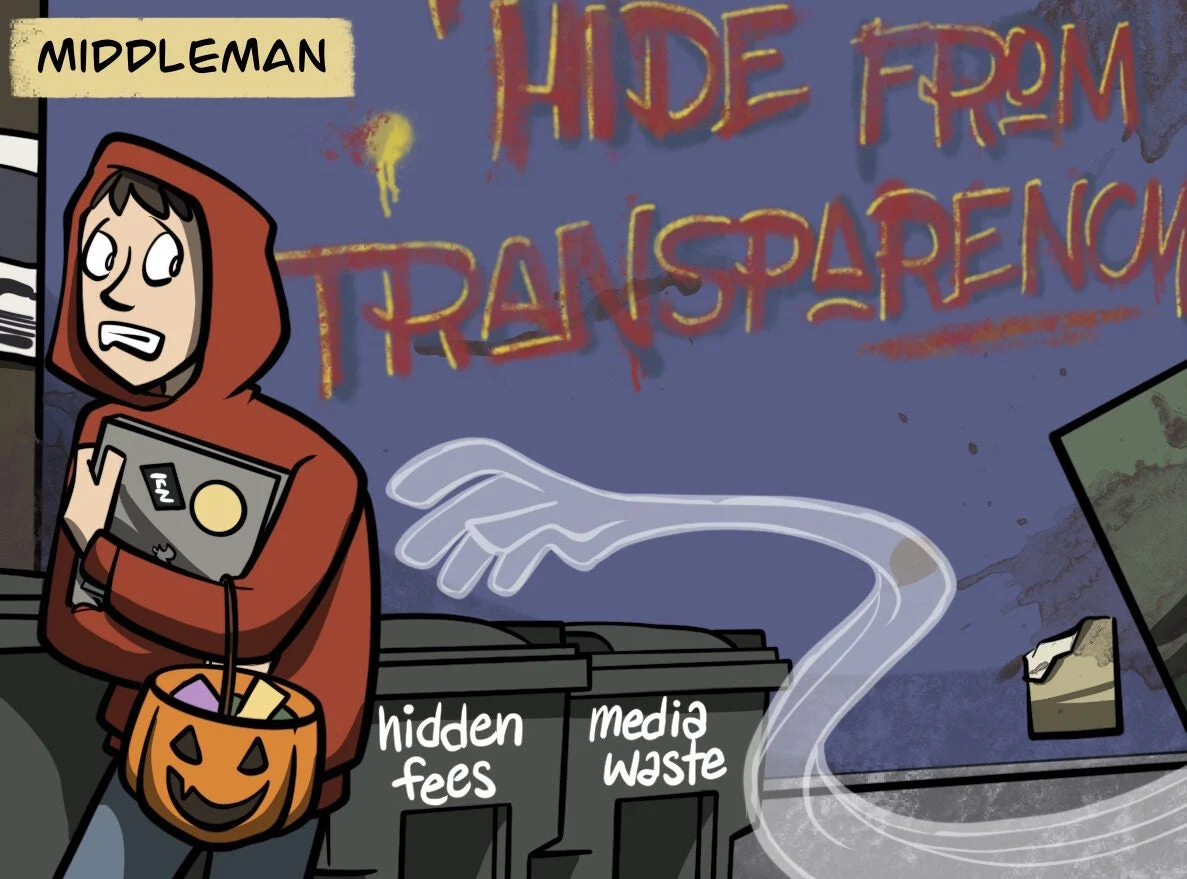
The digital advertising industry, a sector that perpetually champions transparency and accountability, is facing scrutiny as a prominent watchdog organization, Check My Ads, reports being systematically denied access to Demand-Side Platform (DSP) environments. Despite the industry’s vocal commitment to vetting advertisers and ensuring trustworthy partnerships, Check My Ads, a non-profit dedicated to programmatic industry oversight, has encountered significant resistance when seeking the same level of access afforded to other buyers. This reluctance from DSPs, even after initial agreements were in place, raises serious questions about the depth of the industry’s dedication to genuine transparency, particularly when it involves entities that aim to scrutinize their operations.
Check My Ads COO Arielle Garcia has observed a curious paradox within the ad tech landscape. While many vendors are quick to publicize their collaborations with Check My Ads as a testament to their commitment to transparency, the same entities appear hesitant to grant the watchdog a direct seat on their platforms – a move that would allow for the same level of inventory analysis and operational insight as any other legitimate buyer. This reluctance, Garcia suggests, stems from a fear that a more deeply embedded watchdog might uncover less-than-transparent practices within their supply chains.
The most recent and striking instance of this phenomenon involved an unnamed DSP that, after expressing considerable eagerness to partner with Check My Ads, ultimately reneged on a signed Master Service Agreement (MSA). AdExchanger has reviewed correspondence confirming the existence of this agreement, which stipulated the terms of their collaboration. According to the provided emails, the DSP had been so keen to onboard Check My Ads that it even waived its customary minimum spending requirement. However, just prior to Check My Ads initiating its first campaign, the DSP abruptly terminated the arrangement, citing "discomfort with the scope of protections extended to our vendor and supply partners."
The Pursuit of a DSP Seat: More Than Just Oversight
For Check My Ads, the endeavor to secure a DSP seat was multi-faceted, extending beyond its core watchdog mandate. According to Arielle Garcia, this was the organization’s first formal attempt to obtain such access. The primary objective was to bolster its ongoing research into programmatic buying. By gaining firsthand experience within a DSP, Check My Ads aimed to generate actionable insights and publish best practices, particularly for smaller advertisers struggling to navigate the complexities and potential waste inherent in programmatic campaigns. This aligns with their recent work, such as a report on Google’s Performance Max, which was informed by their direct operational experience.
Beyond research, Check My Ads harbors aspirations of offering "agency-lite" managed services to small advertisers on a non-profit basis. Establishing a DSP seat, akin to that of a traditional agency, was seen as a crucial step in developing the necessary technical expertise and operational familiarity to support this future initiative.
Furthermore, the pursuit of a DSP seat was also driven by more pragmatic marketing objectives. Check My Ads actively engages in campaigns to promote its services, disseminate newsletters, and market merchandise. Iesha White, Director of Intelligence at Check My Ads, who boasts a decade of experience as a media buyer, emphasized the importance of having "skin in the game." "In order for us to do that, we have to have skin in the game and spend money," White stated, underscoring the necessity of real-world experience and financial commitment to stay abreast of industry evolution and maintain technical proficiency.
A Timeline of Eagerness and Evasion
The outreach to the unnamed DSP began earlier this year when White, leveraging her prior experience with the platform, contacted a former associate. The initial response was overwhelmingly positive. An introductory platform demonstration was scheduled for April, following which White’s contact provided a summary of the meeting’s outcomes, explicitly confirming the DSP’s agreement to waive the minimum spending threshold.
The subsequent step involved the DSP furnishing an MSA in mid-May, which Check My Ads duly signed. The post-demo recap email also offered a glimpse into the DSP’s understanding of Check My Ads’ objectives. It detailed aspirations such as "Moving beyond Google PMax / Demand Gen into ‘real’ programmatic with full transparency and control, no black box," engaging in "small but meaningful test campaigns ($1k-$20k/month range) for your own research and analysis," and evolving into a "selective mini-agency model." The sentiment expressed was one of honor and enthusiasm for Check My Ads’ consideration.
However, the trajectory of the partnership took a sharp turn in late May. On May 20, White’s contact informed her that the DSP seat should be operational within the following week. In the interim, the DSP requested further details regarding Check My Ads’ planned test campaigns, including the brands involved, anticipated budgets, and campaign objectives.
White responded on May 21, explaining that commitments from brand clients were still being finalized. She disclosed plans for Check My Ads to run its own brand lift campaign, alongside a CPA campaign designed to drive newsletter sign-ups, with an initial test budget of $1,000 – a figure well within the previously approved range.
A follow-up on June 3 from White for a status update yielded a cautious response: "still confirming next steps." This was followed by a more pointed question: "If you identify any vendor performance concerns on [redacted], can we agree to loop us in first before escalating externally?" This query, Check My Ads interpreted as a sign of suspicion regarding their intentions and a clear indication of the DSP’s growing unease about granting a self-proclaimed watchdog platform access. White responded by affirming their standard practice of informing any identified supply issues to relevant parties and impacted SSP vendors.
The final communication on June 5 delivered the definitive blow. The DSP’s head of client partnerships informed Check My Ads that they had "decided not to move forward with this partnership." The explanation cited an inability to become "comfortable with the scope of protections extended to our vendor and supply partners," and an obligation to consider the "downstream impact on them before bringing on new clients, particularly in cases where the nature of the research or activation may intersect with those partners in ways that fall outside what our MSA covers."
Arielle Garcia expressed her disappointment, emphasizing the signed MSA. The DSP’s head of client partnerships reiterated their personal advocacy for the partnership but confirmed the decision was made at a higher level, driven by feedback from their supply and legal teams. The issue, first raised internally on May 20, could not be resolved. The contact concluded with a professional note of respect for Check My Ads’ mission and hope for future collaboration under different circumstances.
The Nuances of DSP Vetting and the Shadow of Doubt
It is essential to acknowledge that DSPs do engage in rigorous vetting processes before granting platform access. This is a standard practice to ensure financial stability and mitigate risks associated with potential fraudulent activity or non-compliance. Ad tech consultants familiar with DSP onboarding procedures, speaking on condition of anonymity, confirm that financial health audits are common. If Check My Ads had exhibited any financial red flags in its recent filings, this could have been a legitimate reason for the DSP to pause.
However, Garcia maintains that no such financial audit was conducted by the DSP in question. The stated concern revolved around the protection of supply partners. The ambiguity surrounding "protection from what exactly" led Check My Ads to infer that the DSP was apprehensive about a watchdog delving into its supply chain intricacies.
Industry experts acknowledge that such concerns are not entirely unfounded from a DSP’s perspective. As one consultant noted, "No DSP is going to knowingly onboard a party whose stated purpose is to turn that seat into an exposé." The potential for a watchdog to uncover and publicize issues within a DSP’s network could indeed pose significant reputational and business risks.
Yet, this reluctance to grant access to a transparency advocate, especially one with a proven track record and a clear methodology, starkly contrasts with the industry’s pervasive discourse on transparency. The narrative of openness and accountability appears to falter when confronted with entities dedicated to holding the industry to its own stated principles.
A Pattern of Hesitation: Beyond One Incident
The experience with the unnamed DSP is not an isolated incident. Check My Ads reports similar hesitations and outright rejections from other programmatic platforms. In one instance, another DSP, after initiating contact with White for a podcast appearance, subsequently denied her request for platform access to conduct tests.
A comparable situation arose with Thrad, a platform specializing in ad placements within generative AI responses. While Thrad initially approved Check My Ads’ platform usage, it later flagged issues with the watchdog’s campaign setup. These included the selection of sensitive targeting categories (politics, abortion, mental health, LGBTQ) where Thrad deemed it unable to place contextual LLM response ads, and a logistical oversight regarding the merchandise storefront’s shipping capabilities to European audiences. Even after these issues were rectified, Thrad ultimately refused to launch the campaign, with CEO Andrea Tortella citing that Check My Ads did not align with their ideal customer profile. Thrad did not respond to multiple requests for comment from AdExchanger.
These recurring instances suggest a broader trend within the programmatic ecosystem. While the industry outwardly professes a commitment to transparency, its practical application seems to have limitations, particularly when confronted with an organization actively seeking to illuminate its inner workings.
Arielle Garcia and Iesha White remain steadfast in their mission. They continue to seek partnerships with DSPs that are genuinely confident in their supply chains and are willing to collaborate in making programmatic advertising more accessible and understandable for small businesses. "If there are any DSPs out there that are confident in their supply and want to help us make programmatic accessible to small businesses," Garcia stated, "reach out to us." The invitation stands, a testament to Check My Ads’ enduring commitment to fostering a more transparent and equitable digital advertising landscape, even as it navigates the inherent resistance from established players. The implications of this widespread reluctance are significant, potentially stifling genuine accountability and perpetuating opaque practices within an industry that thrives on data and claims to value trust. The ongoing challenge for organizations like Check My Ads is to bridge this gap between industry rhetoric and practical application, a task that appears to be an uphill battle against deeply ingrained operational norms and potential vested interests.