The Bill and Melinda Gates Foundation released its inaugural Goalkeepers report in 2017, marking a significant milestone in the global effort to track and accelerate progress toward the United Nations Sustainable Development Goals (SDGs). Titled "Goalkeepers: The Stories Behind the Data," the report serves as both a diagnostic tool and a call to action, aiming to identify urgent problems, highlight promising solutions, and spread best practices in the fight against extreme poverty and disease. By combining rigorous data analysis with compelling narratives, the foundation seeks to provide a transparent look at where the world stands in its commitment to end poverty by 2030. The report arrives at a critical juncture for international development, providing a comprehensive overview of 18 key indicators, ranging from child mortality and maternal health to financial inclusion and agricultural productivity.
The Strategic Framework of Goalkeepers 2017
The Goalkeepers report was designed to be an annual document that monitors the progress of the SDGs, which were adopted by world leaders in 2015. The 2017 edition specifically emphasizes that while the world has seen remarkable improvements in human well-being over the last quarter-century, future progress is not guaranteed. The foundation highlights that shifts in political priorities, funding gaps, and regional instability could jeopardize the gains made since 1990.
Central to the report’s methodology is the use of data visualization to translate complex statistical datasets into accessible information. The report utilizes a multi-medium approach—incorporating text, high-resolution imagery, video content, and interactive charts—to engage a broad audience of policymakers, NGOs, and the general public. This information design is intended to move beyond dry statistics, humanizing the data through case studies that illustrate the real-world impact of health and development interventions.
Chronology of Global Health Initiatives and Maternal Mortality
To understand the context of the Goalkeepers 2017 report, it is necessary to examine the timeline of global health goals. The year 1990 serves as the primary baseline for most modern development metrics. At that time, the international community began a concerted effort to address the staggering rates of maternal and child mortality in developing nations.
In 2000, the United Nations established the Millennium Development Goals (MDGs), which included a specific target (MDG 5) to reduce the maternal mortality ratio by three-quarters between 1990 and 2015. While the world did not fully achieve this ambitious target, the maternal mortality ratio (MMR) fell by approximately 44% globally during that period.
Following the conclusion of the MDG era in 2015, the Sustainable Development Goals were launched. SDG Target 3.1 aims to reduce the global maternal mortality ratio to less than 70 per 100,000 live births by 2030. The Goalkeepers 2017 report serves as one of the first major independent assessments of the transition from the MDGs to the SDGs, providing a baseline for the 15-year journey ahead.
Maternal Mortality: A Case Study of Progress in Ethiopia
One of the most prominent features of the Goalkeepers 2017 report is its focus on maternal mortality, a metric the Gates Foundation describes as a primary indicator of a society’s health and stability. Bill and Melinda Gates have frequently noted that maternal mortality is a devastating force that orphans children and destabilizes communities.
According to UNICEF data, which provides the statistical backbone for much of the report, an estimated 302,530 women died globally in 2015 due to complications from pregnancy or childbirth. This equates to a global average of 168.7 deaths per 100,000 live births. However, these figures mask significant regional successes. Ethiopia, in particular, has emerged as a global leader in reducing maternal deaths.
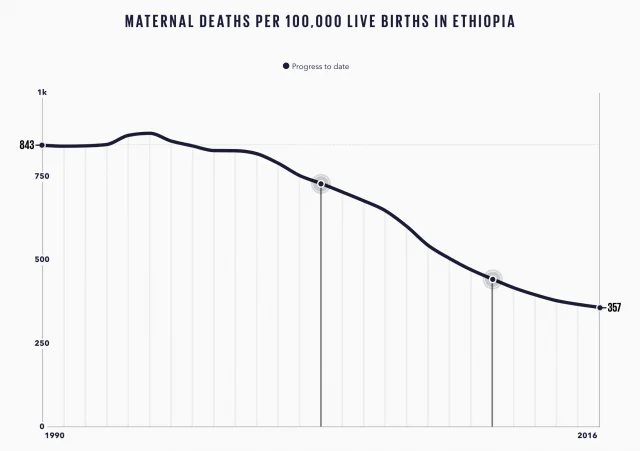
In 1990, Ethiopia’s maternal mortality ratio stood at a staggering 843 deaths per 100,000 live births. By 2015, this figure had been reduced to 357 per 100,000—a decline of more than 50%. The report attributes this success to Ethiopia’s innovative Health Extension Program. Launched in 2003, this program trained and deployed over 38,000 women as health extension workers. These workers were stationed in rural villages to provide essential health services, including prenatal care, immunizations, and education on safe delivery practices. By bringing healthcare directly to the community level, Ethiopia managed to bridge the gap between rural populations and the formal medical system.
Supporting Data and Regional Disparities
While Ethiopia’s progress is noteworthy, the UNICEF datasets utilized in the Goalkeepers report reveal a stark disparity between different regions of the world. Maternal mortality remains heavily concentrated in Sub-Saharan Africa and South Asia.
In 2015, Sub-Saharan Africa accounted for roughly 66% of all maternal deaths worldwide. In many high-income countries, the maternal mortality ratio is in the single digits (e.g., 3 per 100,000 in Finland or 9 per 100,000 in the United Kingdom). In contrast, countries like Sierra Leone and the Central African Republic have historically seen ratios exceeding 800 per 100,000.
The data indicates that the primary causes of maternal death—hemorrhage, infection, high blood pressure during pregnancy, and complications from delivery—are largely preventable or treatable with existing medical interventions. The Goalkeepers report emphasizes that the challenge is not a lack of medical knowledge, but a lack of access to quality care, skilled birth attendants, and emergency obstetric facilities in the world’s poorest regions.
Official Responses and Global Perspectives
The release of the Goalkeepers 2017 report garnered significant attention from international organizations and government leaders. During the launch event, held alongside the UN General Assembly in New York, Bill Gates emphasized the role of leadership in maintaining the momentum of global health improvements. "The progress we’ve seen is not an accident," Gates stated. "It’s the result of smart investments and dedicated leaders."
UNICEF officials have echoed these sentiments, noting that the publication of such data is essential for accountability. By making maternal mortality data publicly available and easily digestible, the foundation and its partners enable civil society to hold governments accountable for their commitments to the SDGs.
Global health specialists have also noted that maternal health is a "multiplier" indicator. When a mother survives childbirth and remains healthy, her children are more likely to be immunized, stay in school, and escape the cycle of poverty. Conversely, the death of a mother often leads to a higher risk of death for her newborn and a significant decrease in the long-term well-being of her surviving children.
Economic and Social Implications of Maternal Health
The implications of the Goalkeepers 2017 findings extend beyond healthcare into the realm of global economics. High rates of maternal mortality represent a significant loss of human capital. Research by the World Health Organization (WHO) suggests that the economic loss resulting from maternal and newborn deaths can amount to billions of dollars in lost productivity for developing nations.
Furthermore, the Goalkeepers report highlights the "demographic dividend"—the economic growth potential that can result from shifts in a population’s age structure. For a country to realize this dividend, it must first reduce child and maternal mortality, which leads to a natural decline in fertility rates and a larger proportion of the population entering the workforce. By investing in maternal health, countries like Ethiopia are not just saving lives; they are laying the groundwork for future economic prosperity.
The Role of Open Data in Future Progress
A significant takeaway from the Goalkeepers 2017 initiative is the importance of open data. The report relies on datasets from UNICEF, the WHO, and the Institute for Health Metrics and Evaluation (IHME). By utilizing publicly available data, the Gates Foundation encourages independent analysts and researchers to conduct their own studies.
The accessibility of this data allows for a more nuanced understanding of regional trends. For instance, while national averages may show improvement, sub-national data often reveals "hotspots" where mortality remains high. Identifying these specific areas allows for more targeted interventions, ensuring that resources are directed where they are most needed. The foundation’s use of Google Data Studio and other visualization tools has set a new standard for how international development data is communicated to the public.
Broader Impact and the Path to 2030
The 2017 Goalkeepers report concludes that while the world has made "extraordinary" progress, the job is far from over. To reach the SDG target of 70 deaths per 100,000 live births by 2030, the rate of decline in maternal mortality must accelerate significantly.
The report serves as a reminder that the tools to end maternal mortality exist. The primary obstacles are logistical, financial, and political. As the global community looks toward 2030, the Goalkeepers report will continue to serve as a vital annual check-up on the world’s health. It underscores the reality that behind every data point is a human story—a mother, a child, and a community whose future depends on the continued commitment of the global community to prioritize health and equity.
By documenting the success of nations like Ethiopia and highlighting the remaining gaps in global care, the Bill and Melinda Gates Foundation provides a roadmap for the next decade of development. The 2017 report establishes that with the right data, the right investments, and the right political will, the devastating impact of maternal mortality can be relegated to history.