Good vibes can spark great ideas, and now they can even help you build a website. A paradigm shift in software development, dubbed "vibe coding," is democratizing the creation of online platforms by leveraging artificial intelligence. This innovative approach moves beyond the intricate demands of traditional coding languages, allowing users to articulate their vision in natural language, refine outcomes through conversational interaction, and witness their digital concepts materialize. While it is not poised to entirely supersede conventional development practices, vibe coding significantly lowers the barrier to entry, empowering a broader spectrum of individuals and businesses to establish their online presence with unprecedented speed and accessibility.
Origins and Evolution of Vibe Coding: A New Development Paradigm
The term "vibe coding" was formally introduced in February 2025 by Andrej Karpathy, a renowned computer scientist celebrated for his foundational contributions as a co-founder of OpenAI and his prior leadership in AI at Tesla. Karpathy envisioned a future where software development would transcend the laborious, line-by-line coding process. Instead, he proposed an intuitive method where users simply describe their desired outcome, and AI agents undertake the complex task of technical implementation. His succinct articulation, "say stuff, run stuff, and copy-paste stuff, and it mostly works," encapsulates the core philosophy of this emergent methodology.
This conceptualization by Karpathy did not emerge in a vacuum but rather as a logical progression in the broader evolution of software development. For decades, the industry has seen iterative attempts to simplify creation, from early drag-and-drop interfaces to the more recent proliferation of low-code and no-code platforms. Vibe coding represents a leap forward, leveraging the advanced capabilities of large language models (LLMs) and generative AI to understand nuanced intent and translate it into functional code or web structures. This shift redefines the user’s role from a technical developer to a "creative director," emphasizing vision, iterative refinement, and strategic guidance over syntax mastery and debugging minutiae. The focus irrevocably moves from the "how" of coding to the "what" of creation, enabling a more direct and intuitive pathway from idea to execution.
The Mechanics of Vibe Coding: A Conversational Partnership with AI
At its operational core, vibe coding transforms website creation into an ongoing dialogue. Instead of grappling with HTML, CSS, JavaScript, or backend logic, users engage with an AI platform using plain English. For instance, an entrepreneur might prompt an AI with: "Create a modern website for a local artisan bakery, featuring warm, inviting aesthetics, an interactive online menu, a gallery for custom cake designs, customer testimonials, and an integrated contact form with reservation capabilities." The AI then interprets this descriptive input, synthesizing it into a functional first draft of the website.
This initial generation is merely the starting point. The user subsequently reviews the AI’s output, offering feedback and requesting modifications through further conversational prompts. This iterative process allows for precise adjustments—such as "make the navigation bar more prominent," "change the primary color palette to muted pastels," or "add a live chat widget"—each building upon the previous instruction. This dynamic, collaborative approach ensures that the final product aligns closely with the user’s evolving vision, effectively making the AI an intelligent co-creator that speaks both human language and the intricate language of code. This dramatically shortens the feedback loop and accelerates the design-to-deployment cycle.
Broadening the Digital Horizon: What Vibe Coding Enables
The utility of vibe coding extends far beyond simple code snippets. Modern AI-powered tools, evolving rapidly since Karpathy’s coining of the term, are now capable of generating a diverse array of digital assets. This includes everything from sophisticated multi-page websites and high-conversion landing pages to complex web applications, interactive dashboards, and tailored internal business tools. The impact on various sectors is profound.
For entrepreneurs, freelancers, and small business owners, vibe coding represents a game-changer. Historically, launching a professional website required significant time, financial investment in developers, or a steep learning curve in coding. Vibe coding bypasses these traditional hurdles, allowing them to rapidly conceptualize, build, and launch their online presence. This empowers them to validate business ideas faster, respond to market demands with agility, and allocate more resources to core business operations rather than technical development. Industry analyses indicate that AI-driven website builders have reduced the average time to launch a basic functional website by approximately 70-80% compared to traditional methods, translating weeks into hours.
Designers and marketers also find immense value in vibe coding for rapid prototyping. Instead of spending days on mock-ups or wireframes, they can generate multiple design variations and functional prototypes in minutes, facilitating quicker client feedback and accelerated project cycles. This capability is particularly beneficial for A/B testing different layouts or content strategies without extensive development overhead. The ability to iterate through conversations means that testing and refinement become integral parts of the design process, making it more fluid and responsive.
Key Advantages and Transformative Impact on Website Creation
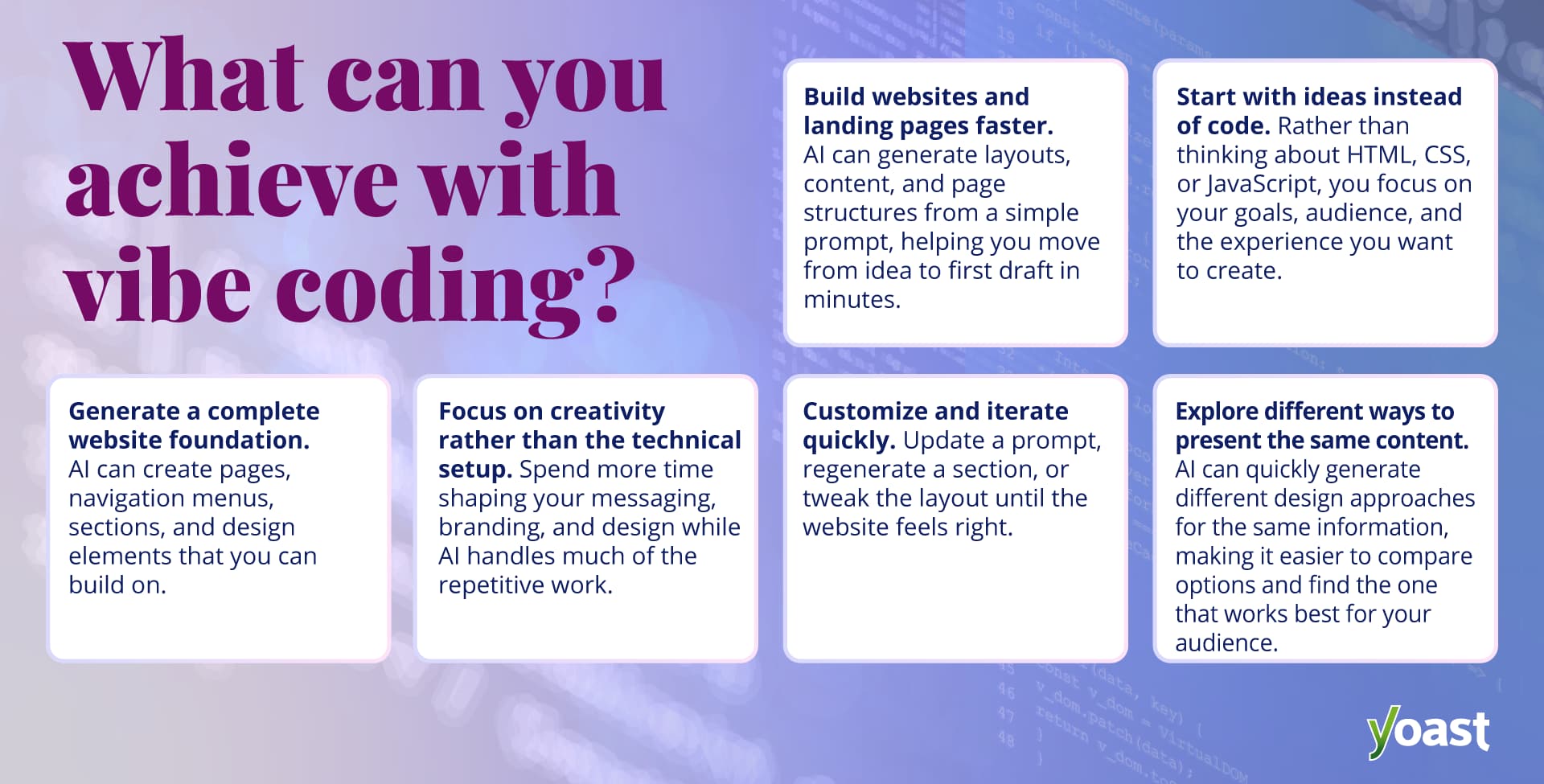
The momentum behind vibe coding is undeniable, driven by several compelling advantages:
- Accelerated Launch Cycle: The most immediate benefit is the dramatic reduction in time from concept to live website. What once took weeks or months can now be achieved in hours or days. This rapid deployment capability is crucial in today’s fast-paced digital economy, allowing businesses to seize opportunities and respond to market shifts promptly. Early adopters report reducing their initial development timelines by as much as 85%.
- Enhanced Experimentation and Prototyping: Vibe coding facilitates a culture of rapid experimentation. Users can quickly generate and test various layouts, functionalities, and content strategies without significant resource investment. This enables more informed decision-making and reduces the risk associated with committing to a single design direction prematurely. Startups, in particular, can leverage this to build Minimum Viable Products (MVPs) quickly and gather crucial user feedback early in their development cycle.
- Intuitive Conversational Iteration: The core strength lies in its conversational nature. Website refinement becomes an organic process of dialogue with the AI. Users can request nuanced changes—such as "make the call-to-action button more inviting," "integrate a blog section with SEO best practices," or "ensure mobile responsiveness is flawless"—and the AI intelligently adjusts the underlying code. This iterative, conversational approach means that the website continuously evolves, guided by human intent rather than limited by technical proficiency.
- Lowered Barrier to Entry: Perhaps the most transformative impact is the democratization of website creation. Individuals without any coding background can now bring sophisticated digital ideas to life. This fosters innovation by enabling a broader range of voices and perspectives to contribute to the digital landscape, leading to a richer and more diverse internet.
Navigating the Development Process: A Five-Step Framework for Vibe Coding
Building a website with vibe coding is less about discovering a perfect, one-shot prompt and more about adhering to a structured, iterative process. The clarity of communication and the diligence in refining AI-generated outputs are paramount to achieving the desired outcome. Here’s a practical five-step framework:
-
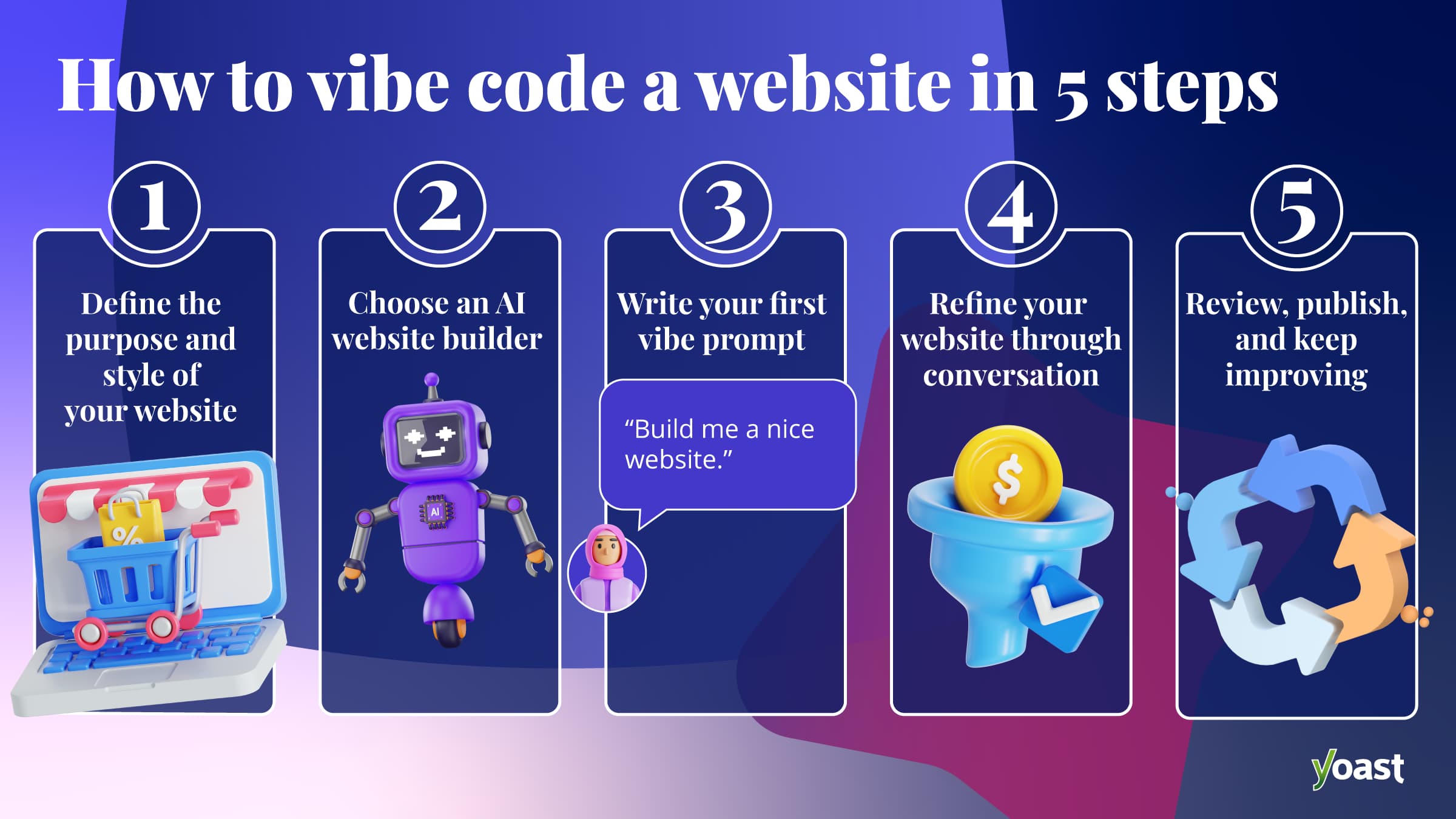
Define the Purpose and Style of Your Website: Before engaging with any AI tool, a clear conceptualization is essential. This involves outlining the website’s primary objectives (e.g., e-commerce, portfolio, informational blog), target audience, desired functionality (e.g., booking system, forum), brand personality, and aesthetic preferences. Instead of a vague prompt like "Build me a business website," a more effective one would be: "Create a contemporary e-commerce website for a sustainable fashion brand. It should feature a minimalist design, a neutral color palette, large product images, an intuitive shopping cart, customer reviews, a ‘Our Story’ page, and a blog. The overall feel should be sophisticated, eco-conscious, and user-friendly." This detailed context empowers the AI to make informed design and functional decisions, aligning with search intent and brand identity from the outset.
-
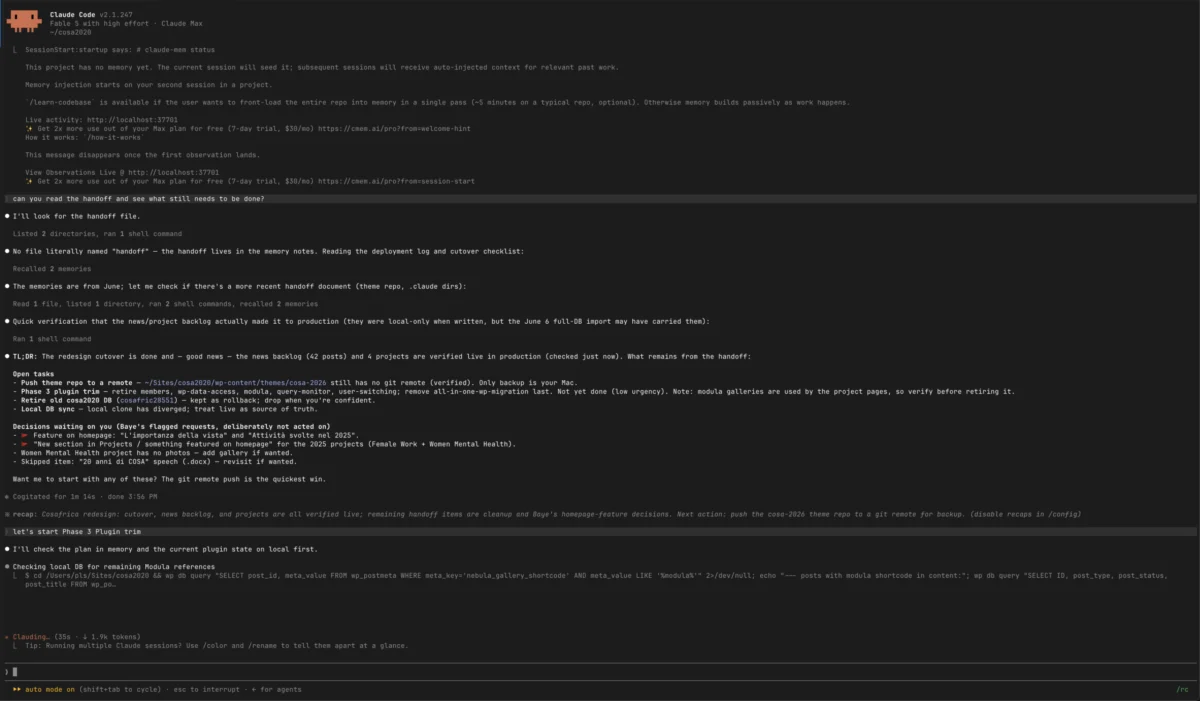
Choose an AI Website Builder: The market for AI-powered development tools is expanding rapidly. Options range from specialized coding agents like Claude Code, which demand familiarity with development environments, to more user-friendly AI website builders. For non-developers, dedicated AI website builders offer a streamlined experience, integrating AI-driven design with hosting and customization features. Platforms like the Bluehost AI Website Builder are exemplary, guiding users through a series of questions about their business, goals, and style preferences before generating a personalized website that can be further refined. Such integrated solutions eliminate the complexity of managing disparate tools, allowing for a seamless transition from idea to live site.
-
Craft Your Initial Vibe Prompt: This foundational prompt is critical. It’s not about crafting a single, all-encompassing instruction but about providing the AI with sufficient context. This involves detailing the website’s core purpose, target demographic, desired look and feel, essential pages, and key user actions. Context engineering—the art of structuring prompts to maximize AI understanding—is key here. For example, detailing the brand’s unique selling proposition, desired customer journey, or specific competitors for stylistic inspiration can significantly enhance the AI’s initial output. The goal is to give the AI the necessary framework to make intelligent design choices.
-
Refine Your Website Through Iterative Conversation: Expecting perfection from the first prompt is unrealistic. Vibe coding thrives on iteration. Once the AI presents the initial draft, the user engages in a conversational refinement process. This involves providing specific feedback and requesting incremental changes. Examples include: "Increase the font size for all headings," "Add a parallax scrolling effect to the hero section," "Integrate social media share buttons on blog posts," or "Make the contact form fields more visually appealing." Focusing on one or two changes per prompt generally yields better results than attempting a complete overhaul, allowing for a methodical progression towards the desired outcome.
-
Review, Publish, and Continuously Improve: Before making the website public, a thorough review is indispensable. This entails verifying content accuracy, testing all links and forms, ensuring cross-device responsiveness, and replacing all placeholder elements with bespoke brand assets. Once satisfied, the website can be published by connecting a custom domain. A significant advantage of vibe coding is that the development process doesn’t cease post-launch. Websites can be dynamically updated, new features added, or landing pages created for campaigns by simply returning to the AI builder and continuing the conversational refinement, thereby ensuring the website remains current and effective without the need for extensive redevelopment cycles.
Addressing Challenges: Navigating the "Vibe Coding Doom Loop"
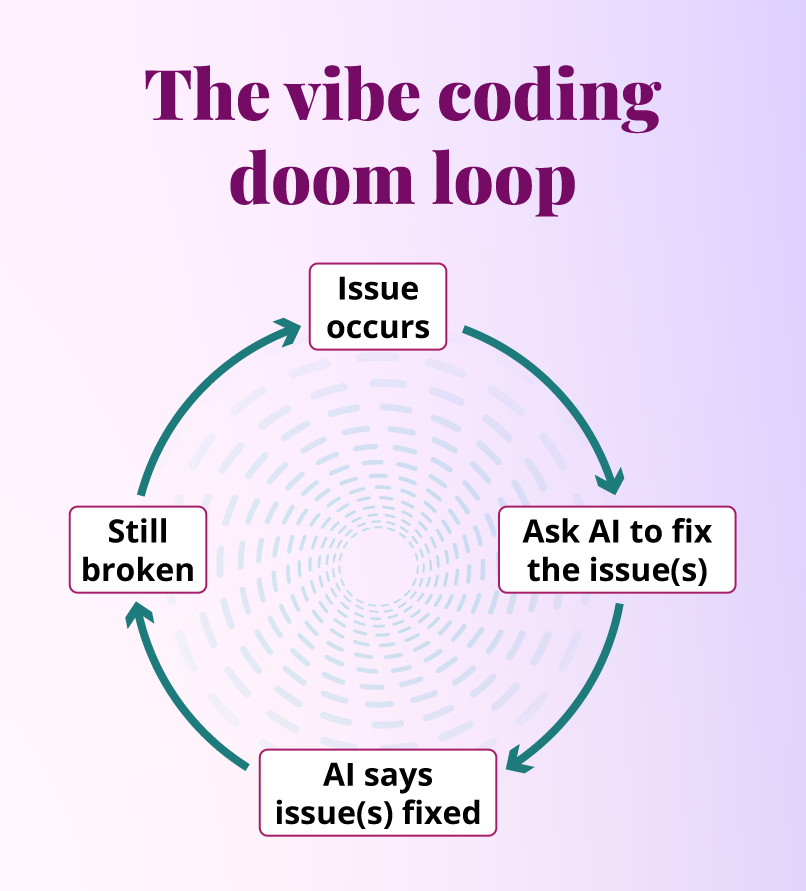
While vibe coding offers remarkable efficiency, it is not without its pitfalls. One common challenge is the "vibe coding doom loop." This occurs when the AI, despite repeated instructions, fails to resolve a specific issue or introduces new problems while attempting to fix existing ones, leading to a cyclical and unproductive refinement process. This typically happens when the AI loses situational context due to vague initial prompts, inconsistent direction, or an overload of unrelated change requests. As the conversational history grows, the AI may struggle to maintain a coherent understanding of the overarching project goals, resulting in disjointed or contradictory outputs.
To mitigate the doom loop, specific strategies are crucial:
- Prioritize Clarity and Context: Before issuing a prompt, ensure it provides adequate context. Instead of "Fix the homepage," articulate "Refine the homepage’s value proposition to clearly communicate our unique benefits to busy professionals, focusing on a clean, executive aesthetic."
- Manage AI Mistakes Systematically: Recognize that AI is a tool, not an infallible entity. Treat each AI suggestion as a draft. Review changes meticulously, making one focused improvement at a time. If an output is unsatisfactory, rephrase the prompt or, if necessary, revert to an earlier version of the website. A proactive oversight significantly prevents minor discrepancies from escalating into major development roadblocks.
Vibe Coding vs. Traditional Coding: A Comparative Analysis
Vibe coding fundamentally alters the interface of website development rather than replacing its underlying principles. It allows users to guide AI agents with natural language, transforming abstract concepts into functional code. This contrasts sharply with traditional coding, which necessitates direct manipulation of programming languages and frameworks.
| Website Aspect | Traditional Coding | Vibe Coding |
|---|---|---|
| Primary Input | Programming languages (HTML, CSS, JS, PHP, Python) | Natural language prompts (English) |
| Required Skills | Deep coding expertise, debugging, framework knowledge | Clear communication, prompt engineering, conceptual vision |
| Development Process | Manual coding, architectural design, debugging | AI-assisted generation, conversational refinement |
| Time to First Draft | Usually longer (days to weeks) | Usually much faster (minutes to hours) |
| Customization | Unlimited, granular control | High, dependent on AI tool capabilities and prompt specificity |
| Best Suited For | Highly complex, unique, bespoke applications, advanced features | Business websites, portfolios, landing pages, MVPs, rapid prototyping, internal tools |
| Barrier to Entry | High (steep learning curve) | Lower (accessible to non-coders) |
| Developer Role | Builder, architect, problem-solver | Creative director, editor, strategic guide |
| Focus | Syntax, logic, performance optimization | User experience, content, business goals |
Traditional coding remains indispensable for projects demanding extreme customization, novel functionalities, or highly optimized performance where granular control over every line of code is paramount. Vibe coding, conversely, excels in scenarios where speed, accessibility, and iterative refinement are prioritized, particularly for individuals and organizations without dedicated development teams. Both methodologies are valid and, increasingly, complementary. Many professional developers now integrate vibe coding tools into their workflows for rapid prototyping or automating repetitive tasks, thereby freeing up time for more complex, bespoke development.
The Crucial Role of SEO in the AI-Driven Web
The act of creating a website, whether through traditional development or vibe coding, is merely the initial step. For any online presence to be successful, it must be discoverable by its target audience. This is where Search Engine Optimization (SEO) becomes critically important, especially in an increasingly AI-driven search landscape.
Today, websites are not solely evaluated by conventional search engine algorithms. AI assistants, intelligent systems, and generative AI interfaces are actively interpreting content to answer user queries, recommend services, and surface relevant information. This mandates that website content communicates effectively with both human visitors and sophisticated machine intelligences.
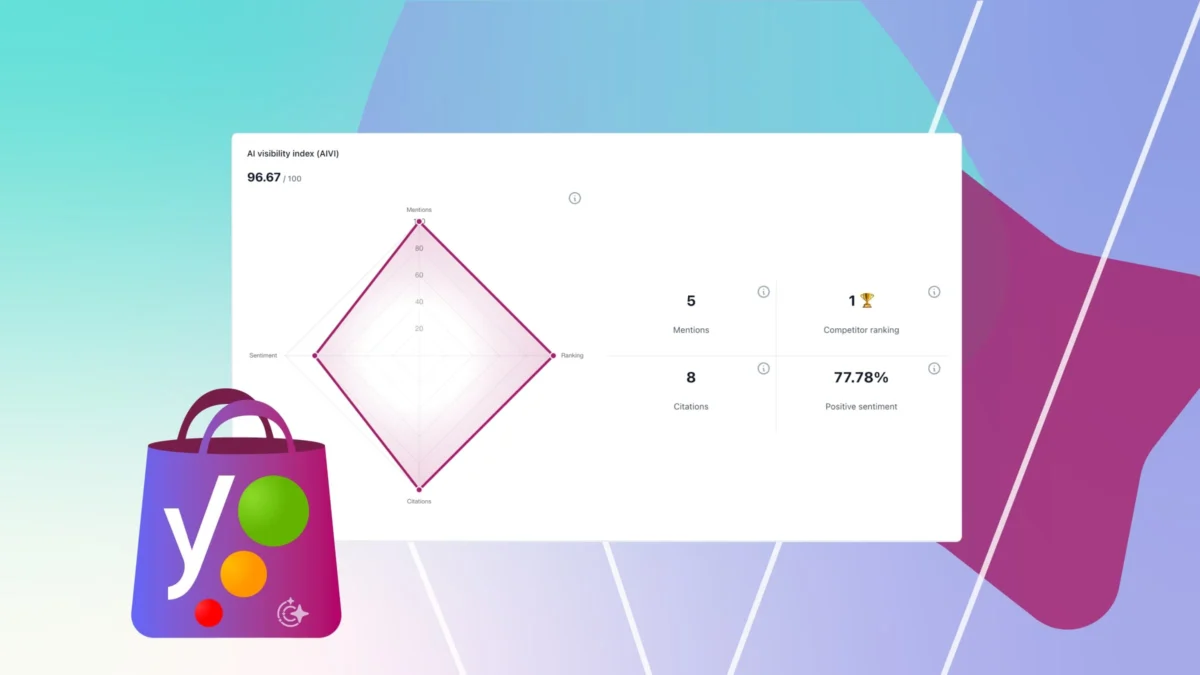
For WordPress users, tools like Yoast SEO Premium are designed to establish this crucial foundation. They automatically generate structured data (Schema Markup), enabling search engines and AI systems to profoundly understand the website’s content, organizational structure, and authoritative expertise. Features such as schema aggregation provide a unified, comprehensive view of the site’s data, while Bot Blocker offers control over which AI systems can access and potentially utilize content for training purposes, addressing emerging concerns about data sovereignty and AI ethics.
Furthermore, SEO is an ongoing process, not a one-time task. The generation of optimized titles and meta descriptions for an expanding website can be time-consuming. Yoast SEO Premium addresses this by offering AI-powered suggestions for these crucial elements, either for individual pages or in bulk. These suggestions are fully editable, ensuring that human oversight and brand voice remain central to the optimization process. As vibe coding streamlines creation, advanced SEO tools ensure that these newly built websites achieve maximum visibility and impact in the complex digital ecosystem.
Future Outlook and Broader Implications
The advent of vibe coding signals a broader trend towards the democratization of technology. It empowers a new generation of digital creators, shifting the focus from technical execution to creative vision. This will likely lead to an explosion of niche websites and innovative online services, fostering a more diverse and vibrant internet. The job market will adapt, with a potential decrease in demand for entry-level coding roles but a surge in demand for "prompt engineers," AI ethicists, and professionals adept at guiding AI tools effectively. The future of website development is increasingly collaborative, blending human creativity with artificial intelligence, making the digital world more accessible and dynamic for everyone.