Google’s long-standing guidance on its Disavow Tool received a significant, albeit nuanced, clarification from Search Relations team member John Mueller, who recently affirmed that the tool "does have effects," though he quickly appended the crucial caveat, "but it has its place & time." This statement, made on Reddit in response to a webmaster’s complaint about a site experiencing a drop in search rankings after disavowing a significant number of links, reignites an ongoing debate within the search engine optimization (SEO) community regarding the utility and potential pitfalls of this powerful, yet often misunderstood, instrument. The clarification underscores Google’s consistent message: while the tool possesses efficacy, its application should be rare, highly targeted, and undertaken with extreme caution, primarily in specific scenarios involving manual penalties or clear instances of malicious link building.
The Genesis of the Disavow Tool: A Response to Link Spam
To fully comprehend the context of Mueller’s recent remarks, it is essential to revisit the historical landscape of Google’s fight against web spam, particularly the proliferation of manipulative link building practices. The Disavow Tool was officially launched by Google in October 2012. Its creation was a direct consequence of the infamous Google Penguin algorithm update, first rolled out in April 2012. Prior to Penguin, webmasters often engaged in aggressive and artificial link building tactics, such as purchasing links, participating in link farms, or creating vast networks of low-quality sites to funnel "link juice" to their main properties. These tactics, while often effective in manipulating search rankings for a time, ultimately degraded the quality and relevance of Google’s search results.
The Penguin update was a game-changer, designed to identify and penalize websites with unnatural or manipulative link profiles. Many legitimate sites, some unknowingly, found themselves caught in Penguin’s crosshairs, experiencing precipitous drops in rankings and traffic. For these sites, particularly those that had received manual actions from Google for "unnatural links," there was an urgent need for a mechanism to declare certain backlinks as unwanted or harmful. The Disavow Tool was Google’s answer, providing webmasters with a direct channel to inform Google that they wished to disassociate their site from specific links, thereby mitigating the negative impact of those links on their ranking signals. The tool essentially allowed webmasters to upload a text file containing a list of URLs or domains that Google should disregard when evaluating their site’s authority.
Google’s Evolving Stance: A Timeline of Nuance and Contradiction
From its inception, the Disavow Tool has been shrouded in a degree of ambiguity, with Google’s advice evolving over time, leading to varying interpretations within the SEO community.
- 2012-2014: Initial Encouragement for Penalty Recovery: In its early years, Google actively encouraged webmasters affected by Penguin or manual penalties to utilize the Disavow Tool. Figures like Matt Cutts, then head of Google’s webspam team, frequently advised its use for "cleaning up" link profiles. The message was clear: if you engaged in or were a victim of bad link building, disavow.
- 2014-2016: The Shift Towards Algorithmic Intelligence: As Google’s algorithms grew more sophisticated, the narrative began to shift. Google started emphasizing its increasing ability to identify and devalue manipulative links automatically, without webmaster intervention. The implication was that for most sites, Google’s systems were already effectively ignoring bad links, rendering the manual disavow process less critical. Statements began to emerge suggesting that the tool was largely unnecessary for the majority of websites.
- September 2016: Penguin Becomes Real-Time: This marked a pivotal moment. Google announced that Penguin was no longer a standalone filter but had been integrated into the core search algorithm and would now run in real-time. This meant that link-based penalties and recoveries would be much faster, and Google’s systems would continuously evaluate link profiles. Post-2016, the prevailing advice from Google, frequently articulated by John Mueller, was that most sites do not need to use the Disavow Tool. Mueller repeatedly stated that Google’s algorithms are generally adept at recognizing and ignoring low-quality or spammy links, and that for the vast majority of sites, simply focusing on building high-quality, natural links was sufficient. He even went so far as to suggest that for many, disavowing links could be a "waste of time" or even "hurt more sites than it helps," echoing a sentiment that the tool’s misuse could inadvertently harm a site’s SEO by disavowing genuinely valuable links. Some Google representatives even speculated about the tool’s eventual removal, mirroring Bing’s decision to discontinue its own disavow feature.
The Recent Clarification: "It Does Have Effects"
John Mueller’s recent statement on Reddit, "There’s a lot of hate on the disavow tool here – but it has its place & time, it does have effects," comes in the context of a webmaster reporting a significant ranking drop after disavowing links. This specific scenario provides crucial context for Mueller’s words. The user stated they "accidentally disavowed valuable backlinks" and subsequently "lost my rankings."
Mueller’s follow-up statement, "disavowing a handful of links is not going to make your site drop out of search," is particularly insightful. It strongly suggests that the webmaster in question likely disavowed a substantial quantity of links, and critically, that some of those links were indeed valuable or contributing positively to their search performance. If Google’s algorithms truly ignored all bad links, and the disavow tool merely echoed that action, then disavowing "valuable" links should, theoretically, have no effect if Google also ignored them because they were perceived as "bad." The fact that disavowing them led to a drop implies two possibilities: either Google was counting them positively, and disavowing them removed that positive signal, or the sheer volume of disavowed links, even if some were genuinely bad, was so extensive that it inadvertently removed legitimate positive signals.
This recent clarification does not contradict Google’s previous advice but rather refines it. It confirms that the tool functions as intended – it tells Google to ignore specific links. If those ignored links were previously contributing positively (even if marginally or in combination with others), then their removal via disavowal will have an effect. The long-standing advice that "most sites don’t need to disavow" remains true because, for most sites, any potentially harmful links are either already ignored by Google’s algorithms or are not significant enough to warrant manual intervention. However, in cases where a site has genuinely valuable links that are mistakenly disavowed, or in rare cases where the tool is used to remove a substantial amount of truly harmful links, its impact becomes evident.
When and Why to Use the Disavow Tool: Google’s Recommended Scenarios
Despite the ongoing debate, Google’s official guidance on the Disavow Tool has remained relatively consistent in its core recommendation:
- Manual Actions for Unnatural Links: This is the primary scenario where Google explicitly recommends using the tool. If a website has received a manual action from Google in Search Console specifically for "unnatural links to your site," then creating and submitting a disavow file is a crucial step in the reconsideration request process. In such cases, Google’s human reviewers have identified specific link manipulation, and the disavow tool helps demonstrate a proactive effort to clean up the link profile.
- Severe Negative SEO Campaigns: While Google generally downplays the widespread effectiveness of negative SEO, there are rare instances where a competitor or malicious actor might launch a highly aggressive, large-scale campaign to build thousands of spammy, low-quality links to a rival site, hoping to trigger a penalty. In such extreme cases, and particularly if combined with a manual action, the Disavow Tool might be considered as a defensive measure. However, even in these scenarios, many SEO professionals still argue that Google’s algorithms are usually capable of discerning and ignoring such attacks without webmaster intervention.
- Post-Acquisition or Inherited Sites: When taking over a website with a questionable history of SEO practices, particularly if the previous owners engaged in aggressive link building, a thorough link audit followed by a cautious disavow might be considered a preventative measure, even without an active penalty. This helps to proactively clean up any potential legacy issues before they trigger an algorithmic or manual penalty.
Crucially, Google emphasizes that the Disavow Tool should not be used for general "link hygiene" or for simply removing links that a webmaster deems "low quality" but aren’t actively harming the site. Over-disavowing, as likely occurred in the Reddit scenario, can be detrimental.
Broader Implications for Webmasters and SEO Professionals
Mueller’s recent statement, while a clarification, reinforces several critical implications for the SEO industry:
- Reinforcing Prudence and Expertise: The Disavow Tool is not a casual SEO lever. Its effective use demands a deep understanding of link analysis, Google’s guidelines, and a careful assessment of potential risks. Engaging with expert SEO professionals for comprehensive link audits is crucial before considering its use. Misuse can lead to self-inflicted harm, as evidenced by the Reddit user’s experience.
- The Continued Importance of Link Quality: The ongoing discussion around the Disavow Tool highlights that backlinks, despite evolving algorithms, remain a fundamental ranking factor for Google. However, the emphasis is overwhelmingly on quality and naturalness. Proactive, ethical link building, focusing on earning links through valuable content and genuine relationships, remains the cornerstone of sustainable SEO.
- Understanding Algorithmic vs. Manual Actions: The distinction between Google’s automated algorithmic filtering of bad links and manual actions by human reviewers is vital. While algorithms are often capable of ignoring most spam, a manual action overrides this, necessitating direct intervention via the Disavow Tool for recovery.
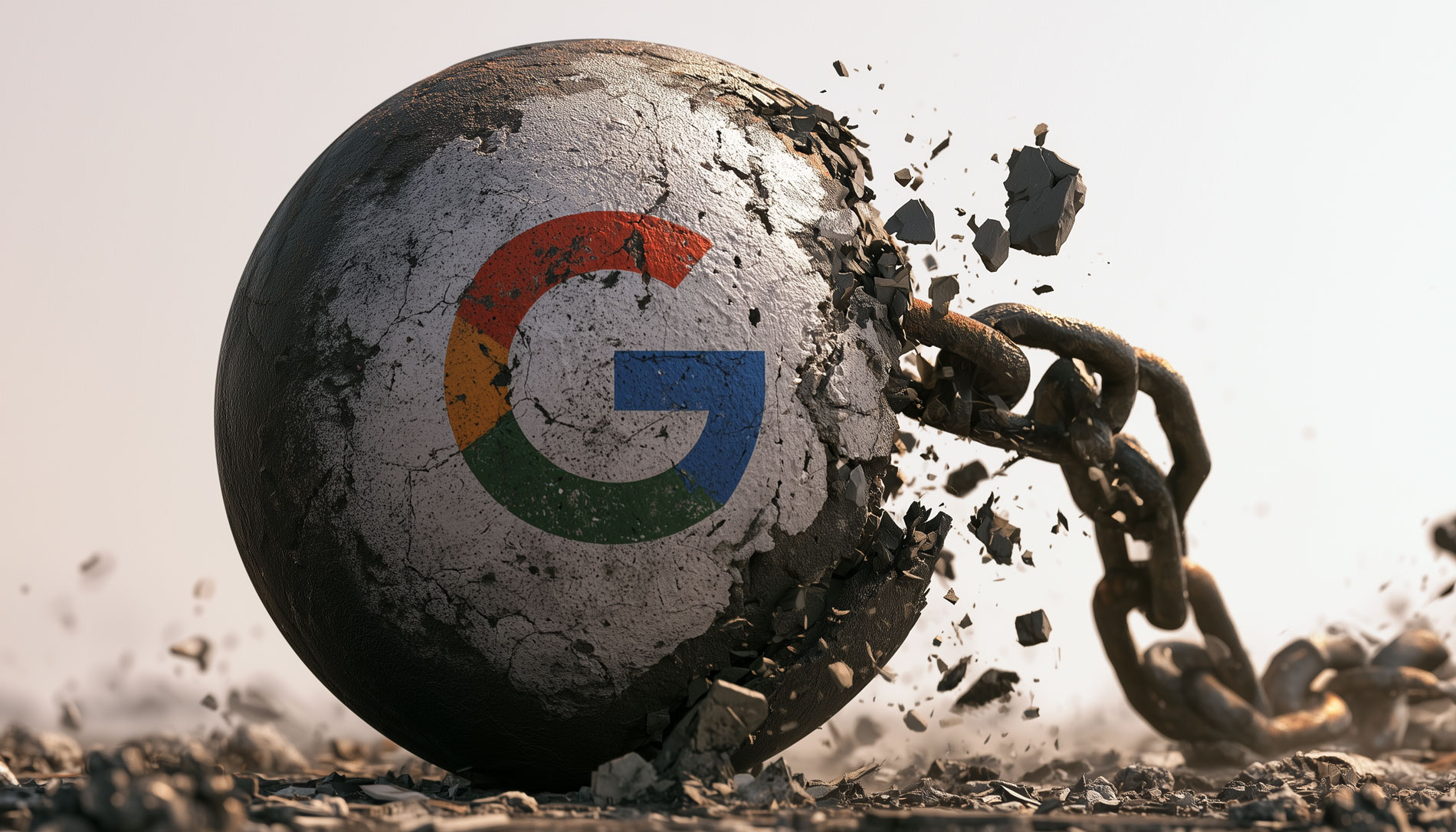
- The "Wrecking Ball" Analogy: The image often associated with the Disavow Tool – a wrecking ball – is apt. It’s a powerful instrument capable of significant demolition, but its application requires surgical precision to avoid unintended destruction of valuable structures.
- The Future of the Tool: Despite the current clarification, the long-term future of the Disavow Tool remains a subject of speculation. Google’s continuous improvements in algorithmic link analysis might eventually render it entirely obsolete. However, as long as manual actions for unnatural links exist, or until Google’s algorithms are deemed foolproof against all forms of negative SEO, the tool will likely retain its niche, albeit rare, utility.
Data and Industry Perspectives
While specific statistical data on the frequency of Disavow Tool usage or its precise impact across the entire web is not publicly available from Google, anecdotal evidence and industry surveys offer insights. A significant majority of SEO professionals advise against its routine use. A 2021 survey among SEO practitioners, for instance, revealed that while most were aware of the tool, a smaller percentage actively used it, and primarily only when dealing with explicit manual penalties or extremely aggressive negative SEO. The consensus is that the effort and risk associated with extensive link auditing and disavowing often outweigh the benefits for sites not facing a penalty. Resources are generally better spent on content creation, technical SEO, and proactive, ethical link acquisition.
Furthermore, the concept of "valuable" backlinks is itself subjective. What one webmaster perceives as a valuable link, Google’s algorithms might already be devaluing due to its source, context, or anchor text. The danger highlighted by the Reddit user is the possibility of human error in assessing link value, leading to the disavowal of links that were, in Google’s eyes, legitimate contributors to a site’s authority. This underscores the complexity and the need for a nuanced understanding of link quality signals.
In conclusion, John Mueller’s recent reiteration serves not as a reversal of Google’s long-held stance but as an important clarification. The Disavow Tool is neither a relic nor a universal panacea for link-related SEO woes. It is a potent, targeted instrument that "does have effects," particularly when removing a substantial volume of links that Google’s algorithms might otherwise consider, whether positively or negatively. Its "place and time" are specific and infrequent, primarily reserved for addressing manual penalties or very rare, severe instances of negative SEO. For the vast majority of webmasters, the most effective strategy remains the pursuit of high-quality content, a robust technical foundation, and the organic acquisition of genuinely authoritative and relevant backlinks, allowing Google’s advanced algorithms to handle the complexities of link evaluation without manual intervention. The message is clear: proceed with caution, understand the tool’s intended purpose, and when in doubt, prioritize natural growth over aggressive cleanup.