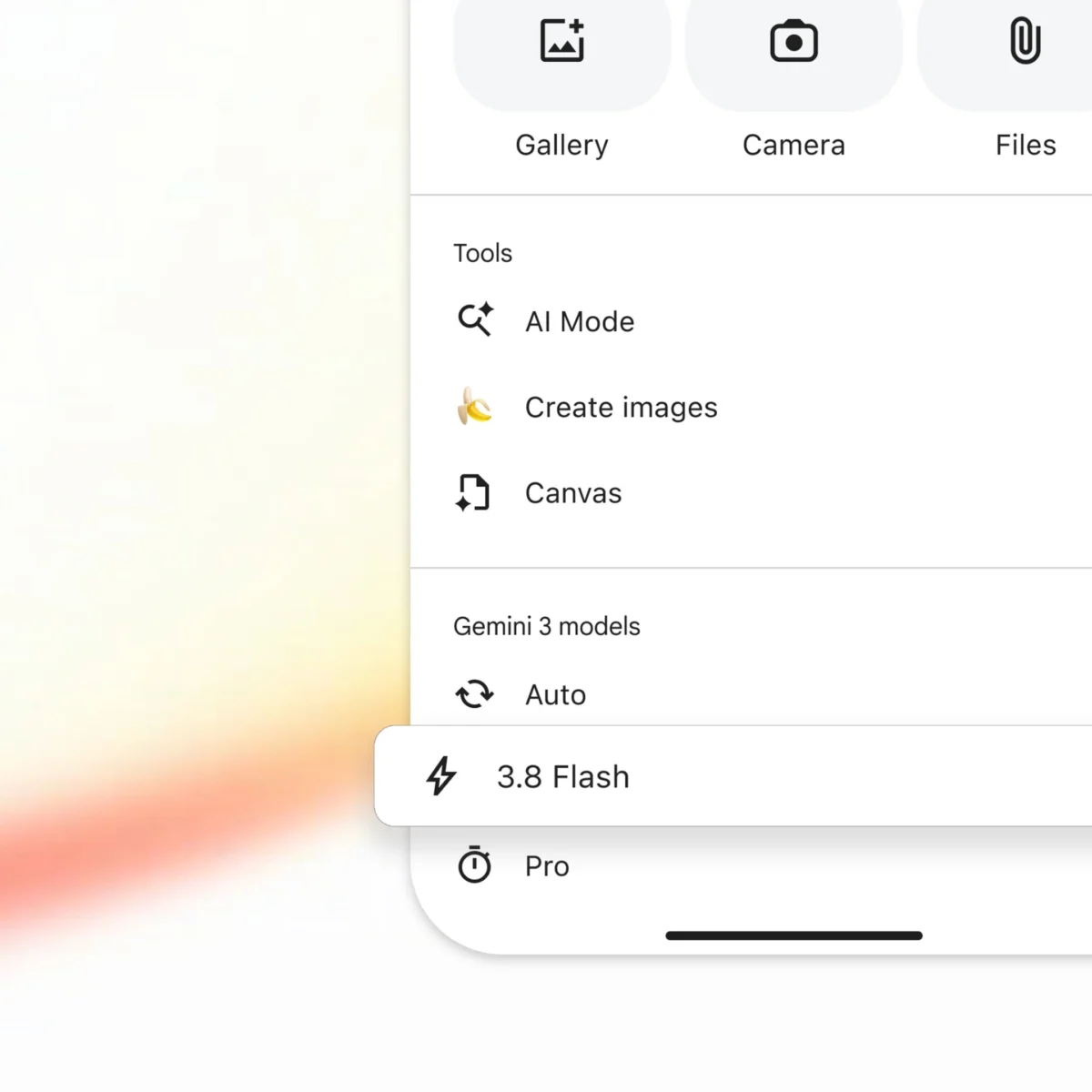
Google has announced the immediate integration of Gemini 3.8 Flash into its AI Mode within Google Search, marking a significant advancement in the company’s artificial intelligence capabilities for its flagship product. The rapid rollout, confirmed by Robby Stein, VP of Product at Google Search, on the platform X, comes mere weeks after the deployment of Gemini 3.7 Flash, underscoring Google’s accelerated pace in bringing cutting-edge AI to its user base. This latest iteration is now available globally to subscribers of Google AI Pro & Ultra, accessible through a simple selection process within the AI Mode interface.
The Evolution of AI in Search: A Strategic Imperative
The introduction of Gemini 3.8 Flash is not an isolated event but rather a critical step in Google’s overarching strategy to redefine the search experience. For decades, Google Search has been synonymous with information retrieval, evolving from a keyword-matching engine to a sophisticated system capable of understanding natural language and intent. The advent of generative AI, however, has ushered in a new paradigm, shifting the focus from simply listing relevant links to actively synthesizing information and generating direct, coherent answers.
Google’s Gemini family of models represents the culmination of years of research and development in artificial intelligence. Initially unveiled as a multimodal AI, Gemini was designed from the ground up to understand and operate across different types of information, including text, code, audio, image, and video. The "Flash" designation, as seen in Gemini 3.7 Flash and now 3.8 Flash, signifies a particular optimization for speed and efficiency, making these models ideal for real-time applications such as search. They are engineered to deliver high-quality responses with significantly reduced latency, a crucial factor for maintaining a seamless user experience in a fast-paced environment like search.
The "AI Mode" within Google Search itself is a testament to this strategic shift. It offers a conversational interface where users can ask complex questions, refine queries, and receive elaborative answers, moving beyond the traditional "10 blue links" model. This mode is designed to handle more nuanced and multi-faceted inquiries, leveraging the generative power of Gemini to provide comprehensive summaries, brainstorm ideas, and even assist with creative tasks, fundamentally transforming how users interact with information online.
A Rapid Iteration Cycle: From 3.7 to 3.8 Flash
The speed at which Google is rolling out these advancements highlights the intense competition in the AI landscape and Google’s commitment to maintaining its leadership position. Robby Stein’s announcement, made public on X, explicitly stated, "Gemini 3.8 Flash has landed in Search," directly following a similar rapid deployment of its predecessor. Nick Fox, a head of Google Search, echoed this sentiment, noting, "Less than three weeks after 3.7, we’re introducing Gemini 3.8 Flash." This aggressive release schedule underscores a development philosophy focused on continuous improvement and agile deployment, allowing Google to quickly integrate the latest research breakthroughs into its user-facing products.
This rapid iteration is indicative of the "AI arms race" currently underway, with major tech players like OpenAI, Microsoft, and Meta all vying for supremacy in the generative AI domain. For Google, integrating advanced AI directly into Search — its most critical and widely used product — is paramount. It serves to differentiate its offerings, provide a more compelling user experience, and secure its future in an era where AI assistants and generative tools are becoming increasingly ubiquitous.
Diving Deeper into Gemini 3.8 Flash’s Capabilities
According to Google’s official statements, Gemini 3.8 Flash is heralded as the company’s "most intelligent workhorse model yet." This description emphasizes its balance of robust intelligence and efficient performance, making it suitable for high-volume, real-time applications. The model delivers "significant improvements from 3.7 Flash across software engineering, agentic tasks, and critical, multi-step reasoning in specialized domains."
Let’s unpack these key areas of improvement:
-
Software Engineering: This refers to the model’s enhanced ability to understand, generate, debug, and optimize code. For users, this could translate into more accurate code suggestions, better explanations of complex programming concepts, or even assistance in scripting and automation directly within the search interface. Developers or those seeking programming help might find the AI Mode significantly more useful for tackling coding challenges or understanding technical documentation.
-
Agentic Tasks: An "agentic task" involves an AI model breaking down a complex goal into smaller, manageable steps, executing those steps, and potentially self-correcting along the way. This capability is crucial for advanced problem-solving. For instance, instead of just answering "how to plan a trip," an agentic AI could help a user by suggesting destinations, finding flights, recommending itineraries, booking accommodations, and even adjusting plans based on real-time feedback or new constraints. This represents a shift from static query responses to dynamic, interactive problem-solving.
-
Multi-step Reasoning in Specialized Domains: This signifies the model’s improved capacity to connect disparate pieces of information and follow complex logical chains to arrive at a conclusion, particularly within specific knowledge areas. For example, a user might ask a multi-faceted medical question involving symptoms, potential diagnoses, and treatment options, requiring the AI to synthesize information from various medical knowledge bases. Or, in a legal context, it could help in understanding complex case precedents and their implications. This capability moves beyond simple information retrieval to true analytical assistance, allowing the AI to "think" through a problem like a human expert would, albeit at machine speed.
These enhancements collectively position Gemini 3.8 Flash as a more sophisticated and versatile tool for a broad range of users, from technical professionals to everyday individuals seeking complex problem-solving assistance.
Subscription Model and Accessibility: The Paywall Debate
Currently, access to Gemini 3.8 Flash in Google Search’s AI Mode is exclusive to subscribers of Google AI Pro & Ultra. These tiers are part of Google’s broader subscription ecosystem, typically bundled with Google One premium plans, which offer expanded cloud storage, VPN services, and access to advanced AI features like Gemini Advanced. The decision to gate these advanced AI capabilities behind a paywall is a strategic one for Google. It aims to monetize its significant investments in AI research and infrastructure, create a tiered service offering, and potentially offer a more premium, ad-free experience for paying customers.
The paywall, however, invariably sparks debate among users. While some are willing to pay for cutting-edge technology and enhanced features, others lament the restriction of advanced AI capabilities, particularly when Google’s core search product has historically been free and ad-supported. Robby Stein acknowledged this tension, stating Google is "looking to bring these capabilities to more people as we can." This suggests a potential future roadmap where older "Flash" models, such as Gemini 3.7 Flash, might eventually become available to a broader user base or even integrated into the free version of Google Search in a more limited capacity. This phased approach allows Google to initially cater to early adopters and power users, gather feedback, and refine the technology before a wider rollout, while also driving initial subscription revenue.
The Broader AI Landscape and Competitive Imperative
Google’s aggressive deployment of Gemini 3.8 Flash must be viewed within the context of an intensely competitive global AI market. OpenAI, with its ChatGPT and GPT-4 models, has captured significant public attention and established itself as a formidable innovator. Microsoft has integrated OpenAI’s technology into its Copilot assistant across Windows, Edge, and its Office suite, directly challenging Google’s dominance in productivity and search with Bing Chat (now Microsoft Copilot). Other players like Meta, with its Llama models, and various startups are also pushing the boundaries of generative AI.
For Google, which derives a substantial portion of its revenue from search advertising, the stakes are incredibly high. The integration of powerful generative AI directly into Search is a defensive and offensive play. Defensively, it aims to prevent users from migrating to alternative AI assistants for complex queries. Offensively, it seeks to re-establish Google’s technological leadership and offer a superior, more intelligent search experience that traditional keyword-based engines cannot match. The "Flash" models, with their emphasis on speed and efficiency, are crucial in this battle, as user experience in generative AI is heavily reliant on quick, coherent responses.
Implications for Users and Developers
The immediate implication for Google AI Pro & Ultra subscribers is access to a significantly more capable AI assistant within Search. Users can expect:
- Enhanced Problem-Solving: More accurate and detailed responses to complex, multi-step queries.
- Improved Creativity and Productivity: Better assistance with tasks like coding, writing, brainstorming, and research.
- Faster Interactions: The "Flash" designation promises quicker response times, making the conversational AI feel more natural and less frustrating.
For developers, the continuous evolution of Gemini models, especially with improvements in "software engineering" capabilities, points to a future where AI tools could become even more integral to the development lifecycle. While 3.8 Flash in Search is a user-facing product, the underlying model advancements often trickle down into developer APIs and tools, enabling the creation of more sophisticated AI-powered applications.
Beyond direct utility, this integration raises broader questions about information consumption. As AI becomes more adept at synthesizing information, users may increasingly rely on AI-generated summaries rather than clicking through multiple links. This could have profound implications for content creators, publishers, and the broader information ecosystem, potentially shifting traffic patterns and advertising models. Google will need to carefully balance the utility of AI-generated answers with its responsibility to surface diverse sources and maintain a healthy web ecosystem.
Strategic Vision for Google: Beyond Search
The deployment of Gemini 3.8 Flash in Search is part of a larger strategic vision for Google. By embedding its most advanced AI models into its core products, Google aims to:
- Solidify AI Leadership: Demonstrate its prowess in AI research and engineering.
- Drive Subscription Growth: Leverage premium AI features to attract and retain subscribers for Google One and Gemini Advanced.
- Future-Proof Search: Evolve its foundational product to remain relevant and indispensable in an AI-first world.
- Create an AI Ecosystem: Build a cohesive ecosystem where Gemini models power various Google services, from search and productivity apps to cloud services and Android.
The description of 3.8 Flash as a "workhorse model" suggests that its capabilities are not just for consumer-facing applications but also for powering internal Google services and potentially being offered to enterprises via Google Cloud. This multifaceted utility reinforces the strategic importance of the Gemini family of models.
Industry Reactions and Analyst Perspectives
While direct industry reactions to this specific deployment are still emerging, analysts would likely interpret Google’s move as a strong reaffirmation of its commitment to AI leadership. The rapid iteration cycle indicates an agile development process designed to stay ahead in a fast-moving field. Concerns might be raised about the accessibility divide created by the subscription model, but most would acknowledge the necessity for tech giants to monetize their immense AI investments.
Experts would also highlight the continued blurring of lines between traditional search and generative AI. This integration pushes Google further into the realm of "answer engines" rather than just "link aggregators." The focus on "agentic tasks" and "multi-step reasoning" suggests Google is preparing for a future where AI does more than just answer questions; it actively assists users in accomplishing complex goals, potentially disrupting industries far beyond information retrieval.
The Road Ahead: What’s Next for AI in Search?
The immediate future will likely see Google continuing its rapid iteration on Gemini models, with subsequent versions expected to offer even greater intelligence, efficiency, and multimodal capabilities. The promise of bringing these capabilities to "more people as we can" suggests a future where some aspects of advanced AI search might become more widely accessible, perhaps in a scaled-down version or through different monetization strategies.
Beyond model improvements, future developments in AI Search could include:
- Deeper Multimodality: Allowing users to search using images, audio, or video prompts, and receiving multimodal responses.
- Personalization: More tailored AI responses based on individual user preferences, history, and context.
- Proactive Assistance: AI that anticipates user needs and provides information or suggestions even before a query is fully articulated.
- Enhanced Integration: Seamless integration of AI Mode with other Google services, creating a unified intelligent assistant experience across the Google ecosystem.
The ongoing evolution of AI in search represents a fundamental shift in how humans interact with information and technology. Google, with its latest deployment of Gemini 3.8 Flash, is clearly positioning itself at the forefront of this transformative era, aiming to redefine the very act of searching for the digital age.