The United States Postal Service (USPS) is signaling a strategic shift in its approach to revenue generation, indicating a willingness to increase parcel prices even if it leads to a reduction in overall package volume. This move comes as the agency continues to grapple with a significant liquidity crisis, highlighting its urgent need for increased financial resources. Postmaster General and CEO David Steiner articulated this strategy during the USPS Board of Governors open session on August 7, 2026, emphasizing the profound impact pricing adjustments can have on financial outcomes.
“The results this quarter show the strong leverage that pricing can have on results, and pricing is one lever that we have to use now to grow revenue,” Steiner stated, underscoring the imperative to leverage all available tools to bolster the agency’s financial standing. This declaration signals a departure from a long-held assumption that simply maximizing package volume, particularly in the burgeoning e-commerce sector, was the primary pathway to solvency.
Navigating the Financial Storm: Q3 FY2026 Performance and Revenue Realities
The USPS recently reported its financial performance for the third quarter of fiscal year 2026, ending June 30. The agency generated $19.9 billion in operating revenue, marking a 6.1% increase compared to the same period in the previous year. While this revenue growth is a positive indicator, the agency’s net loss narrowed to $2.5 billion from $3.1 billion in the prior year, indicating that the financial challenges remain substantial.
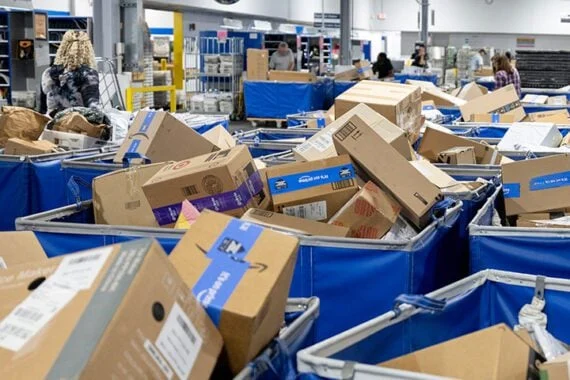
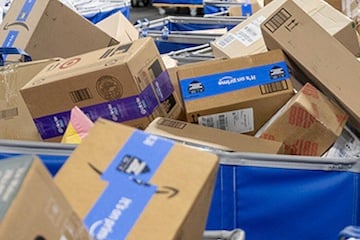
Within this financial landscape, the shipping and packages segment emerged as a critical revenue driver. This sector contributed $8.25 billion to the quarterly revenue, an increase of $588 million, or 7.7%, year-over-year. However, this revenue growth was achieved despite a notable decline in package volume, which fell by 55 million pieces, or 3.4%. This inverse relationship between volume and revenue underscores Steiner’s assertion about the power of pricing. The USPS is effectively earning more from fewer shipments.
Several factors contributed to this trend. The growth of services like Ground Advantage, a more affordable shipping option, played a role. Additionally, a temporary transportation-related price increase implemented in April for specific parcel services had a discernible impact. These relatively higher prices are proving to be a crucial mechanism for compensating for the diminishing volume.
“All of the statistics and results show that we have yet to cross the point that we should be changing our pricing strategy, and that we have more price [increases] to take in the marketplace. It would be financially irresponsible of us not to do so,” Steiner elaborated. This statement suggests that the agency views current pricing levels as suboptimal and believes further adjustments are not only warranted but necessary for fiscal prudence.
The trend of revenue growth outpacing volume decline is not unique to the package sector. In market segments where the Postal Service holds a near-monopoly, such as First-Class Mail, similar patterns are emerging. First-Class Mail revenue increased by 4.3% during the quarter, even as its volume experienced a 3.5% decrease. This reinforces the agency’s reliance on pricing strategies to navigate declining mail volumes and offset operational costs.
The Regulatory Landscape and Pricing Flexibility
The USPS operates under a unique regulatory framework that influences its pricing power. While regulations constrain how aggressively the agency can increase prices for its monopoly mail products, it still possesses considerably more flexibility than for-profit carriers in the competitive parcel delivery market. This quasi-governmental status grants the USPS a degree of autonomy that allows it to make strategic pricing decisions to shore up its finances.
Steiner drew a parallel between the USPS’s pricing strategy and that of industries like airlines and grocery stores. In these sectors, businesses routinely adjust prices based on supply and demand dynamics to optimize financial returns, rather than solely focusing on maximizing sales volume. This approach, he argued, is fundamental to sound business practice.
“Thus far, applying those basic principles has favored raising prices even though there has been a modest decrease in volumes,” Steiner remarked, implicitly positioning the USPS’s current strategy within the broader context of private industry operations, albeit acknowledging that the Postal Service operates under a different set of public service obligations and regulatory oversight.
E-commerce Evolution and the Shifting USPS Incentive
For many years, the USPS perceived the burgeoning volume of e-commerce packages as a vital lifeline, a potential antidote to the steady decline in First-Class Mail volume and its associated revenue. This perception was shared by many merchants, who found the USPS an attractive partner for lightweight residential shipments and deliveries to rural or underserved areas where private carriers might impose surcharges. The logic was straightforward: packages filled existing delivery routes and infrastructure that the USPS was legally mandated to maintain, making incremental package deliveries a seemingly low-cost, high-volume revenue opportunity. The ubiquity of post offices, even in the smallest communities, further bolstered this view.
However, Postmaster General Steiner has articulated a different perspective, one that decouples maximizing parcel volume from maximizing revenue. The financial results from the third quarter of FY2026 serve as concrete evidence of this shift. The agency handled 55 million fewer packages but collected $588 million more in revenue from those shipments. From the USPS’s internal financial perspective, this was a favorable trade-off, signaling a new incentive structure.
This development has significant implications for e-commerce shippers. While the USPS still requires package volume to operate efficiently, its latest performance data suggests it does not necessarily need more packages at any price. If the agency can achieve higher revenue with a reduced parcel count, Postmaster General Steiner has made it clear which outcome he prioritizes.
For e-commerce merchants, this strategic pivot does not inherently diminish the attractiveness of USPS services like Ground Advantage. However, it does suggest a potential evolution in how the Postal Service will operate and price its services moving forward. Merchants may need to re-evaluate their shipping strategies and anticipate potential price adjustments that prioritize profitability over sheer volume.
An Unsustainable Model and the Call for Congressional Action
Beyond immediate revenue strategies, Steiner also underscored the fundamental unsustainability of the Postal Service’s current business model. He asserted that even with increased price-setting authority and revenue boosts, the agency’s core structural issues would persist.
“As things stand, the Postal Service is expected to be self-sustaining while, at the same time, fulfilling mandates that are inherently unsustainable and do not cover their costs,” Steiner explained. This statement points to a long-standing conflict between the USPS’s public service obligations, such as universal mail delivery, and the expectation that it operate as a financially independent entity.
The agency has faced a persistent imbalance between costs and revenue for approximately 17 years. Steiner believes that addressing this deep-rooted issue will require legislative intervention. “We need to fix the business model that has produced the 17-year-long imbalance in costs and revenue – and that is going to require Congressional involvement,” he stated, placing the onus on lawmakers to enact reforms that create a more viable long-term operating framework.
In the interim, e-commerce merchants and businesses relying on postal services should prepare for continued price fluctuations. The current financial pressures and strategic adjustments suggest that postal package rates could see further increases, particularly as the peak holiday shipping season approaches. The USPS’s current trajectory indicates a move towards a more revenue-conscious pricing strategy, which will undoubtedly shape the logistics landscape for businesses across the country. The agency’s ability to balance its universal service obligations with its financial realities remains a critical challenge, one that will likely require significant policy changes and strategic adaptation in the years to come.