Doug Lauretano, a seasoned advertising executive with a career spanning major publishing houses like Fortune, The Wall Street Journal, and CNN Money, has launched a new Demand-Side Platform (DSP) named Tuple. This move comes after Lauretano identified significant inefficiencies and a pervasive "trust gap" within the existing programmatic advertising ecosystem, particularly concerning the intricate relationships between DSPs and Supply-Side Platforms (SSPs). Tuple, which officially went live in March 2026, aims to address these systemic issues by offering a fundamentally different approach to how advertisers access and optimize digital ad inventory.
Lauretano’s journey into the heart of programmatic technology began during his tenure at CivicScience, a data and advertising company, where he was instrumental in developing a deal ID and curation product. This role provided him with an unprecedented, granular view into the internal workings of DSPs. "And what I saw was pretty ugly," Lauretano stated, reflecting on the complexities and opacity he encountered. This firsthand experience, coupled with his decade-long background at supply-side programmatic players like OpenX and Media.net, ignited a drive to create a more transparent and efficient solution.
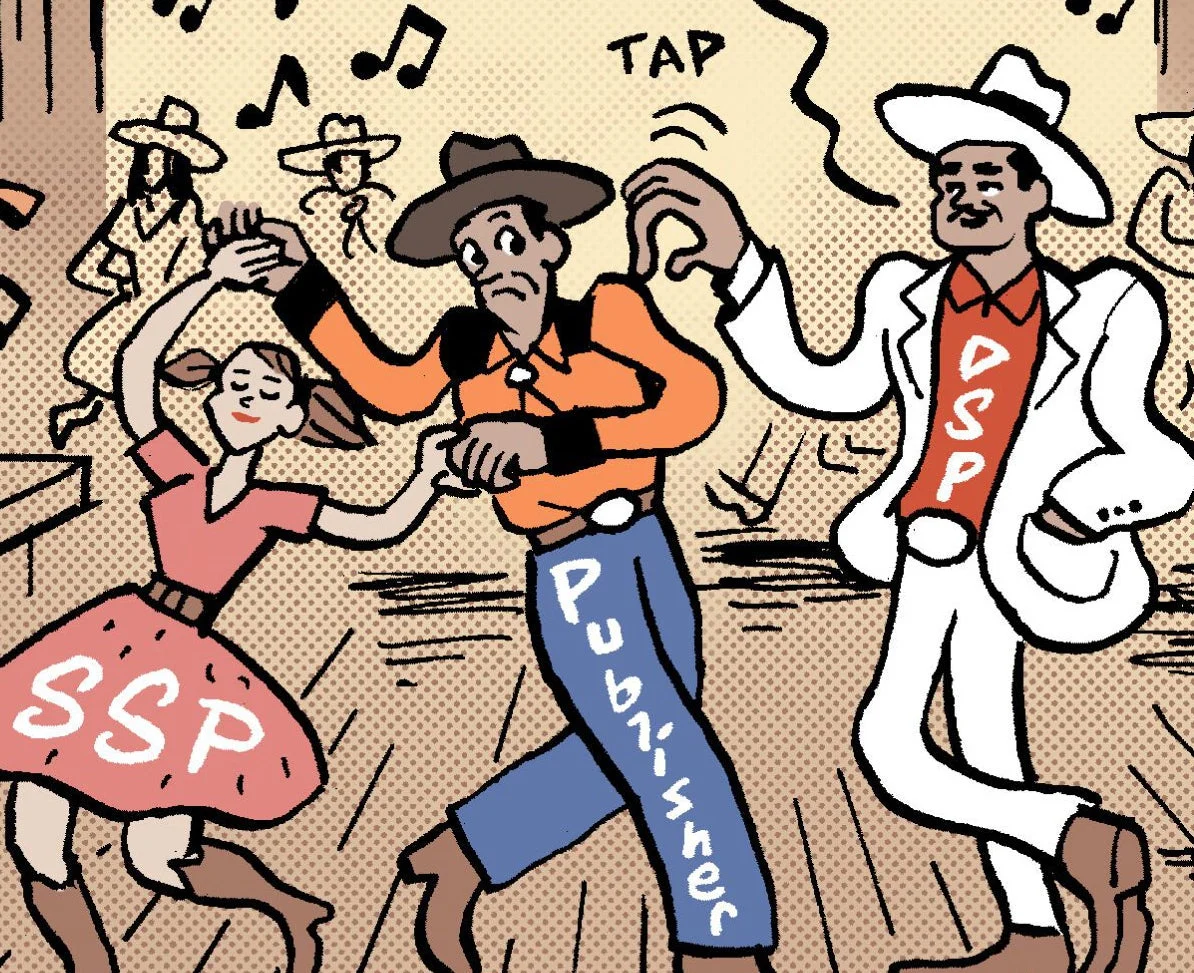
The programmatic advertising industry, valued at an estimated $80 billion in the U.S. alone in 2025, has long been criticized for its opacity and the inherent conflicts of interest between different players in the ad tech supply chain. Lauretano’s observation that "there’s just so much animosity" between the buy and sell sides encapsulates a sentiment shared by many industry observers. This friction is often manifested in subtle yet impactful ways. For instance, major DSPs have been known to reframe SSPs as mere "resellers," a term that diminishes the value and technological contribution of SSPs. Conversely, SSPs have been accused of employing tactics such as "ID bridging" to illicitly inflate bid prices and circumvent crucial frequency capping rules, measures designed to prevent ad fatigue and maintain user experience.
The Genesis of Tuple: Addressing a Deep-Seated Trust Deficit
The core problem Tuple seeks to solve is the pervasive "programmatic trust gap." Lauretano argues that this distrust stems from how DSPs and SSPs have historically interacted, often characterized by a lack of transparency and a tendency for one side to obscure or manipulate information to their advantage. "It’s almost like one is constantly trying to trick the other," Lauretano remarked, highlighting the adversarial nature that has taken root.
Adding to this complexity is the rapid evolution of ad tech infrastructure, driven by the integration of Artificial Intelligence (AI) and the shift towards cloud-based, "containerized" systems. This technological upheaval has enabled new bidding models where DSPs, custom algorithm providers, and even media buyers themselves can embed their algorithms directly within SSPs. This approach bypasses the traditional DSP account seat, offering a more direct pathway to inventory but also potentially exacerbating the existing trust issues if not managed with full transparency.
Lauretano explained that the traditional model of DSPs accessing SSP inventory is often subject to "throttling." SSPs, dealing with billions of ad impressions daily at a global scale, employ throttling as a cost-management measure to control the volume of requests they receive from individual DSPs. This means that a DSP might only see a fraction of the total available impressions from an SSP that an advertiser would be interested in bidding on. While a necessary operational practice, this throttling creates a blind spot for the advertiser.
Containerized bidding models, on the other hand, can offer buyers visibility into every impression as it surfaces within an SSP, circumventing the query-per-second limitations inherent in the traditional DSP-SSP interface. However, this increased visibility, while technically advantageous, does not automatically resolve the underlying trust deficit. Lauretano emphasized that establishing trust between buyers and SSPs is "almost as important" as the technical advancements themselves, underscoring the human and relational element that underpins successful programmatic transactions.
Tuple’s Differentiated Model: A Focused Approach to Inventory Access
Tuple’s operational strategy diverges significantly from the prevailing practices of legacy DSPs. Instead of integrating with a vast, often unmanageable, number of SSPs – a common practice where advertisers using platforms like The Trade Desk, Beeswax, or Viant might find themselves bidding across hundreds of SSPs – Tuple adopts a highly curated and focused approach.
Currently, Tuple has established a direct integration with only one SSP: Media.net. This choice was deliberate, stemming from Lauretano’s prior experience and his high degree of confidence in the Media.net team and their deal ID setups. This close relationship allows for a deeper understanding and optimization of the programmatic pipeline. Lauretano indicated that Tuple might expand to work with a maximum of five SSPs in the near term. However, the long-term vision is to operate with just three strategic SSP partners.
The rationale behind this limited integration is to achieve maximum visibility into the universe of programmatically available impressions. Lauretano posits that a handful of SSPs, particularly those with exclusive supply agreements, can effectively cover the vast majority of desirable programmatic inventory. By concentrating on a select group of trusted SSPs, Tuple aims to eliminate duplicated inventory and unnecessary bidding seats, thereby streamlining the buying process and improving efficiency. "There are so few with exclusive supply," Lauretano noted, suggesting that the perceived need for sprawling integrations is often an illusion.
Reclaiming Transparency in AI-Driven Optimization
Beyond the structural changes in SSP integration, Tuple also addresses the opacity surrounding AI-driven optimization features within DSPs. Lauretano characterizes many current DSP AI offerings as "black-box" products. Advertisers typically input desired outcomes and bid parameters, leaving the platform to manage the intricacies of optimization. While this offers a degree of simplicity, it often sacrifices the transparency that is a hallmark of successful "walled garden" environments.
The true advantage of walled gardens, Lauretano explained, lies not just in their controlled environments but in the ability for advertisers to gain sophisticated insights and optimize campaigns based on real-time performance data. When a DSP’s AI operates as a black box, advertisers lose the critical visibility needed to understand how their campaigns are performing and why. This can lead to suboptimal outcomes, such as an AI prioritizing cheaper display ads when an advertiser expects higher-quality inventory, or focusing conversions in unintended markets when the campaign goal is geographic expansion.
"A platform with as little noise as possible has the best chance of being the best performer," Lauretano asserted. He believes that AI-based optimization, when it obscures performance data and overrides advertiser preferences without clear explanation, constitutes "the original sin" of legacy ad tech. This lack of transparency, he argues, is precisely what necessitates innovative solutions like Tuple.
For instance, within a traditional DSP utilizing AI, an advertiser might be unaware that the majority of conversions are originating from a specific region, like California, when their strategic objective is to penetrate new markets. The AI, driven by raw performance metrics, might continue to pour budget into the most efficient existing channels, effectively ignoring the advertiser’s broader strategic goals. Similarly, the AI might favor lower-cost inventory types that align with immediate performance metrics but do not represent the quality or engagement levels the advertiser seeks.
By stripping away this visibility, legacy DSPs create a dependency on opaque algorithms, leaving advertisers unable to fully grasp or influence their campaign trajectory. This disconnect between advertiser intent and algorithmic execution is a critical failure that Tuple aims to rectify by prioritizing transparency and advertiser control within its AI-driven optimization framework. The company’s commitment is to provide advertisers with a clear understanding of how their campaigns are performing, the data driving those decisions, and the flexibility to adjust strategies based on nuanced business objectives, not just raw performance indicators.
Broader Impact and Future Implications
Tuple’s entry into the DSP market signals a potential shift in how programmatic advertising is approached, moving away from a model characterized by complexity and distrust towards one that prioritizes transparency, efficiency, and strategic partnership. The company’s limited SSP integration strategy challenges the conventional wisdom that broader reach always equates to better performance. Instead, Tuple advocates for depth of understanding and trust within a curated ecosystem.
The implications of Tuple’s model could be far-reaching. If successful, it may encourage other DSPs to re-evaluate their integration strategies and their approach to AI-driven optimization. The demand for greater transparency from advertisers is growing, fueled by increasing scrutiny from regulators and a desire for more accountable marketing spend.
The success of Tuple, currently serving a small base of eight customers including a prominent mobile brand that opted for anonymity in its testimonial, will depend on its ability to demonstrate tangible improvements in campaign performance and cost efficiency for its clients. The anonymous enterprise mobile brand cited their "rationale for choosing a startup DSP over an incumbent" as a key factor, suggesting that the perceived limitations of established players are creating an opening for agile innovators like Tuple.
As the programmatic advertising industry continues to evolve, with ongoing discussions around data privacy, cookie deprecation, and the ethical use of AI, companies like Tuple that champion transparency and a more direct, trusted relationship between buyers and sellers of ad inventory are likely to gain traction. Lauretano’s vision for Tuple is not merely to be another DSP, but to fundamentally redefine the relationship between technology, data, and trust in the complex world of digital advertising. The industry will be watching closely to see if Tuple can indeed untangle the programmatic knot and forge a path towards a more transparent and effective future.