The landscape of software development underwent a significant transformation in August 2026 as the focus of the global developer community shifted from foundational large language models toward the sophisticated machinery required to operationalize them. Data tracked through GitHub Trending throughout the month reveals that the "centre of gravity" has moved to the peripheral layers of the artificial intelligence stack, specifically focusing on agent harnesses, skill sets, memory layers, and document processing tooling. This shift suggests a maturing market where the priority is no longer just the intelligence of the model, but the reliability and composability of the systems built around it. One repository alone, the DeepSeek Harness, managed to capture the industry’s attention by gaining over 190,000 stars in a mere four-week window, signaling a massive demand for open-source agent orchestration.
The August 2026 Infrastructure Surge
The month of August was characterized by a consolidation of tools that aim to make AI agents more "production-ready." For much of 2025 and early 2026, GitHub was dominated by new model weights and fine-tuning scripts. However, the August 2026 data indicates that developers are now solving for the "last mile" of implementation. The 15 repositories that saw the most significant momentum—measured by star growth, ecosystem impact, and real-world relevance—illustrate a clear trend: the standardization of the agentic "socket."
Industry analysts suggest that this movement is a response to the "black box" nature of early agent frameworks. Developers are increasingly rejecting process-owning frameworks that offer little visibility into decision-making. Instead, they are gravitating toward modular plugins and transparent "harnesses" that allow for granular control over agent behavior.
1. DeepSeek AI: The Emergence of the Open Harness
DeepSeek AI’s release of the deepseek-harness, colloquially known as "dsh," stands as the most significant event of the month. Adding approximately 191,000 stars in August—including a peak of 62,000 in a single week—the project has set a new record for rapid adoption in the AI sector. Built on a plugin-centric architecture powered by Cordis and released under the permissive MIT license, dsh addresses the need for a frontier-lab-grade open-source harness.
The repository’s success is attributed to its ease of use; a single command allows developers to launch a local web UI. However, the project remains in a "developer preview" state. Technical documentation warns of compatibility-breaking changes, highlighting the volatile nature of this emerging category. For enterprise developers, dsh represents a move away from proprietary agent clouds toward self-hosted, customizable orchestration.

2. The Rise of Composable Skills: mattpocock/skills
While DeepSeek provided the harness, Matt Pocock’s "skills" repository provided the utility. With a total star count reaching approximately 242,000, this repository has become the definitive directory for composable agent skills. Distributed through the Claude Code marketplace and the skills.sh installer, these skills allow developers to "drop in" specific behaviors—such as Test-Driven Development (TDD) or code reviews—without adopting a heavy framework.
The philosophy behind this project is a direct critique of earlier frameworks like GSD or Spec-Kit. Pocock argues that monolithic frameworks reduce developer control and complicate debugging. By splitting skills into user-invoked commands (/grill-me) and model-invoked behaviors (/diagnosing-bugs), the project has established a new standard for how agent behaviors are packaged and shared in 2026.
3. Chronology of Adoption: OpenAI Codex and Pi
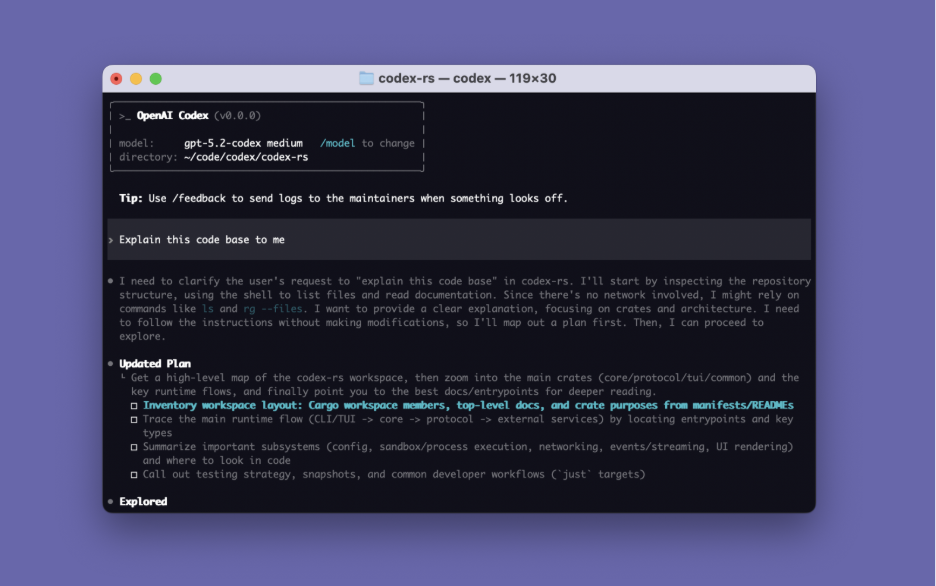
The month also saw sustained growth for established platforms. OpenAI’s Codex, a lightweight terminal-based coding agent, added 17,500 stars. While this growth was slower than the newcomers, Codex remains the industry benchmark. Its maturity is evidenced by the fact that many of the new "skills" and "gateways" released in August include native Codex support as a primary feature.
Similarly, earendil-works/pi has evolved from a simple toolkit into a foundational platform. Pi bundles a unified LLM API with an agent loop and terminal UI. Its inclusion in this month’s trending list is driven by "ecosystem gravity"—other trending projects are increasingly shipping Pi-specific extensions. This indicates that the market is beginning to settle on a few "first-class hosts" for agentic workflows.
4. Bridging the Visual Gap: Archify and Diagram-Design
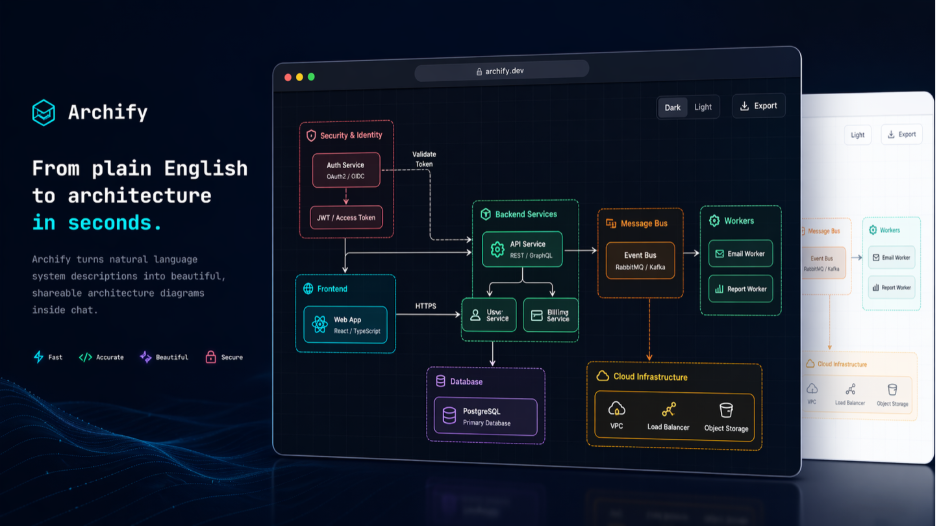
A notable trend in the middle of the month was the sudden demand for agent-generated visual documentation. Two repositories, tt-a1i/archify and cathrynlavery/diagram-design, collectively gained 56,000 stars. For years, AI agents have been capable of writing complex code but struggled to produce professional-grade architectural diagrams.
Archify focuses on motion-enabled sequence and dataflow diagrams, while Diagram-Design takes a minimalist approach, explicitly avoiding "Mermaid slop" and shadows in favor of clean, editorial SVG and HTML outputs. This trend highlights a shift toward using agents not just for logic, but for high-level system design and communication.

5. The "Senior Engineer" Paradigm: DietrichGebert/ponytail
One of the most technically rigorous projects to trend in August was Ponytail. This agent skill, compatible with over 20 hosts, forces coding agents to adopt the mindset of a senior engineer who prioritizes code deletion over addition. Ponytail operates on a "seven-rung ladder" of logic, questioning the necessity of every line of code before it is written.
The project’s impact is backed by data. Published benchmarks show that agents using Ponytail produce 54% less code and operate at a 20% lower cost while maintaining safety guards. The maintainer’s transparency—publicly retracting higher initial claims after contributor feedback—has earned the project a reputation for reliability in an era of AI hype.
6. Solving the Unstructured Data Problem: Firecrawl
As agents are tasked with more complex research, the "plumbing" of data extraction has become a bottleneck. Firecrawl’s two projects, anydoc and pdf-inspector, addressed this by adding 34,600 stars. Anydoc provides a Rust-based solution for converting various file formats (Word, PPT, EPUB) into Markdown, which has become the preferred language for LLM consumption.
The more significant breakthrough, however, was pdf-inspector. Built on the realization that 54% of PDFs do not actually require expensive Optical Character Recognition (OCR), this tool classifies documents and extracts Markdown in milliseconds. This efficiency is critical for production pipelines where speed and cost are paramount.
7. Cost Management and Model Agnosticism: OmniRoute
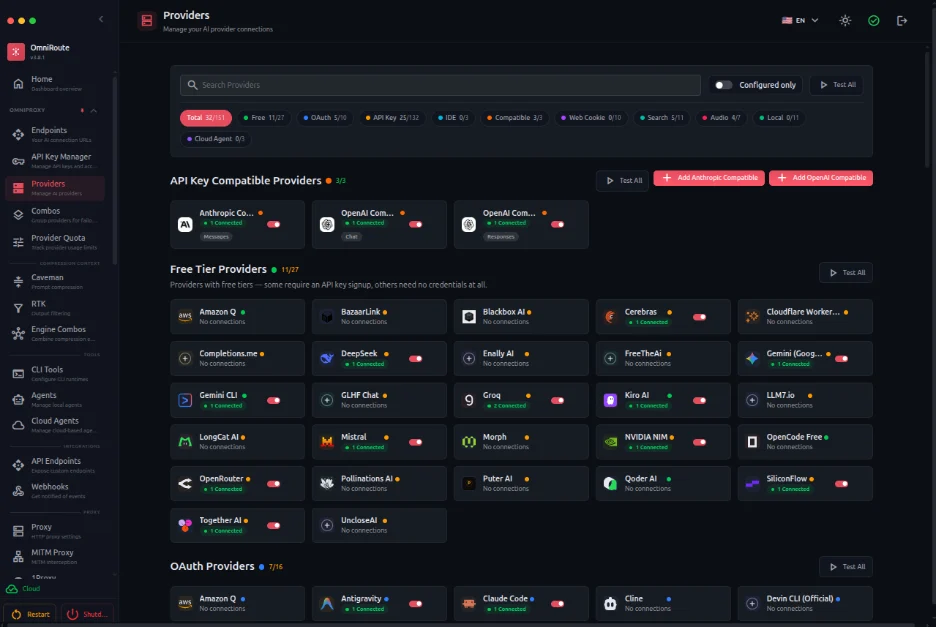
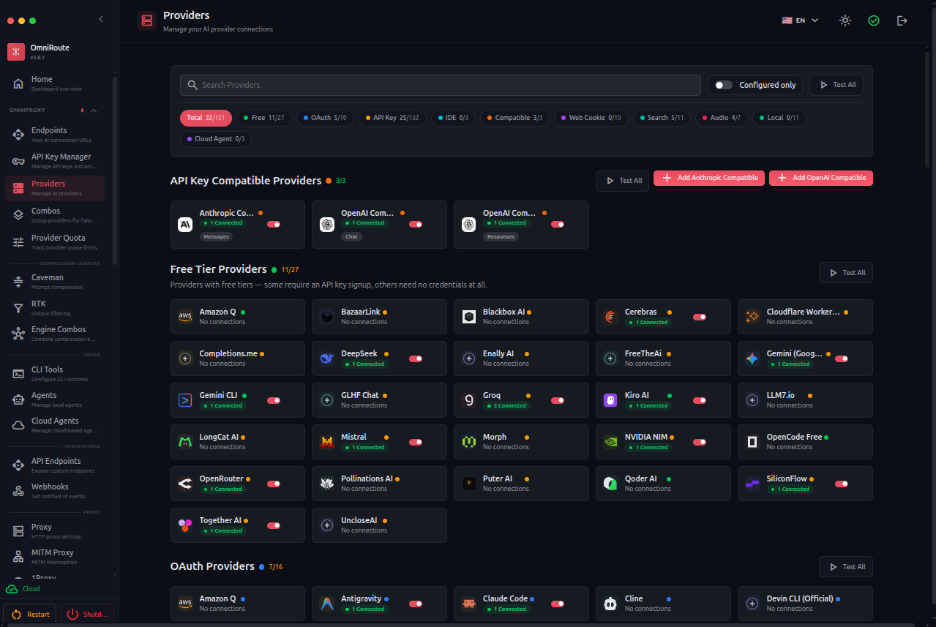
With the proliferation of models, developers are facing "provider fatigue." OmniRoute, an MIT-licensed AI gateway, trended in late August by offering a single endpoint for over 350 providers and 1,200 models. Beyond simple routing, OmniRoute provides quota-aware fallback and prompt compression.
The project claims to save between 15% and 95% on token costs. While these marketing-forward claims are high, the project’s support for the Model Context Protocol (MCP) and its 550+ contributors suggest it is becoming a staple for developers looking to avoid vendor lock-in.
8. The Memory Frontier: TencentDB-Agent-Memory
The final major trend of August involved solving the "forgetfulness" of agents. TencentCloud’s TencentDB-Agent-Memory added 15,600 stars by providing a team-level memory hub. It categorizes interactions into Chat Memory, Skills, LLM-Wiki, and Code-Graphs.
Unlike local memory solutions, this project allows memory to be shared across different agents and frameworks. As organizations move from single-agent experiments to multi-agent teams, the ability to maintain a persistent, governed knowledge base is becoming a prerequisite for deployment.
Broader Impact and Implications
The data from August 2026 suggests several long-term implications for the software industry:
- The Modularization of AI: The era of the "all-in-one" AI application is giving way to a modular ecosystem. Developers are choosing their own harness, their own skills, and their own memory layers.
- Efficiency over Volume: Projects like Ponytail and pdf-inspector indicate that the industry is moving away from "more is better." There is a growing premium on reducing token usage, deleting unnecessary code, and avoiding expensive computations like OCR when simpler methods suffice.
- The Standardization of the Socket: The fact that independent projects are now building extensions for Pi, Codex, and DeepSeek Harness indicates that we are entering a phase of standardization. Similar to how the industry settled on Docker for containers, we are seeing the emergence of standard "sockets" for AI agents.
- Open Source as the Baseline: The overwhelming dominance of MIT-licensed projects on the trending list suggests that the "infrastructure" layer of AI will be built on open-source foundations, even if the underlying models remain proprietary.
As the month concluded, eight of the top twenty repositories were replaced by newer entries, illustrating the high velocity of this sector. While star counts are a measure of attention rather than a guarantee of quality, the underlying themes of August 2026—modularization, cost efficiency, and infrastructure standardization—are likely to define the trajectory of AI development for the remainder of the year. Developers are no longer just asking what a model can do; they are building the complex systems required to make those models work reliably in the real world.