The landscape of generative artificial intelligence has shifted from mere content production to sophisticated editorial refinement, as evidenced by the surge in specialized "Claude Skills" hosted on GitHub. While early iterations of AI writing tools focused on basic task automation, such as generating commit messages or status reports, the current ecosystem has evolved to prioritize high-fidelity prose, narrative structure, and the elimination of identifiable AI markers. As of August 2026, the developer community has coalesced around a handful of repositories that have become the gold standard for transforming raw Large Language Model (LLM) outputs into professional-grade literature. These skills, built specifically for Anthropic’s Claude Code and the Model Context Protocol (MCP) environment, represent a significant advancement in the quest to eliminate "AI-slop"—the generic, predictable phrasing that often plagues machine-generated text.
The Evolution of the Claude Skill Ecosystem
The transition from simple prompting to agentic "skills" began in earnest in late 2024 following the release of the Claude 3.5 model family. However, it was the formal introduction of Claude Code—a terminal-based interface for agentic coding and writing—that catalyzed the development of persistent editorial tools. Unlike traditional prompts, which require manual entry for every session, Claude Skills are integrated into the agent’s runtime environment, allowing the model to autonomously apply complex editorial frameworks to its own output.
By mid-2025, the proliferation of AI-generated content on platforms like Wikipedia and various digital news outlets led to a backlash against "slop." This created a market for tools that could not only write but also "de-generate" the text—stripping away the stylistic tics associated with LLMs. The following repositories represent the most influential tools in this category, ranked by their community adoption and star counts as of early August 2026.

1. Humanizer: The Gold Standard for Stylistic Refinement
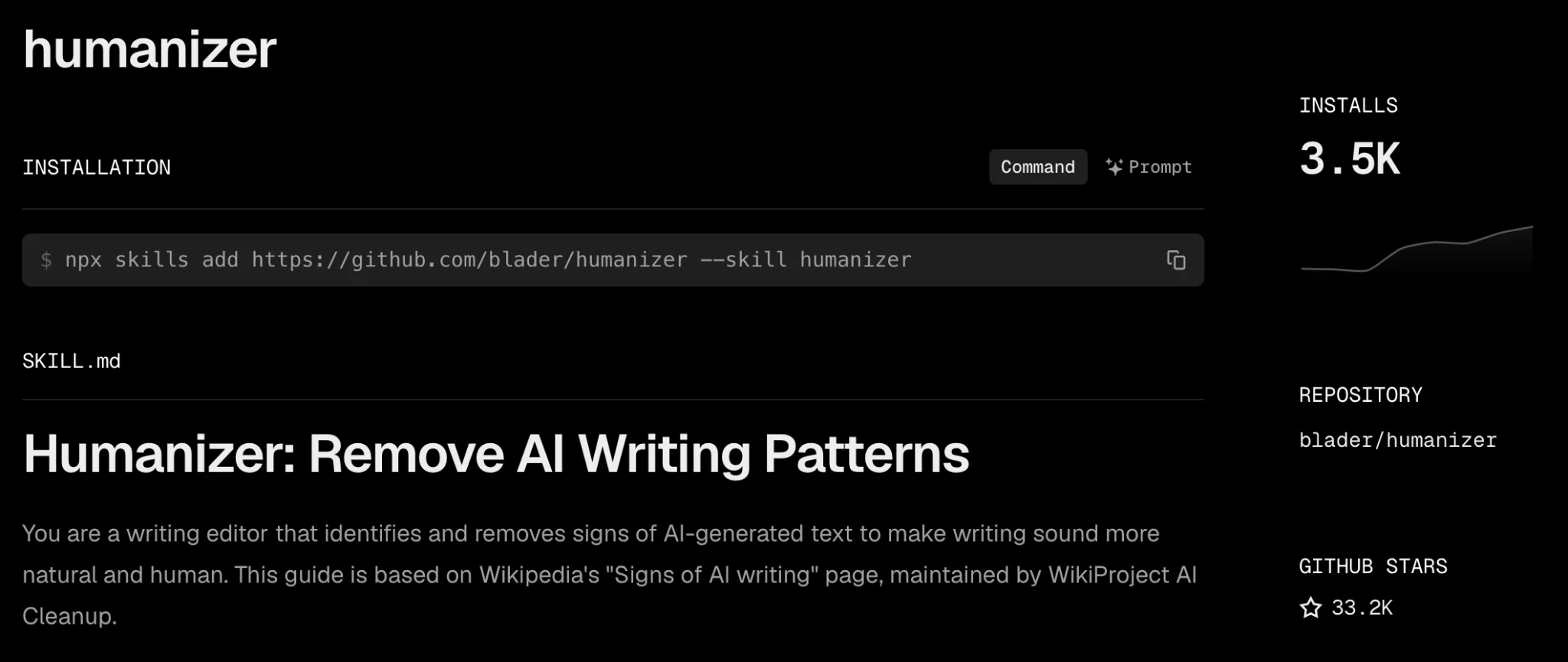
With 33,700 stars and over 1,000 forks, the blader/humanizer repository stands as the most prominent tool for authors seeking to mask the digital origins of their work. The core of this skill is a library of thirty-three distinct linguistic patterns, each accompanied by "before and after" examples derived from Wikipedia’s "Signs of AI Writing" guide.
In its early versions, Humanizer focused primarily on vocabulary, targeting overused AI terms such as "delve," "tapestry," and "testament." However, the 2026 updates have shifted focus toward syntax and rhythm. The tool now actively manages "subjectless fragments" and "manufactured punchlines"—the overly neat concluding sentences that AI often generates to wrap up a paragraph. Perhaps most notably, Humanizer addresses the "chatty rhetorical opener," where the model asks a question only to immediately answer it, a hallmark of low-effort AI drafting.
Technically, Humanizer functions by running a post-processing pass on Claude’s initial draft. It identifies em-dashes and colon-heavy structures, which AI tends to over-utilize for faux-sophistication, and replaces them with more varied human-centric punctuation. For professional journalists and essayists, this tool serves as a "humane touch" layer that ensures the final output resonates with a natural cadence.
2. Stop-Slop: Quantitative Editorial Control
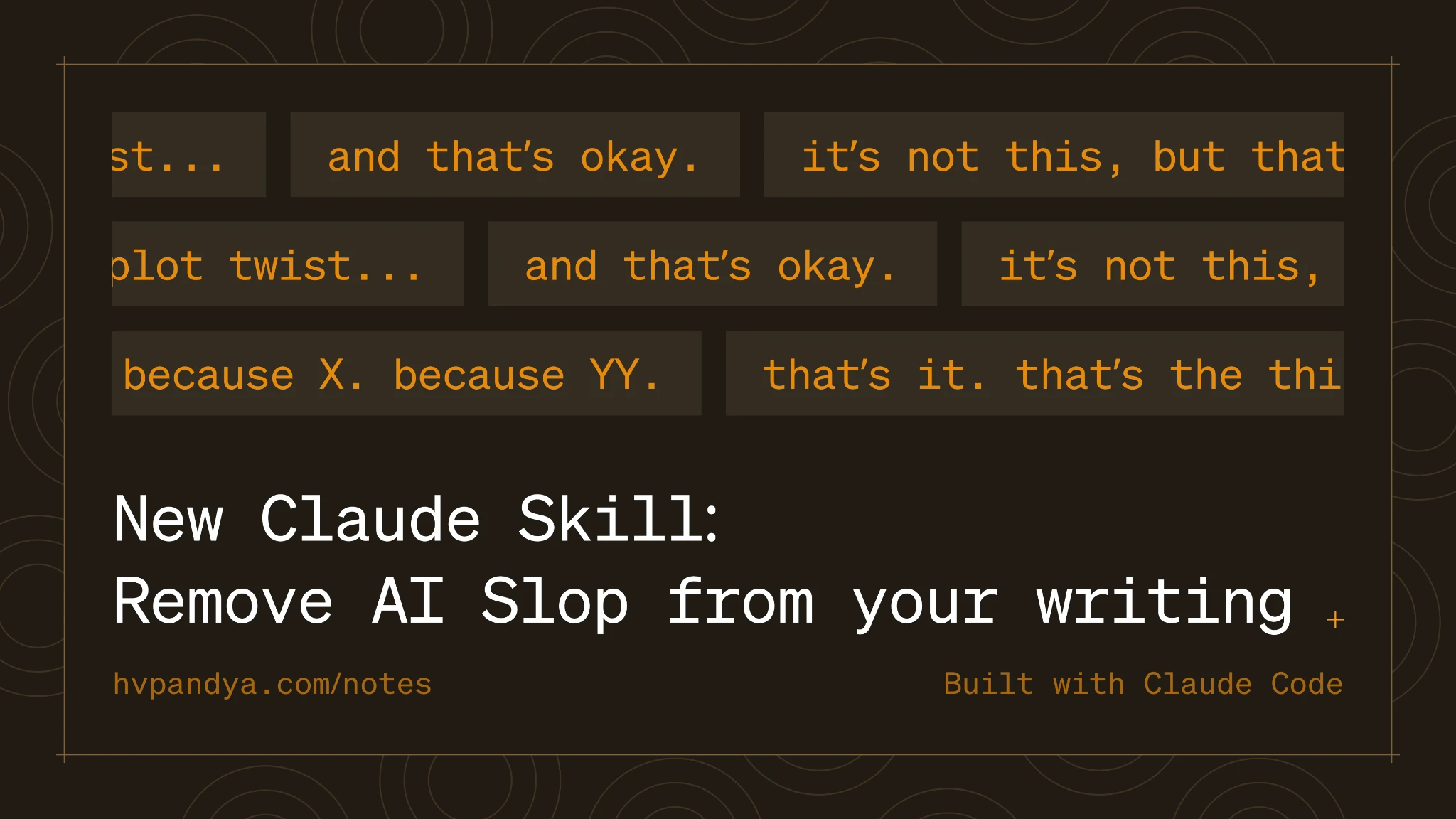
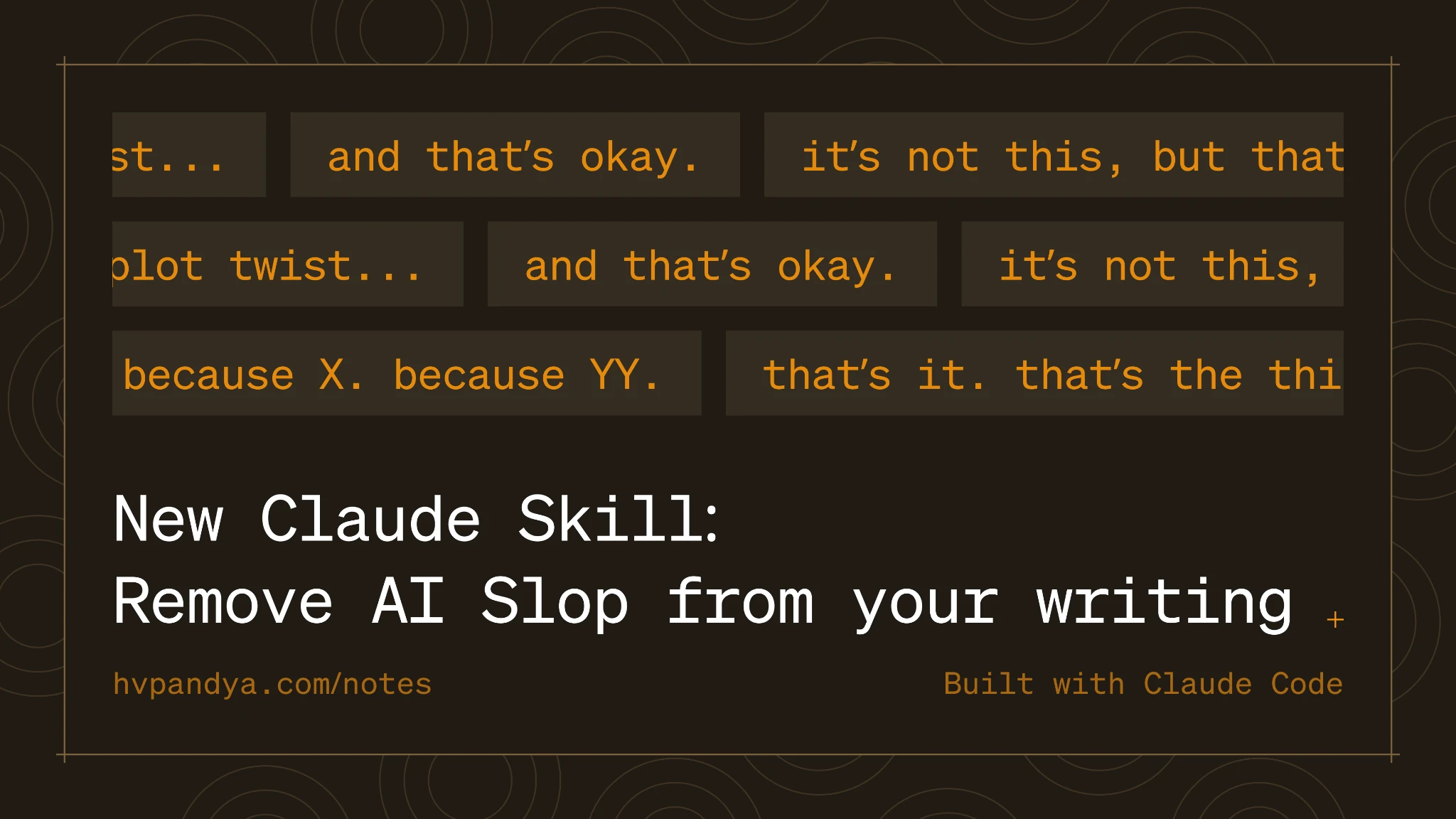
Ranking second in popularity with 15,199 stars, hardikpandya/stop-slop takes a more analytical approach to editorial quality. While other tools suggest tonal shifts, Stop-Slop provides a strict framework for "what not to do." It operates via a SKILL.md file and three reference libraries that categorize forbidden linguistic habits.
The defining feature of Stop-Slop is its self-correction mechanism. After generating a draft, the skill forces the model to score its own work on a scale of 1 to 10 across five critical dimensions:
- Directness: The elimination of passive voice and "fluff."
- Rhythm: The variance in sentence length and structure.
- Trust: The use of concrete data over vague generalities.
- Authenticity: The avoidance of sycophancy or overly enthusiastic tones.
- Density: The information-to-word ratio.
If the aggregate score falls below 35 out of 50, the agent is programmed to automatically revise the text without user intervention. This internal verification loop is what distinguishes a "skill" from a mere suggestion, as it delegates the quality-gate function to the AI itself.
3. AI-Research-SKILLs: Academic and Technical Precision
For the scientific and technical community, the Orchestra-Research/AI-Research-SKILLs repository (11,400 stars) provides a comprehensive suite for the full research lifecycle. While much of the repository is dedicated to engineering tasks like quantization and vLLM optimization, its writing modules have become essential for academic publishing.
The writing component of this repository is divided into three primary categories: literature survey synthesis, technical paper drafting, and peer-review simulation. The "ml-paper-writing" skill is particularly notable for its ability to convert raw experimental data into LaTeX-ready prose that adheres to the stylistic conventions of major conferences like NeurIPS or ICML. By automating the more tedious aspects of research documentation, this tool allows scientists to focus on hypothesis generation and data analysis, while ensuring the final manuscript maintains a high standard of technical clarity.
4. Oh-story-claudecode: Narrative Deconstruction and Fiction
Fiction writing presents a unique challenge for AI, which often struggles with long-term narrative consistency and subtext. The worldwonderer/oh-story-claudecode repository, boasting 5,080 stars, addresses this by implementing a "deconstruction" pipeline. Originally developed for the high-volume world of Chinese web fiction, the English-language version has gained traction for its ability to emulate successful narrative structures.
The tool’s methodology involves three steps: trend scouting, deconstruction, and drafting. Users can point the agent toward an existing successful novel, and the skill will produce a structured teardown of its pacing, character beats, and thematic arcs. This teardown becomes a reusable library. When the user begins drafting their own story, the agent writes against this "proven" structure rather than relying on its default training data. This prevents the "hallucination of tropes" and results in stories that feel architected rather than randomly generated.
5. Claude-blog: The Industrial Content Lifecycle
For digital marketing and high-volume publishing, AgriciDaniel/claude-blog (1,579 stars) offers an end-to-end solution for content management. This repository includes thirty sub-skills and five specialized agents that handle everything from topic cluster strategy to "content decay" detection.
The most innovative aspect of Claude-blog is its "delivery contract." The author of the repository operates on the philosophy that "the user is never the first reviewer." To achieve this, every draft undergoes a 100-point rubric evaluation across five "gates." If a draft fails to reach a 90-point threshold, it is blocked and re-run up to three times. This verification pattern mirrors the rigorous editorial pipelines of traditional newsrooms, providing a level of quality assurance that is often missing in AI-assisted workflows. It is specifically designed for environments where volume is high and personal review of every draft is unfeasible.
Chronology of Development: 2024–2026
The timeline of these tools reflects a rapid maturation of the AI industry:
- Q4 2024: Initial release of Claude 3.5 Sonnet. Early prompts for "human-like" writing begin appearing on forums.
- Q2 2025: Anthropic releases the Model Context Protocol (MCP), allowing developers to build standardized "skills" for Claude.
- Q4 2025: The "Slop Crisis" reaches a peak as search engines become flooded with generic AI content. Repositories like
stop-slopsee a 400% increase in star counts. - Q1 2026: Specialized skills for fiction and academic research branch off from general writing tools.
- August 2026: The current state of the art emphasizes multi-agent verification and self-scoring rubrics.
Technical Implementation and Installation
For users operating within the Claude Code environment, installation of these skills has been streamlined through Git integration. By cloning these repositories directly into the ~/.claude/skills/ directory, users can grant their agent permanent access to these editorial frameworks.
| Skill Name | Primary Function | Command for Installation |
|---|---|---|
| Humanizer | Pattern-based de-sloping | git clone https://github.com/blader/humanizer ~/.claude/skills/humanizer |
| Stop-Slop | Quantitative quality scoring | git clone https://github.com/hardikpandya/stop-slop ~/.claude/skills/stop-slop |
| AI-Research | Academic paper synthesis | git clone https://github.com/Orchestra-Research/AI-Research-SKILLs ~/.claude/skills/ai-research |
| Oh-Story | Narrative deconstruction | git clone https://github.com/worldwonderer/oh-story-claudecode ~/.claude/skills/oh-story |
| Claude-Blog | High-volume verification | git clone https://github.com/AgriciDaniel/claude-blog ~/.claude/skills/claude-blog |
Analysis of Implications for the Writing Profession
The rise of these skills signals a fundamental shift in the role of the writer in the age of AI. As the "humanizer" tools become more effective, the distinction between human-written and AI-written text becomes increasingly blurred. This has profound implications for digital trust and the value of prose.
Industry analysts suggest that we are entering an "Editorial Era," where the primary skill of a writer is no longer the act of putting words on a page, but rather the orchestration of agents and the design of quality-control rubrics. The success of repositories like claude-blog suggests that the future of content production lies in "verification patterns"—automated systems that ensure quality without human intervention.

However, some critics argue that "humanizing" AI is an inherently deceptive practice. By training models to avoid the very markers that identify them as machines, developers are making it harder for readers to evaluate the source and reliability of information. Despite these ethical concerns, the data from GitHub indicates that the demand for these tools is only growing. For the modern professional, mastering these Claude Skills is no longer optional; it is the baseline for remaining competitive in a world where "slop" is the default and quality is a programmed choice.