

In the rapidly evolving digital landscape of 2026, the bedrock of sustainable online engagement and business growth remains the humble email list. Often underestimated amidst the clamor of social media platforms, an email list represents a direct, owned channel to an audience, a powerful asset that can drive conversions, foster loyalty, and cultivate brand advocacy. Far from being a mere collection of addresses, it is, metaphorically, a curated room filled with individuals who have actively expressed interest in a brand’s message, products, or services. These individuals, once engaged, are more likely to interact, inquire, purchase, and ultimately become enthusiastic advocates, organically expanding the brand’s reach by inviting others into this valuable “room.”
Traditionally, the primary gateway to building such a list has been a signup form embedded within a dedicated website. Visitors navigating a brand’s online presence encounter these forms, offering their email addresses in exchange for newsletters, updates, or exclusive content. However, a significant and growing segment of entrepreneurs, solopreneurs, and small businesses operate without a full-fledged website, often relying on social media profiles or third-party marketplaces for their primary digital presence. This scenario has historically presented a challenge for list building, leading many to believe that a website is an indispensable prerequisite. This article explores how modern solutions, particularly hosted signup forms, have democratized email list building, empowering businesses of all sizes to cultivate a robust audience without the complexities and costs associated with maintaining a website.
The Enduring Value of Email Marketing in 2026
Despite the proliferation of new communication channels, email marketing continues to demonstrate an unparalleled return on investment (ROI). Recent industry reports from 2025 indicated that for every $1 spent on email marketing, businesses saw an average return of $42. This figure underscores email’s effectiveness not just in broad reach but in targeted engagement and conversion. Unlike social media algorithms that dictate who sees what and when, an email list offers direct access to a subscriber’s inbox, fostering a more intimate and less ephemeral connection. Subscribers actively choose to receive communications, indicating a higher level of intent and interest compared to passive scrolling on social feeds.
Furthermore, an email list represents an “owned” audience. Businesses have complete control over their subscriber data and the content they distribute, free from the whims of platform policy changes, algorithm updates, or potential account suspensions that can plague social media-reliant strategies. This autonomy is increasingly valued in an era where digital presence can be fragile. From nurturing leads with educational content to announcing new products, delivering exclusive discounts, or providing customer support, the email list serves as a versatile and reliable communication hub.
Bridging the Website Gap: The Emergence of Hosted Signup Forms
For many aspiring entrepreneurs or businesses in their nascent stages, the prospect of building and maintaining a website can be daunting. The perceived barriers include significant financial investment, technical expertise required for development and upkeep, and the considerable time commitment involved in content creation and SEO optimization. These factors often lead businesses to delay or forgo a dedicated online presence, inadvertently sidelining crucial marketing strategies like email list building.
This is precisely where the hosted signup form steps in as a revolutionary solution. A hosted signup form is a standalone web page specifically designed to collect email addresses and add subscribers to a mailing list. Crucially, it “lives on its own,” meaning it does not require integration into an existing website. Instead, it is assigned a unique, shareable URL. This URL transforms the signup form into an independent digital asset that can be distributed across virtually any online or offline channel.

The primary function of a hosted signup form is singular and focused: conversion. Unlike a full website that might offer navigation, multiple content pages, and various calls to action, a hosted form presents a clean, distraction-free environment solely dedicated to capturing subscriber information. This streamlined approach can often lead to higher conversion rates for specific campaigns or lead generation efforts, as visitors are presented with a clear, unambiguous objective.
Even for businesses that do possess a website, hosted signup forms offer strategic advantages. They serve as an invaluable backup mechanism; should a primary website experience downtime, the hosted form remains operational, ensuring continuous list growth. Moreover, for specific marketing campaigns or social media promotions where a direct, uncluttered link to subscription is desired, a hosted form eliminates unnecessary navigation and potential user friction, guiding prospective subscribers straight to the point of action.
Streamlining Creation with AI: The AWeber AI Signup Form Builder
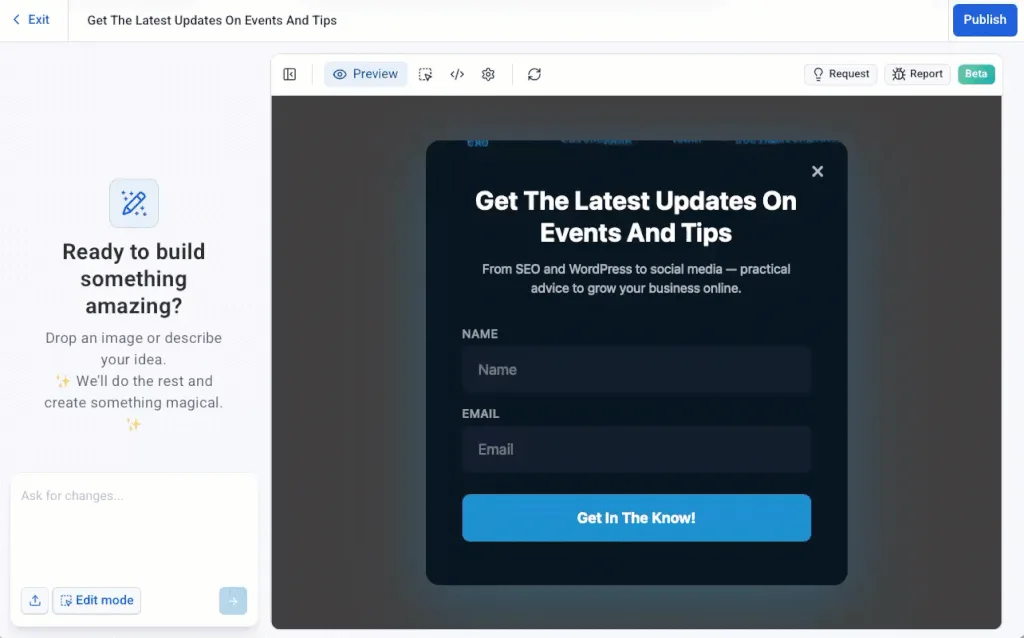
The process of creating a professional and effective hosted signup form has been dramatically simplified with the advent of artificial intelligence (AI) tools. Platforms like AWeber have integrated AI-powered builders, making it accessible even for users with no design or coding experience. Announced in June 2026, AWeber’s AI Signup Form Builder exemplifies this trend, offering an intuitive, rapid creation process.
The builder operates on a simple, conversational prompt system. A user describes their business, its offerings, or the purpose of the list, and the AI algorithm takes over, generating a complete, hosted signup form. This includes crafting a compelling headline, writing a concise description, and selecting a design aesthetic that aligns with the brand’s identity. This automation significantly reduces the time and effort traditionally associated with form design, allowing businesses to launch their list-building efforts almost immediately.
The typical workflow within such an AI builder involves several straightforward steps:
- Access the Builder: Users navigate to the “Pages & Forms” section within their email marketing platform and select the AI Signup Forms option. This centralized location ensures easy access and management of all digital assets.
- Describe the Business: This is the core input stage. Users provide a brief, clear description of their business, its niche, target audience, or the specific value proposition for subscribing. For example, “I sell artisanal candles handcrafted with essential oils, and I want to share monthly scent profiles and exclusive offers.” The AI then interprets this information to tailor the form’s content and design.
- Review and Customize: Once the AI generates the initial form, users can review its elements. While the AI aims for accuracy and brand alignment, the human touch remains essential. Users can easily adjust the headline for stronger impact, modify colors to precisely match branding guidelines, or tweak the layout for optimal visual appeal. The flexibility to refine the AI’s output ensures that the final form perfectly reflects the brand’s voice and objectives. For those satisfied with the initial generation, immediate publication is also an option.
- Obtain the Hosted URL: Upon publishing the form, the platform automatically provides a unique, dedicated URL. This URL is the key asset, ready to be shared across any desired channel. The entire creation process, from initial prompt to a publishable form, can often be completed in under five minutes, representing a significant leap in efficiency for digital marketers. The AI handles the foundational design and copywriting, freeing users to focus on strategic distribution.
Diverse Strategies for Email Collection Without a Website
With a hosted signup form in hand, the next critical step is to strategically place it where the target audience congregates. The absence of a website does not preclude effective promotion; it merely shifts the focus to alternative distribution channels.
-
Leveraging Social Media Platforms:
Social media remains a powerhouse for audience engagement and discovery. Businesses can effectively disseminate their hosted signup form link across major platforms such as Facebook, Instagram, X (formerly Twitter), LinkedIn, and TikTok. However, simply “dropping a link” is rarely sufficient. The strategy must involve compelling calls to action and clear communication of subscriber benefits.
For instance, a business could craft a post stating, “Unlock exclusive weekly baking tips and early access to new recipes! I send one email every Tuesday with a fresh recipe and a convenient grocery list. No spam, just deliciousness. Sign up here: [Hosted Form URL].” On Instagram and TikTok, the link can be prominently placed in the bio, often accompanied by a compelling visual or video directing followers to “Link in Bio.” Pinned posts on platforms like X and Facebook ensure visibility, while LinkedIn allows for integration within articles or profile sections. The key is to convey tangible value, motivating followers to make the leap from social engagement to direct email subscription. The preview text generated when sharing the link, often derived from the form’s name, should be optimized to be clear and enticing, such as “Exclusive Artisan Coffee Updates” or “Your Weekly Wellness Guide.”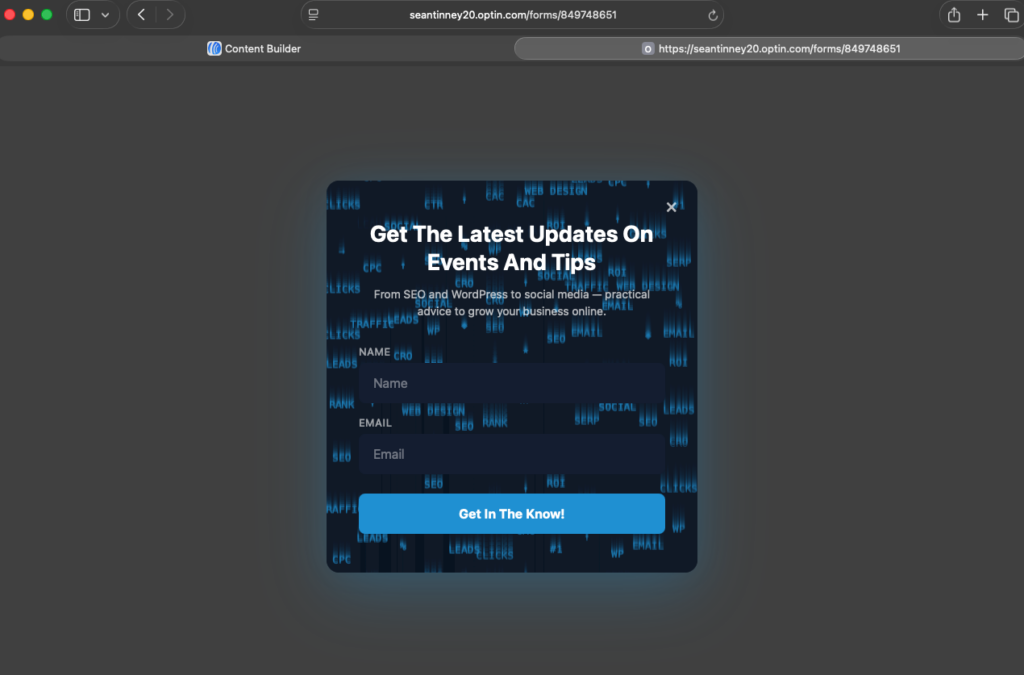
-
Integrating into Guest Posts and Collaborations:
Guest blogging and strategic collaborations offer an excellent avenue for expanding reach and acquiring new subscribers. When contributing content to another blog, publication, or collaborating with an influencer, businesses can embed a link to their hosted signup form within the article’s body or, more commonly, within the author’s bio or signature. This leverages the audience of the host platform, directing interested readers to the contributor’s own channel. For example, an article about sustainable fashion could conclude with “For more insights into ethical sourcing and exclusive discounts on eco-friendly apparel, sign up for our newsletter here: [Hosted Form URL].” This method taps into pre-qualified audiences who have already demonstrated interest in a related topic, increasing the likelihood of conversion. -
Facilitating In-Person Email Collection with QR Codes:
The resurgence and widespread adoption of QR codes have revolutionized the way businesses connect their physical presence with digital engagement. Hosted signup forms are perfectly suited for QR code integration. Businesses can generate a QR code that directly links to their hosted form’s URL and deploy it across various physical touchpoints.
Imagine a small artisan selling handmade jewelry at a farmer’s market. Instead of relying on handwritten lists, they can print a QR code on their business cards, product tags, or a prominent sign at their stall. A potential customer, intrigued by their craftsmanship, can simply scan the QR code with their smartphone, instantly accessing the signup form. They can subscribe on the spot, receiving a welcome email with a special discount or a preview of new designs before they even leave the market. This seamless transition from an offline interaction to an online subscription eliminates friction and enhances the customer experience. Other applications include packaging inserts, event signage at workshops or conferences, and even printed advertisements, providing a direct, measurable path to list growth without needing a website.
The Strategic Progression: When to Consider a Full Website
While hosted signup forms and dedicated landing pages provide a powerful foundation for audience building, there comes a point in a business’s growth trajectory where a full website becomes not just beneficial, but essential. This transition typically aligns with an expansion of business objectives and an increasing demand for more comprehensive digital functionality.
Key indicators that signal the readiness for a website upgrade include:
- Publishing Long-Form Content: When a business moves beyond brief updates and social media snippets to produce extensive blog posts, in-depth guides, whitepapers, or educational resources, a website provides the necessary architecture to host and organize this content effectively. A blog section, for instance, offers a centralized, searchable repository for evergreen content.
- Direct Online Sales: Selling products or services directly online requires robust e-commerce capabilities. A website equipped with an online store, shopping cart functionality, secure payment gateways, product pages, and inventory management systems is indispensable for scaling retail operations. While hosted forms can facilitate lead magnet delivery, they are not designed for transactional e-commerce.
- Need for Multiple Pages: As a business matures, it often requires various informational pages to serve its audience comprehensively. This includes an “About Us” page detailing the brand’s story and mission, “Services” pages outlining offerings, “Testimonials” pages showcasing social proof, and a dedicated “Contact Us” page. A full website provides the framework to structure these pages logically and enhance user navigation.
- Building Brand Authority and SEO: A dedicated website significantly contributes to brand credibility and authority. It serves as the definitive online home, offering a polished and professional image. Crucially, a website is fundamental for search engine optimization (SEO). Through strategic keyword integration, quality content, and technical optimization, a website can rank higher in search results, attracting organic traffic from users actively searching for related products or services. While hosted forms can be shared, their SEO footprint is limited compared to a content-rich website.
- Advanced Analytics and Integration: A website offers more granular control over analytics and deeper integration with various marketing tools beyond email marketing. This allows for comprehensive tracking of user behavior, conversion funnels, and broader campaign performance, providing invaluable data for strategic decision-making.
Until these advanced needs materialize, however, hosted signup forms and specialized landing pages serve as highly effective digital “home bases.” They efficiently collect email addresses, deliver lead magnets (such as free e-books or exclusive templates), and can trigger sophisticated automated email workflows, all without the overhead of a full website. This strategic approach allows businesses to focus their resources on audience engagement and core operations while steadily building a valuable, owned communication channel.
Conclusion
The digital marketing landscape of 2026 demands agility and accessibility. The traditional reliance on a full website for email list building is no longer a prerequisite, thanks to innovations like hosted signup forms and AI-powered builders. These tools empower entrepreneurs and small businesses to establish a direct line of communication with their audience, fostering loyalty and driving growth from day one, regardless of their technical resources or web development budget. The ability to quickly create, customize, and deploy a professional signup form, and then distribute it across social media, collaborations, and physical touchpoints, democratizes the power of email marketing.
As businesses evolve, a website may become a necessary expansion, offering greater functionality, content hosting, and e-commerce capabilities. But for the initial and crucial phase of audience acquisition, the hosted signup form stands as a robust, efficient, and cost-effective solution. It is a testament to how modern marketing technology is continuously adapting to meet the diverse needs of the global business community, ensuring that the fundamental power of an engaged email list remains within reach for everyone. For those ready to harness this power, platforms like AWeber offer the tools to begin this essential journey immediately.








