Iffa Jayyana

The strategic application of image descriptions, commonly known as alt text or alt attributes, has emerged as a cornerstone of effective digital content, significantly impacting search engine optimization (SEO), web accessibility, and the burgeoning field of artificial intelligence (AI)-powered content understanding. Beyond merely enhancing visual appeal, properly described images serve as vital conduits of information for screen readers used by individuals with visual impairments, sophisticated search algorithms, and the rapidly evolving landscape of visual search and AI overviews. Understanding the nuanced roles of alt attributes and, to a lesser extent, title attributes, is no longer a technicality but a strategic imperative for any entity publishing content online.
The Foundational Role of Alt Attributes in Web Accessibility and SEO
At its core, an image’s alt attribute provides a textual alternative to visual content. This is fundamental for web accessibility, ensuring that users who cannot see images—whether due to visual impairment, slow internet connections preventing image loading, or browser settings—still receive the information conveyed by those images. Screen readers, assistive technologies that vocalize on-screen content, rely almost exclusively on alt text to describe graphics, photographs, and illustrations to their users. Without descriptive alt text, an image becomes an invisible barrier, rendering content incomplete or incomprehensible for a significant segment of the global internet population. The World Health Organization (WHO) estimates that at least 2.2 billion people globally have a near or distance vision impairment, underscoring the vast demographic reliant on accessible web design principles, including robust alt text implementation.
Concurrently, alt text plays a critical role in search engine optimization. Search engine crawlers, fundamentally text-based, cannot "see" an image in the same way a human does. They depend on textual cues to understand an image’s content and context. The alt attribute serves as the primary descriptor, helping search engines like Google, Bing, and DuckDuckGo categorize images and determine their relevance to specific search queries. This directly influences an image’s visibility in image search results, a growing avenue for content discovery. Google’s own guidelines explicitly state the importance of using descriptive alt text, along with relevant filenames and surrounding text, to help algorithms understand and rank images. This linkage between image content and textual context enhances the overall SEO profile of a webpage, contributing to higher organic search rankings.
Distinguishing Alt Attributes from Title Attributes
While often conflated, the alt attribute and the title attribute serve distinct purposes within the HTML <img> tag. A complete HTML image tag typically appears as:
<img src="image.jpg" alt="image description" title="image tooltip">
The alt attribute, as discussed, is a textual substitute for the image, crucial for accessibility and search engine interpretation. It is a mandatory attribute for non-decorative images under accessibility standards like the Web Content Accessibility Guidelines (WCAG).

The title attribute, conversely, provides supplementary information that appears as a tooltip when a user hovers their mouse pointer over the image. Its utility has significantly diminished over time. Screen readers do not reliably announce title attributes, and mobile users, who navigate via touch, cannot access hover-based tooltips at all. Consequently, any critical information intended for users should be integrated directly into the surrounding page text, not hidden within a title attribute. The only significant exception where the title attribute remains crucial for accessibility is with embedded frames (<iframe>), where it provides an accessible name for the frame’s content. For standard images, the alt attribute effectively fulfills the role of description, making the title attribute largely optional and often unnecessary.
The Evolution of Image Understanding: A Chronology
The journey of how machines interpret images on the web reflects the broader evolution of digital technology:
- Early Web (1990s-early 2000s): Images were primarily decorative or embedded with minimal textual context. Search engines were rudimentary, relying heavily on filenames and adjacent text.
alttext was primarily an accessibility concern, not yet a major SEO factor. - Rise of Image Search (Mid-2000s): As broadband internet became widespread, image search engines gained prominence. Google Images, launched in 2001, began to emphasize
alttext, filenames, and surrounding page content as key signals for indexing and ranking visual assets. - Mobile Revolution and Responsive Design (Early 2010s): The proliferation of smartphones highlighted the limitations of traditional web design and the
titleattribute. The shift to responsive design further solidified the importance of efficient, accessible image delivery. - Emergence of Computer Vision (Mid-2010s): Advances in AI, particularly deep learning and neural networks, enabled search engines to begin "seeing" and understanding the actual content of images. Computer vision algorithms could identify objects, colors, and patterns, but still benefited from explicit textual cues.
- Visual Search and AI Integration (Late 2010s-Present): Tools like Google Lens, Pinterest Lens, and e-commerce visual search capabilities have revolutionized how users discover information using images. AI-powered search results and generative AI models (like Google’s AI Overviews) increasingly integrate visual content. In this multimodal search environment, well-crafted
alttext acts as a crucial bridge, helping AI connect its visual understanding with specific, human-provided context and details, especially for product attributes or nuanced concepts.
Google’s Stance and Best Practices for Alt Text
Google’s Search Central documentation consistently emphasizes the creation of "useful, information-rich content that uses keywords appropriately and is in context of the content of the page" for alt text. The company explicitly warns against "keyword stuffing," which involves artificially inflating alt attributes with irrelevant keywords. Such practices not only degrade user experience for screen reader users but can also lead to a site being flagged as spam, resulting in penalization.
Key recommendations from Google and accessibility advocates include:
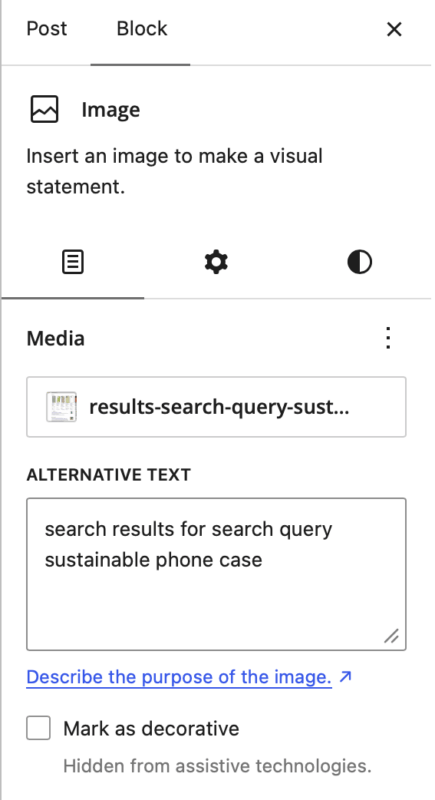
- Be Descriptive and Specific: Accurately describe what the image shows. Instead of "shoe," use "red waterproof running shoe with breathable mesh upper."
- Provide Context: Relate the image’s content to the surrounding text on the page. If an image illustrates a data point, summarize that data point in the alt text.
- Incorporate Keywords Naturally: If relevant, include your target keywords or keyphrases, but only when they genuinely describe the image.
- Keep it Concise: While descriptive, aim for brevity. Screen readers typically announce alt text, so excessively long descriptions can be cumbersome.
- Empty Alt for Decorative Images: For images that serve purely aesthetic purposes and convey no meaningful information (e.g., background patterns, dividers), use an empty
altattribute (alt=""). This instructs screen readers to skip the image, preventing unnecessary auditory clutter. - Descriptive File Names: Complement good alt text with descriptive image filenames (e.g.,
red-waterproof-running-shoe.jpginstead ofIMG_1234.jpg).
The Business Case: Impact and Implications
The diligent implementation of robust alt text strategies carries significant business implications across various sectors:
- Enhanced E-commerce Discoverability: For online retailers, detailed alt text for product images is paramount. Including product names, IDs, colors, sizes, and specific features in alt text significantly boosts product discoverability in visual search and image search results. This directly translates to increased traffic, higher click-through rates, and ultimately, improved sales conversions. Studies often show that product pages with comprehensive image optimization perform better in organic search.
- Broader Audience Reach: Adhering to accessibility standards by providing meaningful alt text ensures that websites are usable by individuals with visual impairments. This commitment to inclusivity not only expands a brand’s potential audience but also aligns with ethical business practices and legal compliance requirements (e.g., Americans with Disabilities Act in the U.S., Equality Act in the UK).
- Stronger SEO Performance: Beyond direct image search, comprehensive alt text contributes to the overall topical authority and relevance of a webpage. Search engines use image context to understand the broader subject matter of a page, indirectly influencing its ranking for related text-based queries.
- Future-Proofing for AI-Driven Search: As AI continues to reshape search, the importance of structured and contextual data, including alt text, will only grow. AI Overviews and multimodal search experiences rely on extracting precise information from various content types. Well-described images provide AI models with richer, more accurate data to synthesize answers and display relevant visual aids, increasing the likelihood of content appearing in these advanced search features.
- Improved User Experience: For all users, good alt text contributes to a more robust web experience. Even without visual impairment, a slow internet connection might prevent an image from loading; descriptive alt text provides immediate context where a broken image placeholder would otherwise appear.
AI-Powered Alt Text Generation: Efficiency Meets Oversight
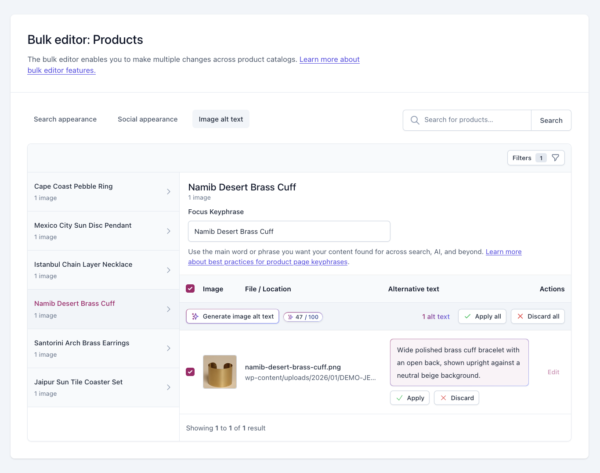
The sheer volume of images on many websites, particularly large e-commerce catalogs, makes manual alt text creation a time-consuming endeavor. This challenge has spurred the development of AI-powered alt text generation tools. These tools leverage computer vision to analyze image content and natural language generation (NLG) to craft descriptive text automatically. Platforms like Yoast SEO AI+ and Yoast WooCommerce SEO exemplify this, generating initial alt text based on product data and visual analysis within content management systems.
While AI generation offers immense efficiency, particularly for bulk tasks, it is not without limitations:
- Genericity: AI often produces generic descriptions that lack nuance or specific brand-related context. For example, it might identify "blue ceramic mug" but miss that it’s a "limited edition artisan-crafted navy blue ceramic mug with ergonomic handle."
- Contextual Blind Spots: AI might struggle to understand the purpose or significance of an image within the broader content. An infographic explaining complex statistics might receive a generic "chart showing data" alt text rather than a summary of the key findings.
- Accuracy and Bias: AI models can occasionally misidentify objects or perpetuate biases present in their training data. Human review is crucial to correct factual errors and ensure inclusive language.
- Decorative vs. Informative: Distinguishing purely decorative images from informative ones remains a challenge for AI. An AI might generate alt text for an image that should ideally have an empty alt attribute.
Therefore, the most effective approach combines AI efficiency with human expertise. AI can handle the heavy lifting for routine product images or less critical visual assets, providing a strong starting point. However, human content creators must review, refine, and, where necessary, completely rewrite AI-generated alt text for critical images such as hero banners, infographics, charts, and images conveying complex ideas. This hybrid approach ensures scalability while maintaining accuracy, relevance, and adherence to accessibility best practices.
Practical Implementation in Content Management Systems
Most modern Content Management Systems (CMS) like WordPress, Shopify, Squarespace, and Wix provide dedicated fields for alt text when uploading or embedding images. In WordPress, for example, the "Alt Text" field is prominently displayed in the media library and image block settings. It’s crucial for content creators to actively utilize these fields rather than leaving them blank or allowing the CMS to auto-populate with generic filenames. Some advanced SEO plugins, such as Yoast SEO, integrate AI-powered tools directly into the editing workflow, streamlining the process of generating and managing alt text, especially for large product catalogs.
In conclusion, the humble alt attribute is far more than a technical detail; it is a powerful tool at the intersection of accessibility, SEO, and the future of AI-driven content understanding. By prioritizing well-crafted, descriptive alt text, digital publishers can ensure their content is inclusive, highly discoverable, and prepared for the evolving landscape of how machines perceive and interpret the visual web. This strategic commitment yields tangible benefits, from expanded audience reach and improved user experience to enhanced search visibility and stronger brand reputation in an increasingly visual and intelligent digital world.

 Azzam Bilal Chamdy

 Pevita Pearce